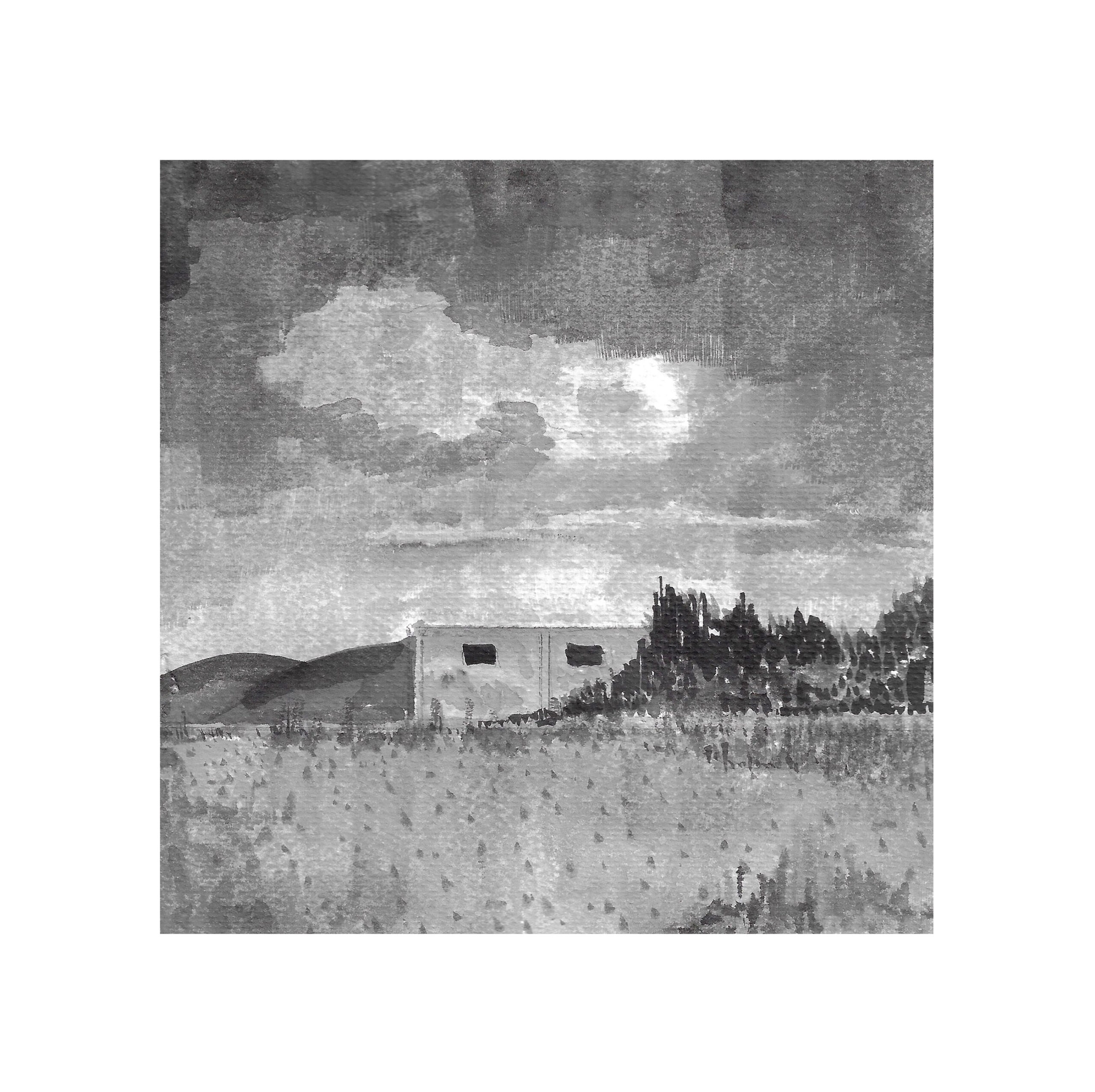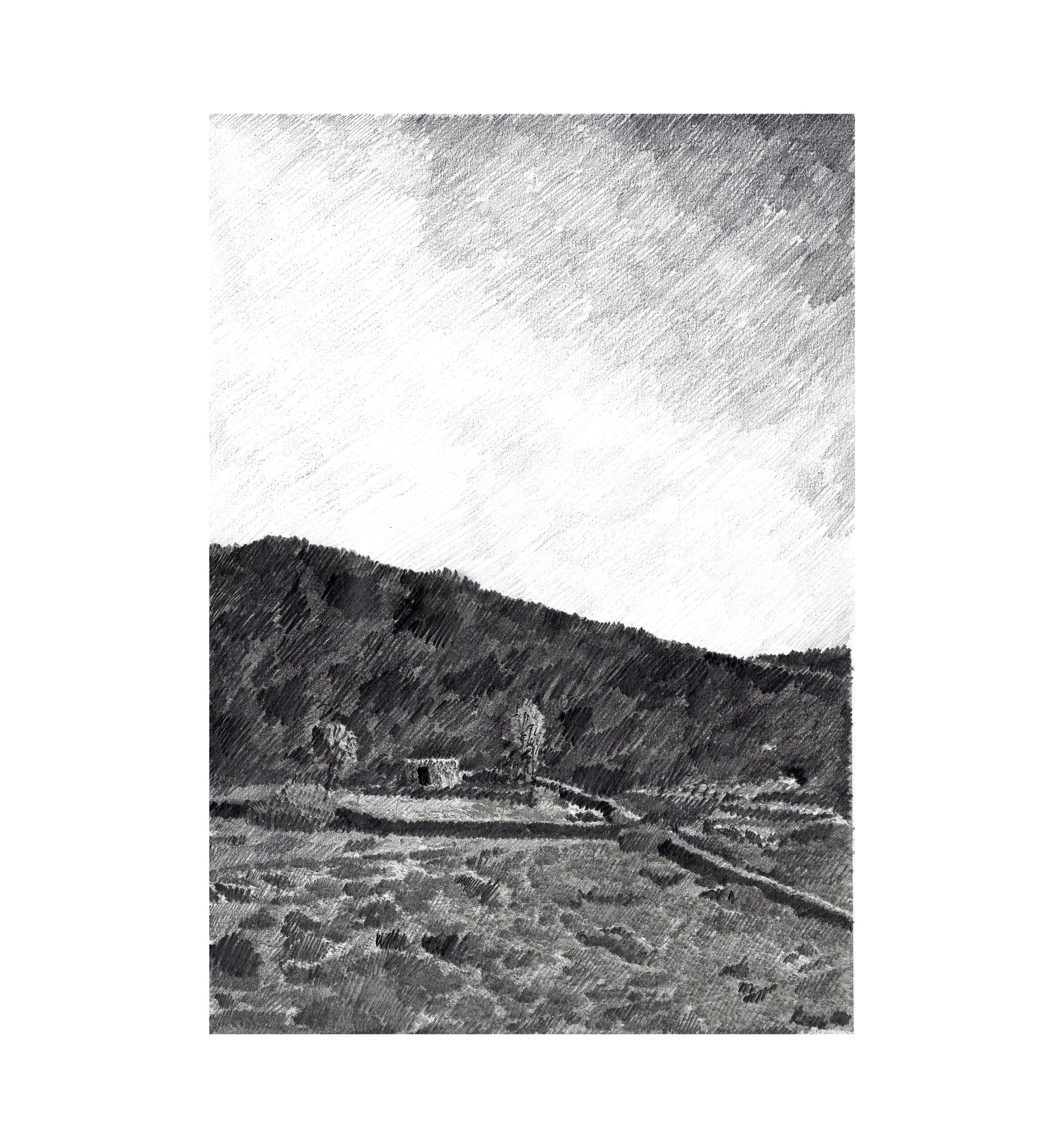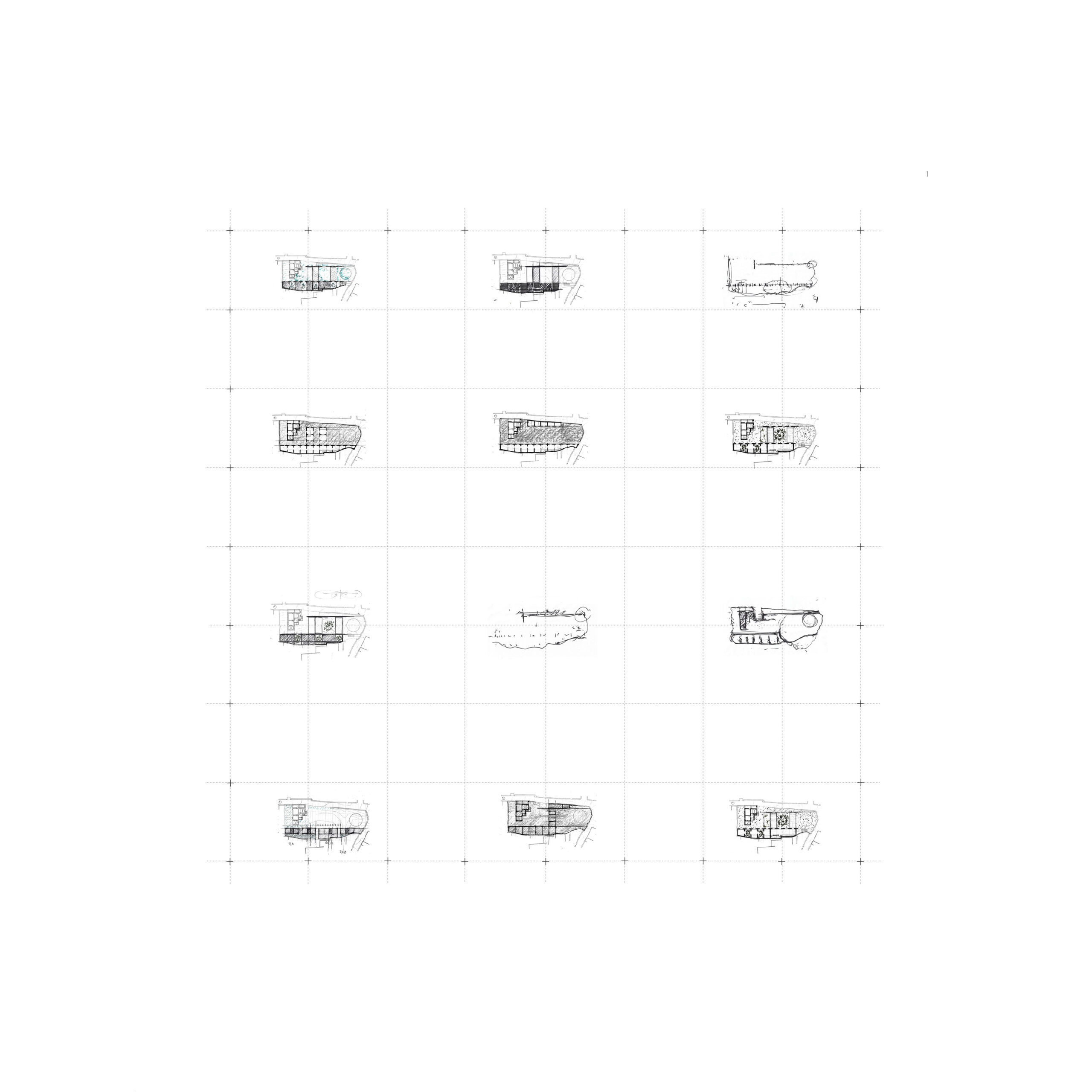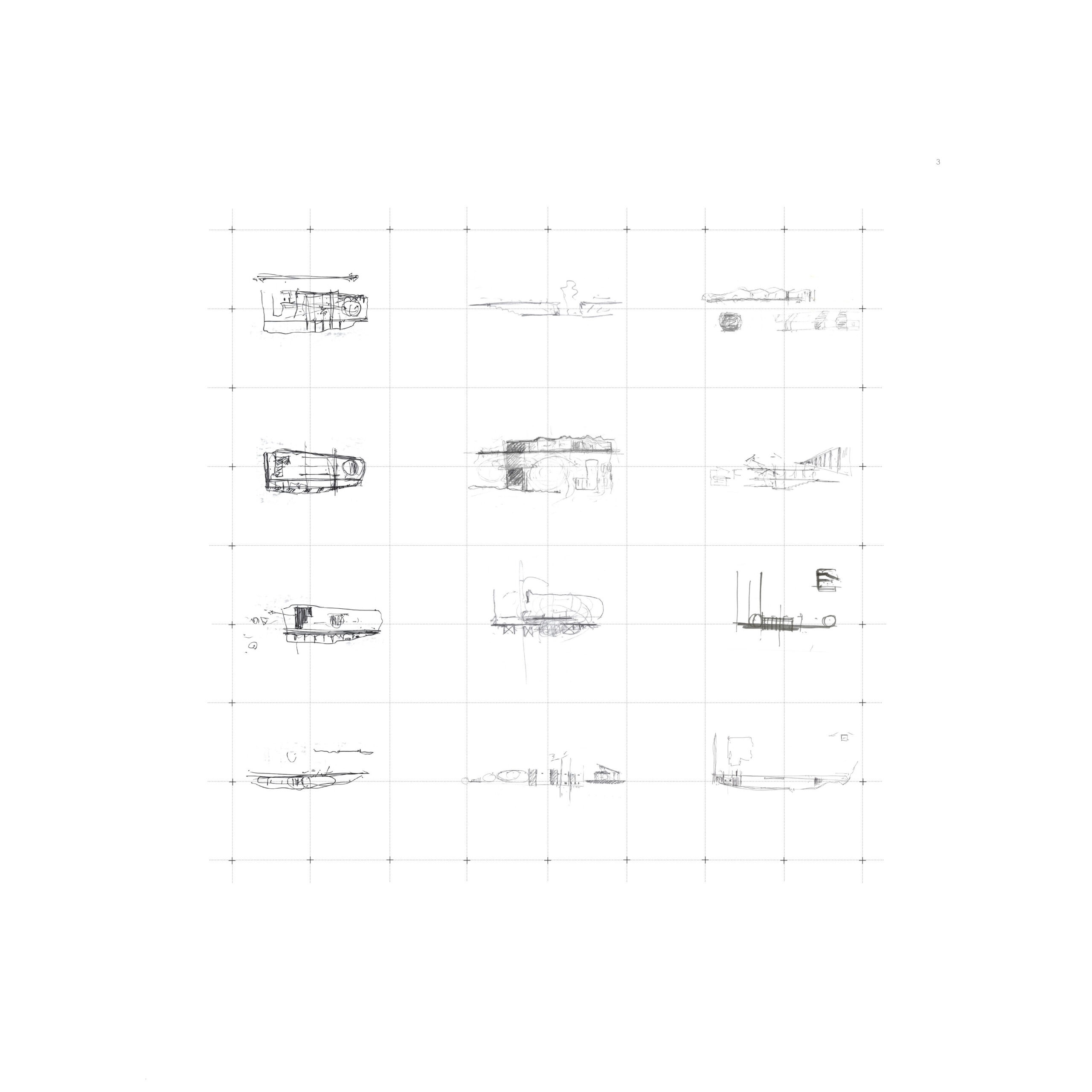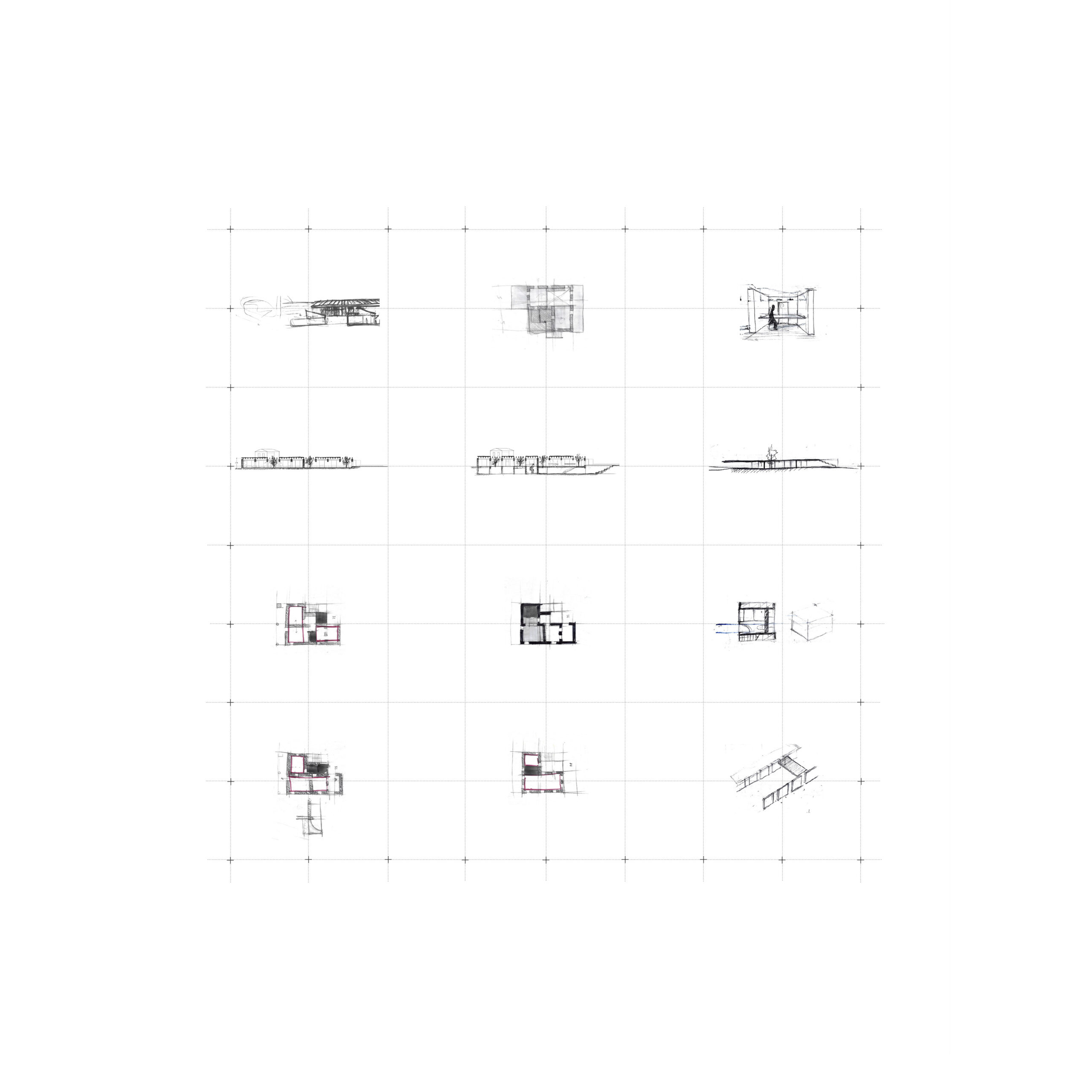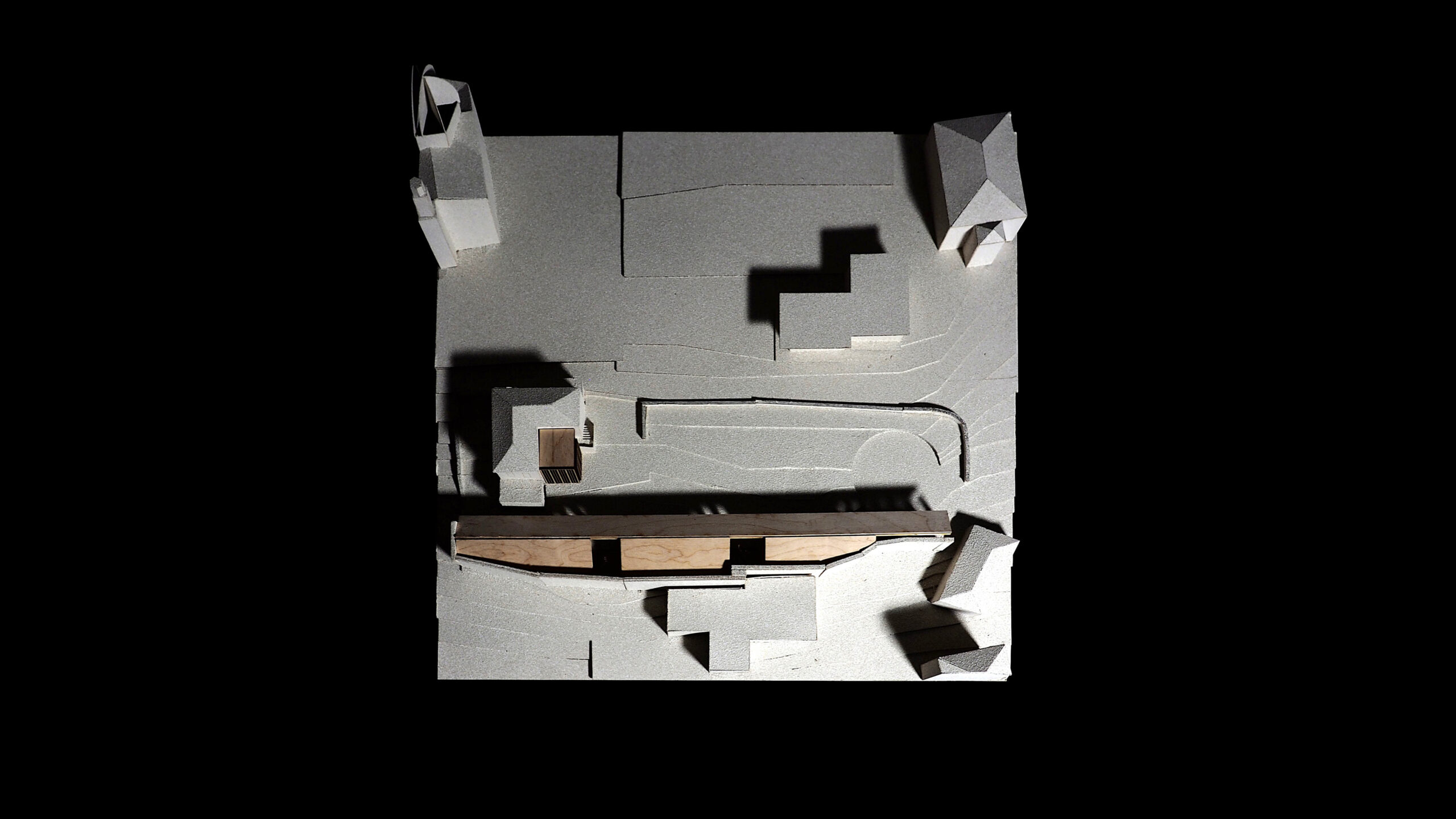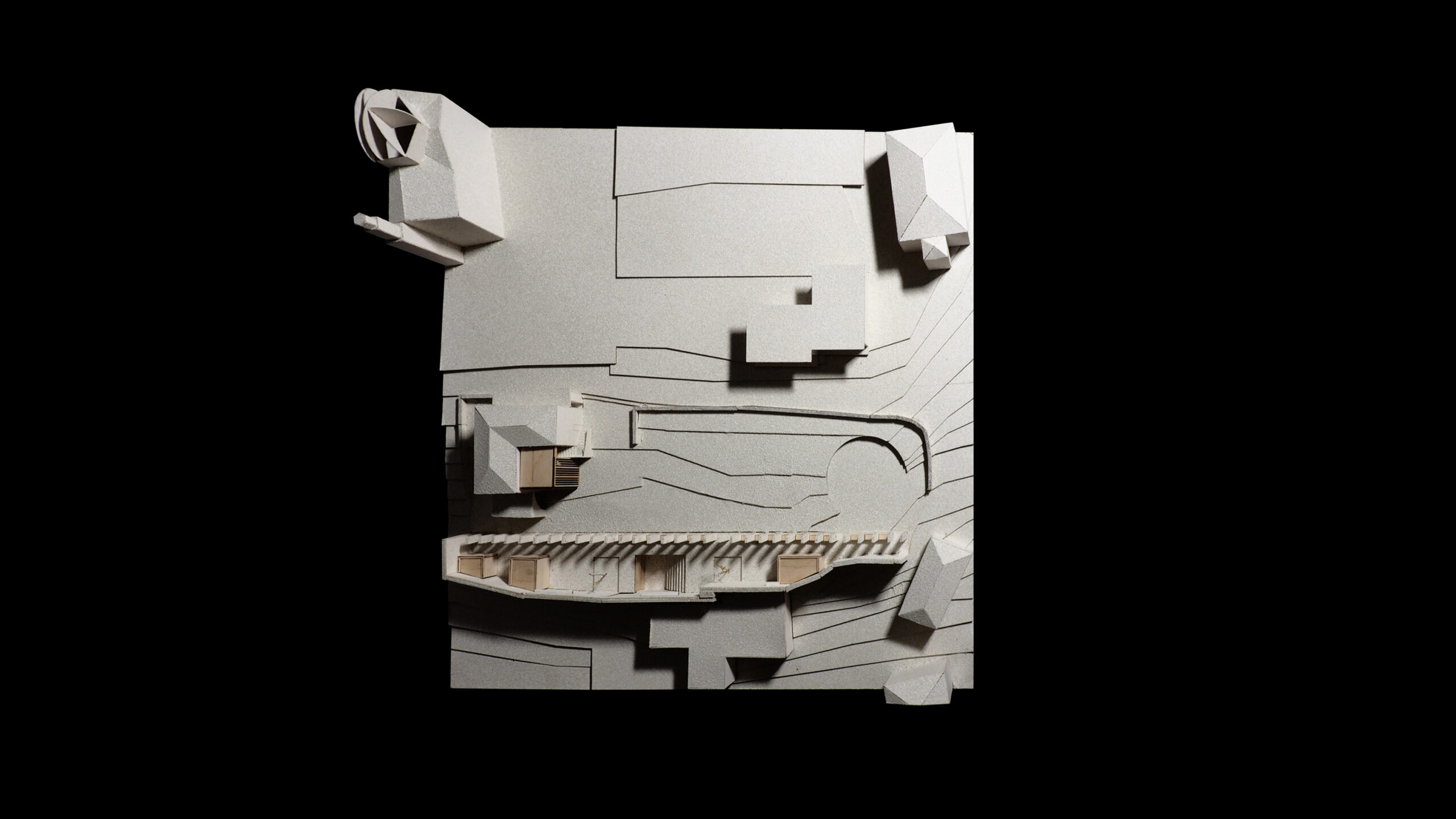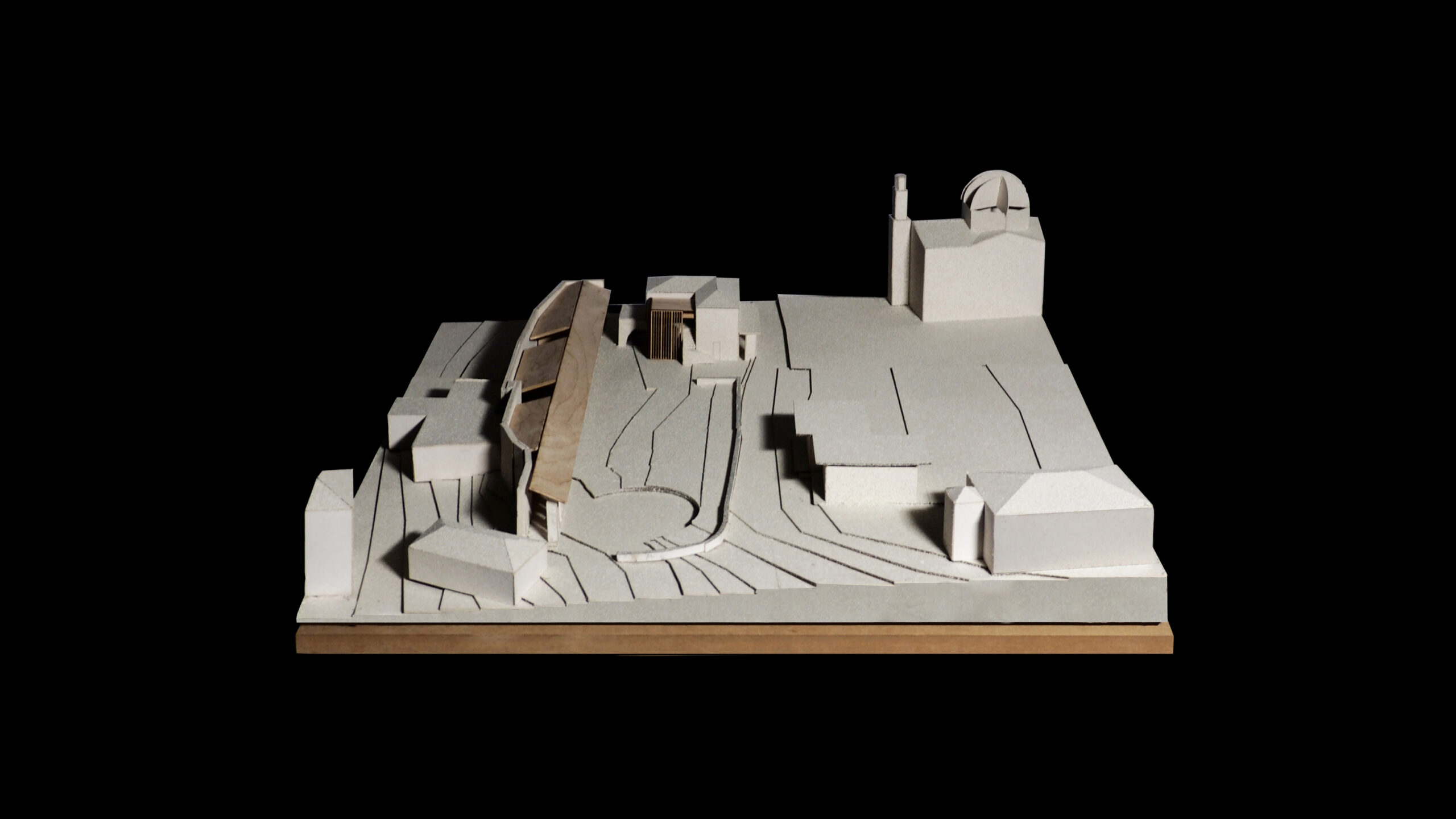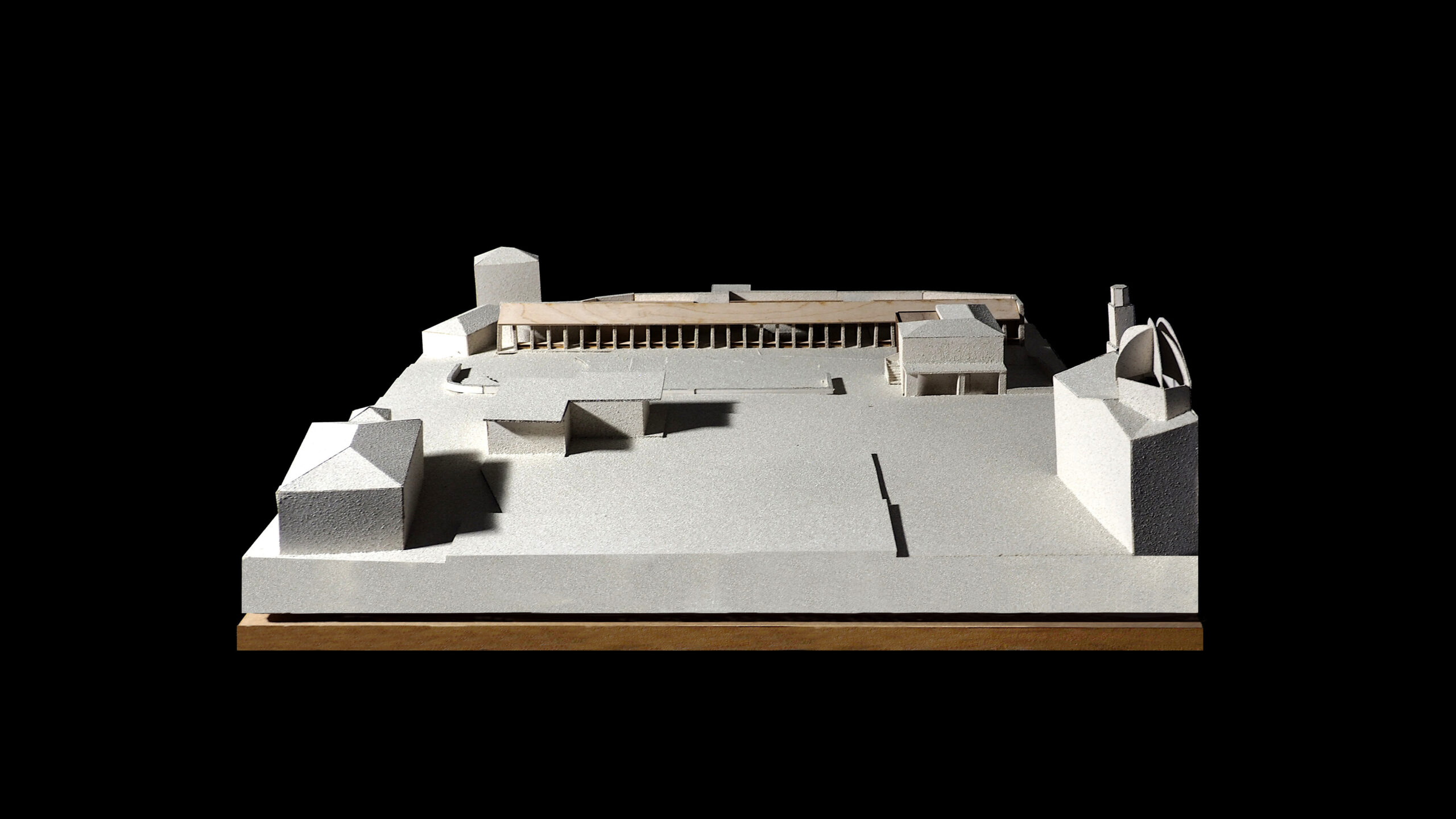
In Neochori, one of the mountain villages of Mani, a family approached us with a plot at the edge of the settlement. The site features a preserved stone house, a traditional aloni, and an extensive garden that forms a threshold between the dense village fabric and the open landscape. What initially appeared as a conventional commission soon raised broader questions about habitation, resilience, and the pressures shaping contemporary rural settlements.
In our early discussions, the family described the growing number of new residents who choose to settle in Neochori and its neighbouring villages. They noted the absence of shared spaces and basic infrastructure that could support year-round communal life, particularly during the winter, when social interaction becomes limited. At the same time, they expressed concerns about the decreasing availability of affordable housing, exacerbated by tourism and rising property values. These concerns revealed a structural imbalance: the contrast between an intense, tourism-driven summer and a dormant winter that threatens to weaken local identity and disrupt everyday continuity.
This context reframed the project as a response not only to individual needs but to broader environmental and social conditions. Together with the family, we developed a programme that addresses these issues directly: a cultural and community centre, a small kafeneio and gastronomy hub, workshop spaces, affordable housing units, and two guest houses for artistic and research residencies. From the outset, we aimed to preserve the openness of the plot—a rare condition within the dense traditional settlement—and to maintain the visual relationship between the stone house and the aloni.
Five main synthetic gestures guide the project.
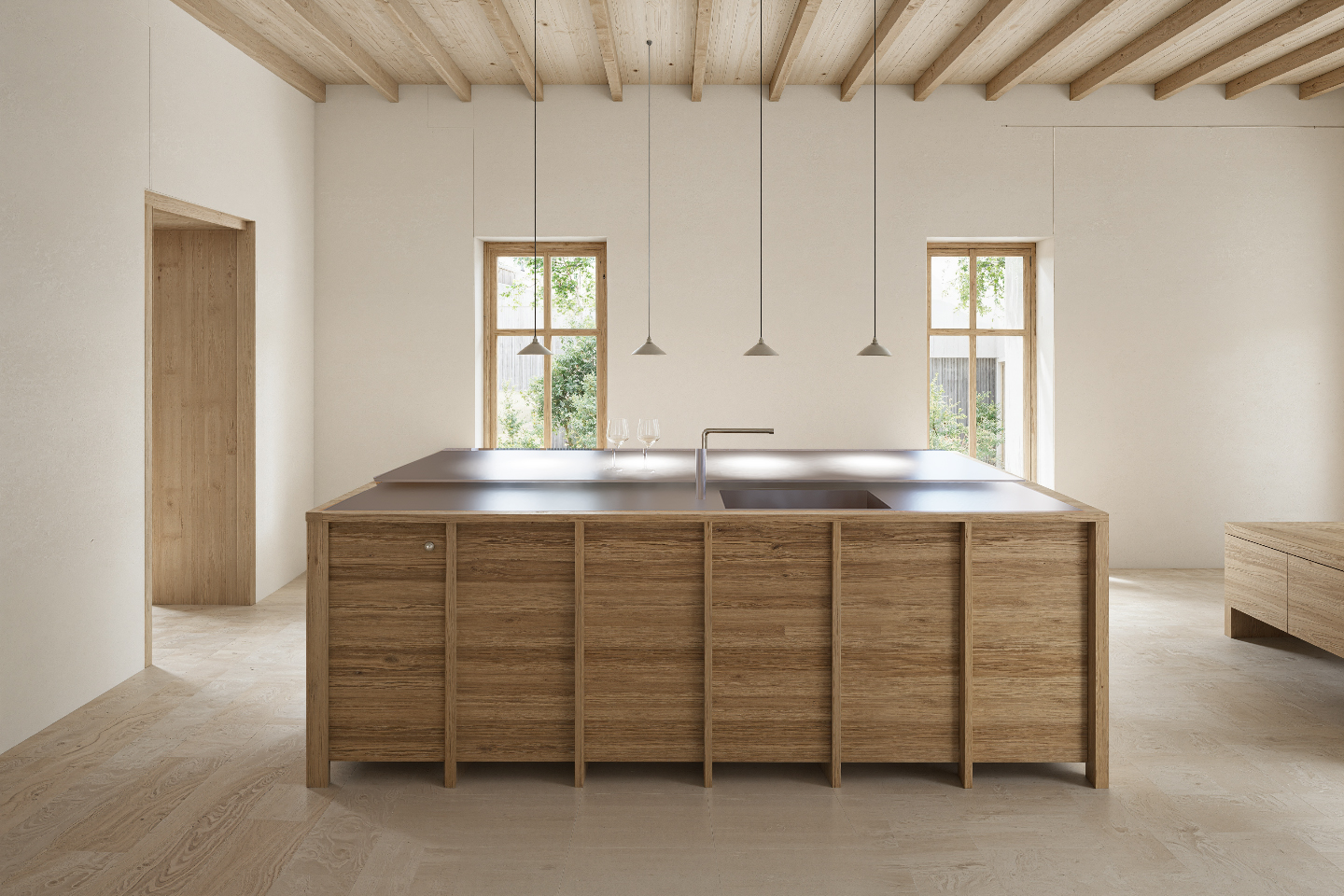
First, the existing two-storey L-shaped stone house—protected by law—is renovated and transformed into two affordable dwelling units. Earlier concrete additions are removed and replaced by a lightweight wooden structure with adjustable blinds, forming a semi-open liakoto on each level. This layer integrates auxiliary functions such as WC, storage, and service spaces while preserving the stone core intact.
Second, the low dry-stone walls along the surrounding streets are retained, but a higher structural wall is introduced along the eastern boundary. This establishes a clear threshold with neighbouring residences while allowing the interior of the plot to remain open toward the village.
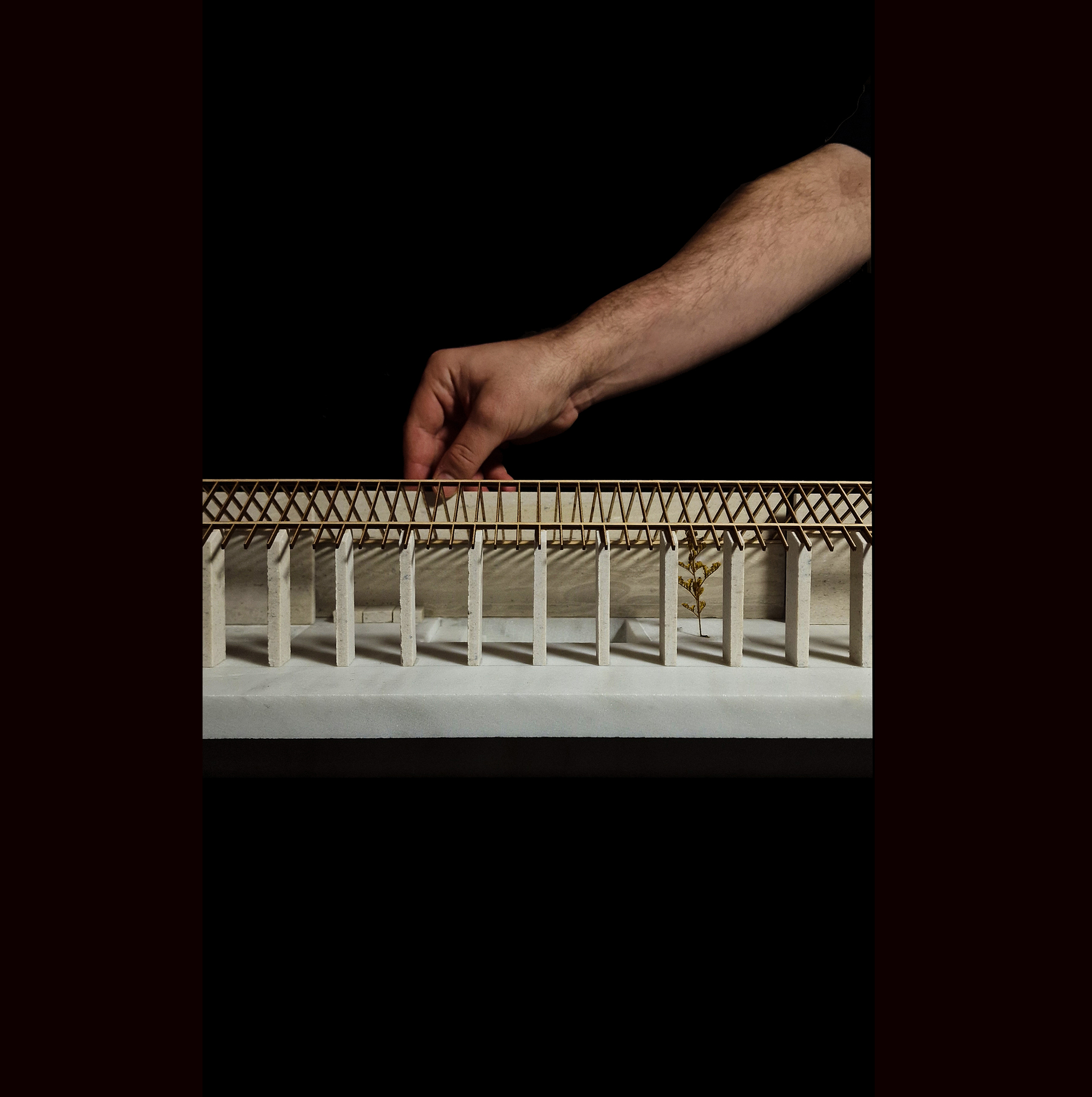
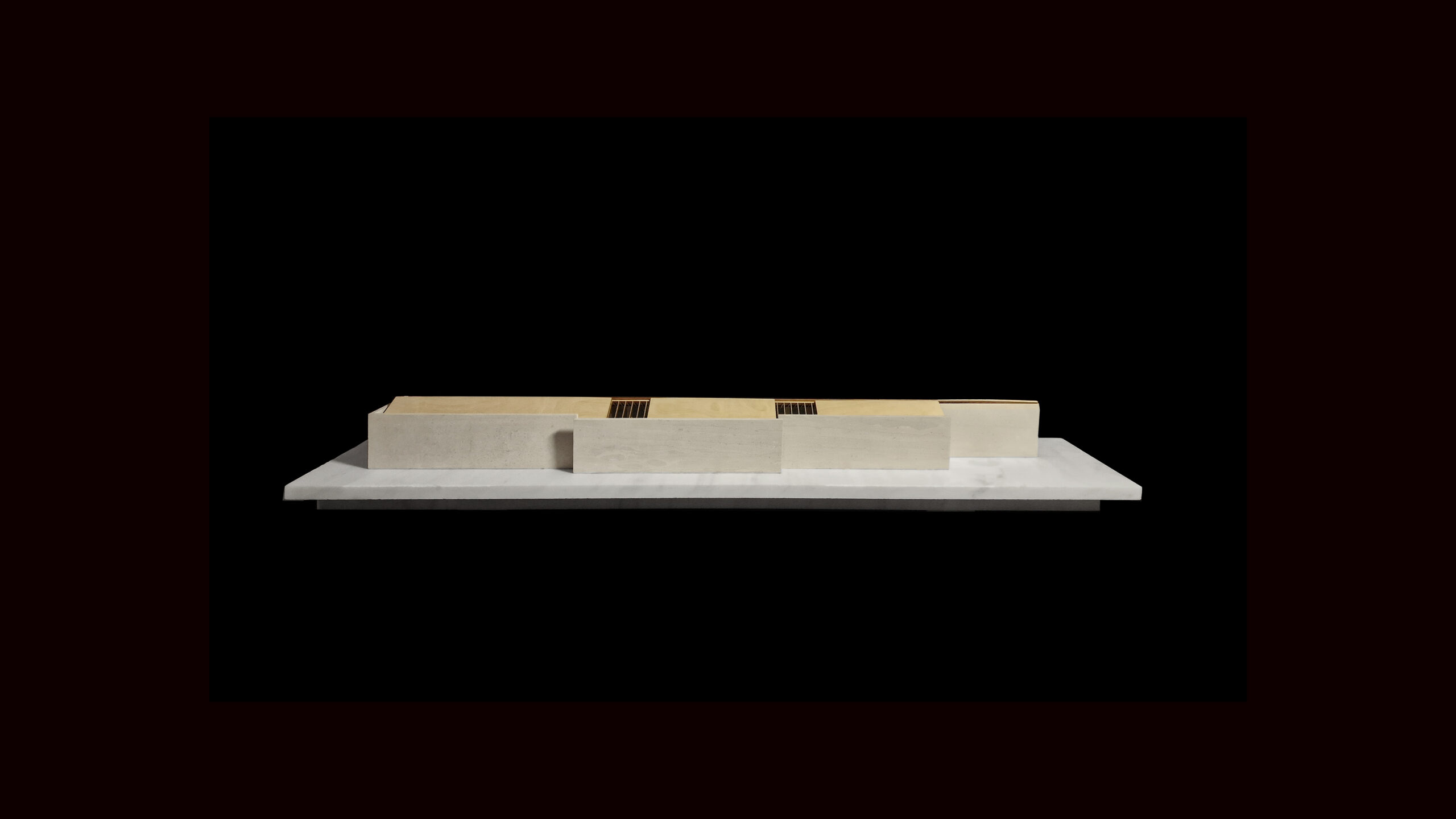
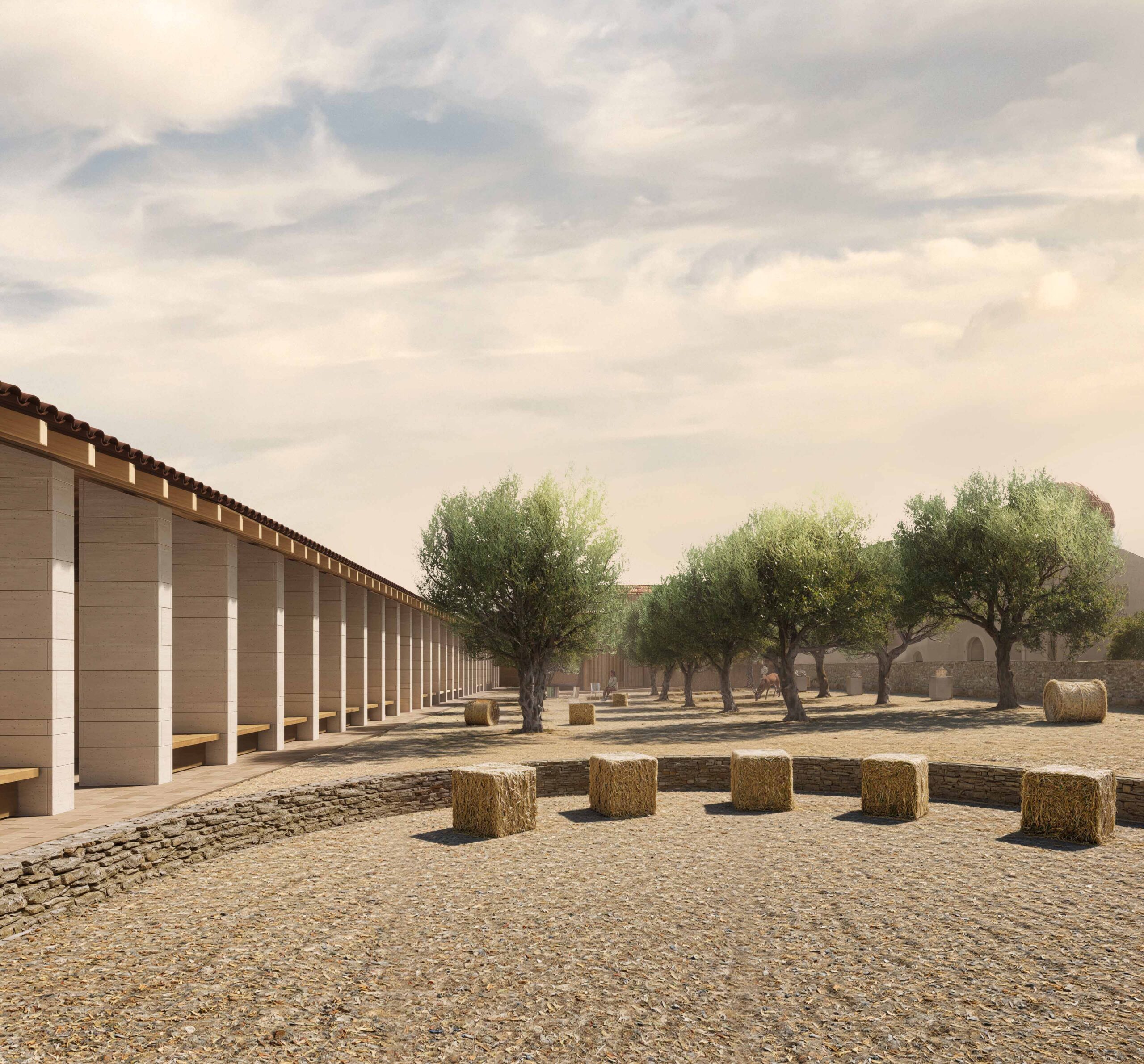
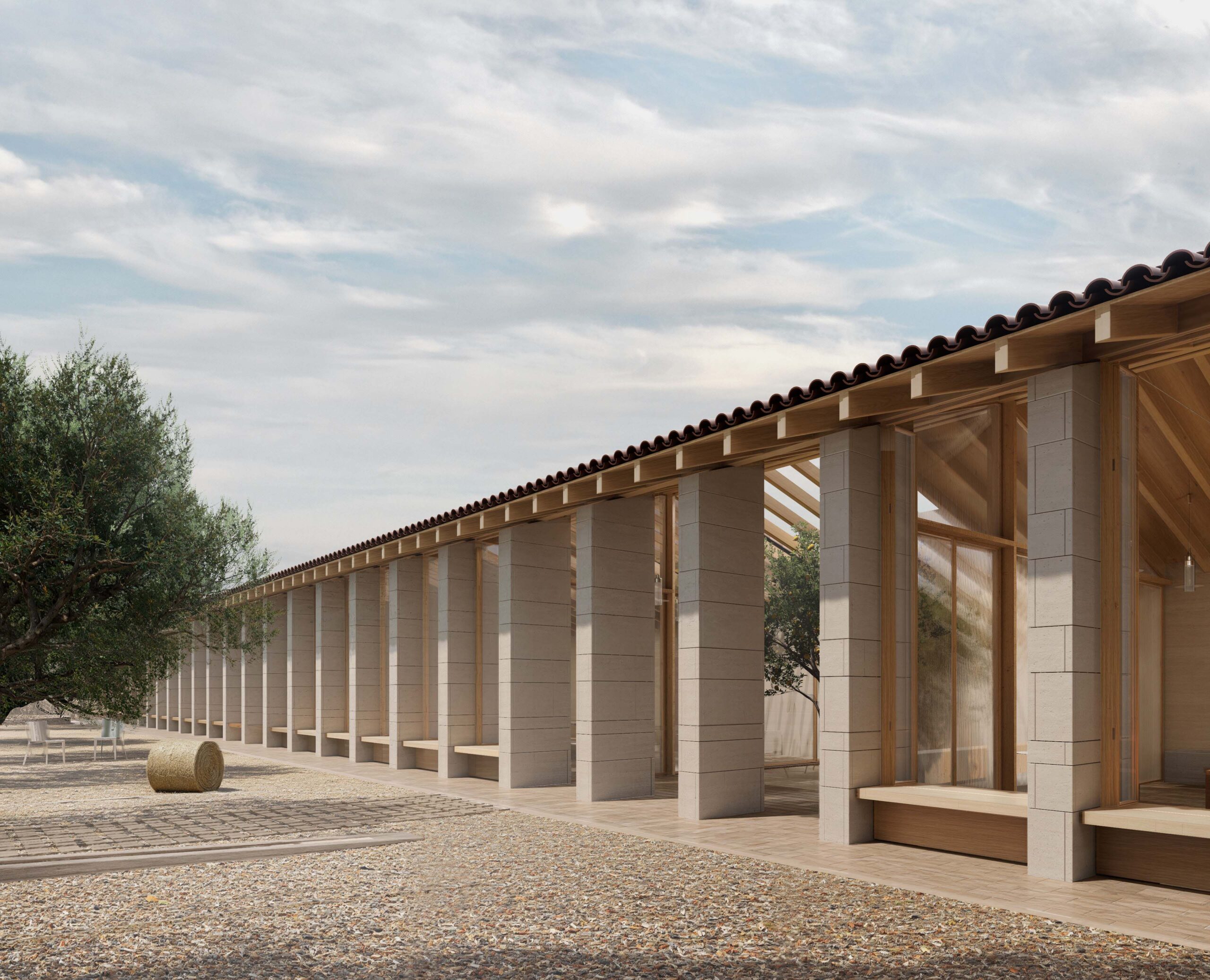
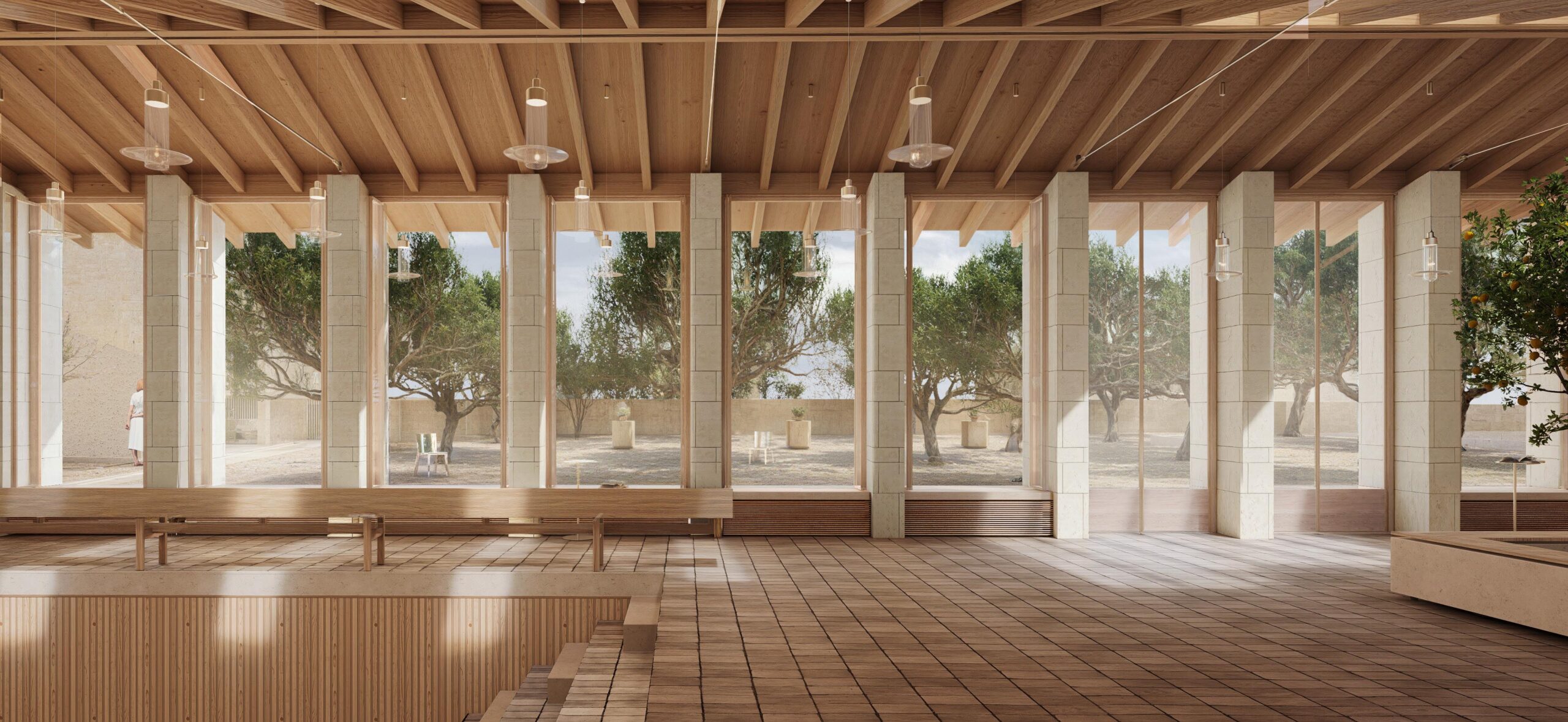
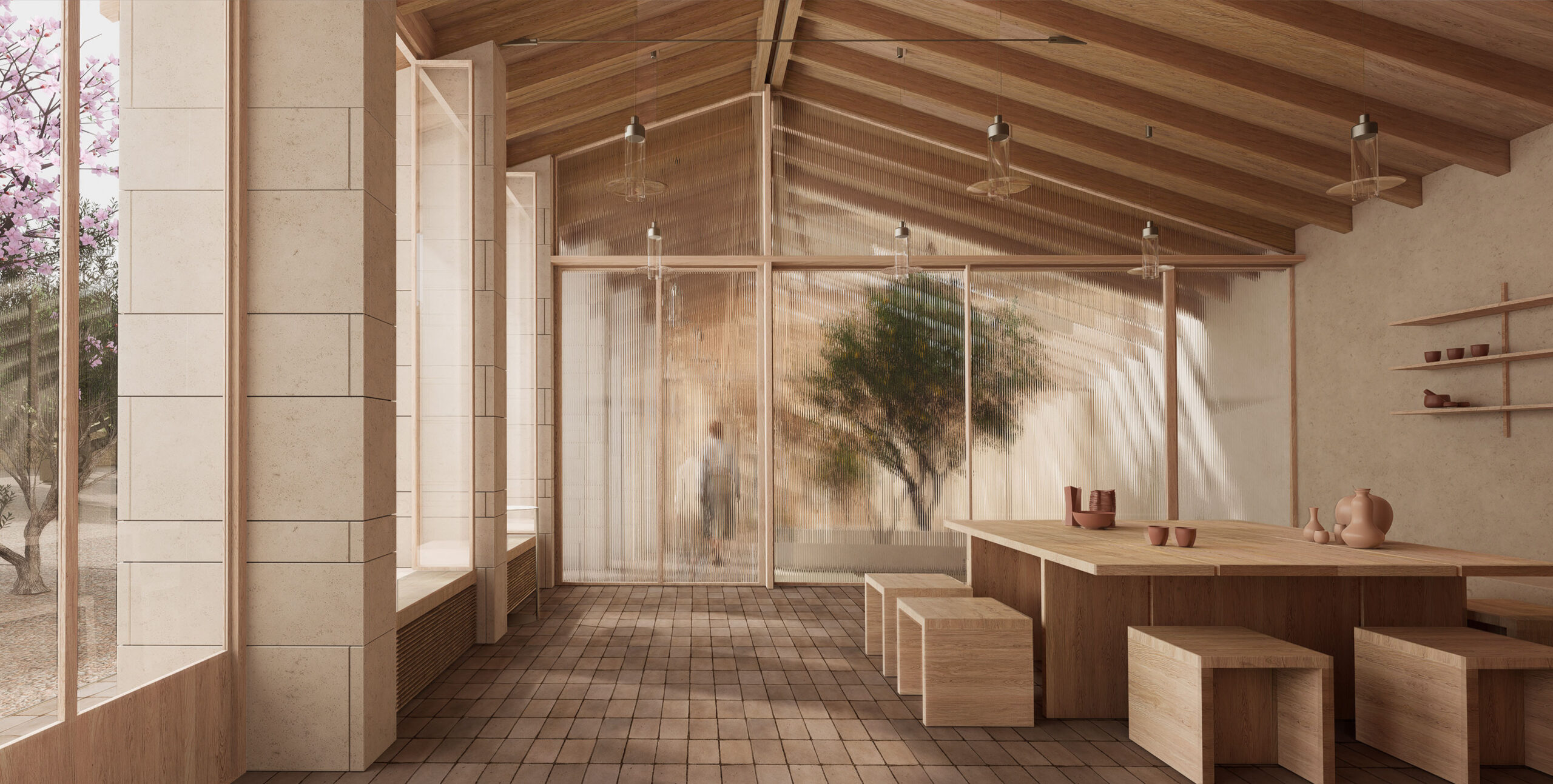
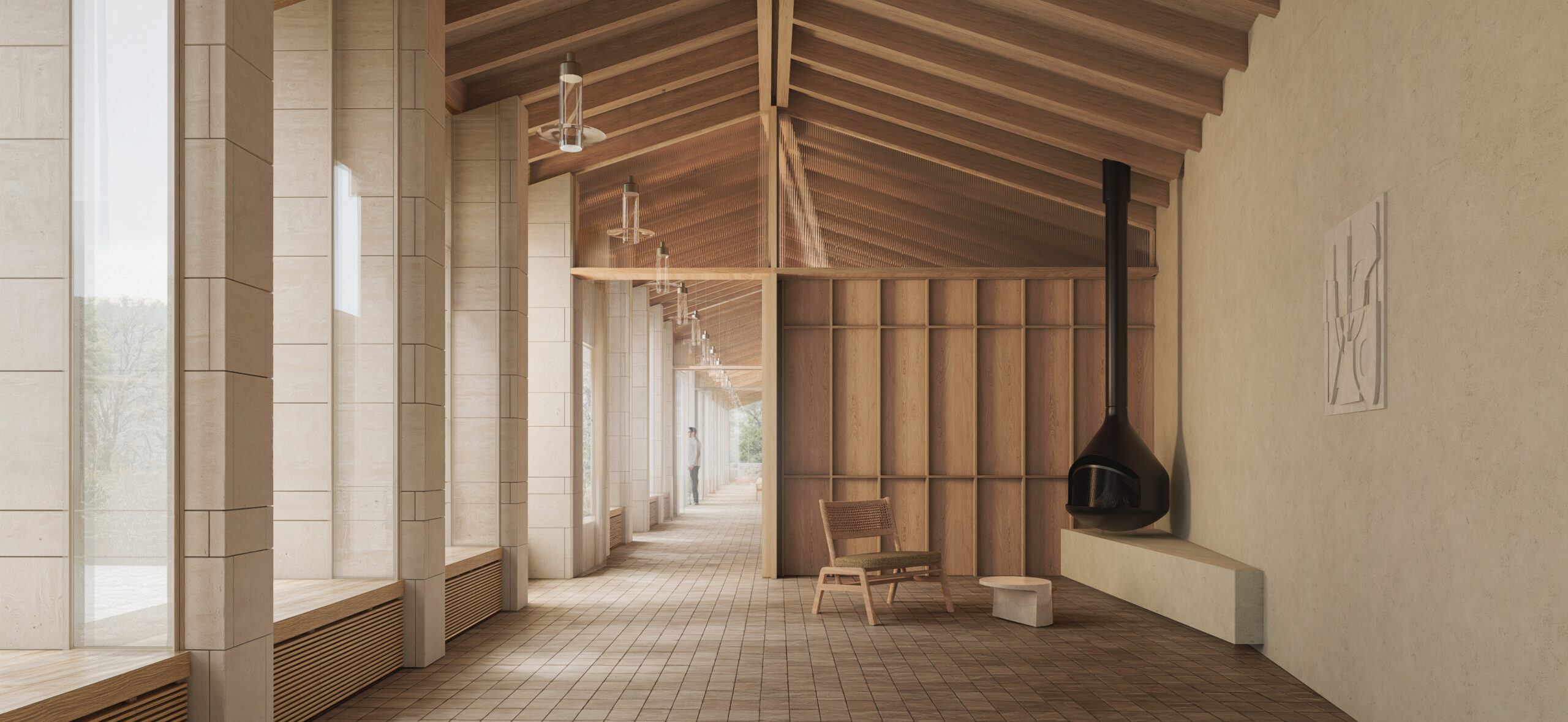
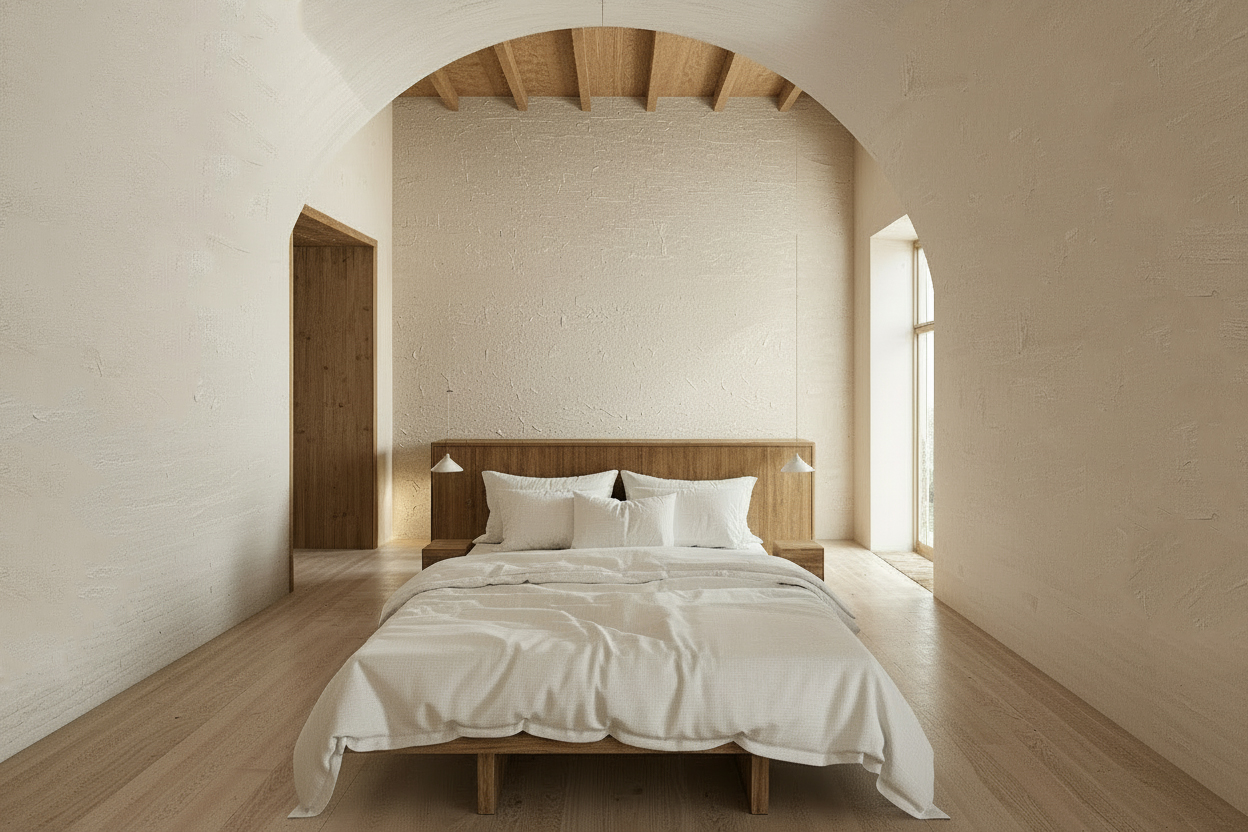
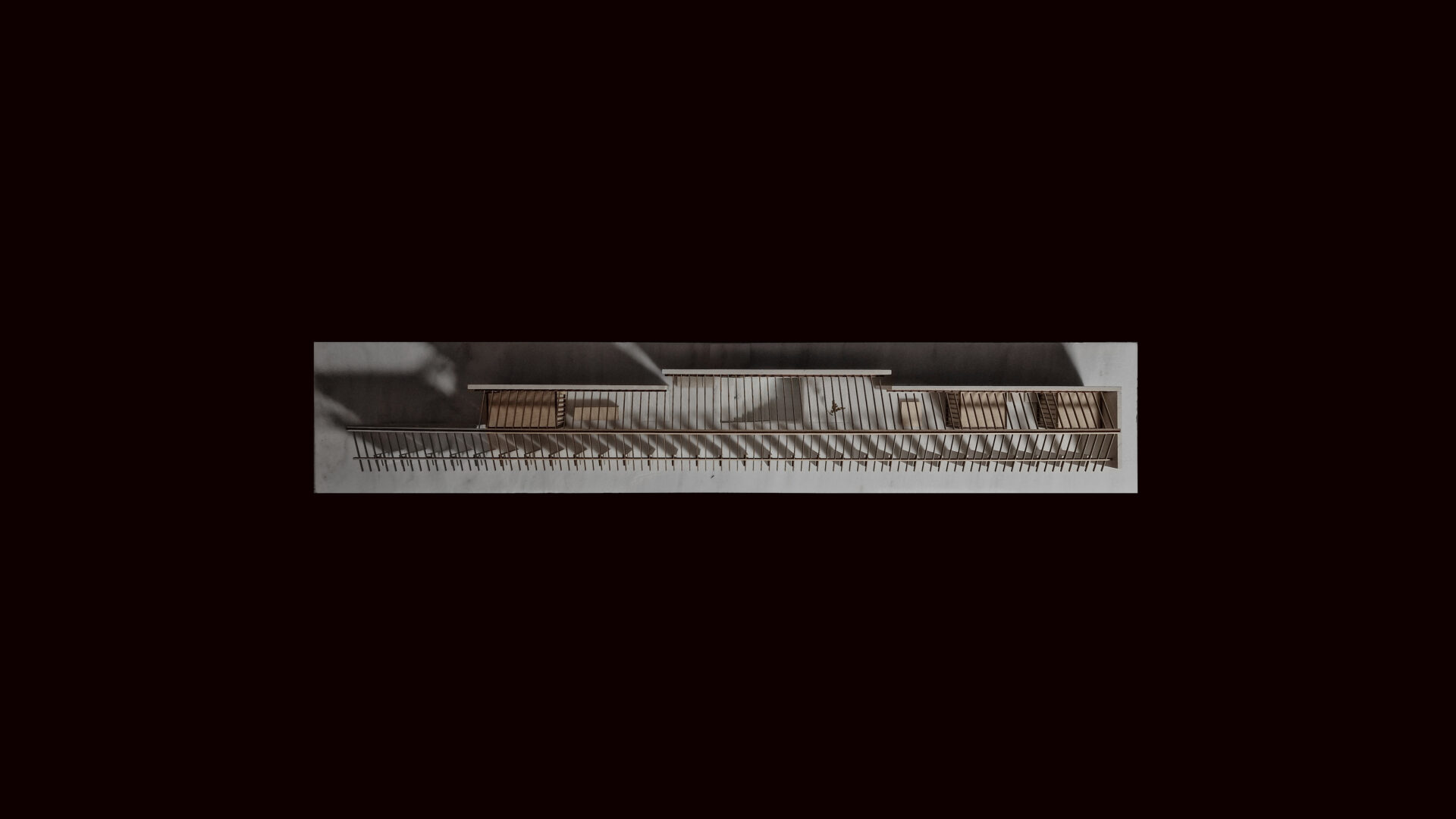
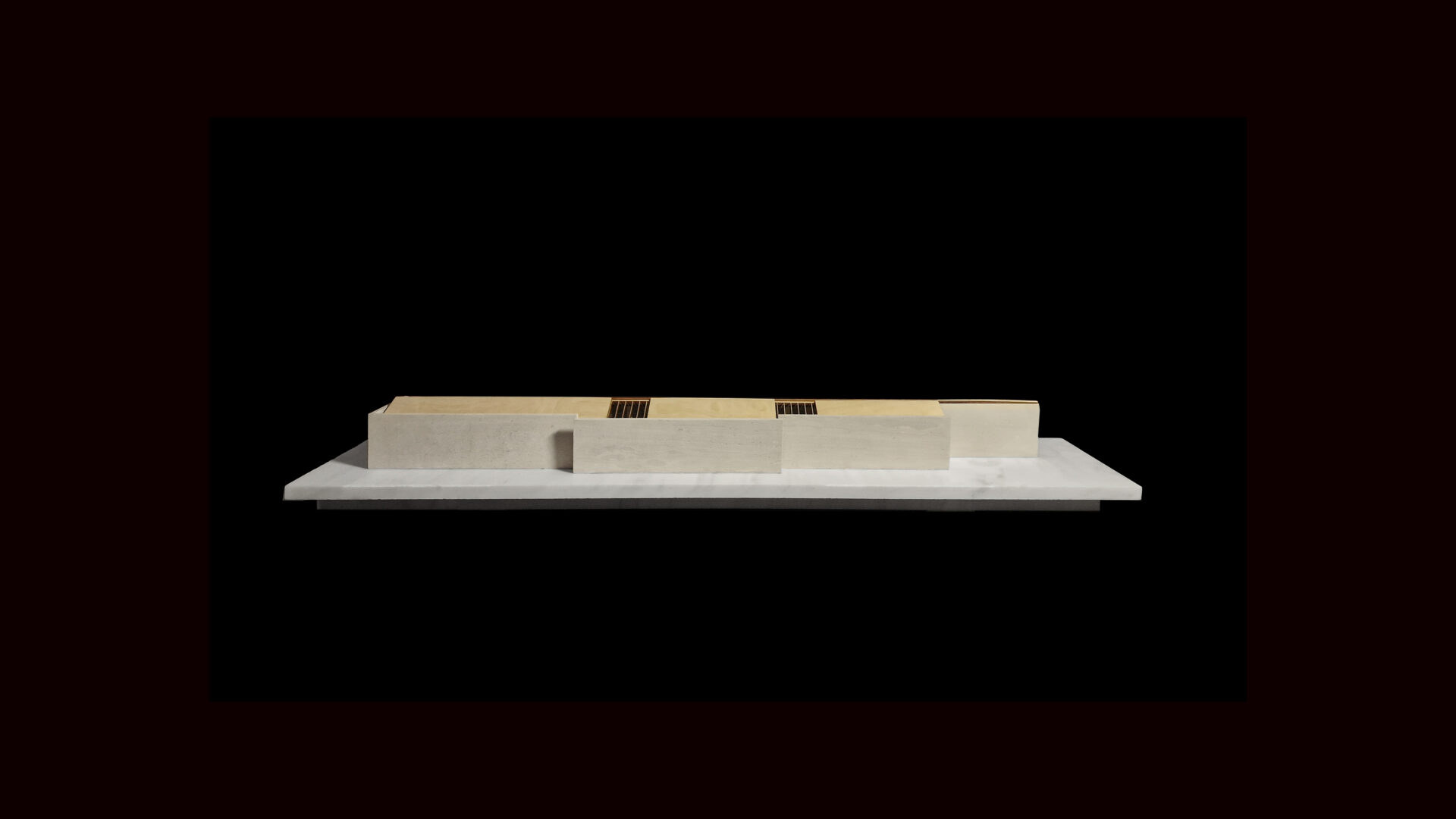
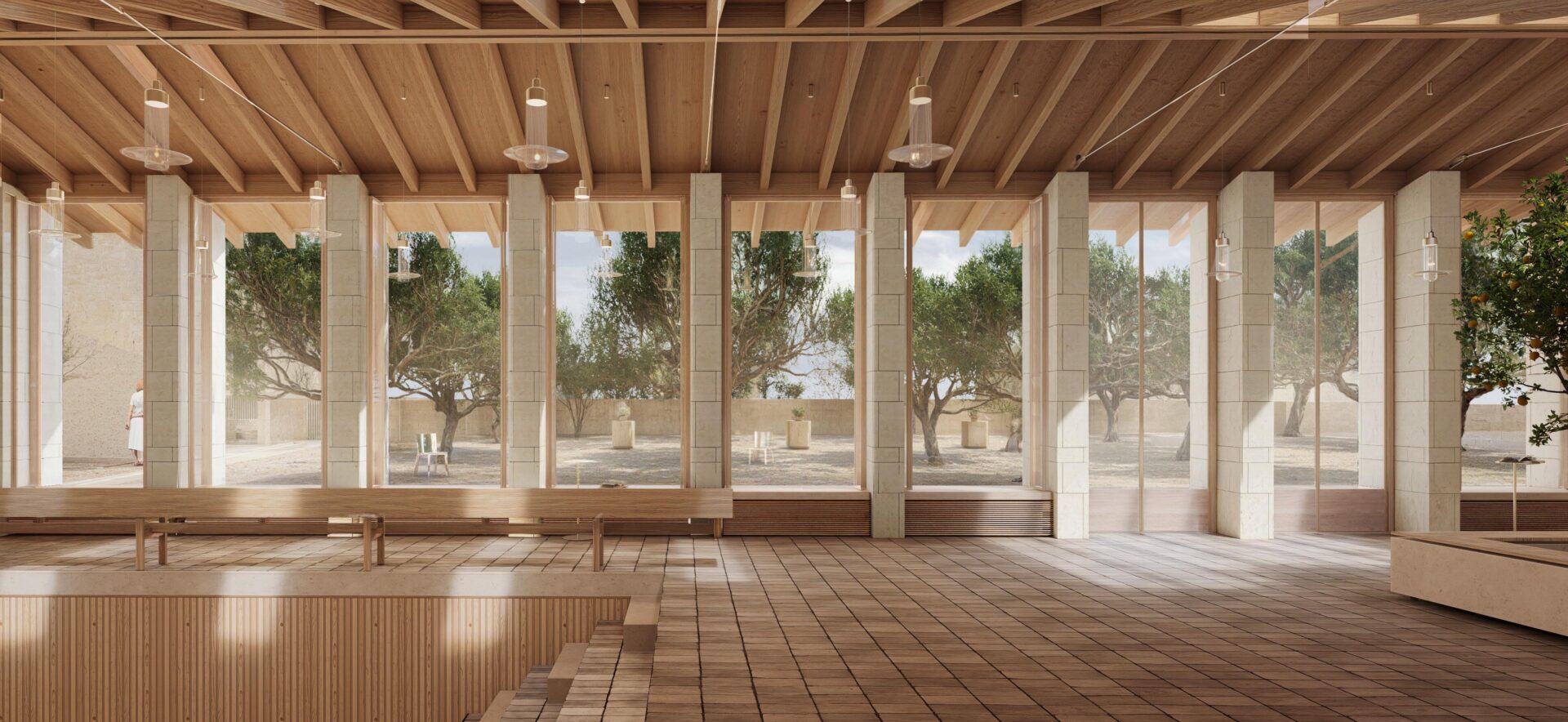
Third, the community and cultural centre is placed along the full extent of the eastern boundary, creating a linear link between the house and the aloni. This volume forms a calibrated edge to the garden and provides a neutral backdrop for the programme’s activities. Sequential rooms and subtle enfilades reinforce the connection between interior spaces and the landscape.
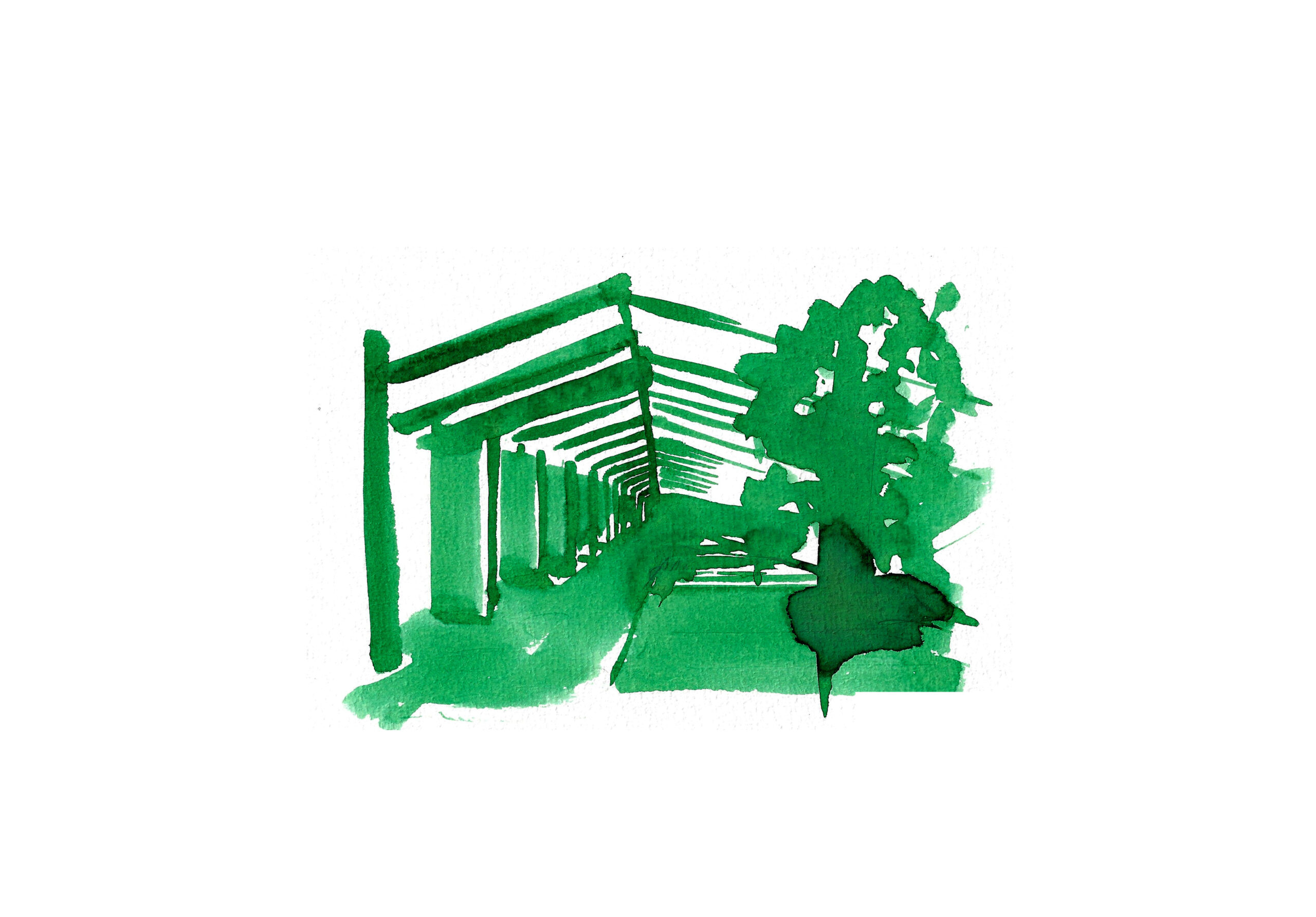
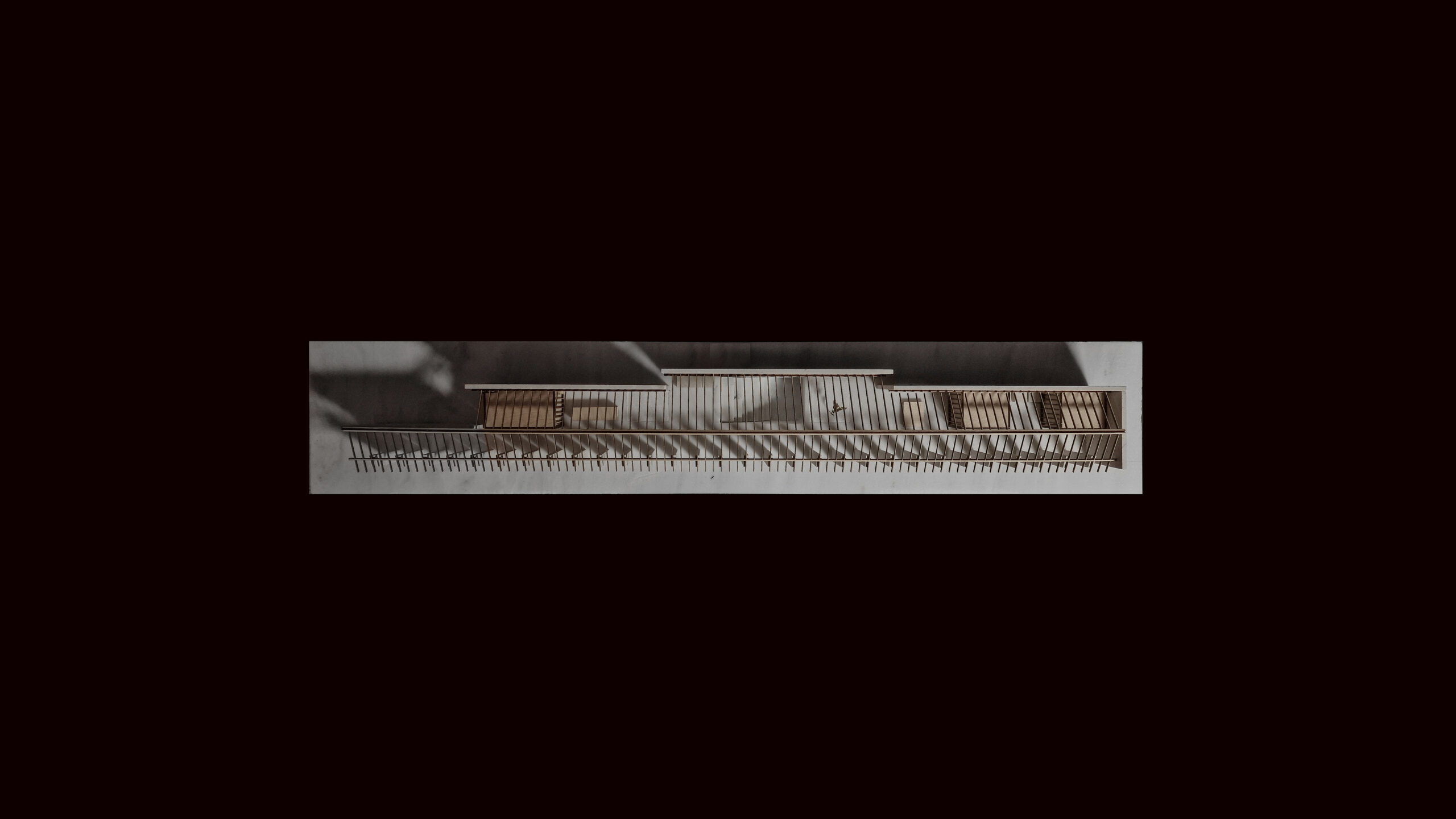
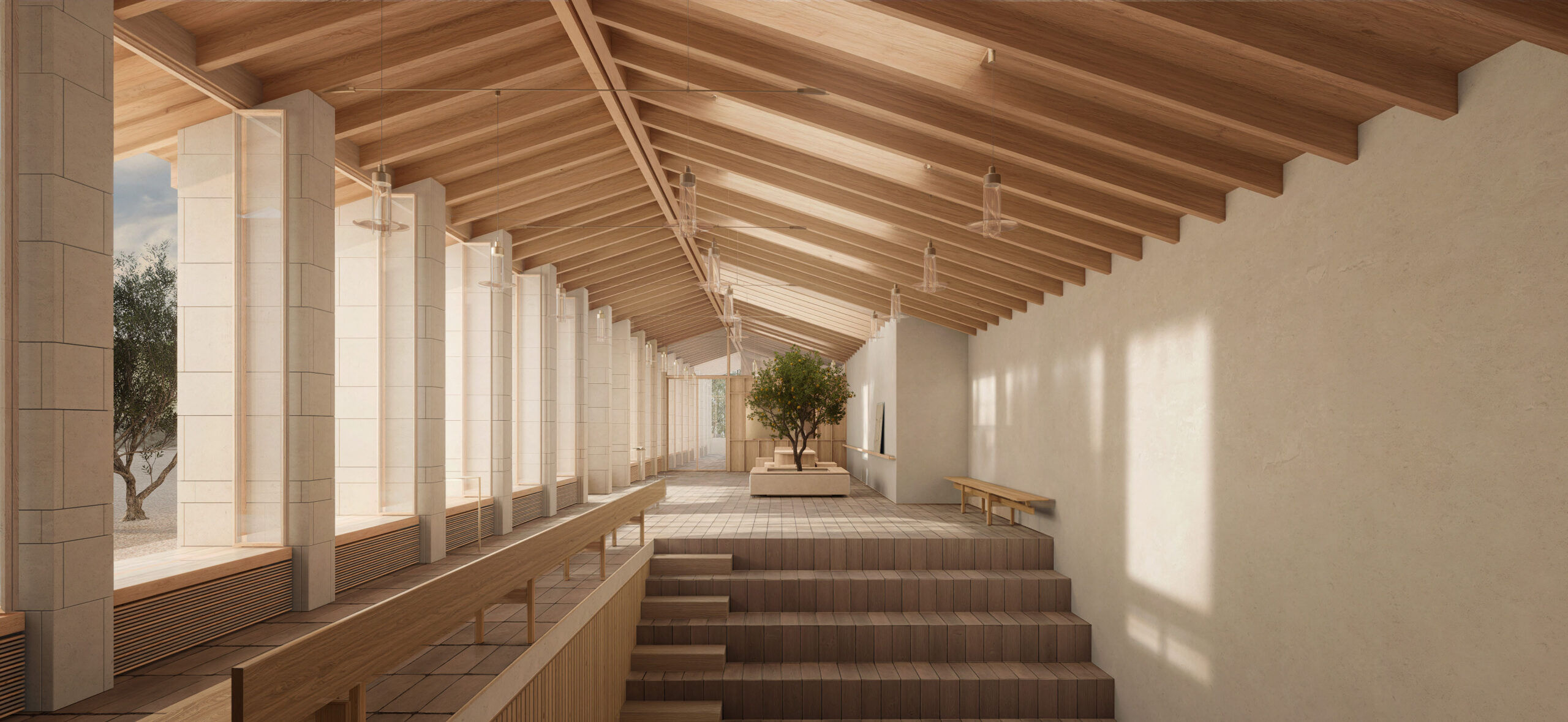
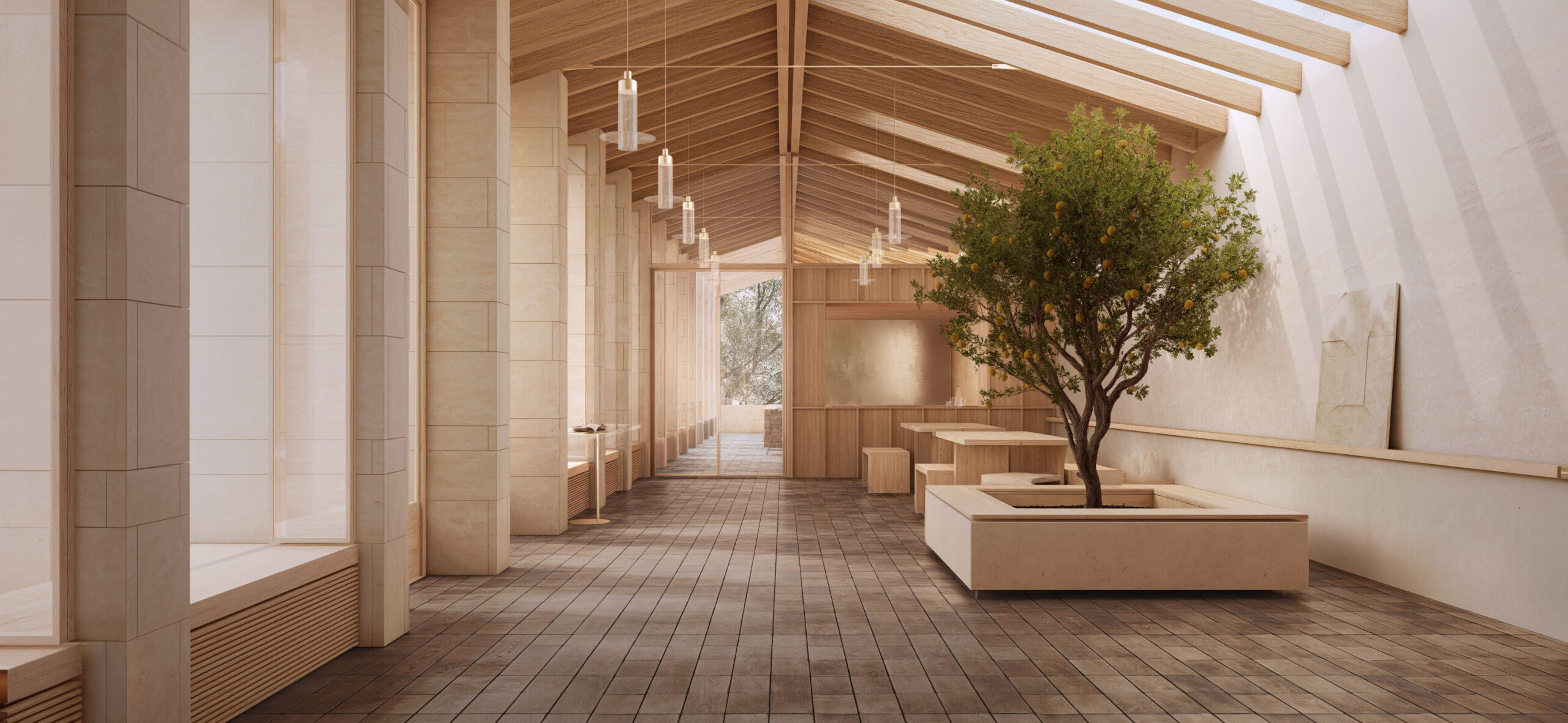
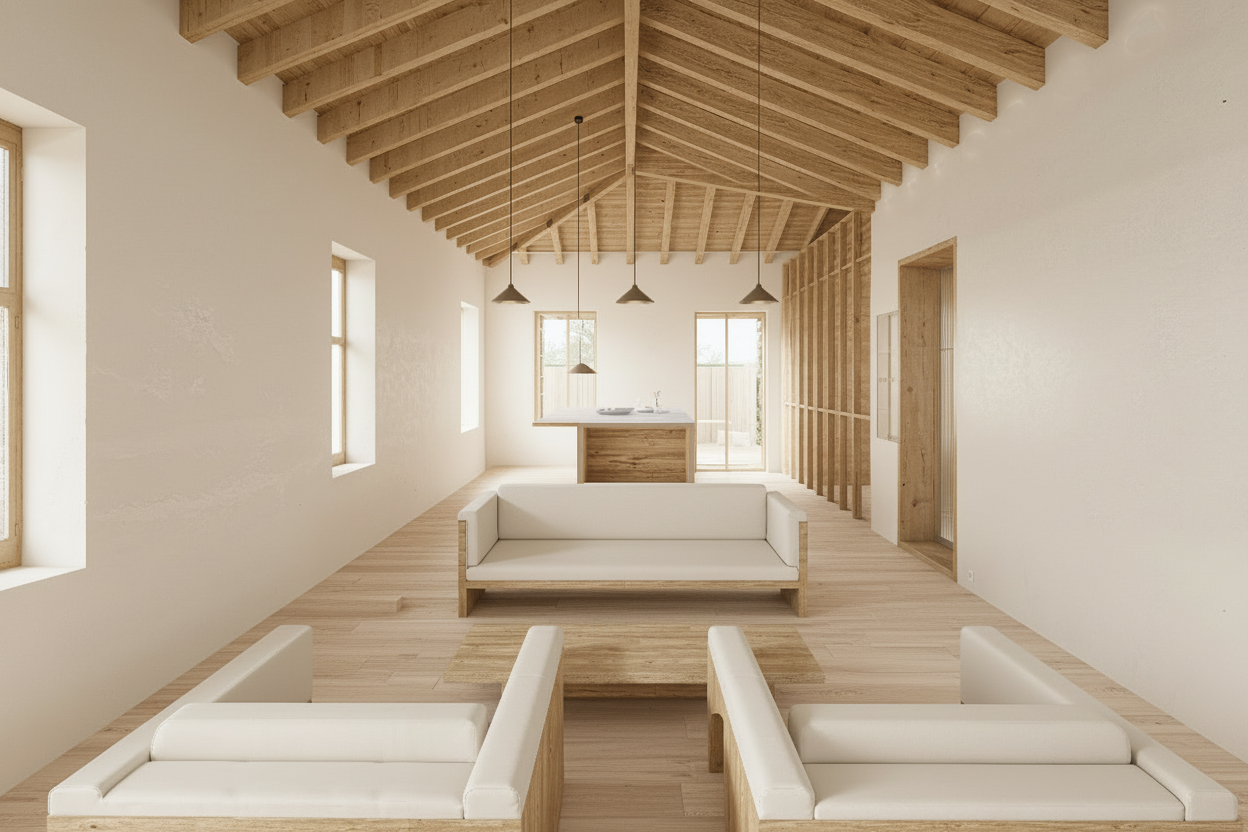
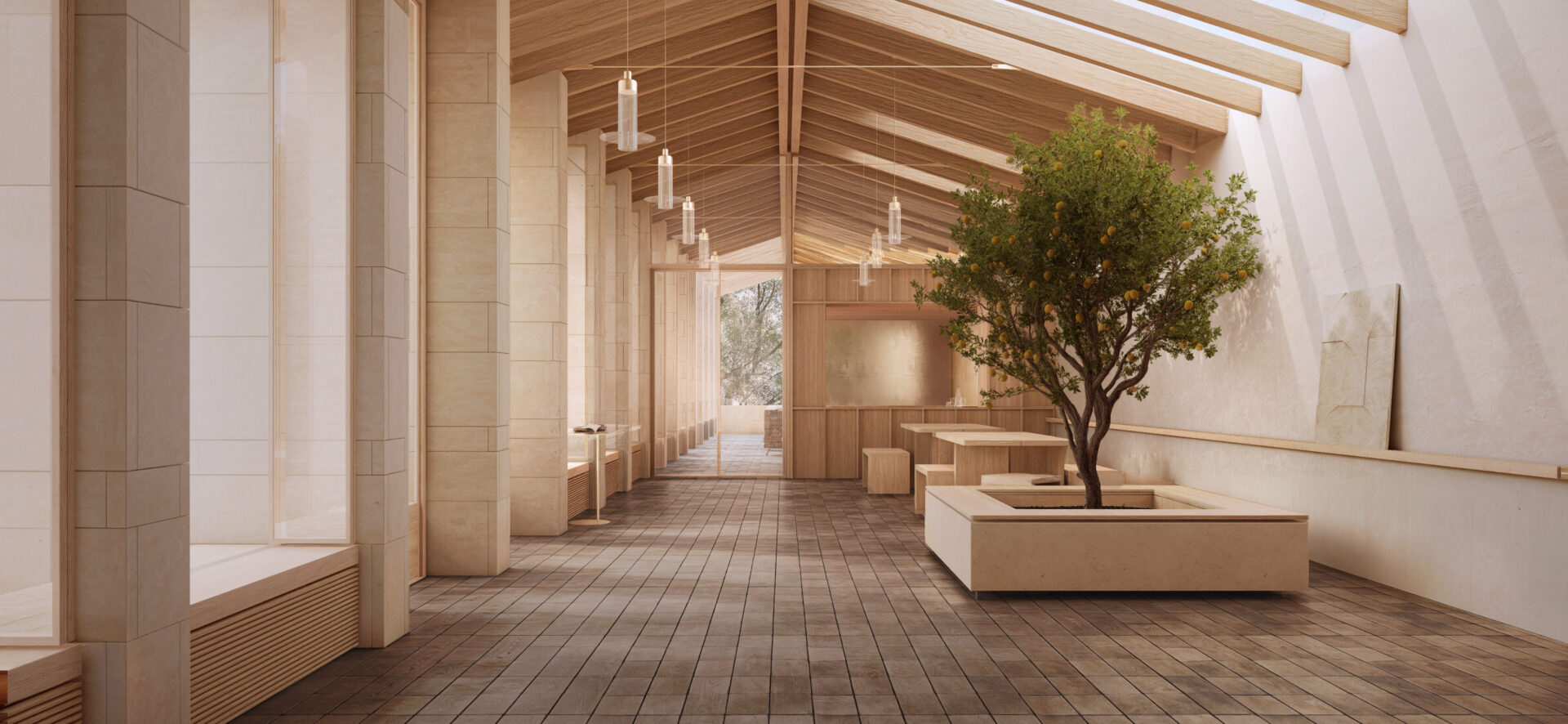
Fourth, a pitched wooden roof generates high, continuous interior volumes while responding to regulatory constraints. The ridge emphasises the building’s longitudinal axis, defining a 60-metre zone along the western boundary that functions as an extended circulation and seating area. At the same time, the northern side accommodates the more programmatically assigned spaces. Skylights regulate daylight and ventilation, improving comfort and reducing energy demand and the building’s carbon footprint.
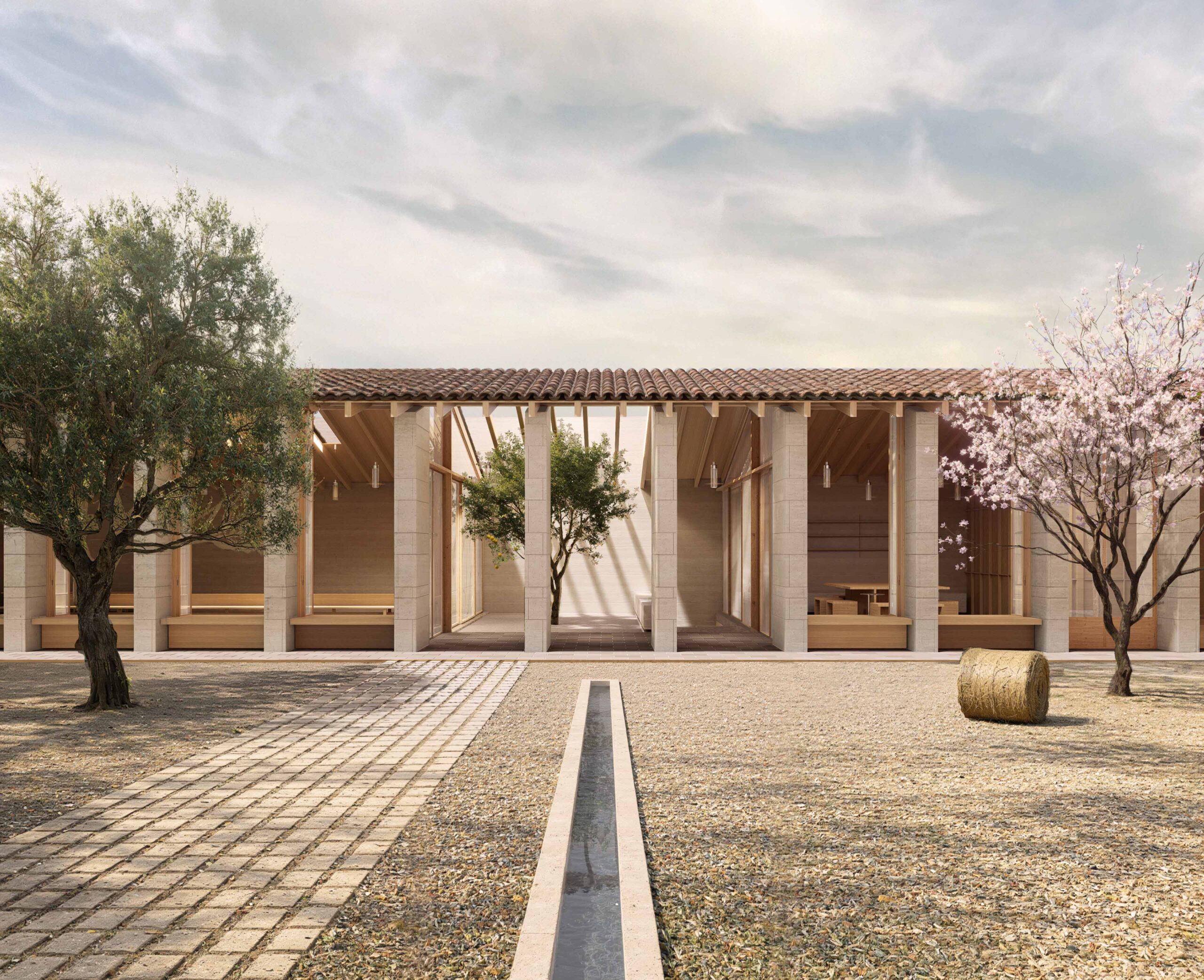
Fifth, two atriums mark the main entrances and divide the linear building into three distinct zones: the central community centre, the southern coffee and gastronomy hub, and the northern workshop area, supporting also the artistic and research residencies when necessary. Compact wooden service volumes can open or close as needed, condensing all functional requirements and enabling flexible use across the three zones.
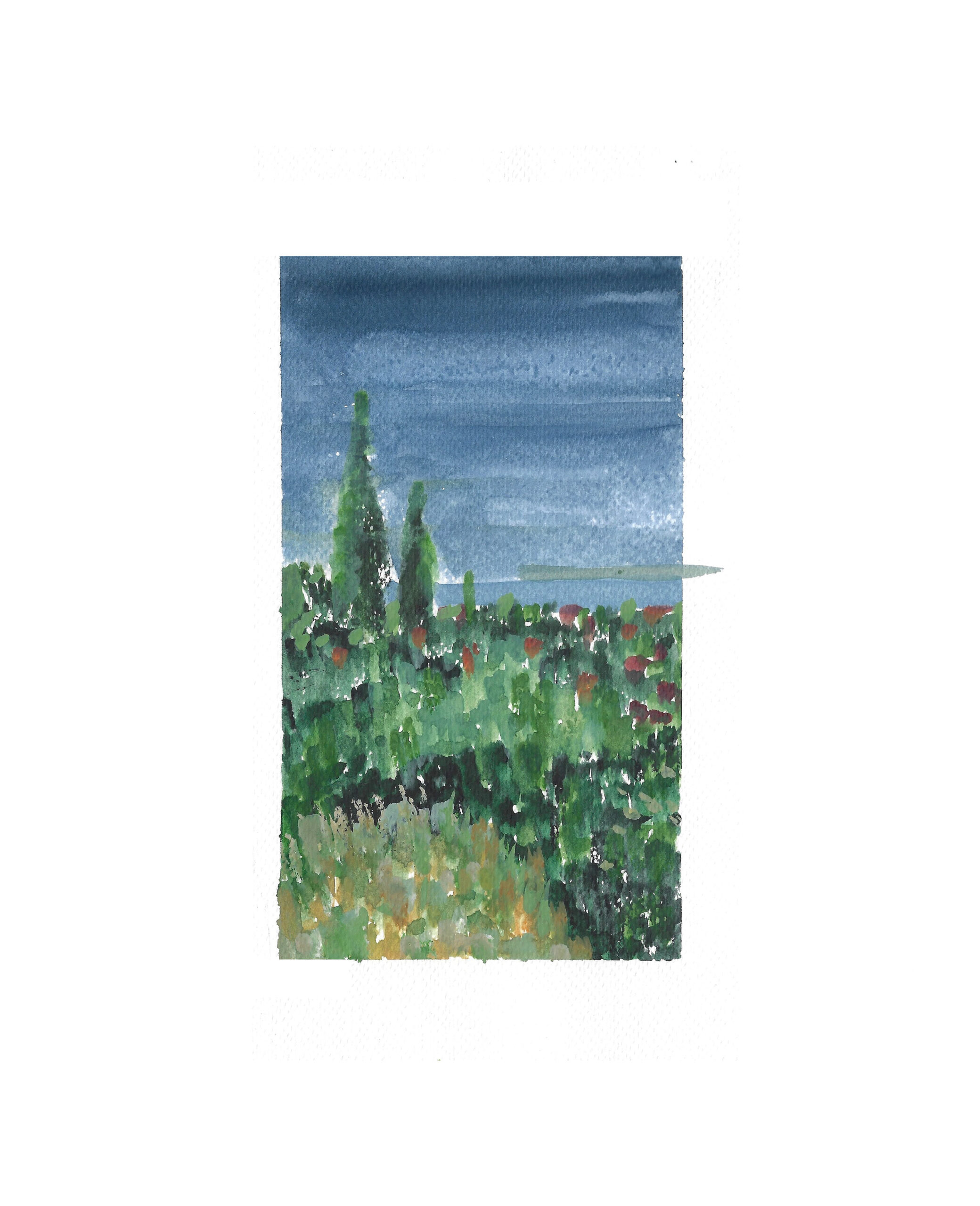
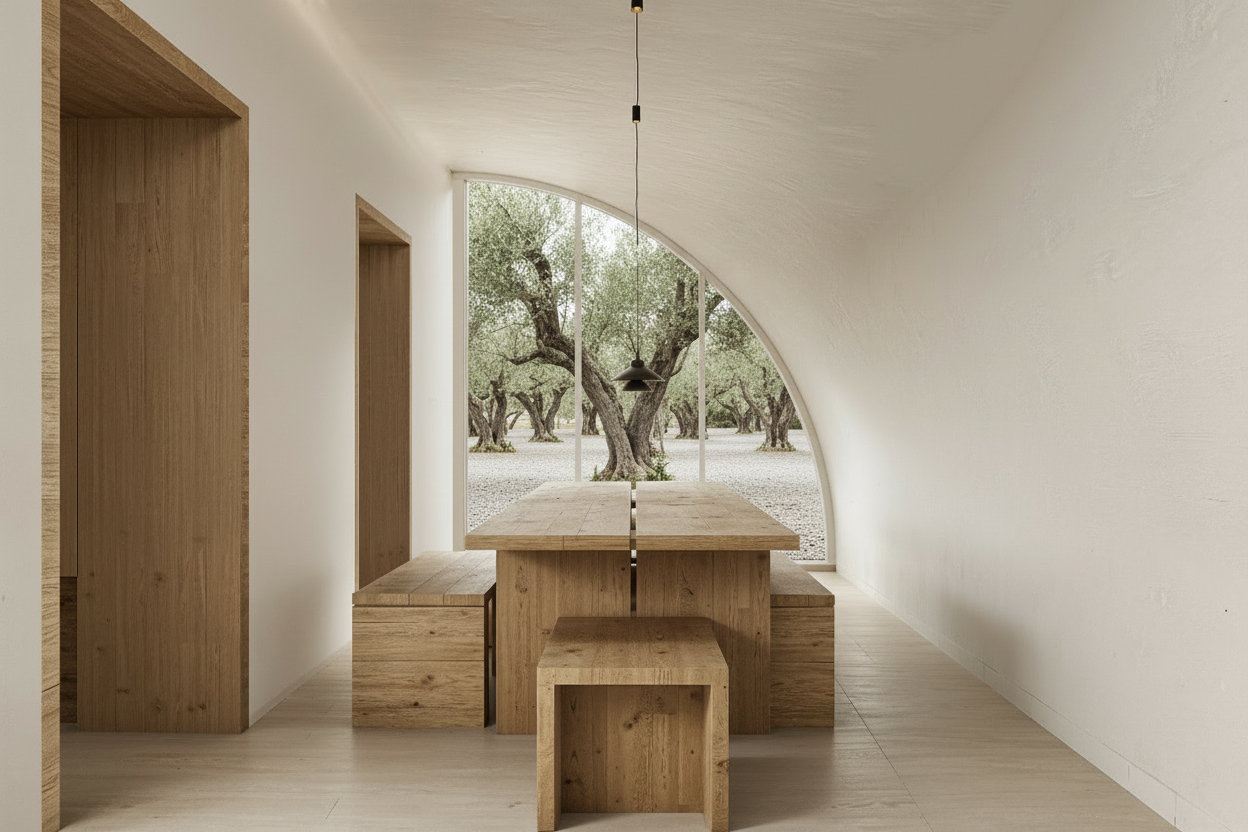
The landscape design reinforces these gestures. Local gravel is applied across the site, and an olive grove—arranged in a grid based on the structural rhythm of the main building—is placed between the house and the aloni, strengthening the transition between interior, semi-outdoor, and outdoor areas. A fountain with a linear drainage channel marks the western entrance, while seven stone podiums are positioned throughout the grove to display works by local artists.
The material palette draws from long Mani’s building traditions. Koimisiri stone forms a hybrid thin-wall system combining stone and concrete, glued-laminated timber is used for the roof and functional volumes, handmade terracotta tiles are proposed for the flooring, and stainless steel is applied in selected details and hygiene-related surfaces. Conceived as a mediating structure between dwelling, landscape, and village, the Aloni Longhouse provides a durable framework for year-round communal life to unfold.
As a discreet presence at the village edge, the Aloni Longhouse holds space for what is truly shared to persist quietly in the background of everyday life. By enabling forms of gathering, learning, and exchange that remain active beyond the summer season, the project contributes a stable yet unobtrusive structure to the life of Neochori—one that supports the quiet continuities on which the village depends.
Architects: P4architecture
Design Team: Alkiviadis Pyliotis, Evangelos Fokialis, Konstantinos Pyliotis, Margarita Togia
Contributors: Angeliki Kontokosta, Panayiota Kyriakou, Demetrios Konstantinidis
Interior Design & 3D Visualization: Studio Ephyra
Civil Engineers Consultants: Skalos EPE (Demetrios Kokas)
Administrative Support Consultant: Katerina Pylioti
Mechanical & Engineering Consultant: KNS Engineers (Konstantinos Sourilas)
Architectural Models: Doussis Marble (Konstantinos Dousis, Nikolaos Doulos), Angeliki Kontokosta
Project Type: Cultural Center & Affordable Housing – Private Commission