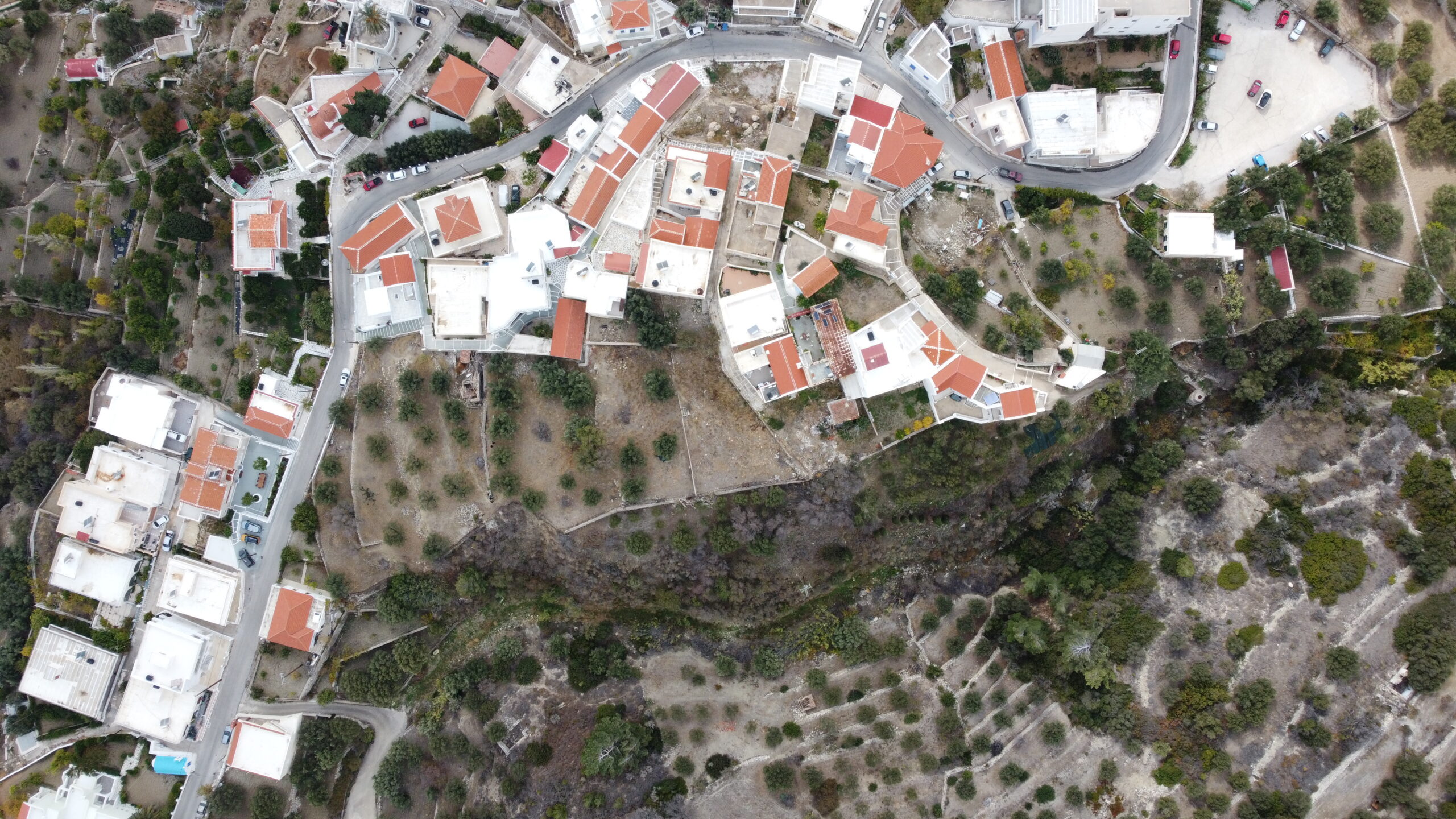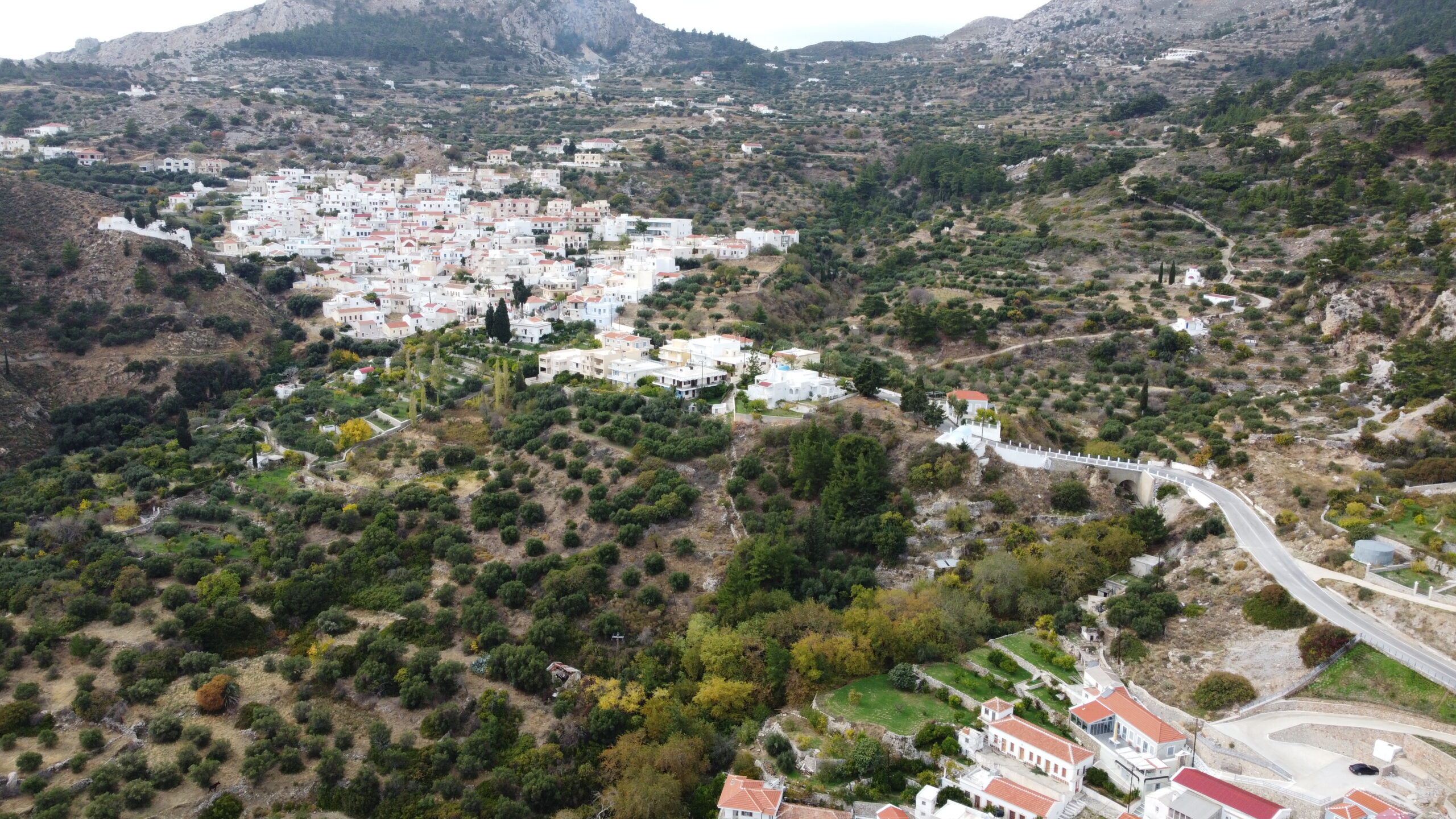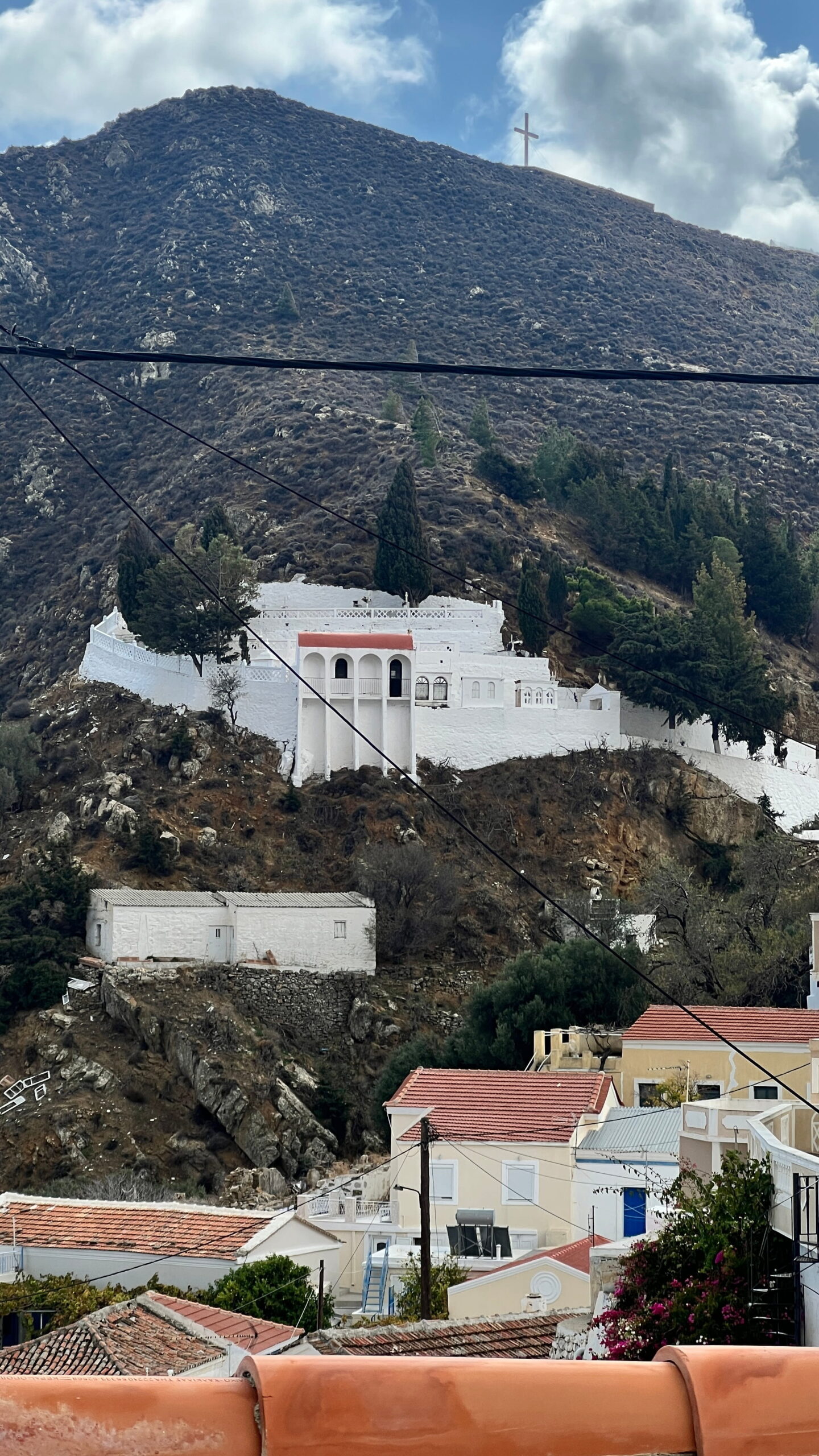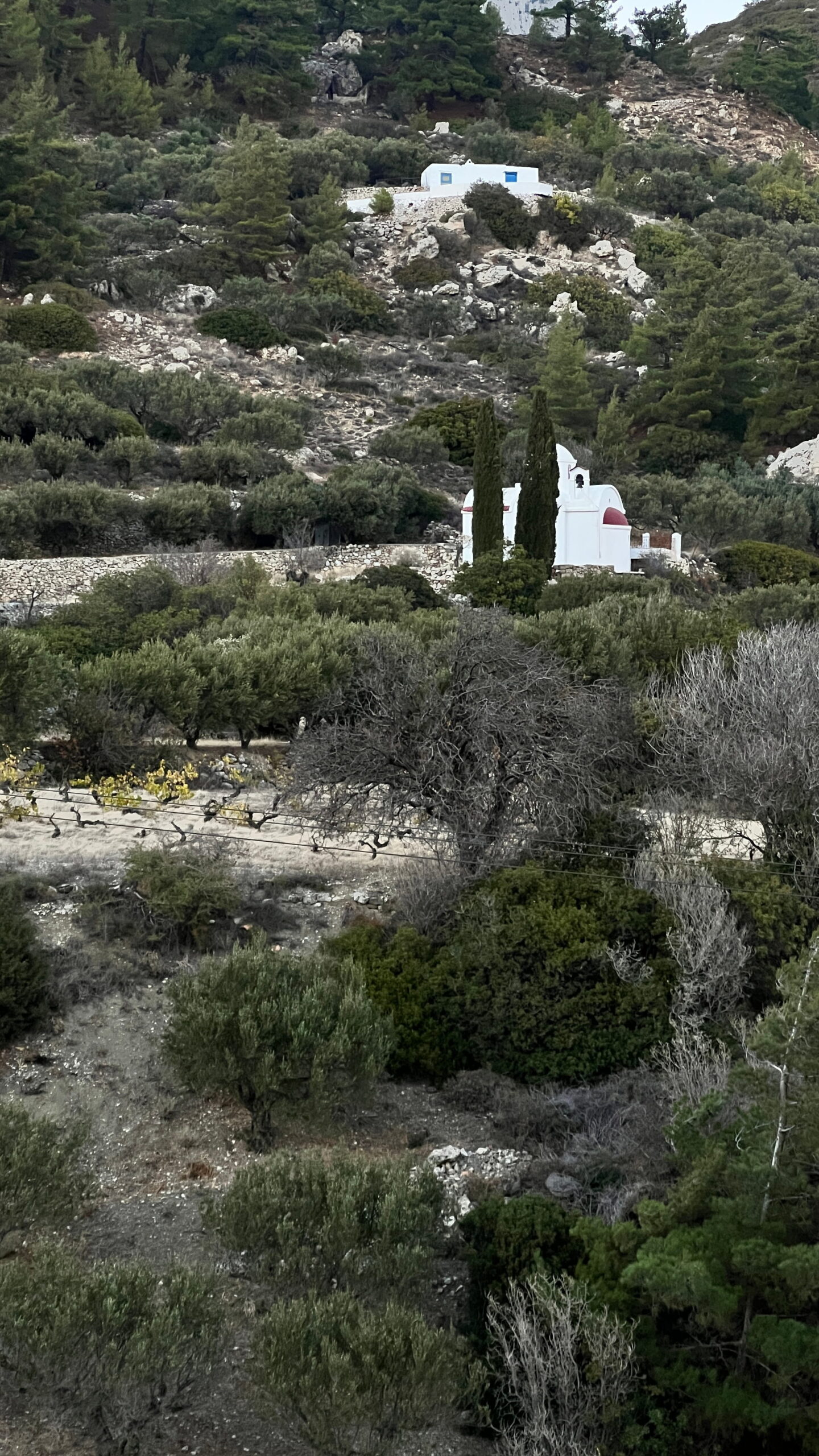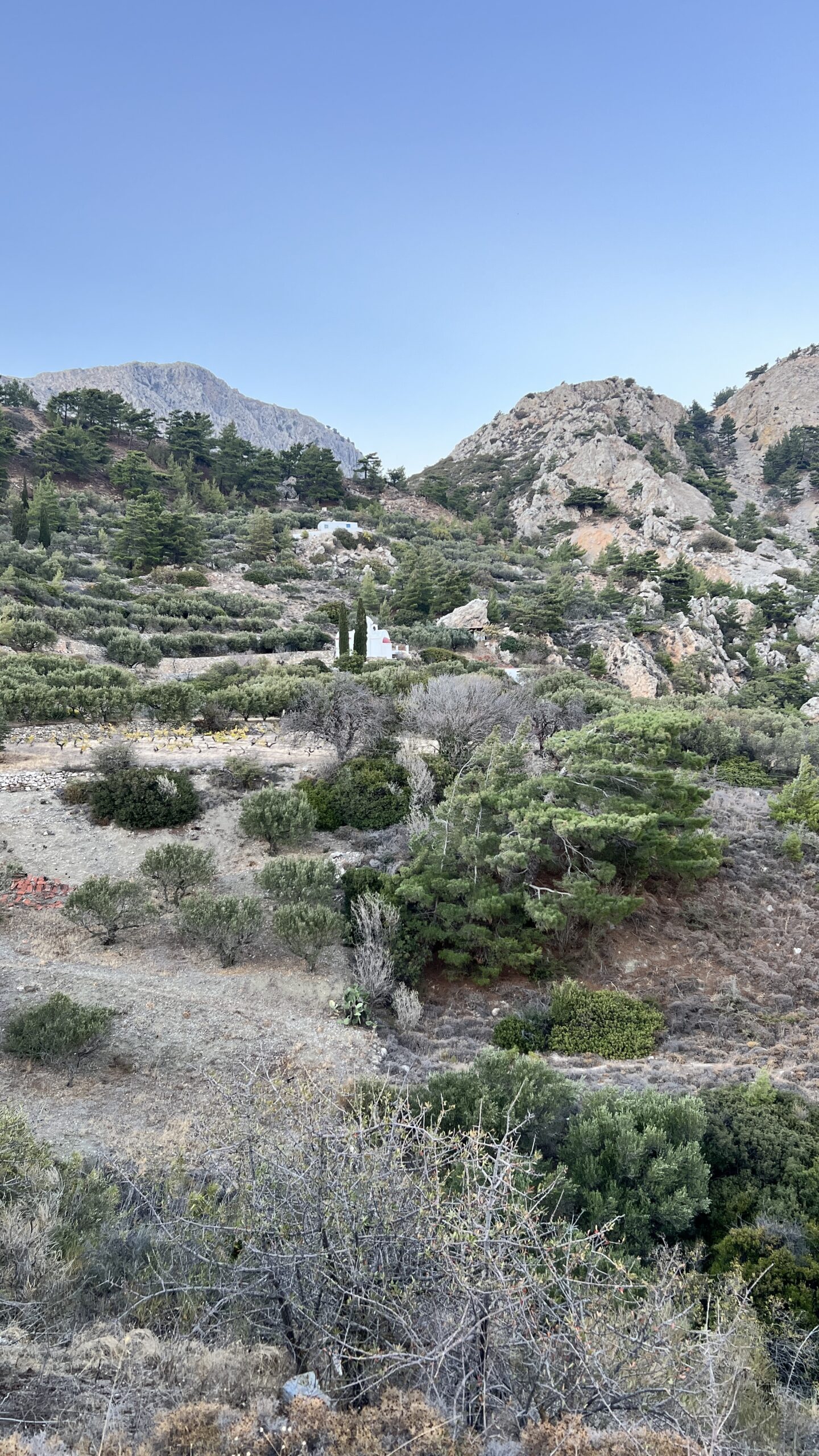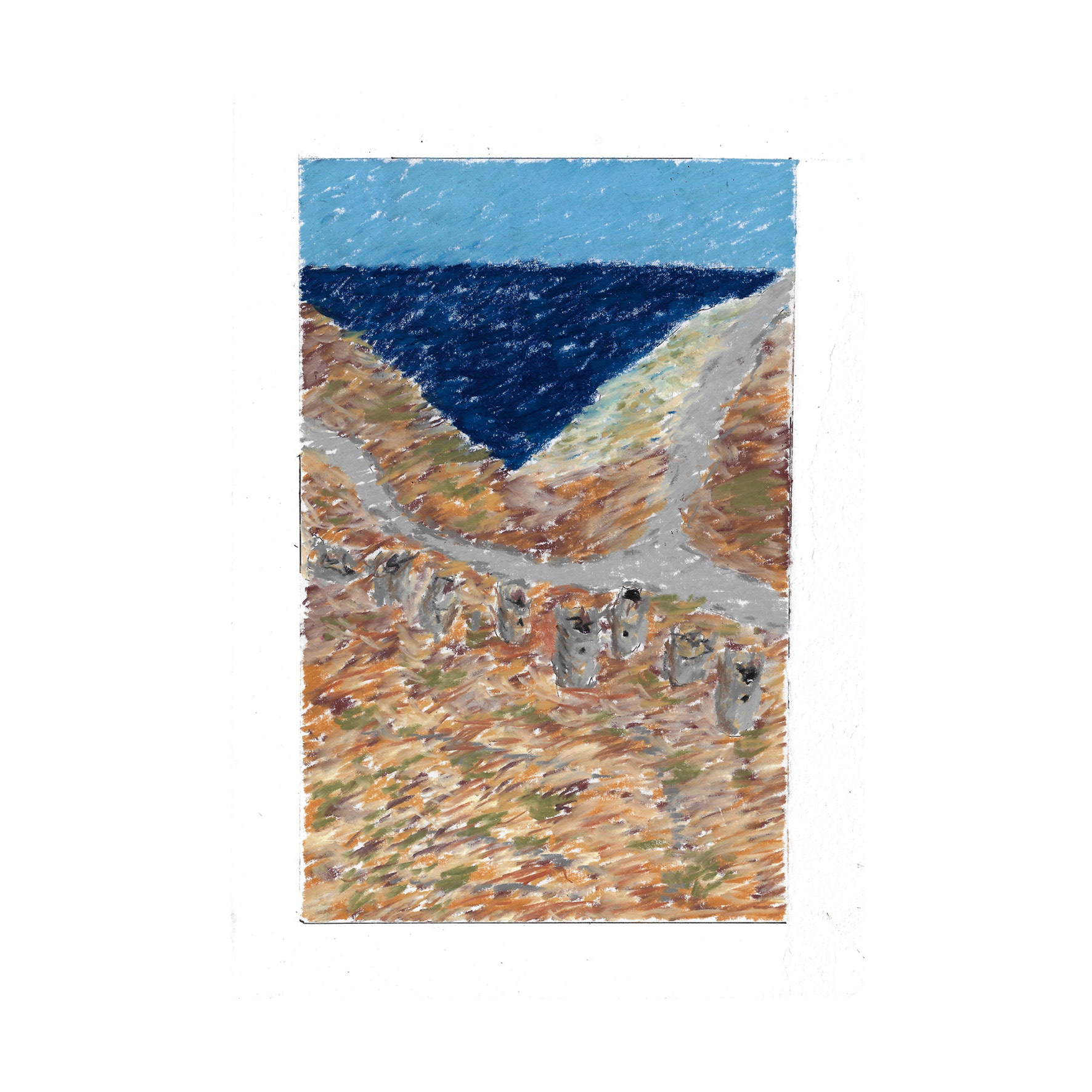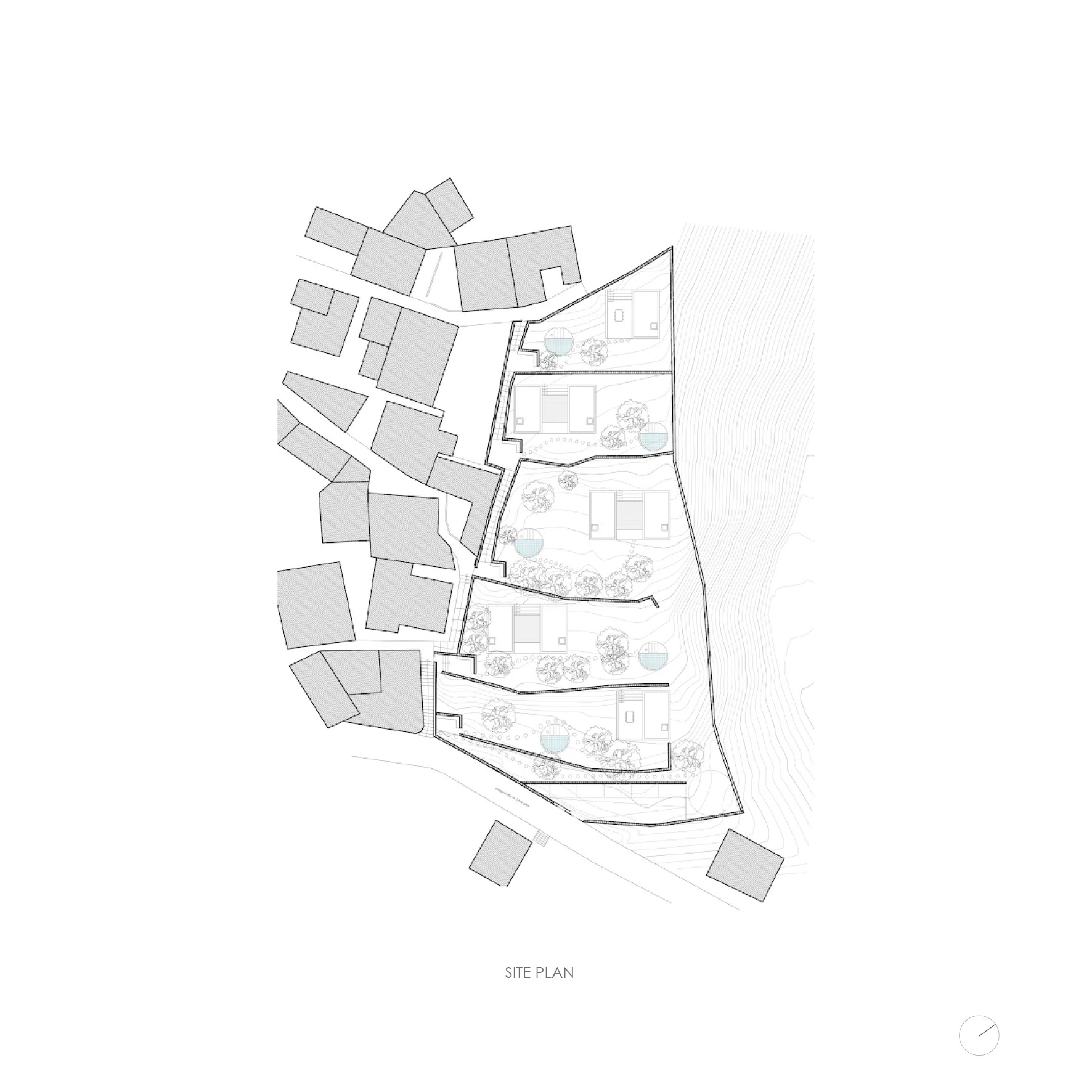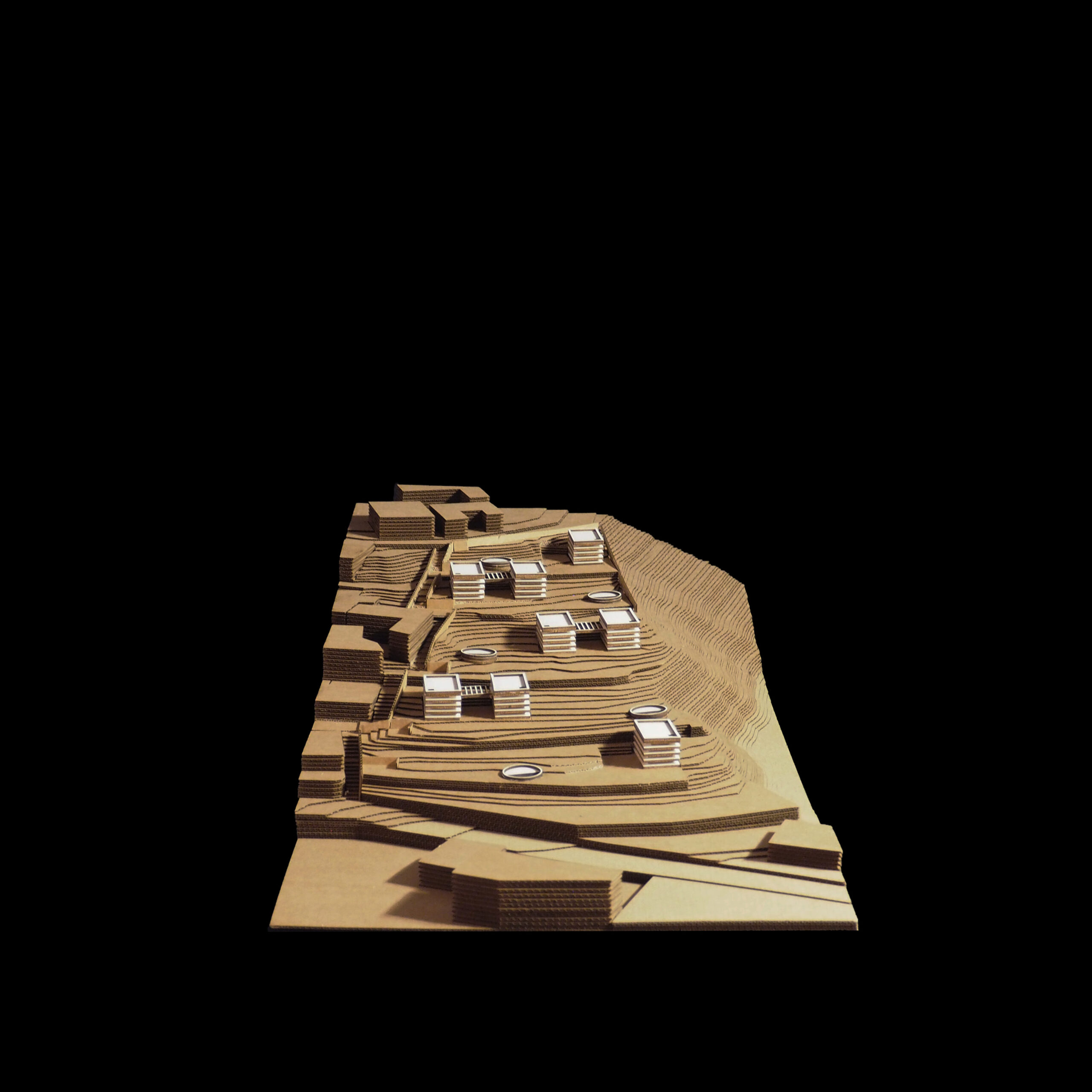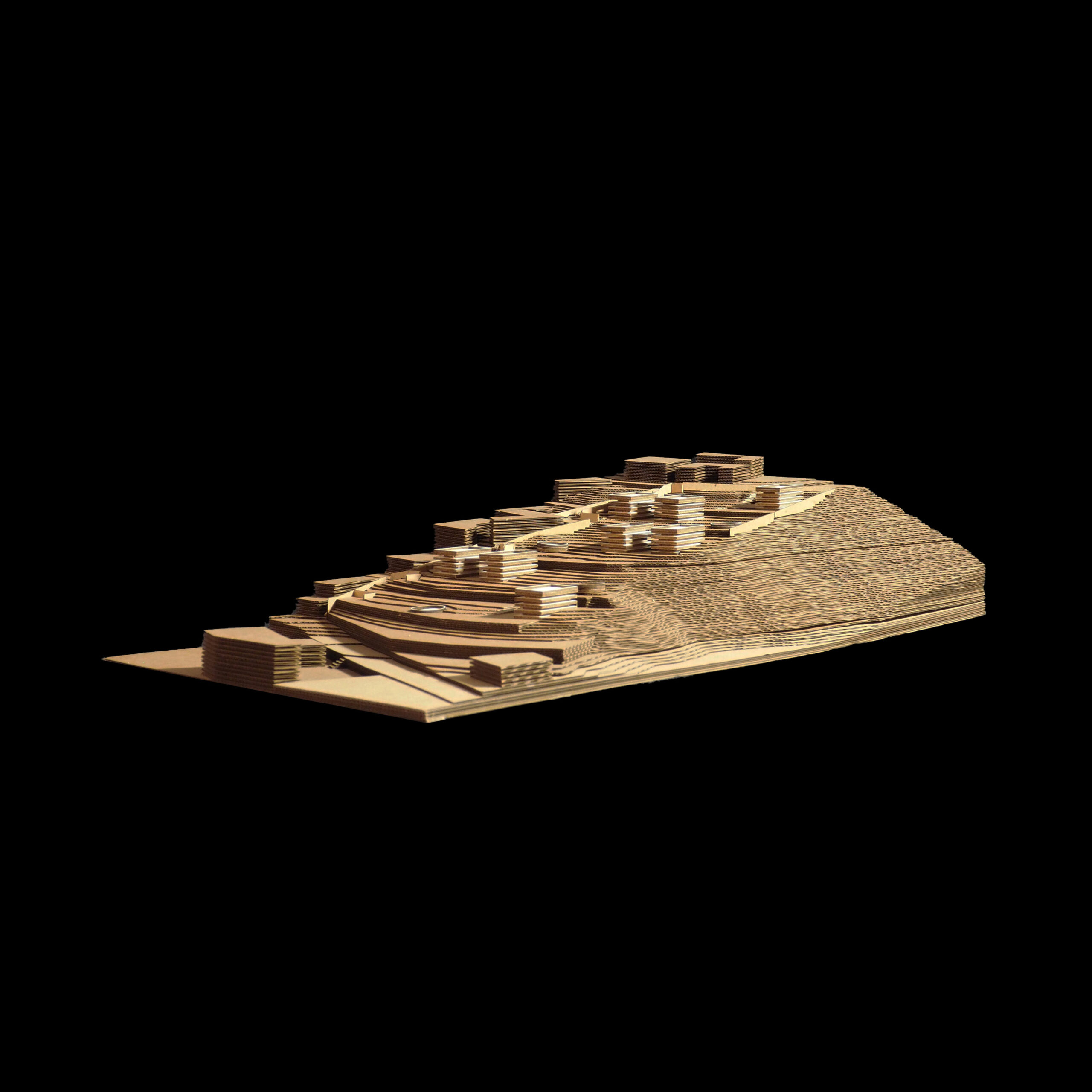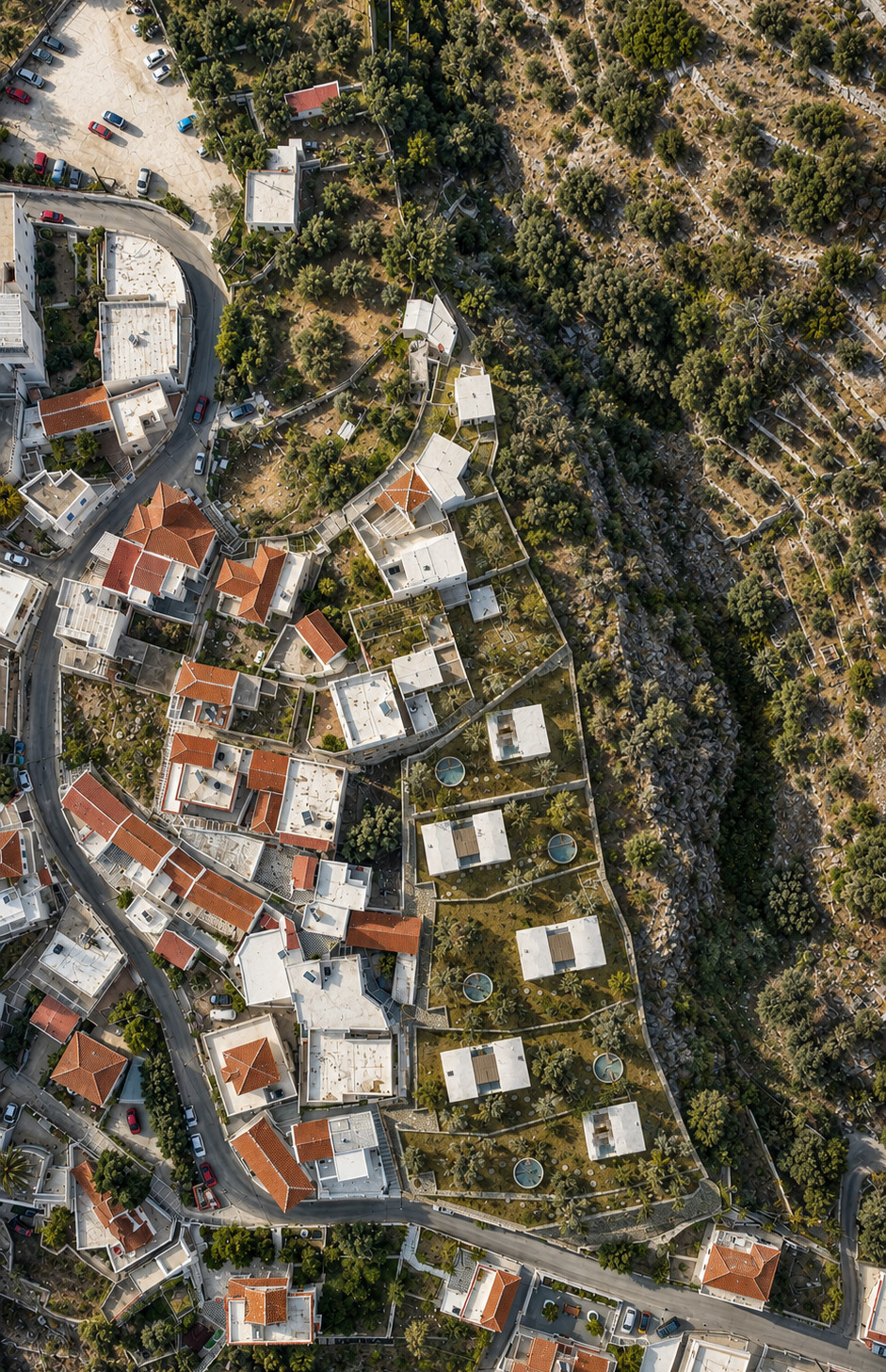
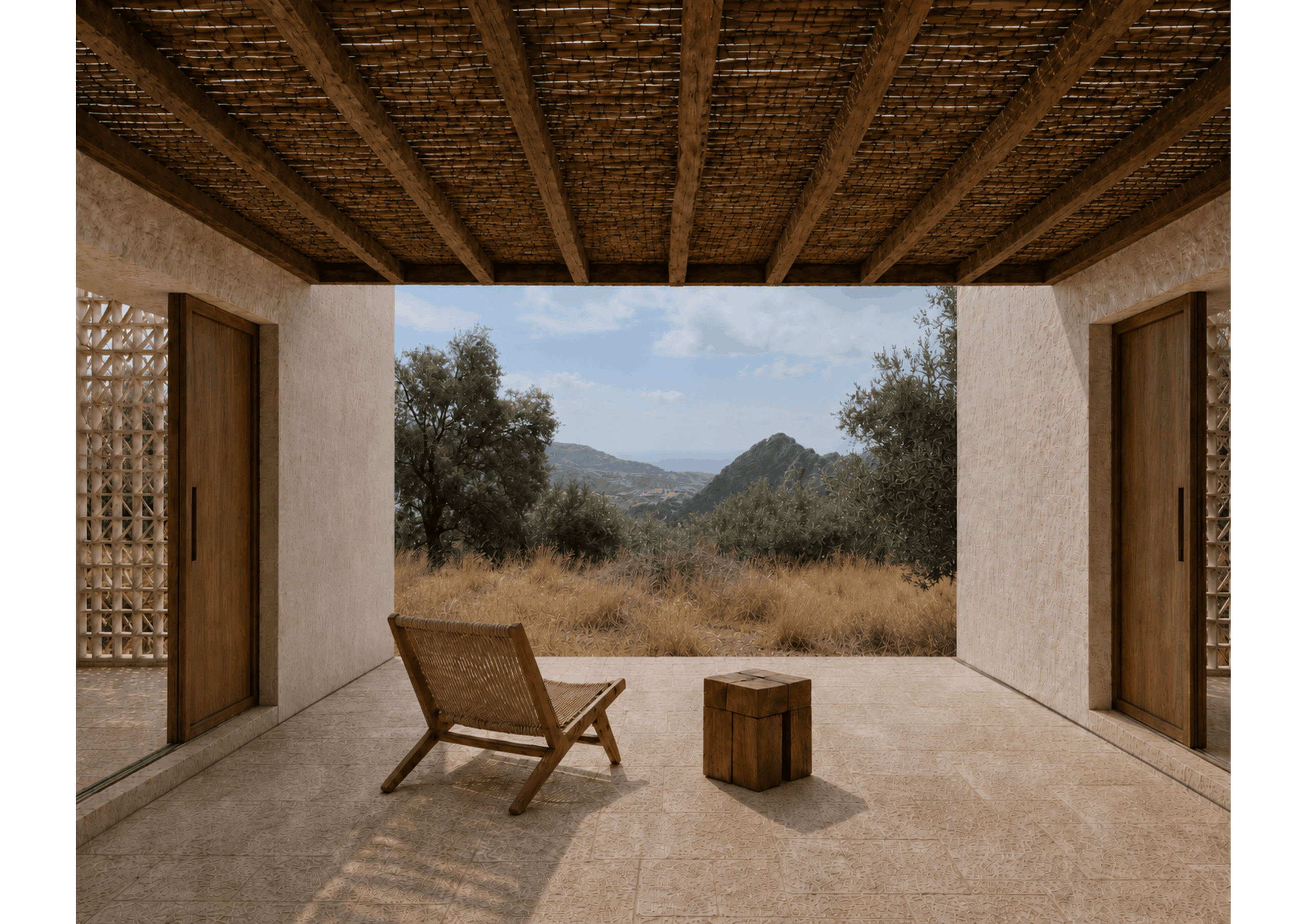
At the northern edge of the settlement of Volada in Karpathos, we were commissioned to design a complex of holiday dwellings. The site lies at the point where the compact fabric of the village meets the open agricultural landscape of the island. To the southwest extends the settlement of Volada, while to the north, a deep stream marks the transition toward the wider landscape of Karpathos and the sea views to the east.
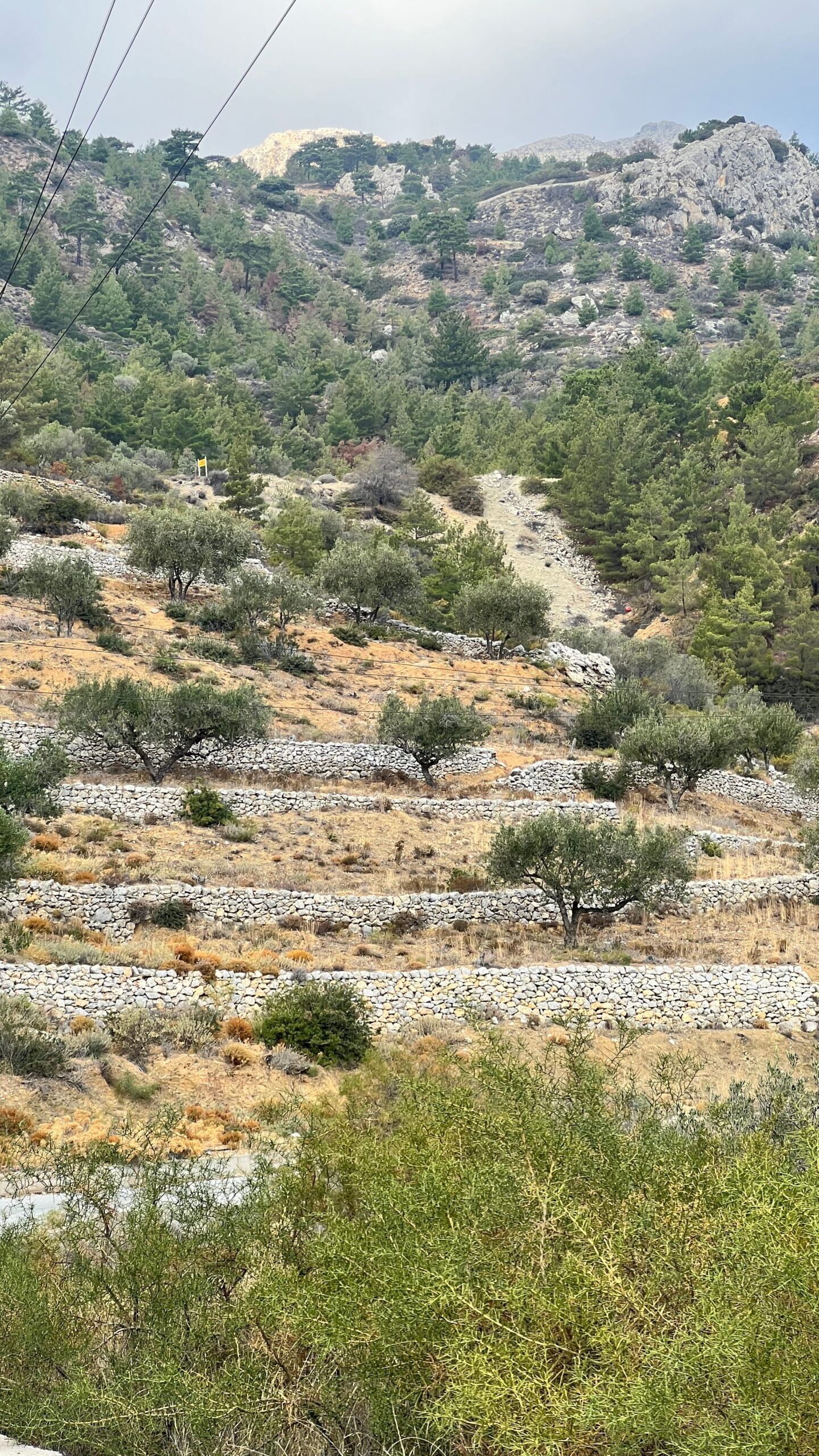
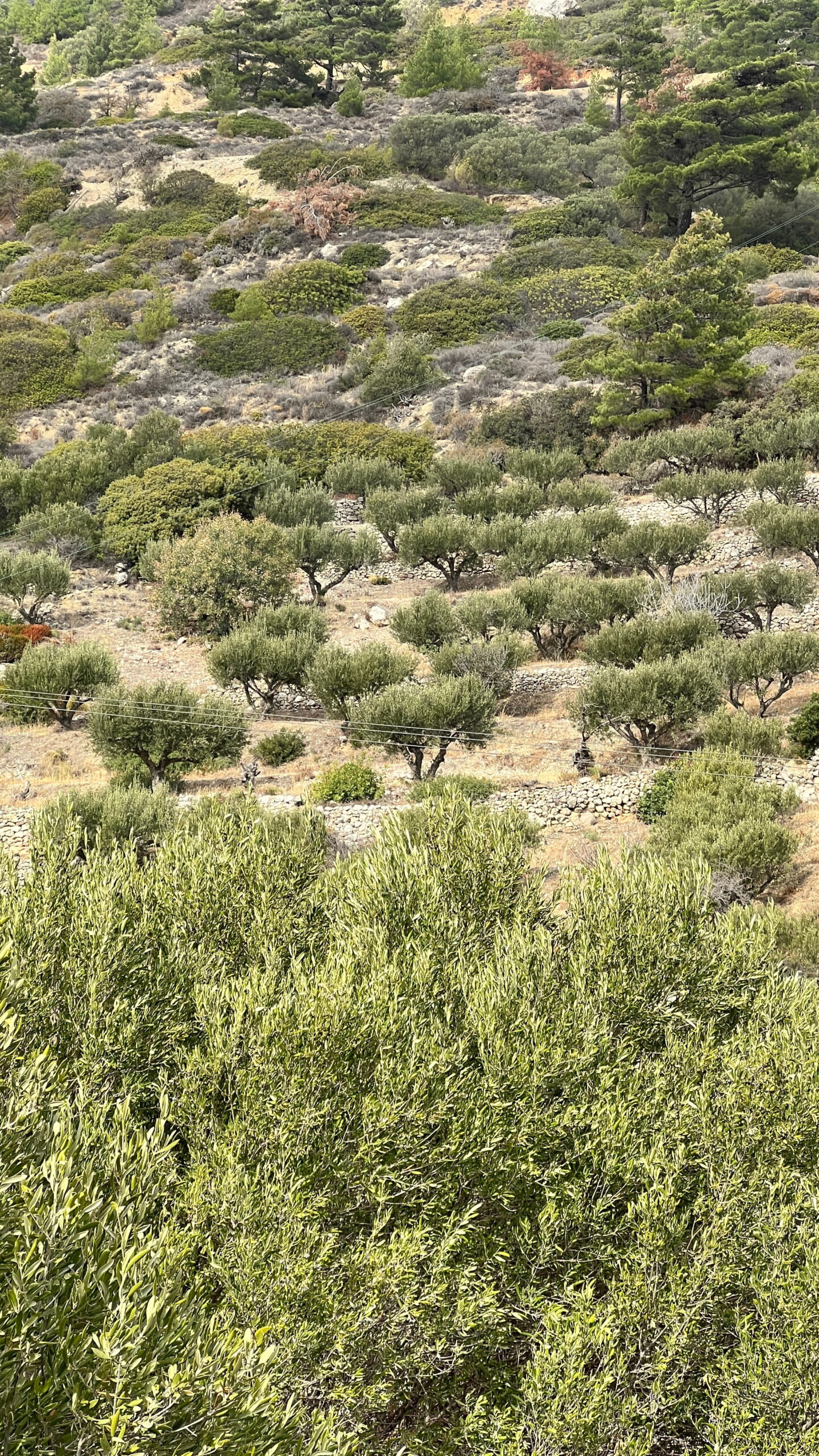
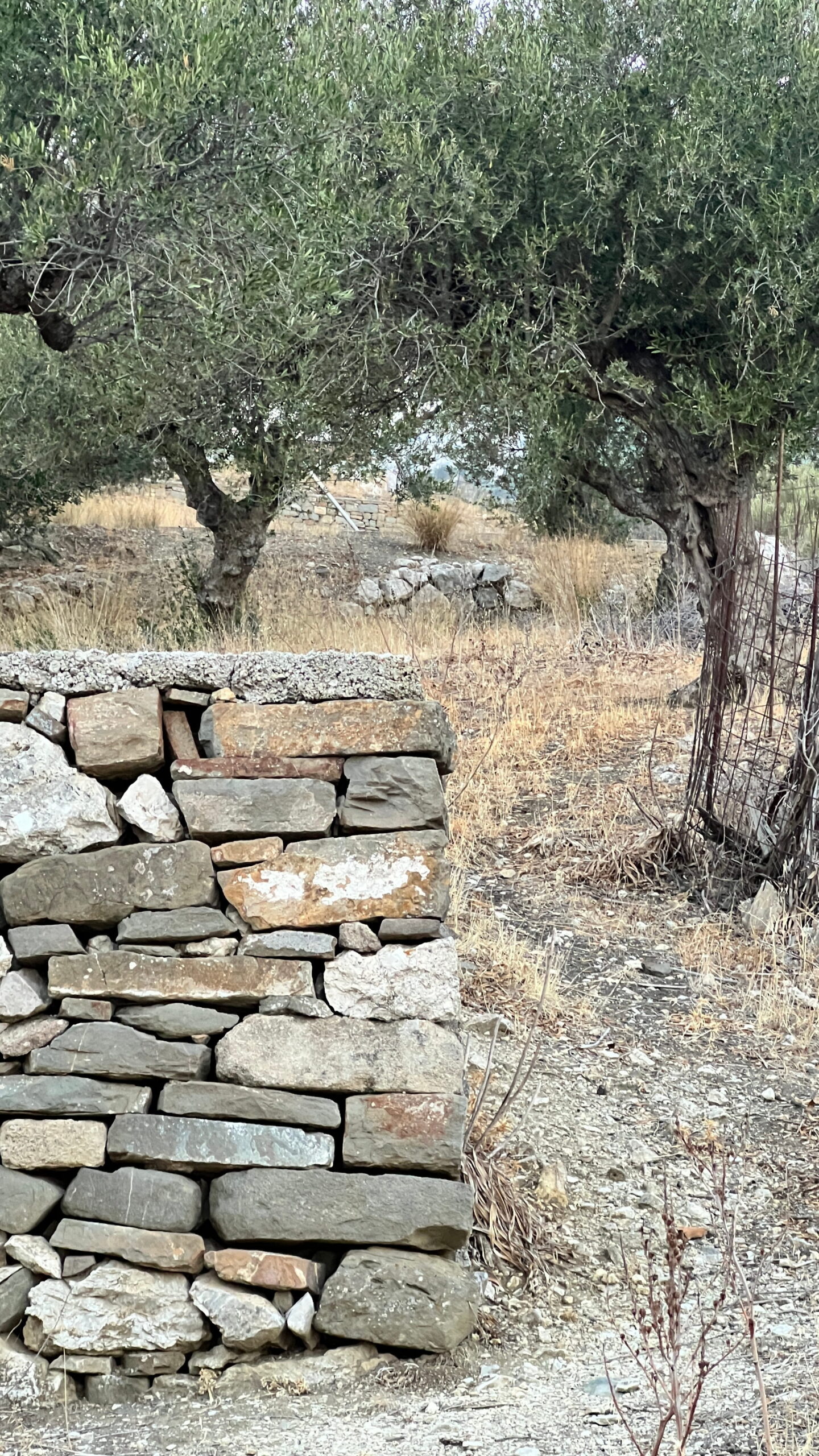
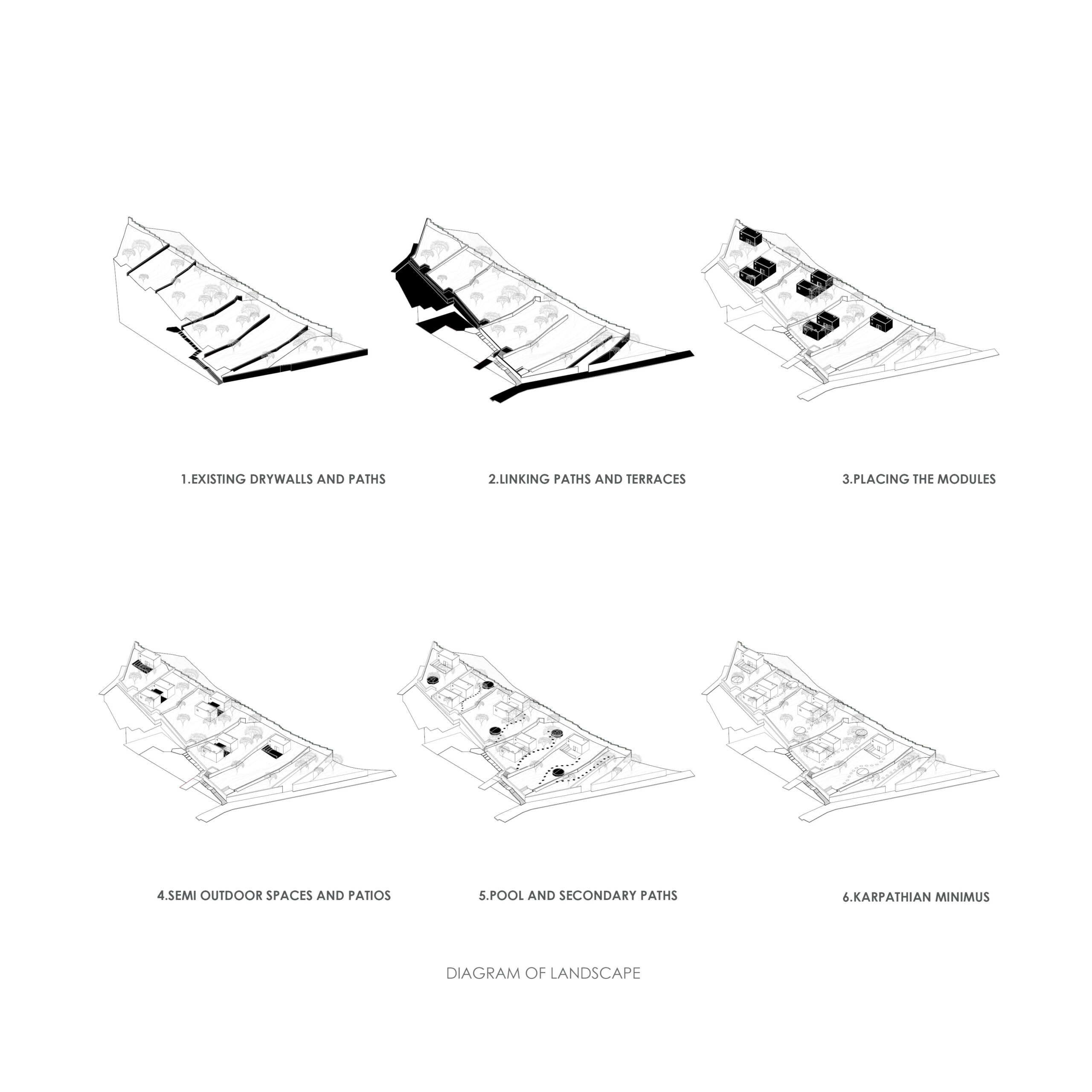
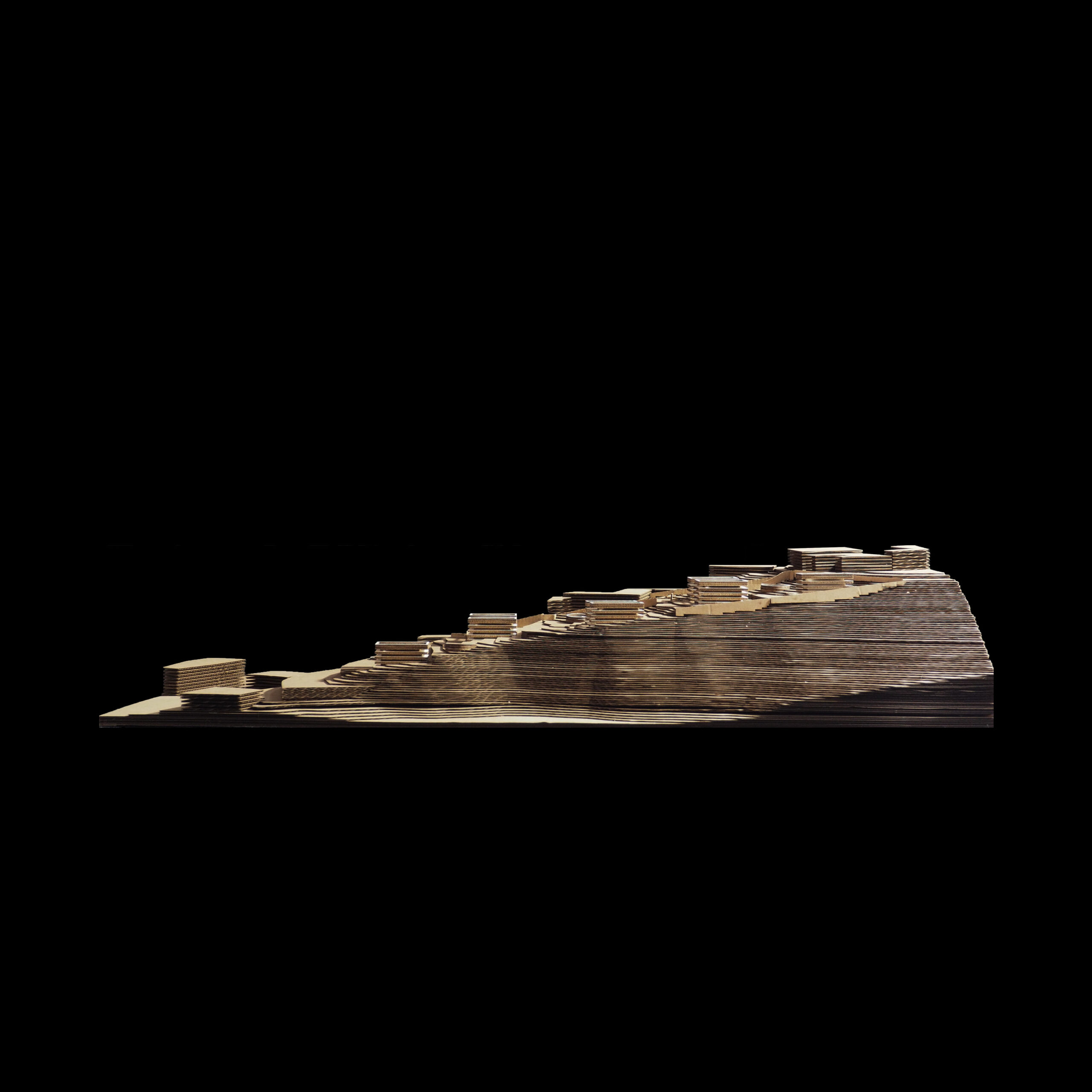
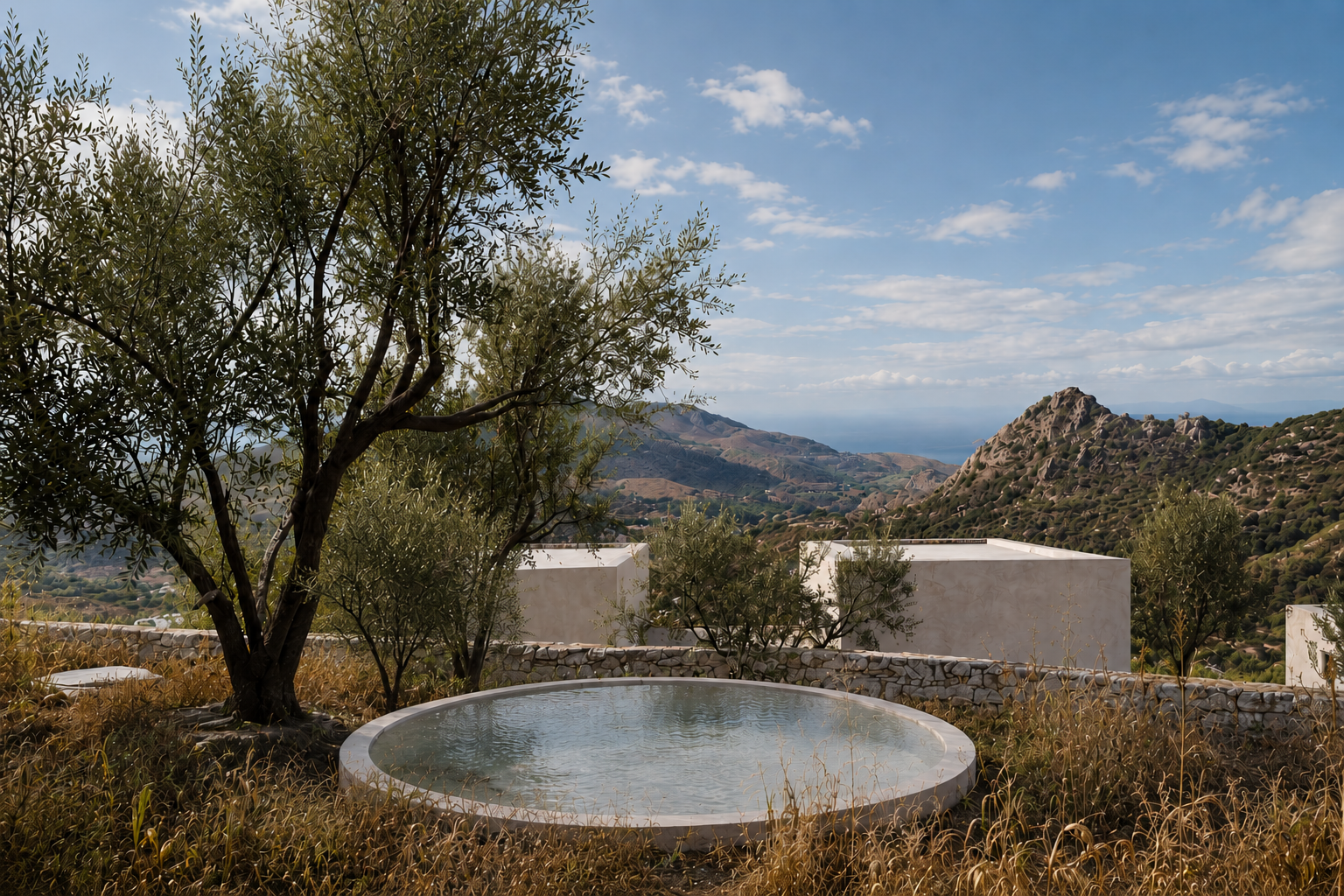
Within the site, important elements of the local agricultural geography were preserved: dry-stone terraces forming six successive levels, existing retaining walls, and long-standing olive trees. Access takes place from the lower part of the site, while two smaller village paths terminate at different points within the plot.
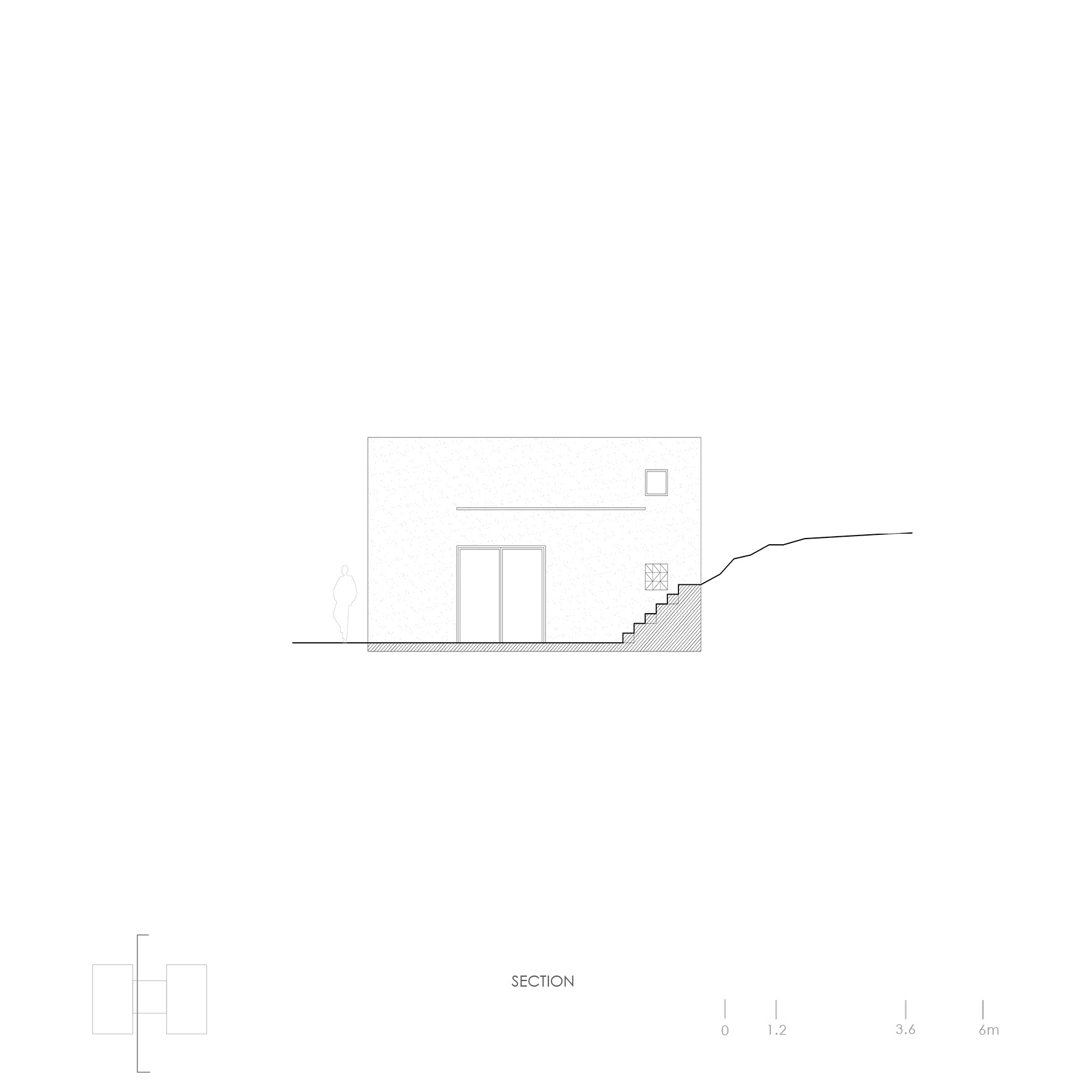
From an early stage, it became clear that any large-scale intervention would require extensive excavations, new road access, and a construction logic foreign to the morphology of the site. Such an approach would alter not only the existing terraces and retaining walls, but also the way the landscape itself has historically been organized. Here, the terraces do not serve as a backdrop for the placement of buildings, but rather as a pre-existing structure of habitation and cultivation that already organizes ground, shade, water runoff, and movement.
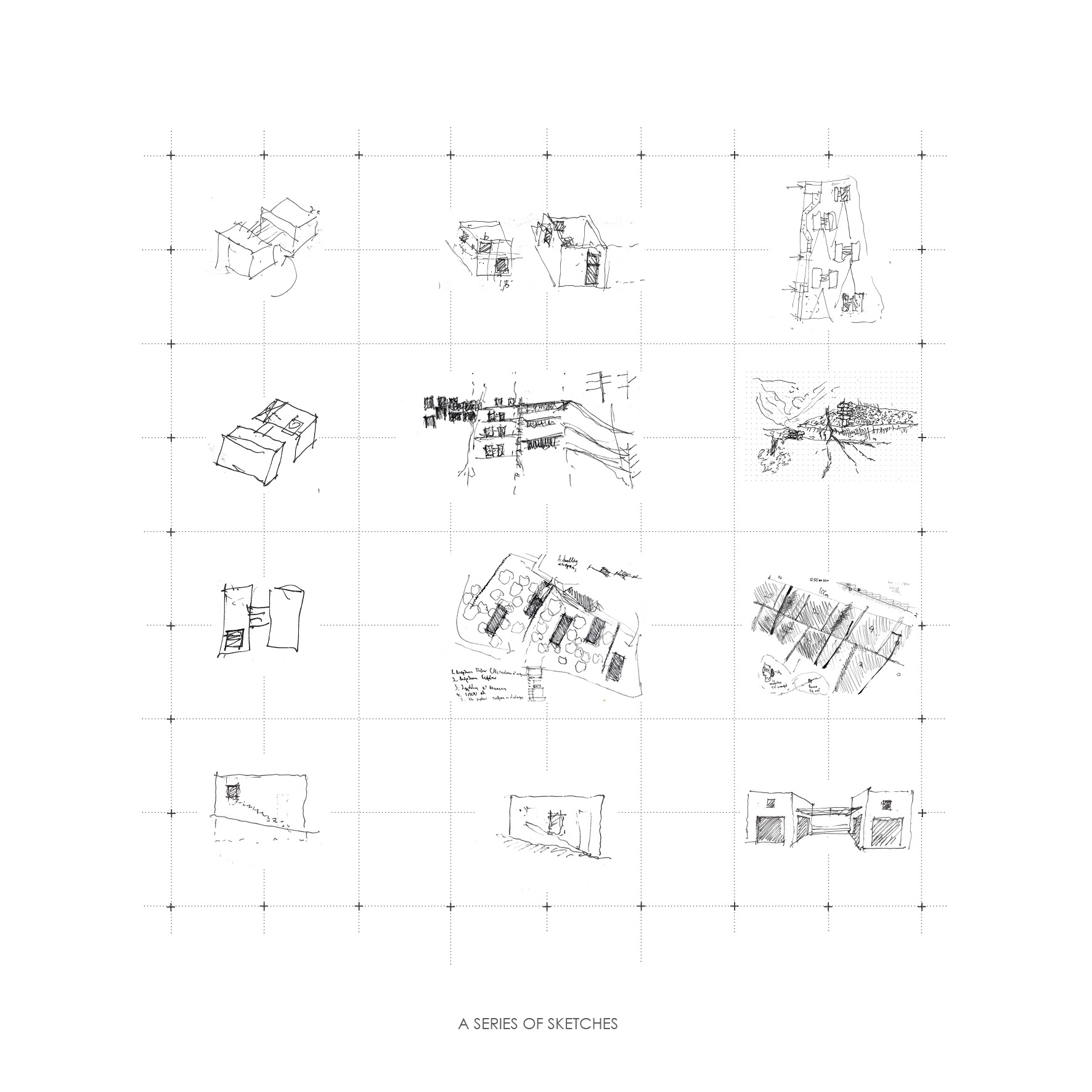
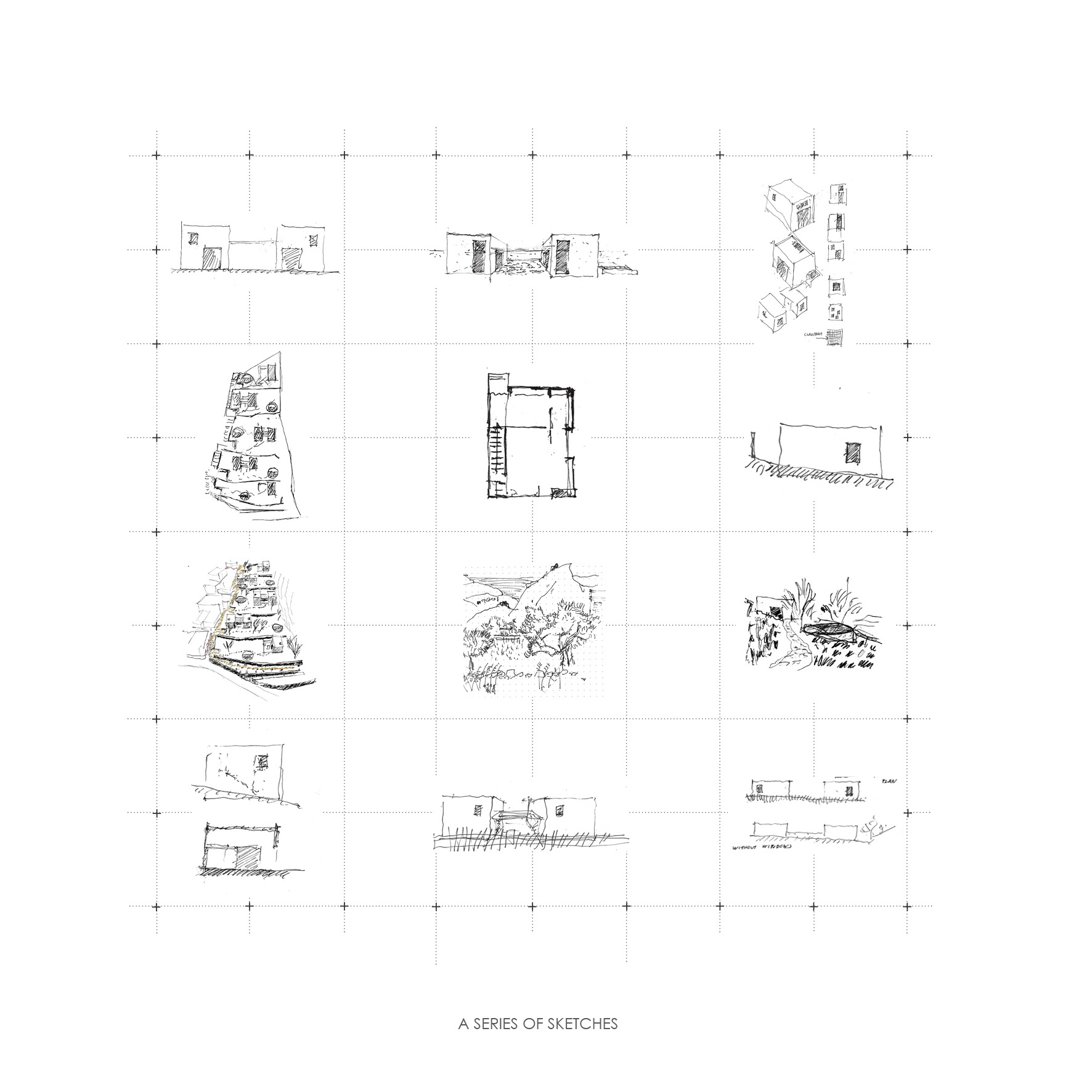
For this reason, we consciously chose not to organize the project as a singular architectural object. Instead, we worked on a small-scale construction system capable of continuing the logic of the terraces without imposing a new geometry on the landscape.
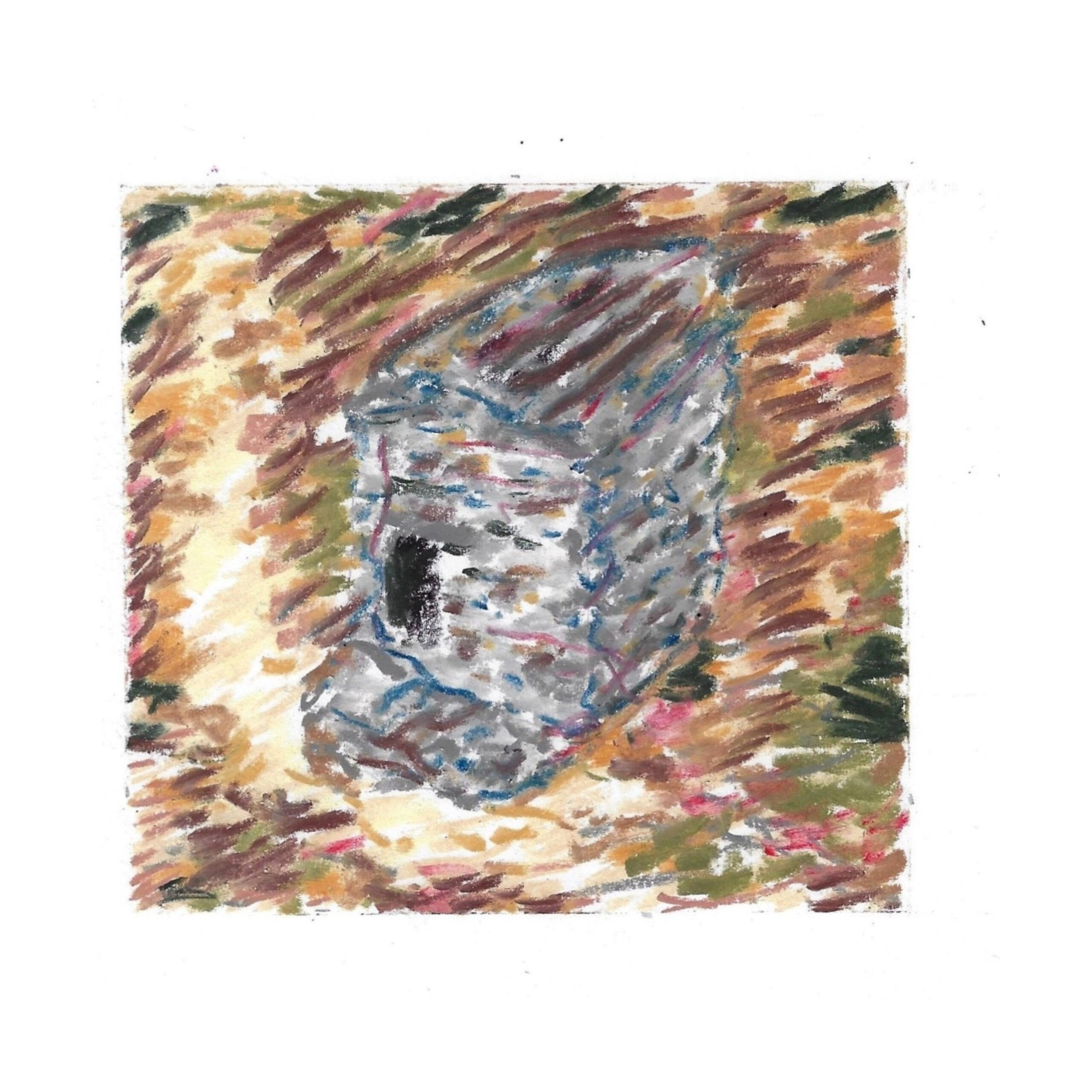
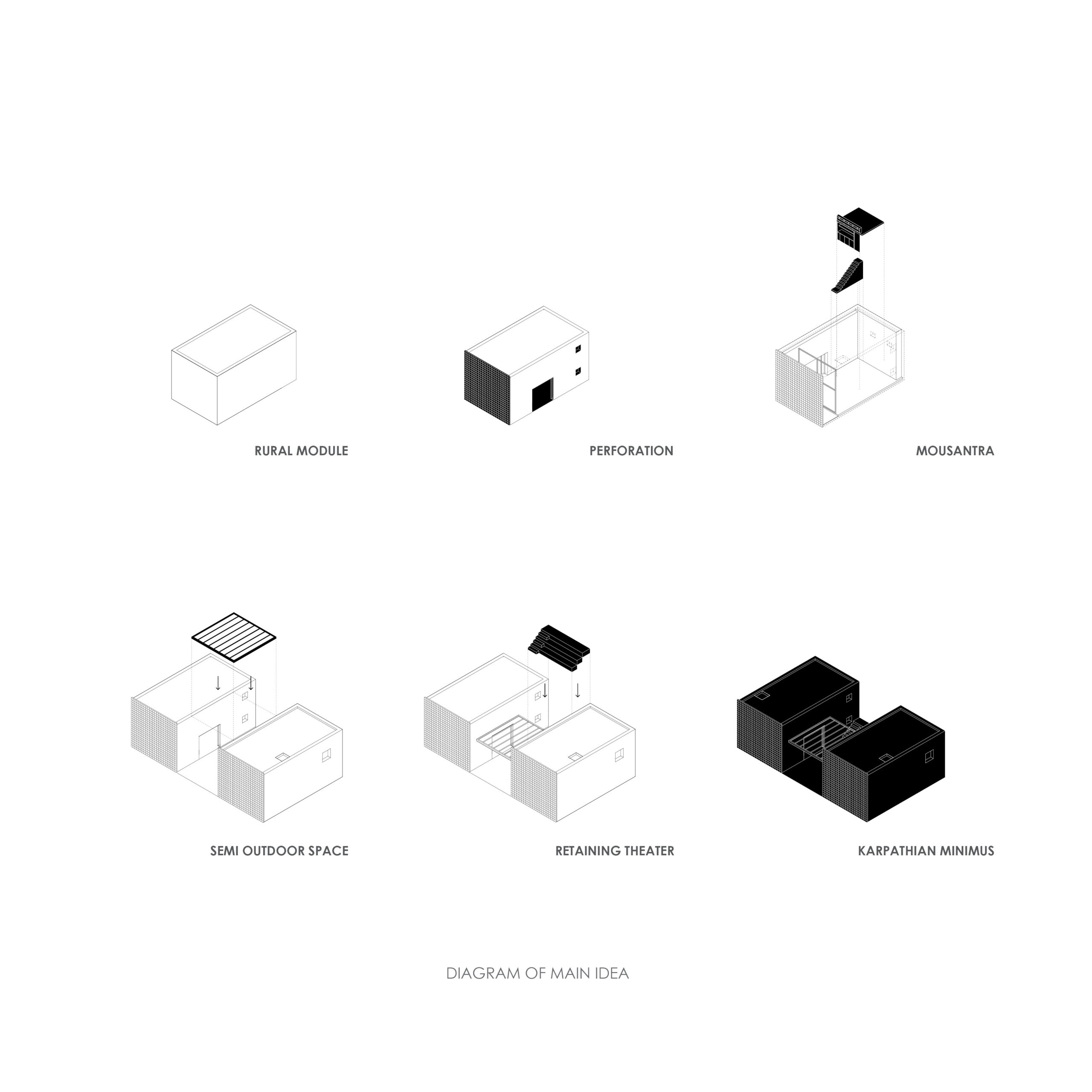
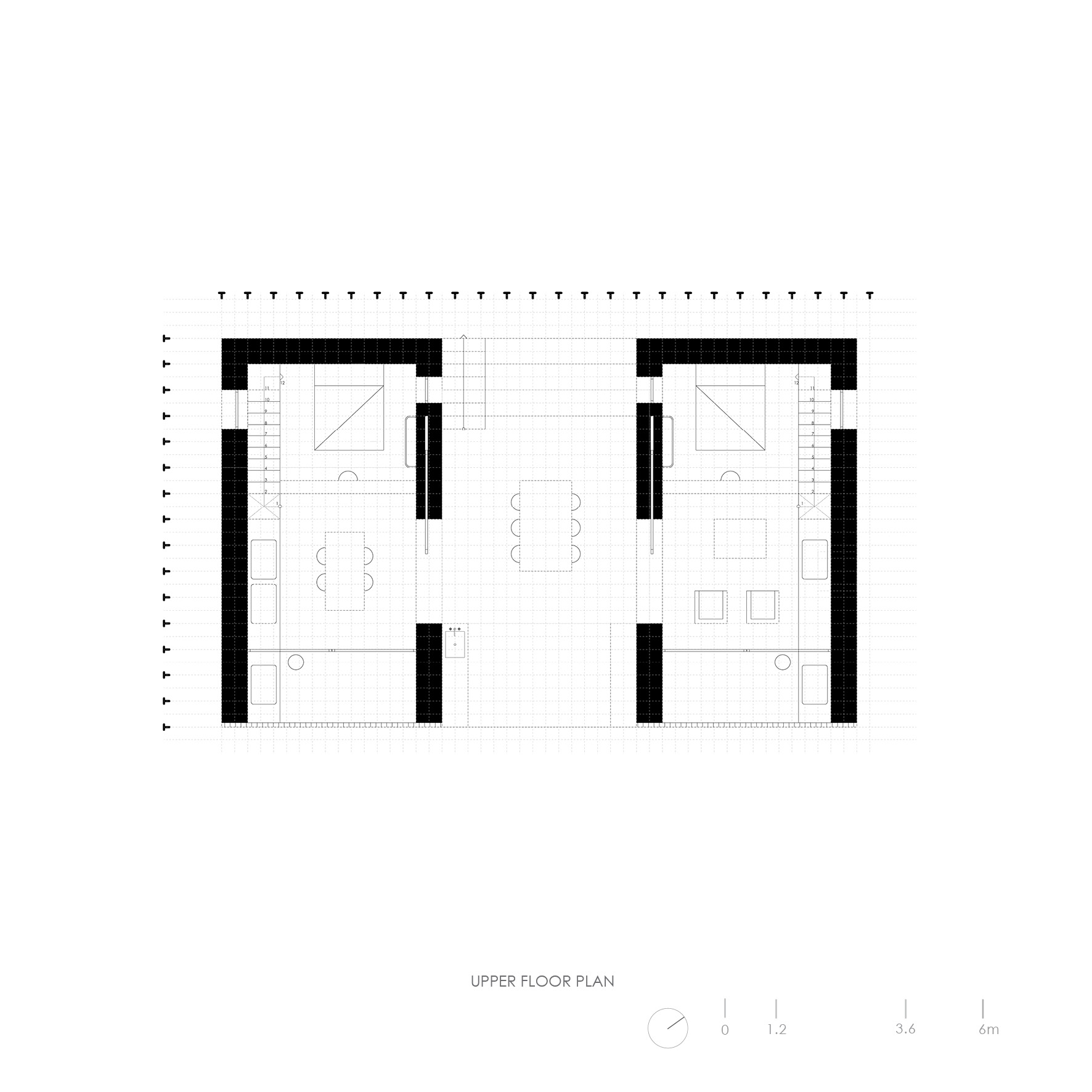
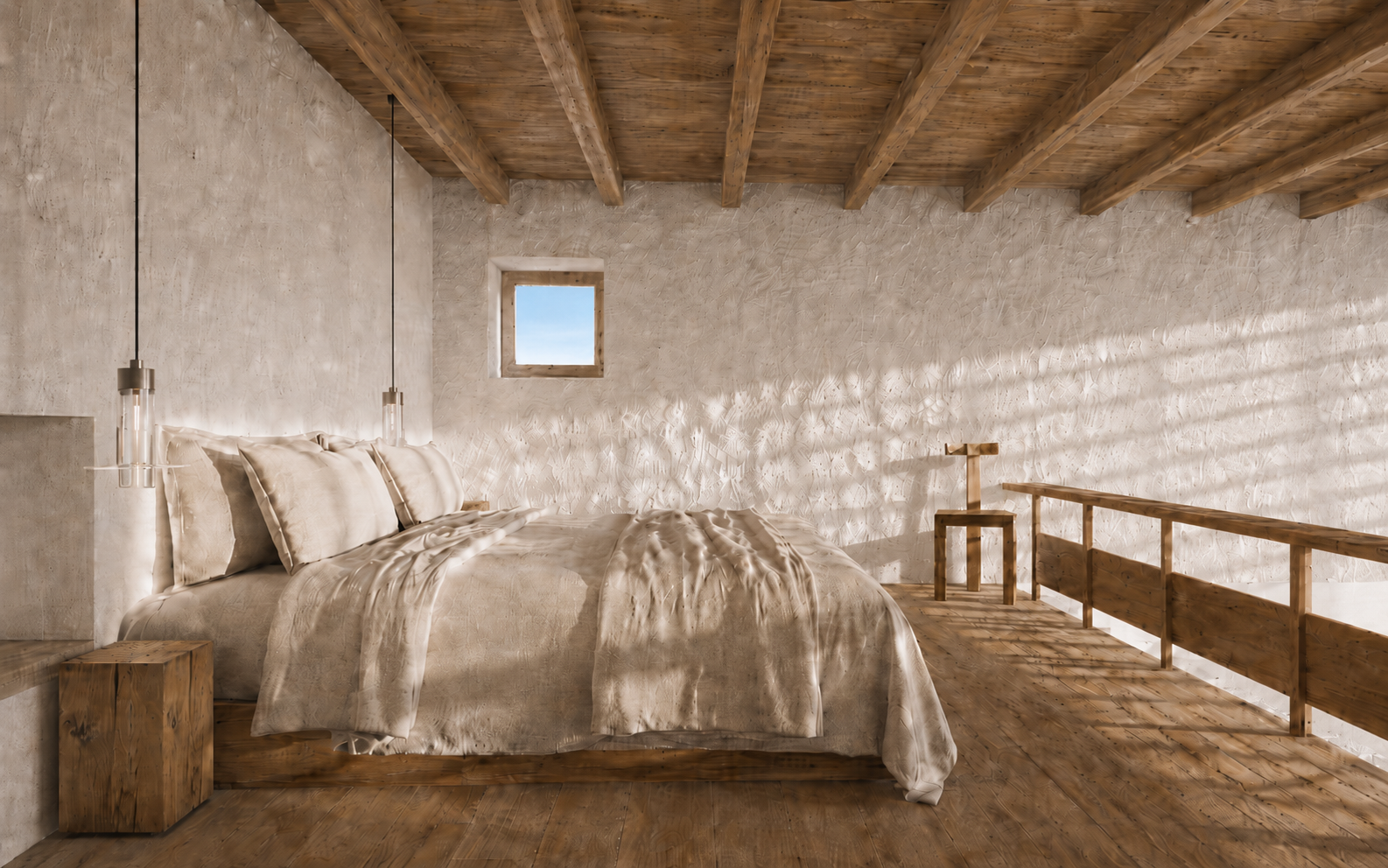
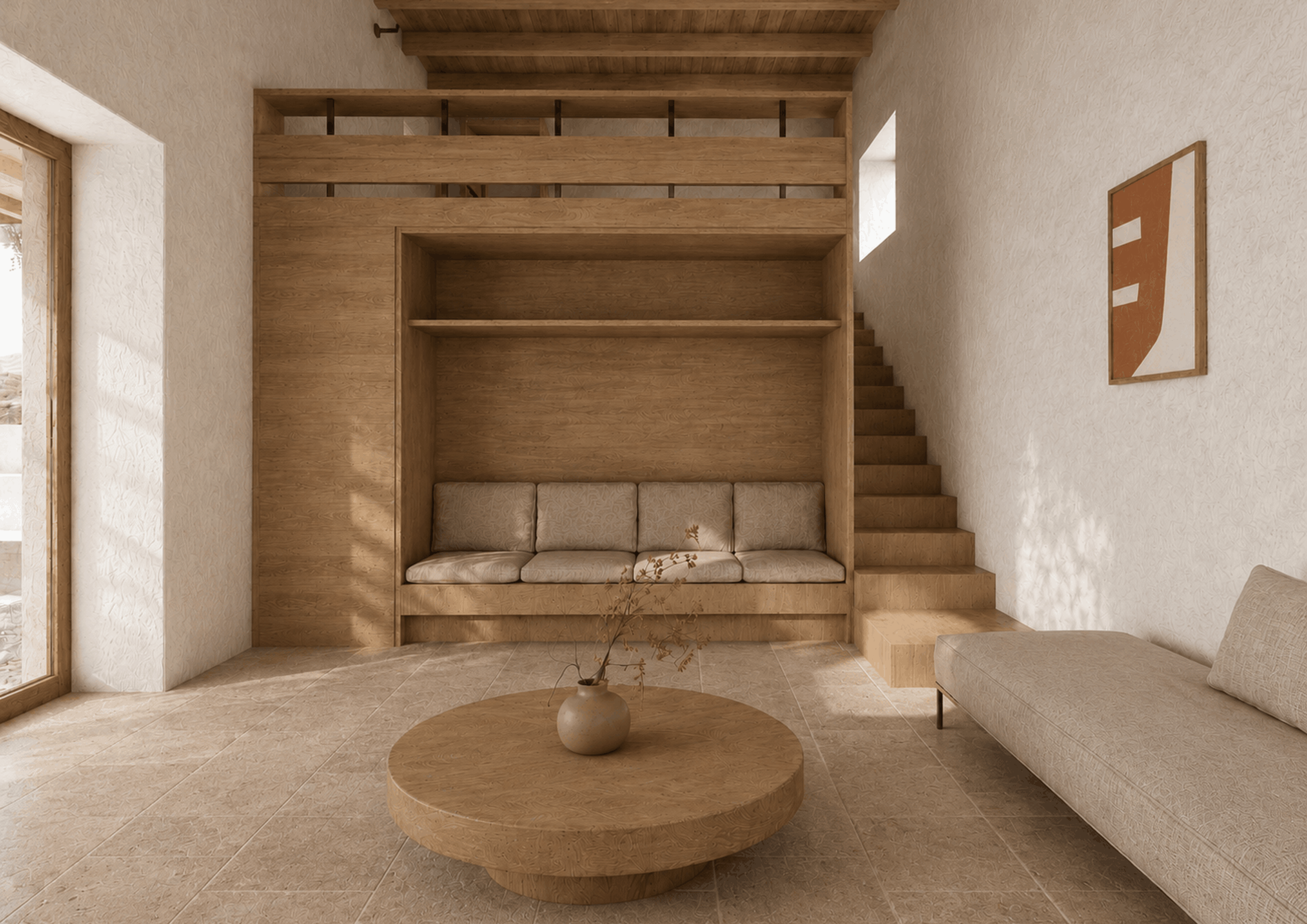
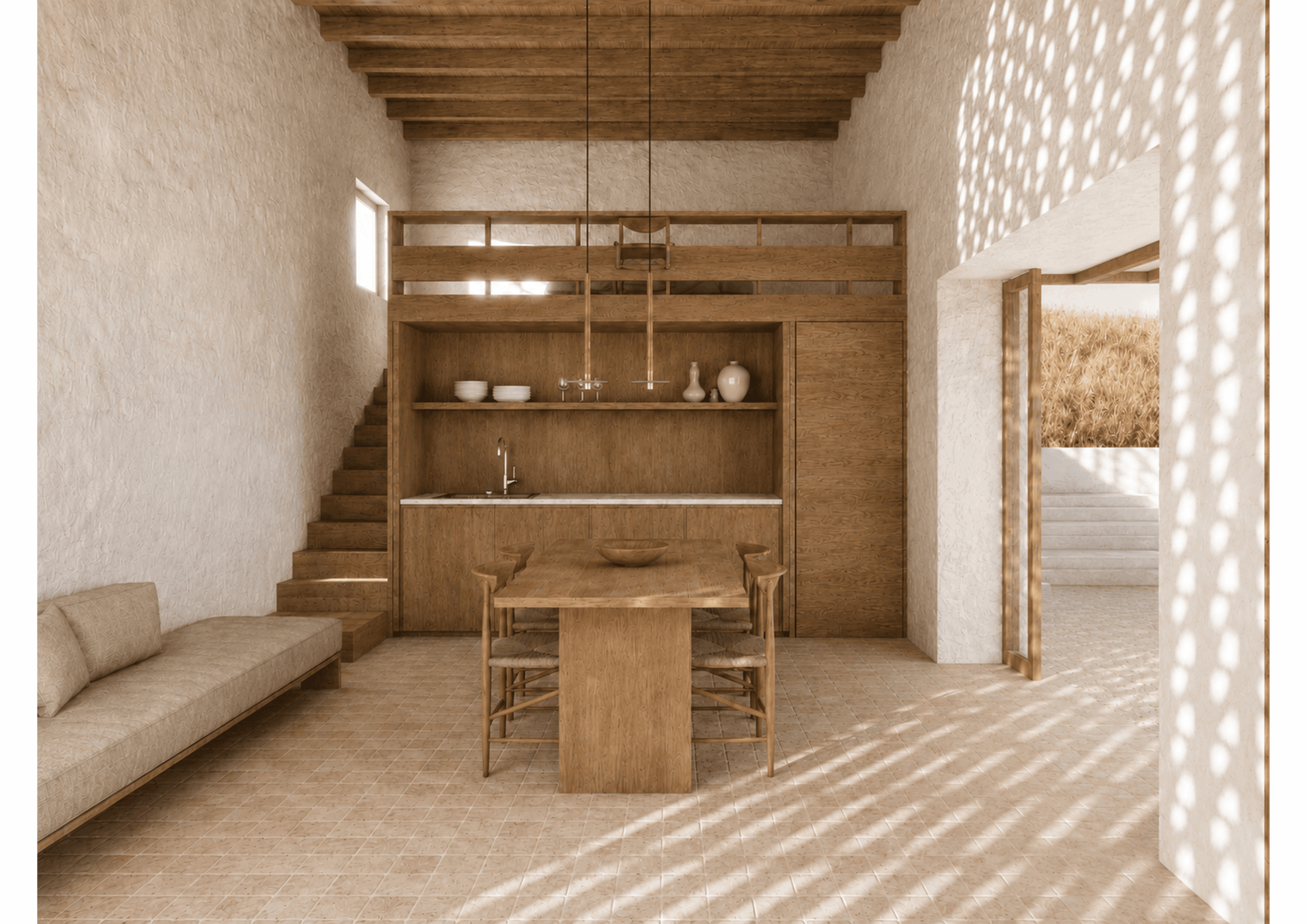
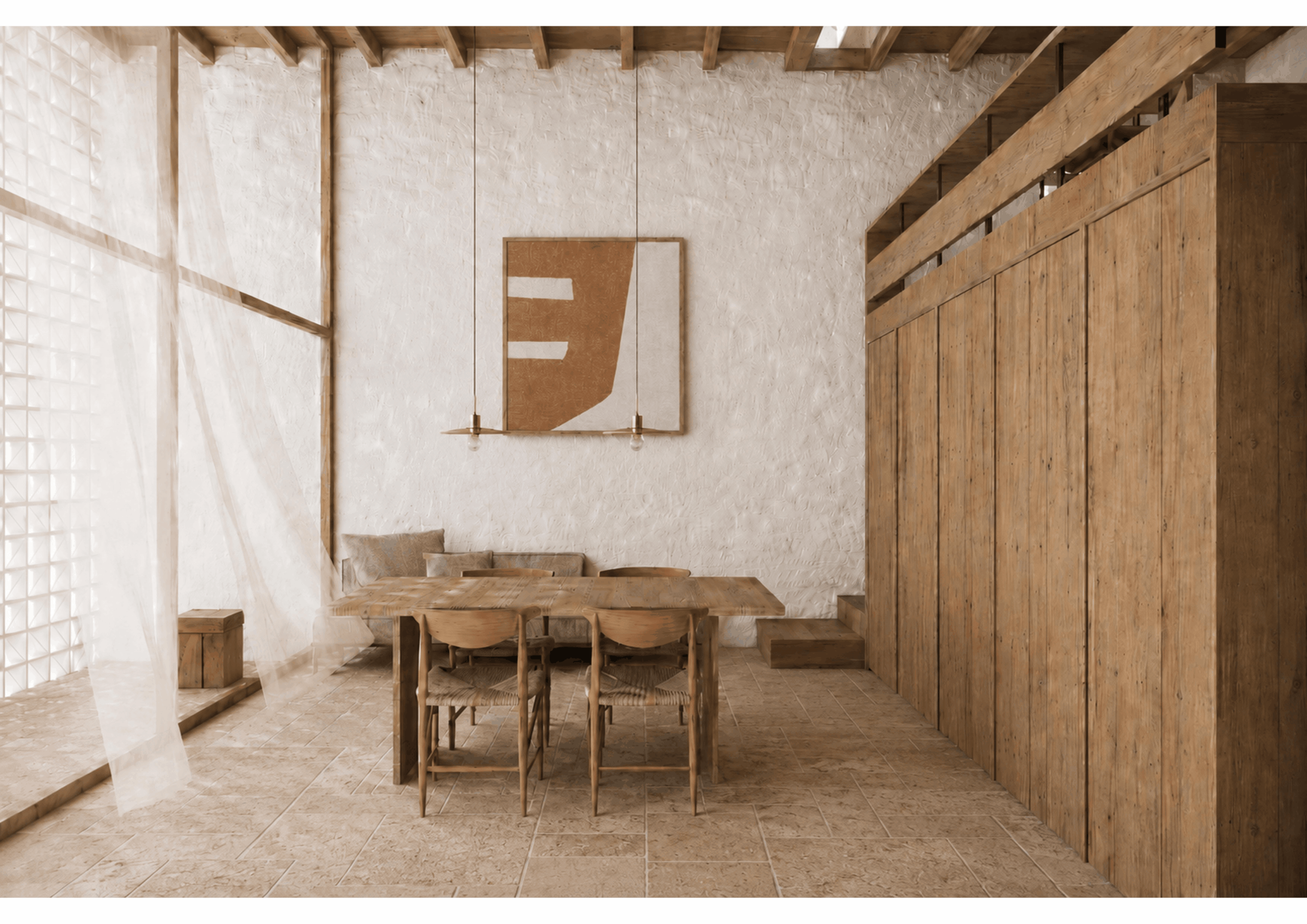
An important precedent for the project was the traditional architecture of Karpathos, and particularly the “voskareas,” the dispersed rural dwellings of the island. At the same time, an important reference was the “moustantra,” an elevated wooden element found in the traditional houses of Karpathos that concentrates sleeping space and part of everyday domestic life within a single room. This element does not operate merely as a piece of built furniture, but as a small-scale spatial mechanism that organizes habitation, allowing different functions to be compacted vertically within a limited footprint. The logic of this vertical organization, spatial economy, and close relationship between construction and dwelling is transferred into the new housing unit.
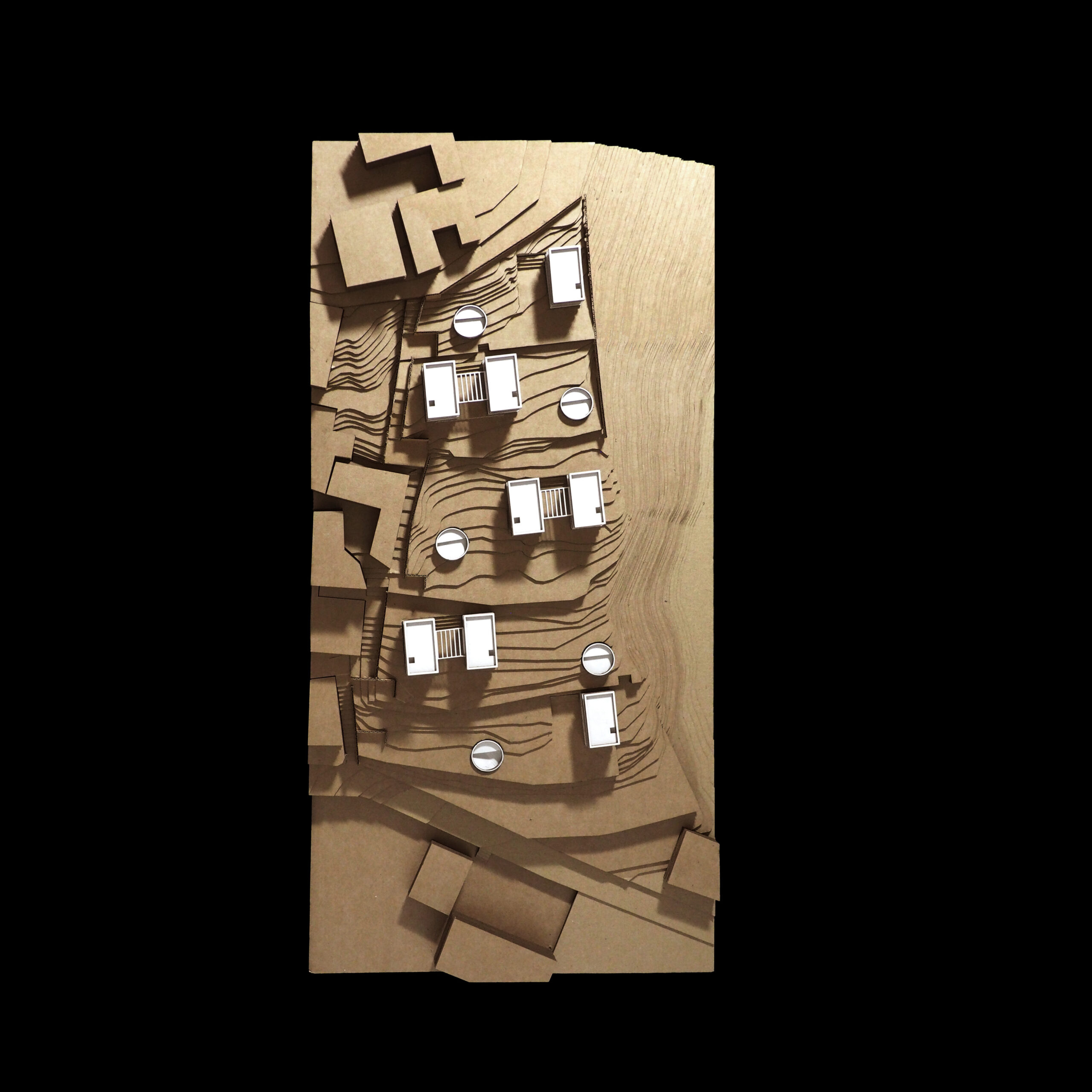
The proposal is organized as a system of small dwellings, with one house positioned on each existing terrace. Along the southern edge of the site, a linear circulation zone connects the main road with the two village paths and operates as a shared infrastructure linking all terrace levels.
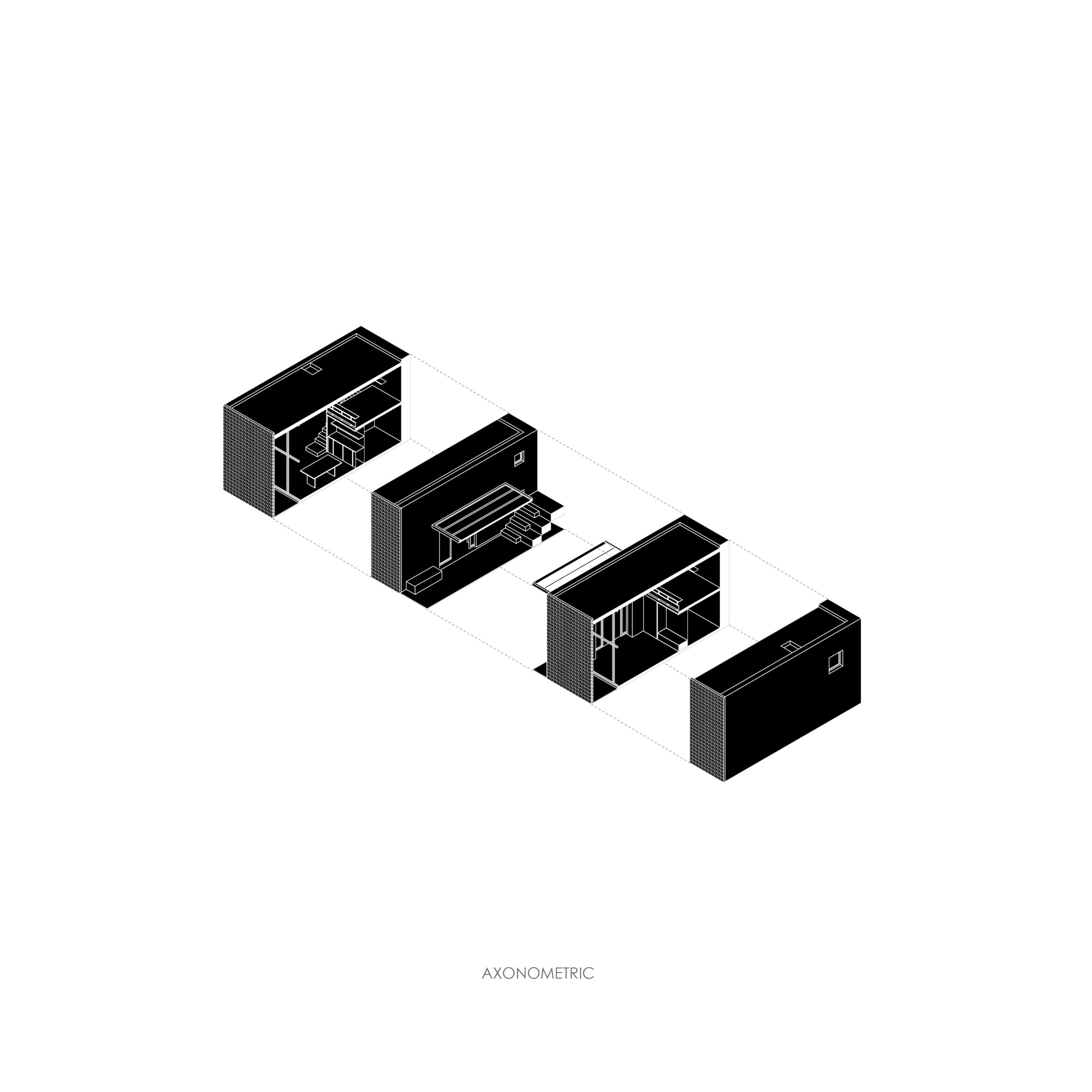
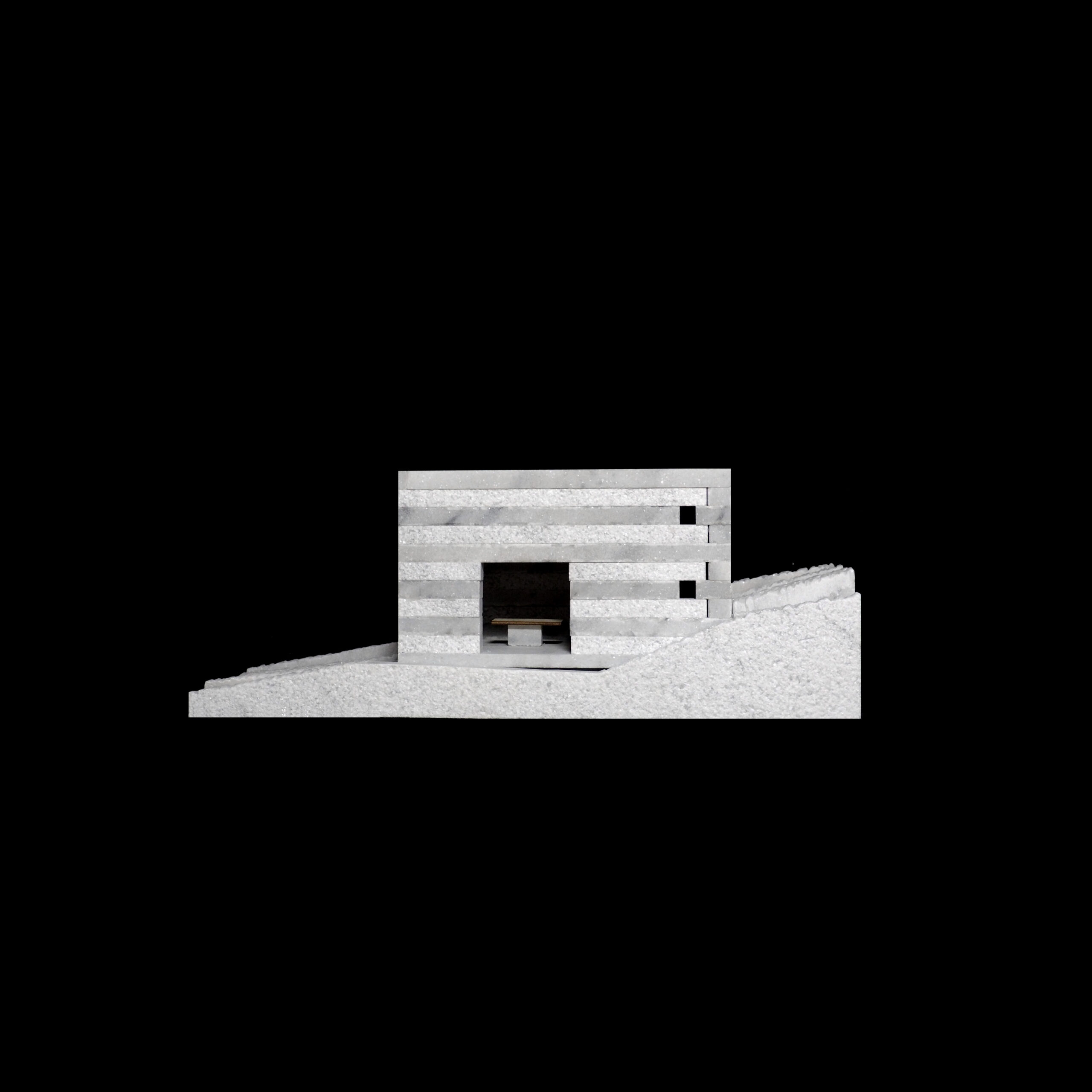
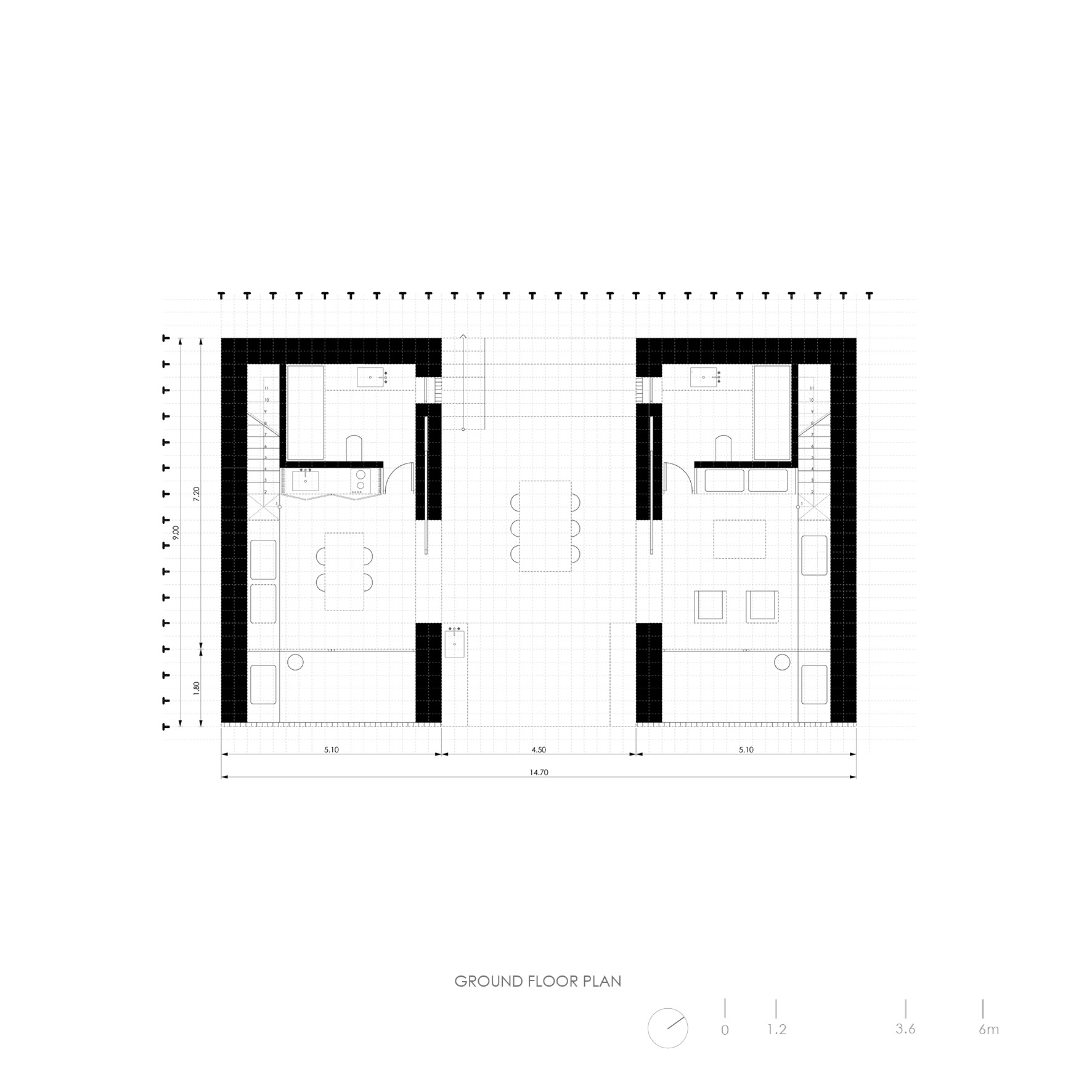
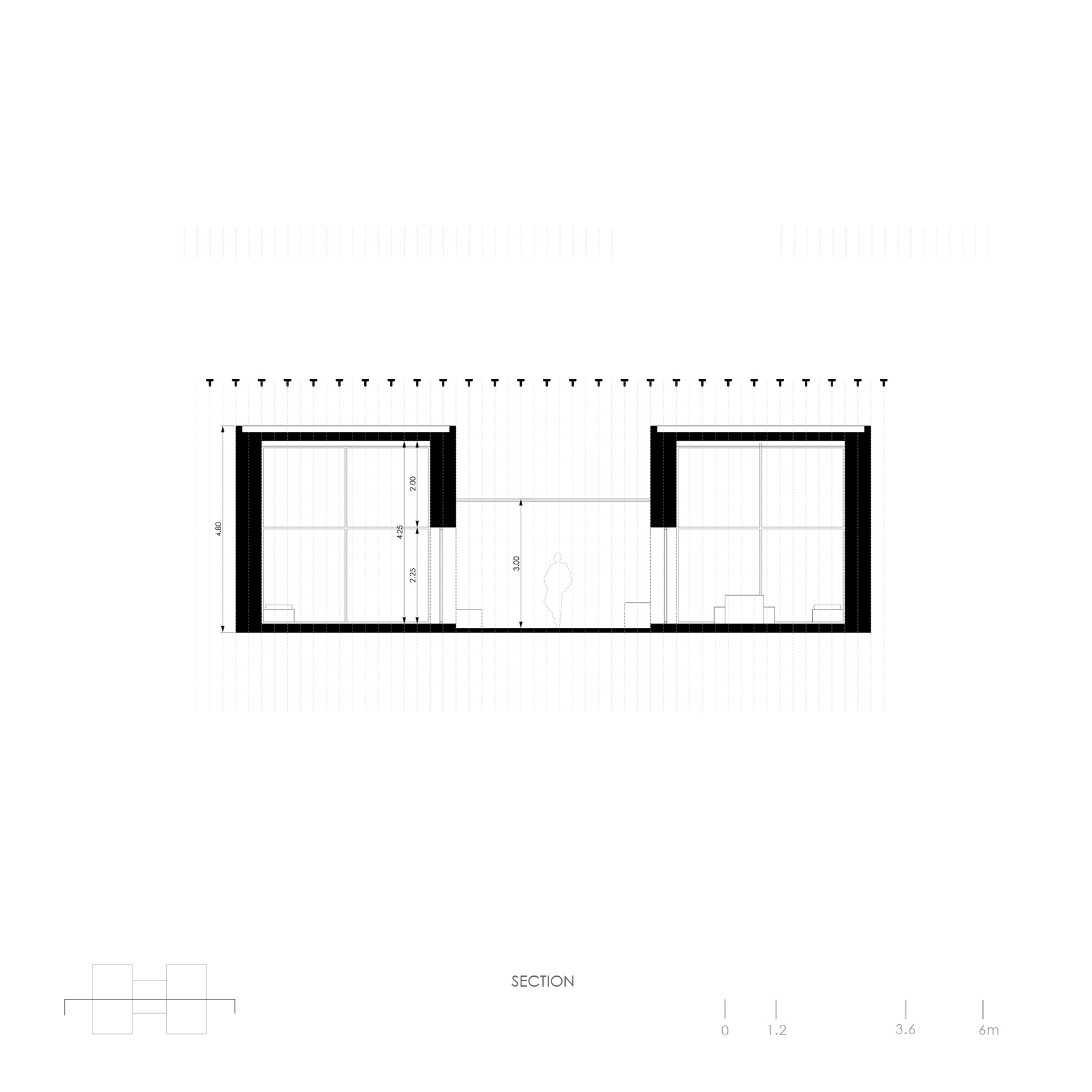
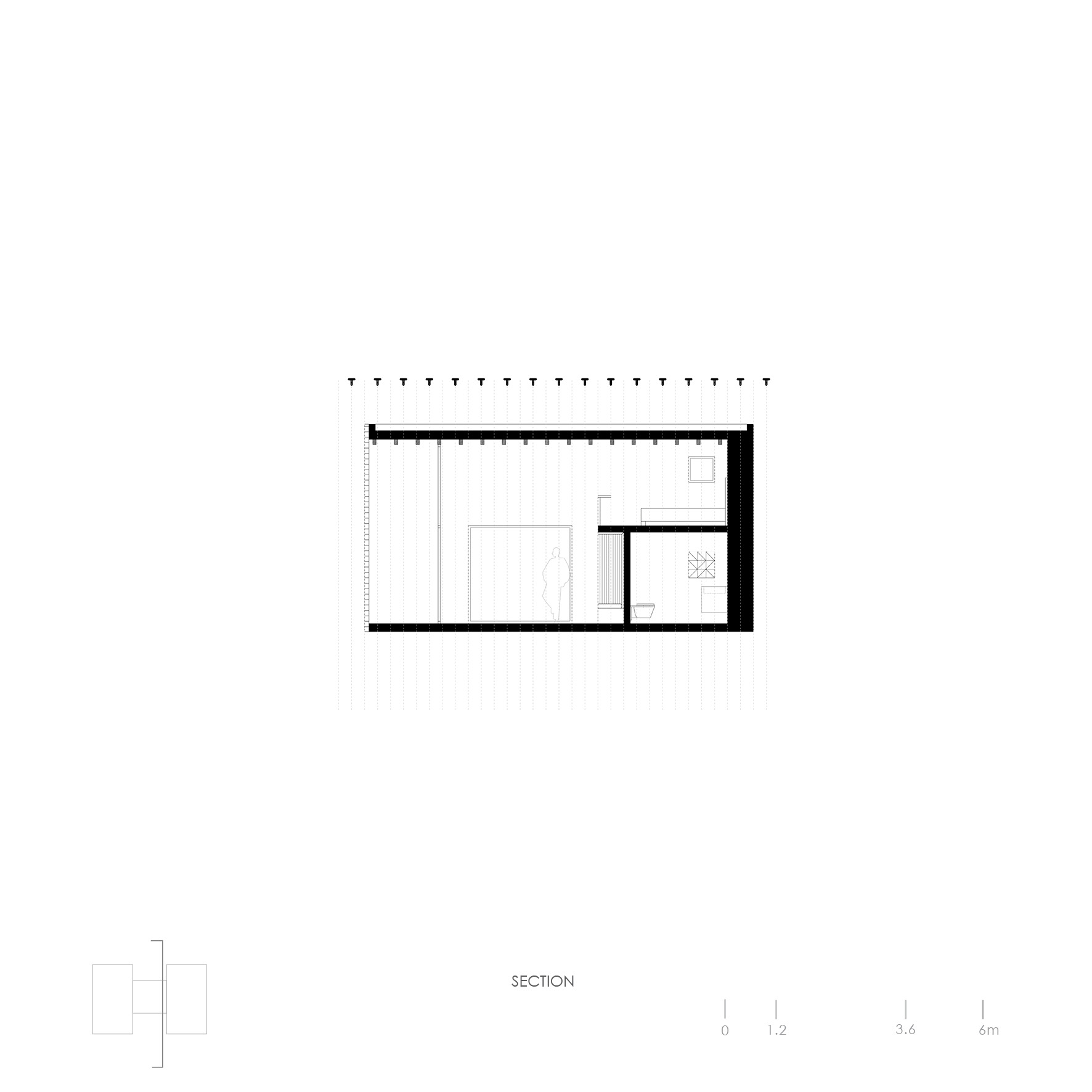
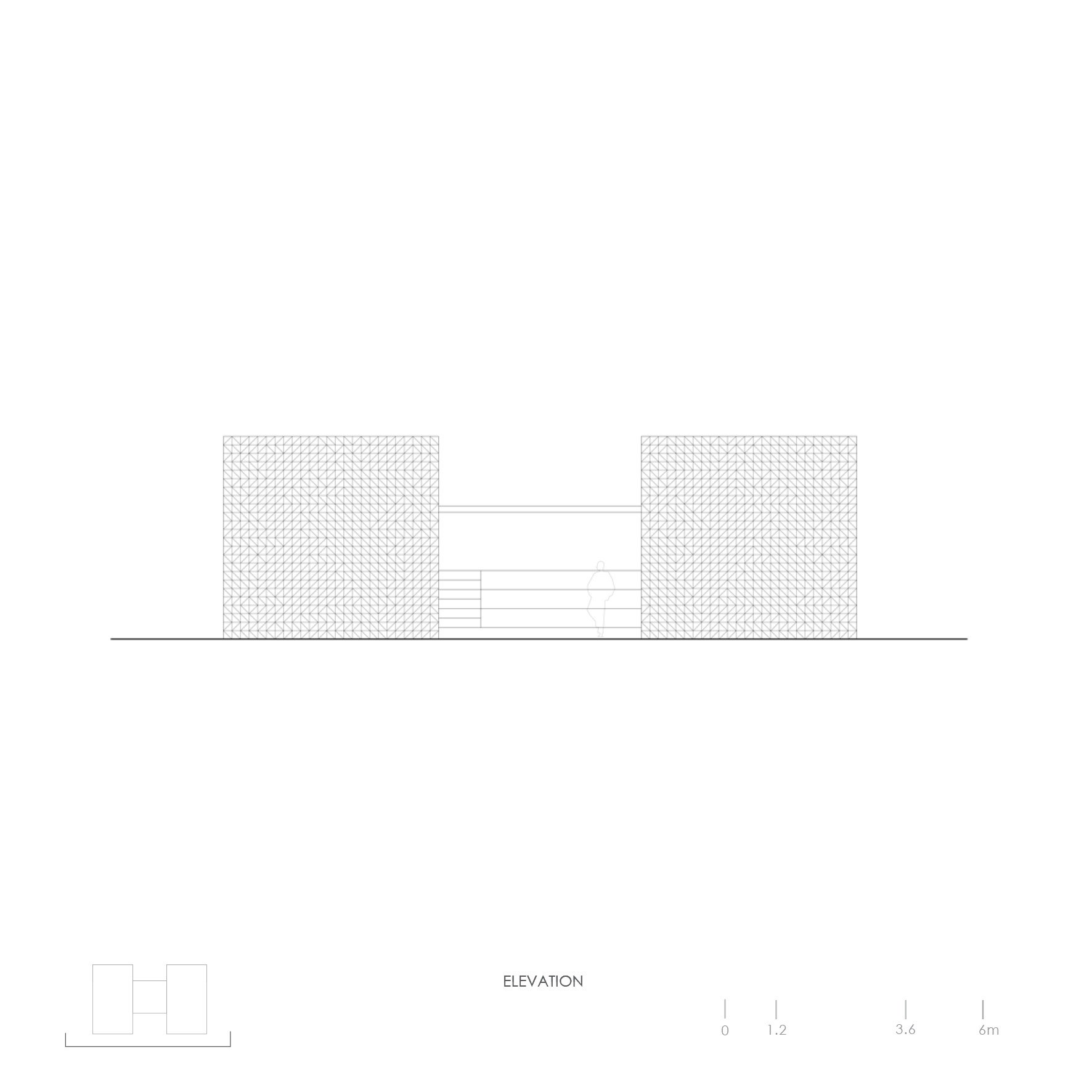
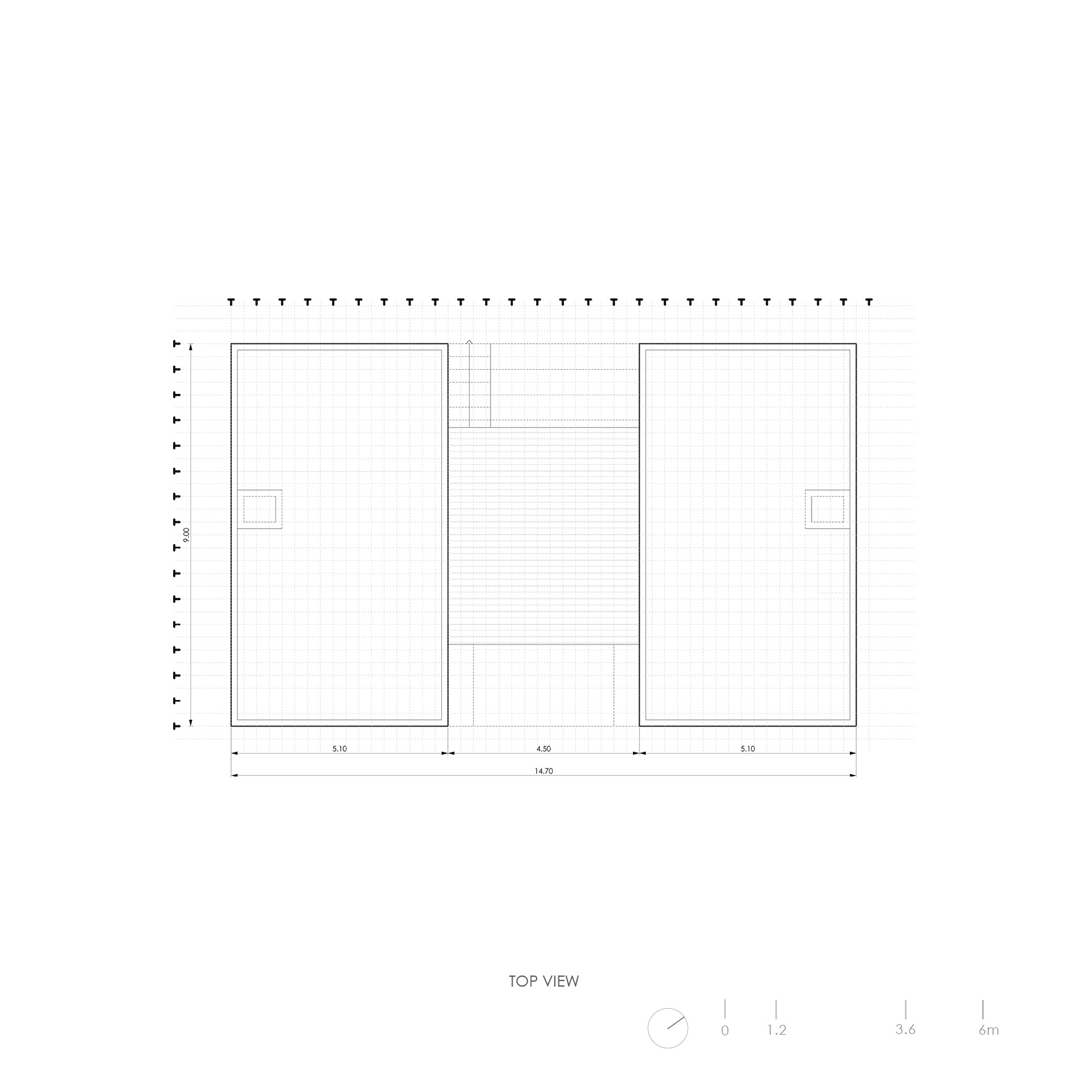
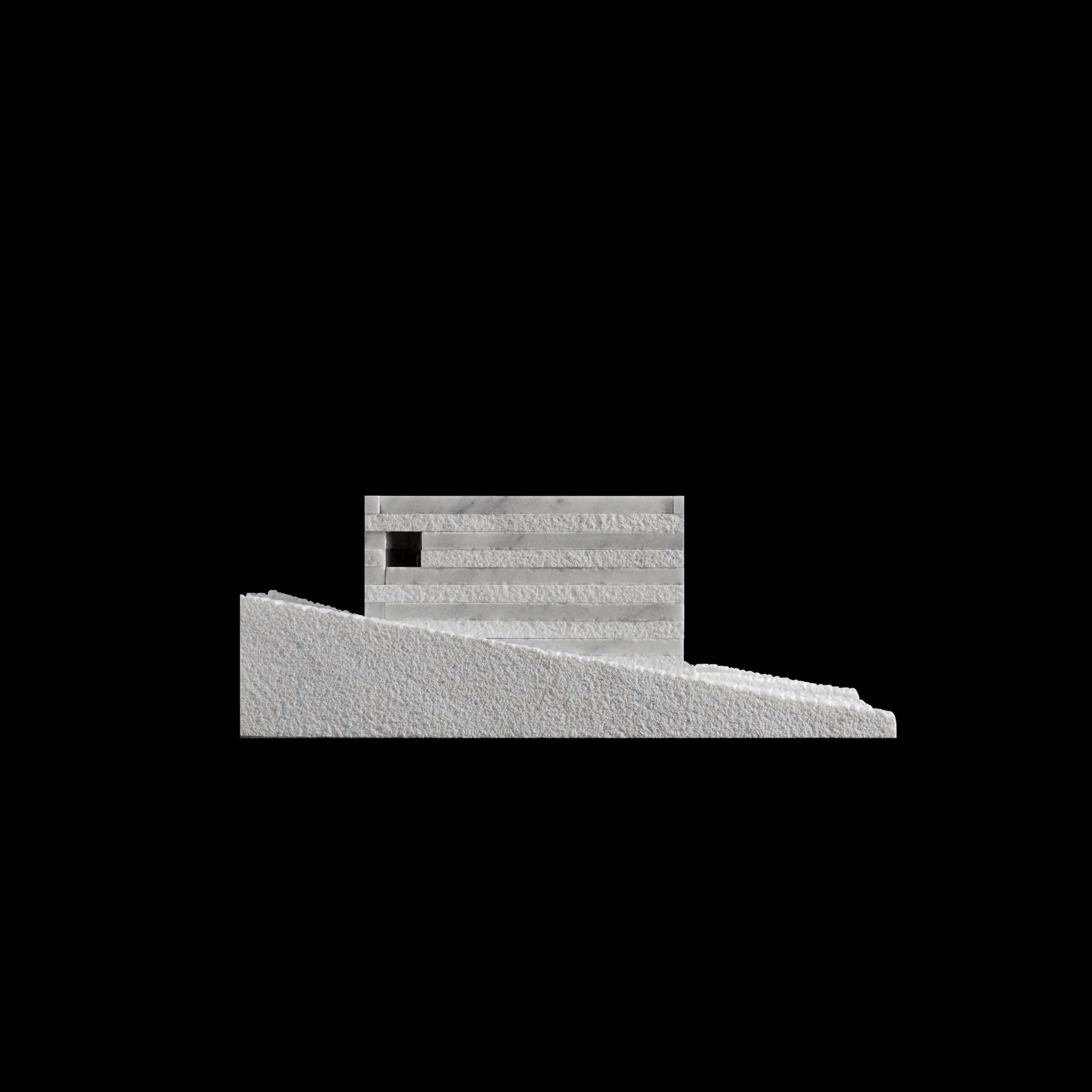
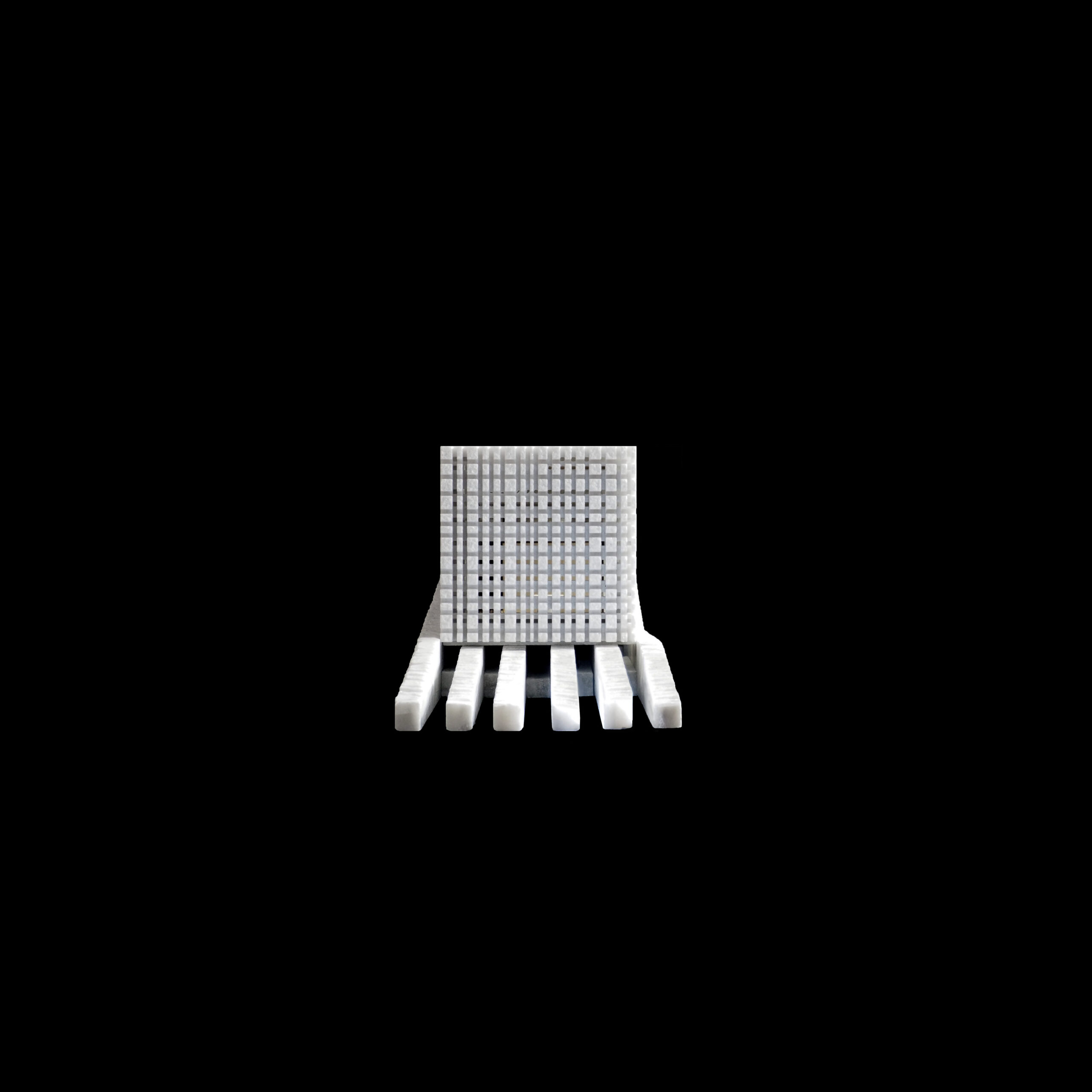
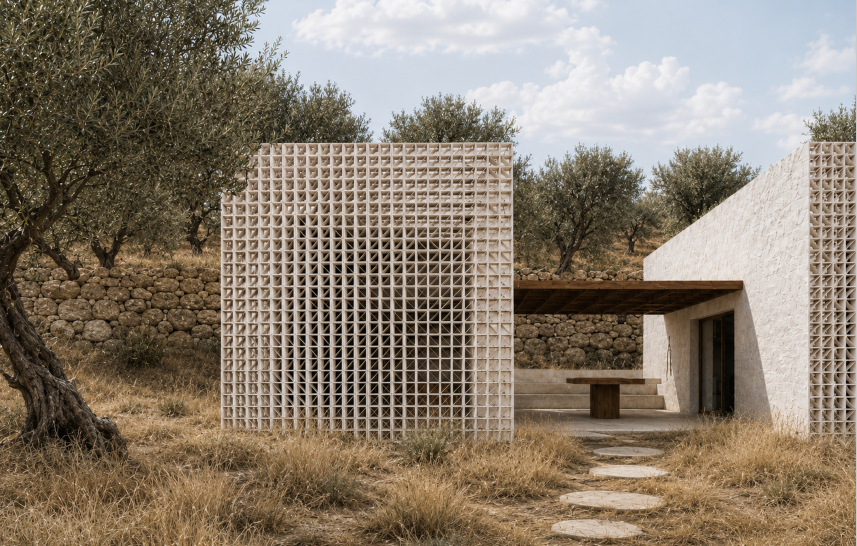
On the smaller plateaus, the proposed dwelling takes the form of a stone prism measuring 5.10 × 9.00 m with a height of 4.50 m. Inside, a double-height communal space is organized together with a compact wooden element containing the auxiliary domestic functions and an elevated sleeping area. The stone envelope is defined by limited openings, while on the eastern side, a stone lattice acts as a filter for shading and ventilation.
On the larger terraces, the unit is repeated in a sliding arrangement around a shared courtyard and unified through a wooden pergola. Small circular water basins contribute to the improvement of the microclimate, while the existing vegetation is preserved in its entirety. The proposal thus forms a system of dwellings that settles into the landscape while maintaining the logic of the terraces, the paths, and the agricultural geography of Volada. The project approaches the existing landscape not as a historical image to be preserved, but as a living structure whose spatial logic remains active in the present.
Architects: P4architecture
Design Team: Alkiviadis Pyliotis, Evangelos Fokialis, Konstantinos Pyliotis,Evangelia Triantafylla
Contributors: Natasha Chatzichristodoulou, Angeliki Kontokosta, Persefoni Chatziagoraki
Civil Engineers Consultants: Skalos EPE
Mechanical Engineer: Manouil Kalogirou
Project Type: Private Commision
Project Year: 2026