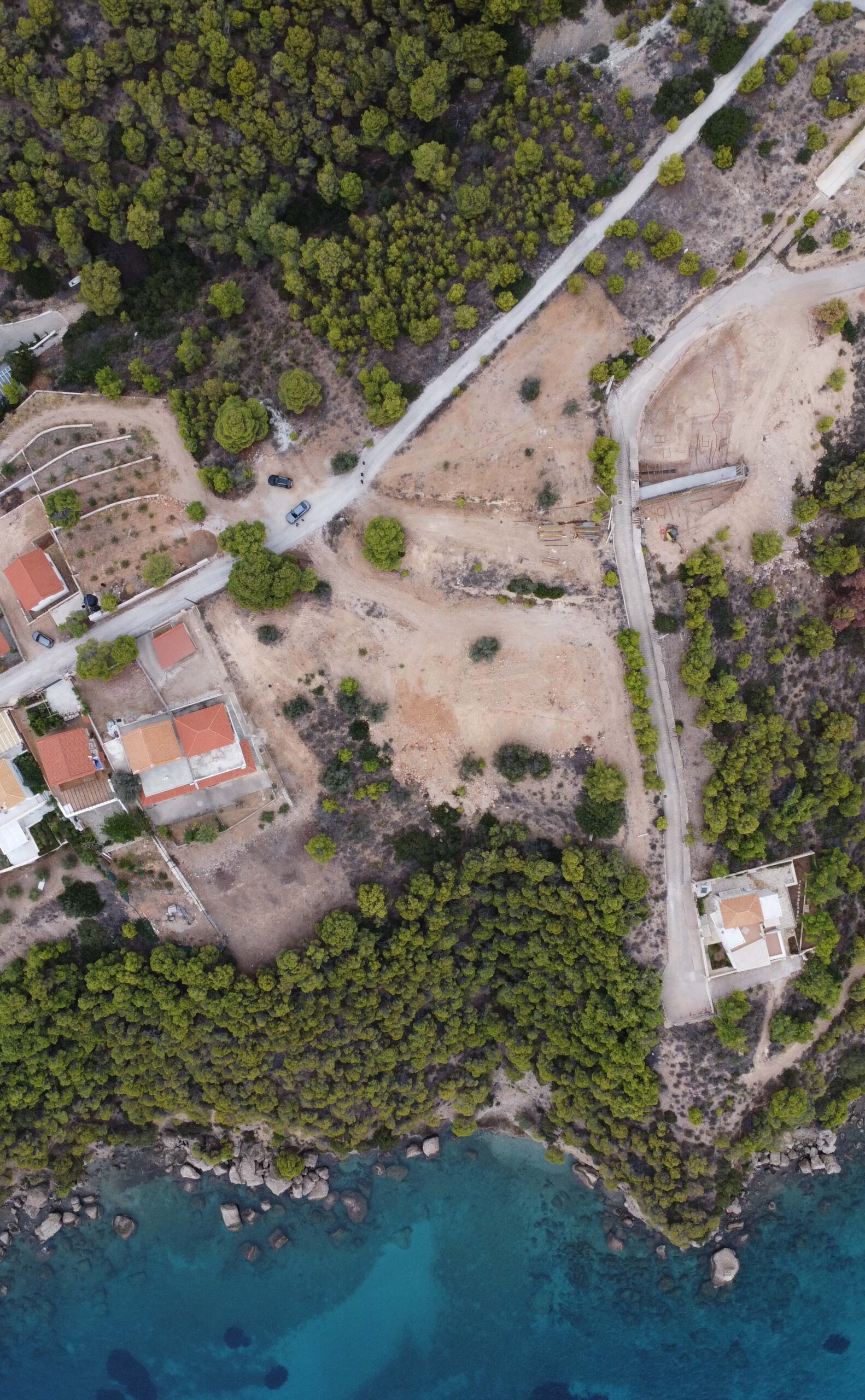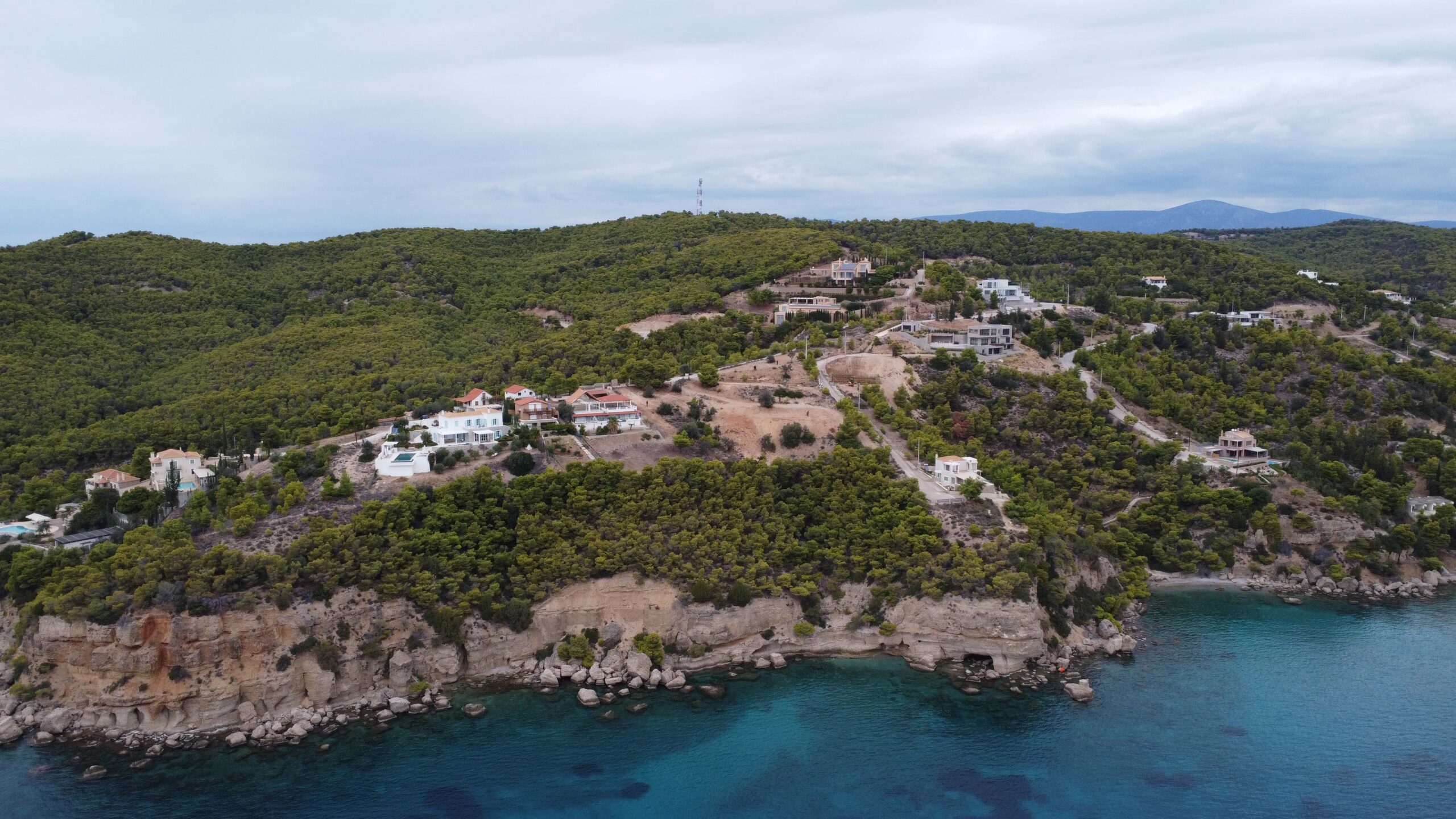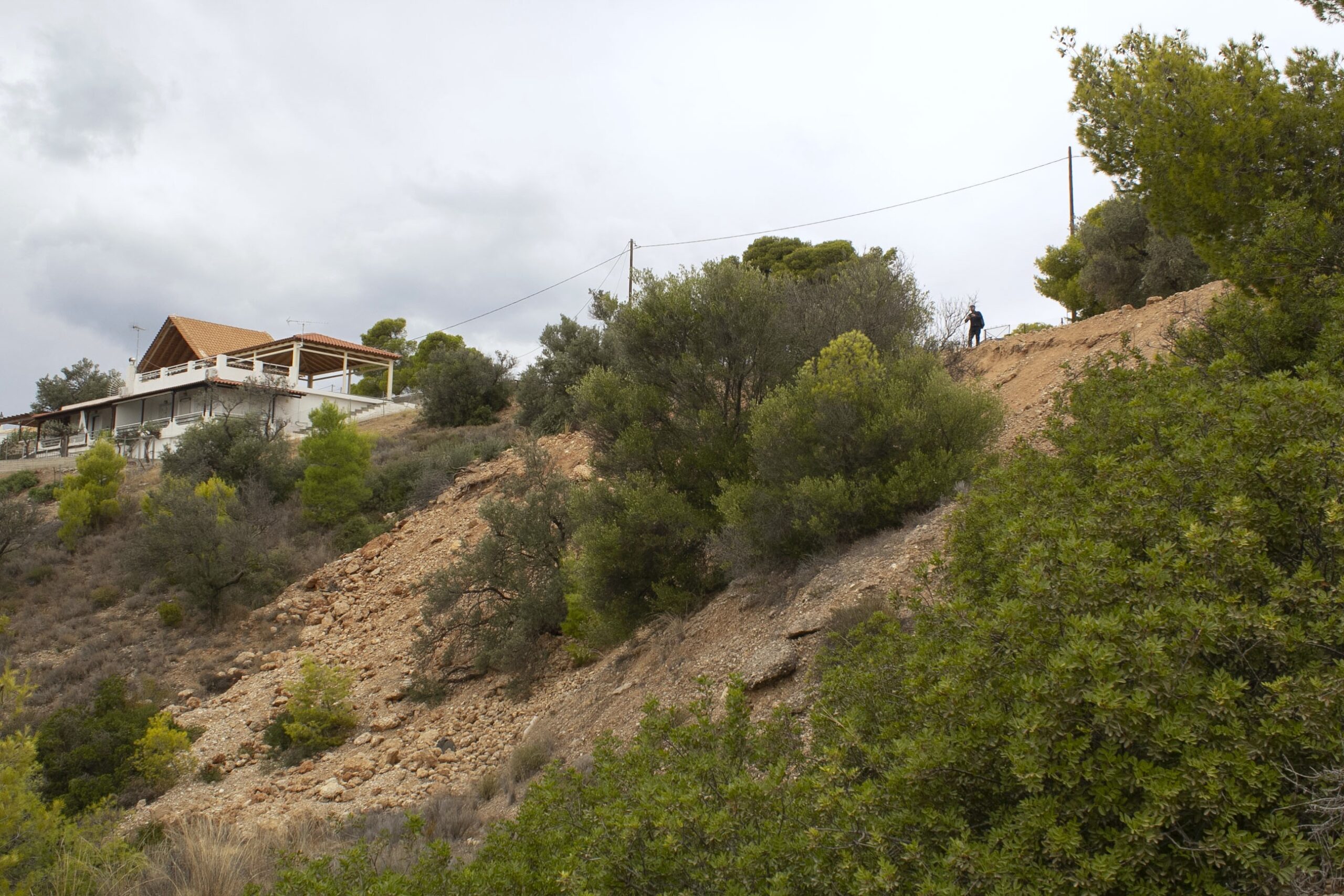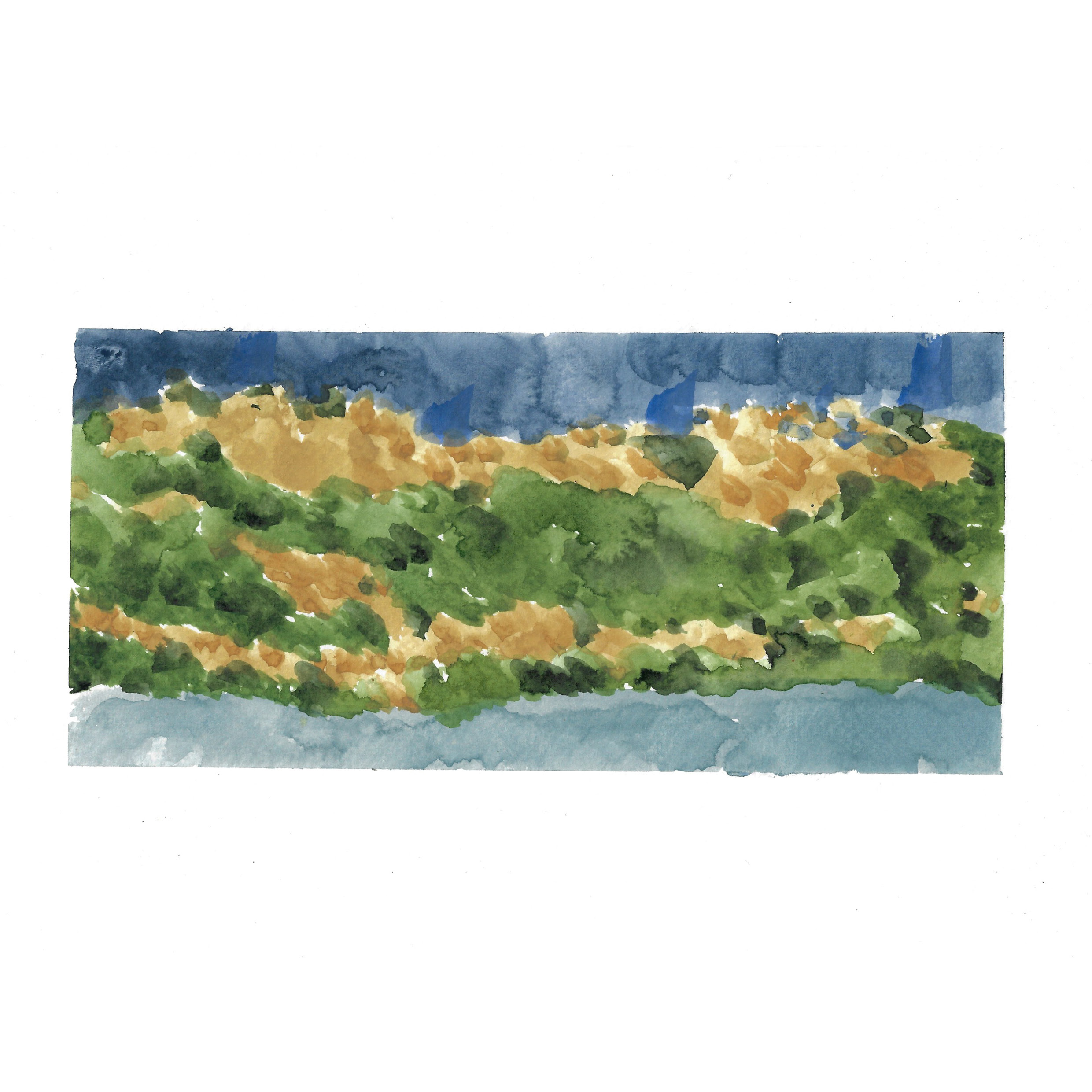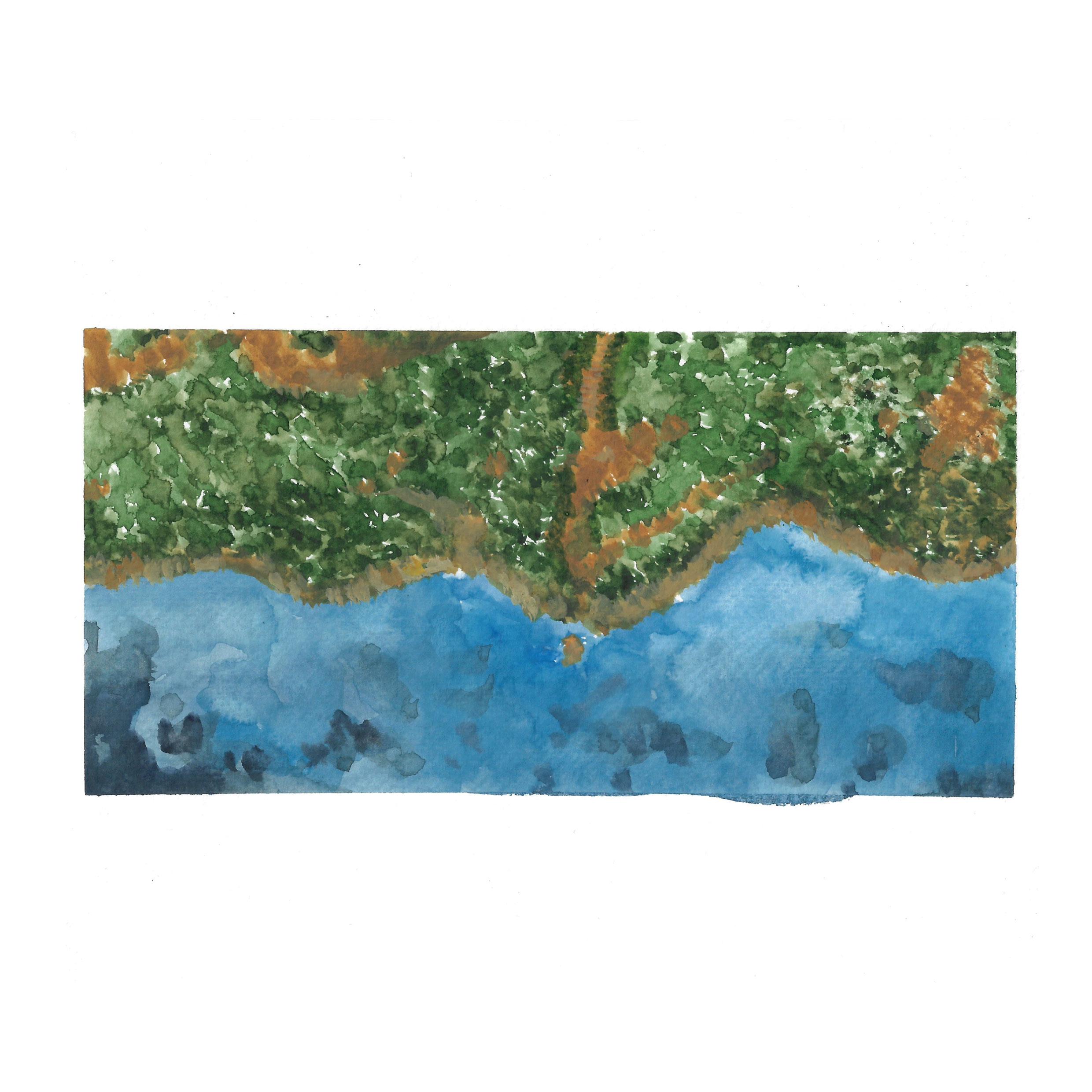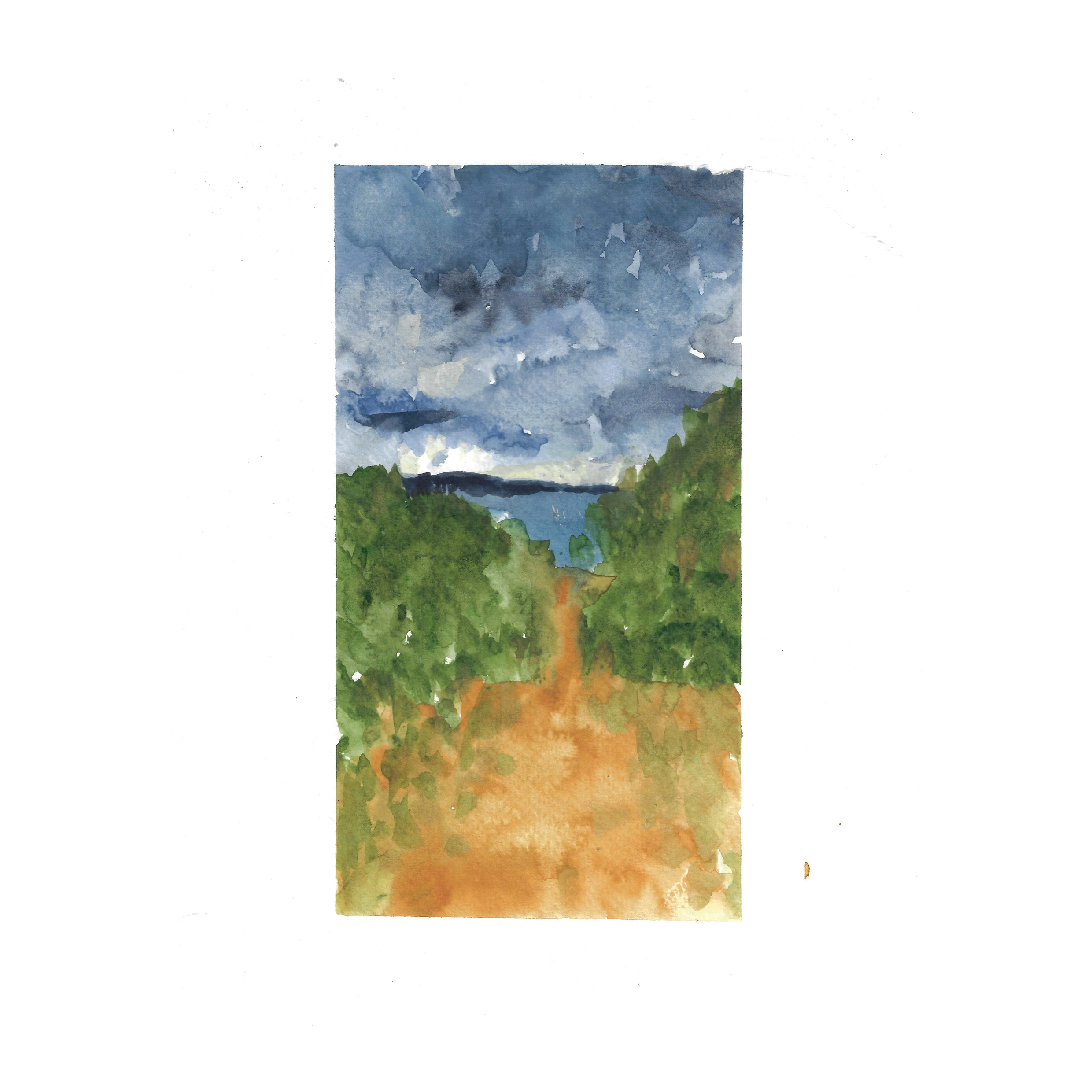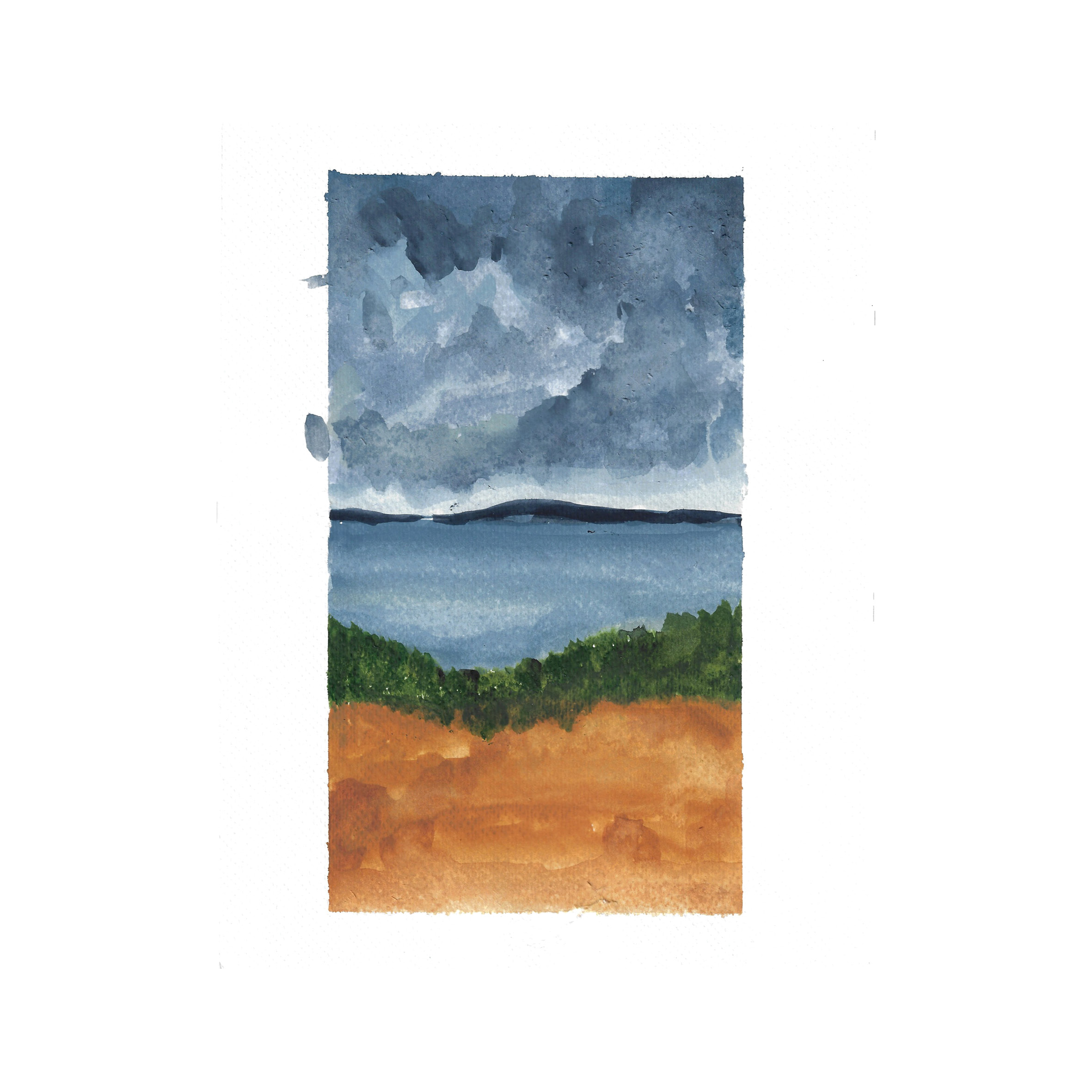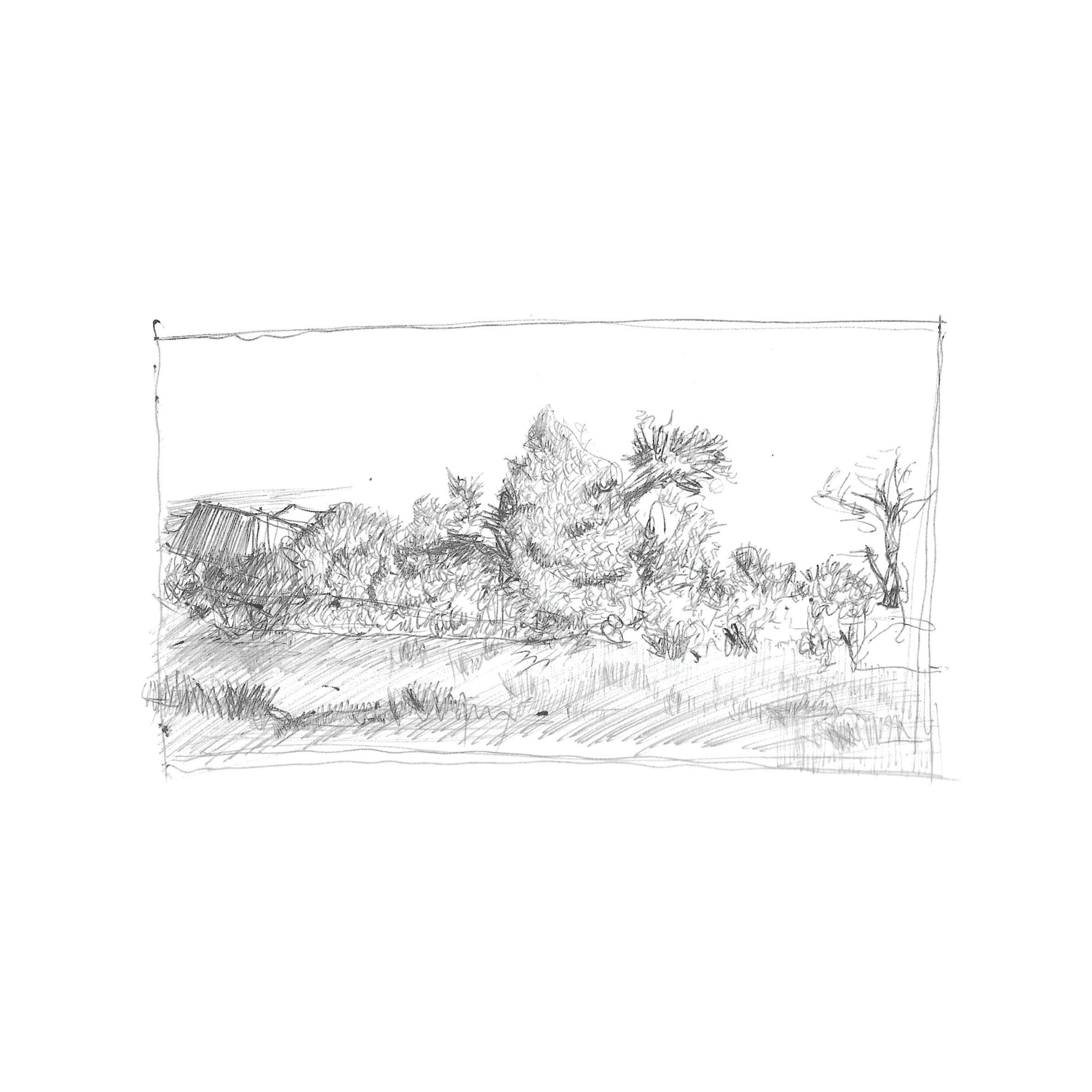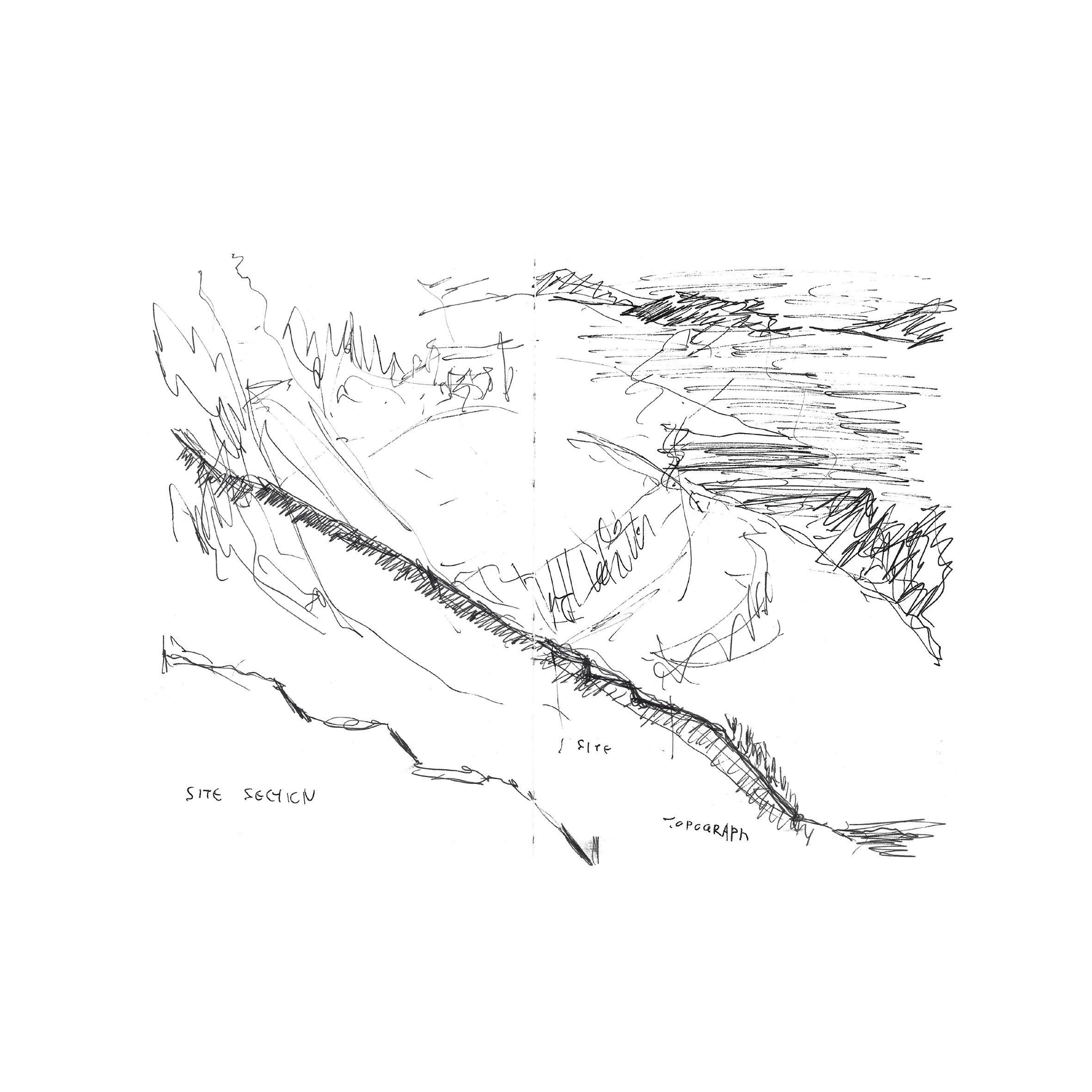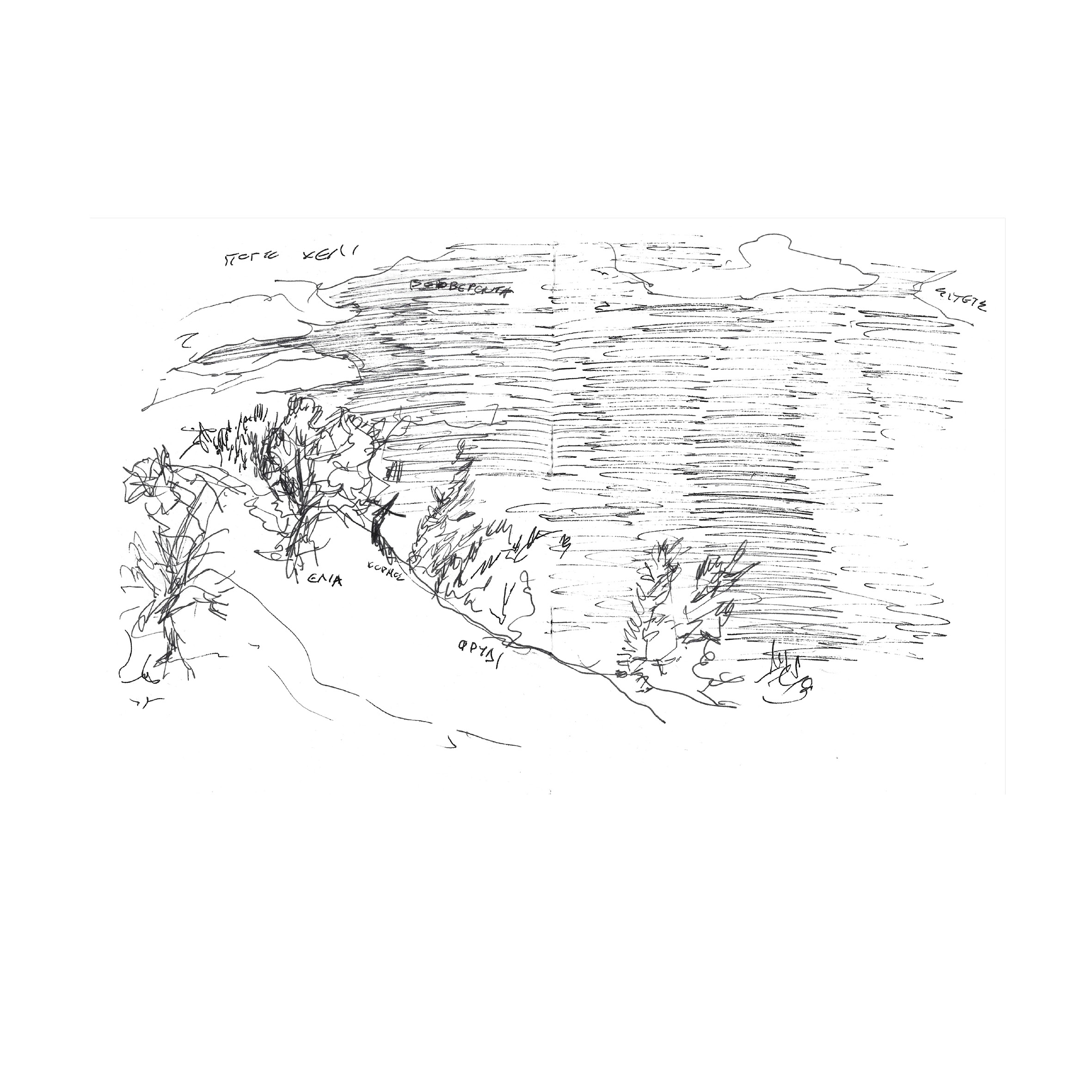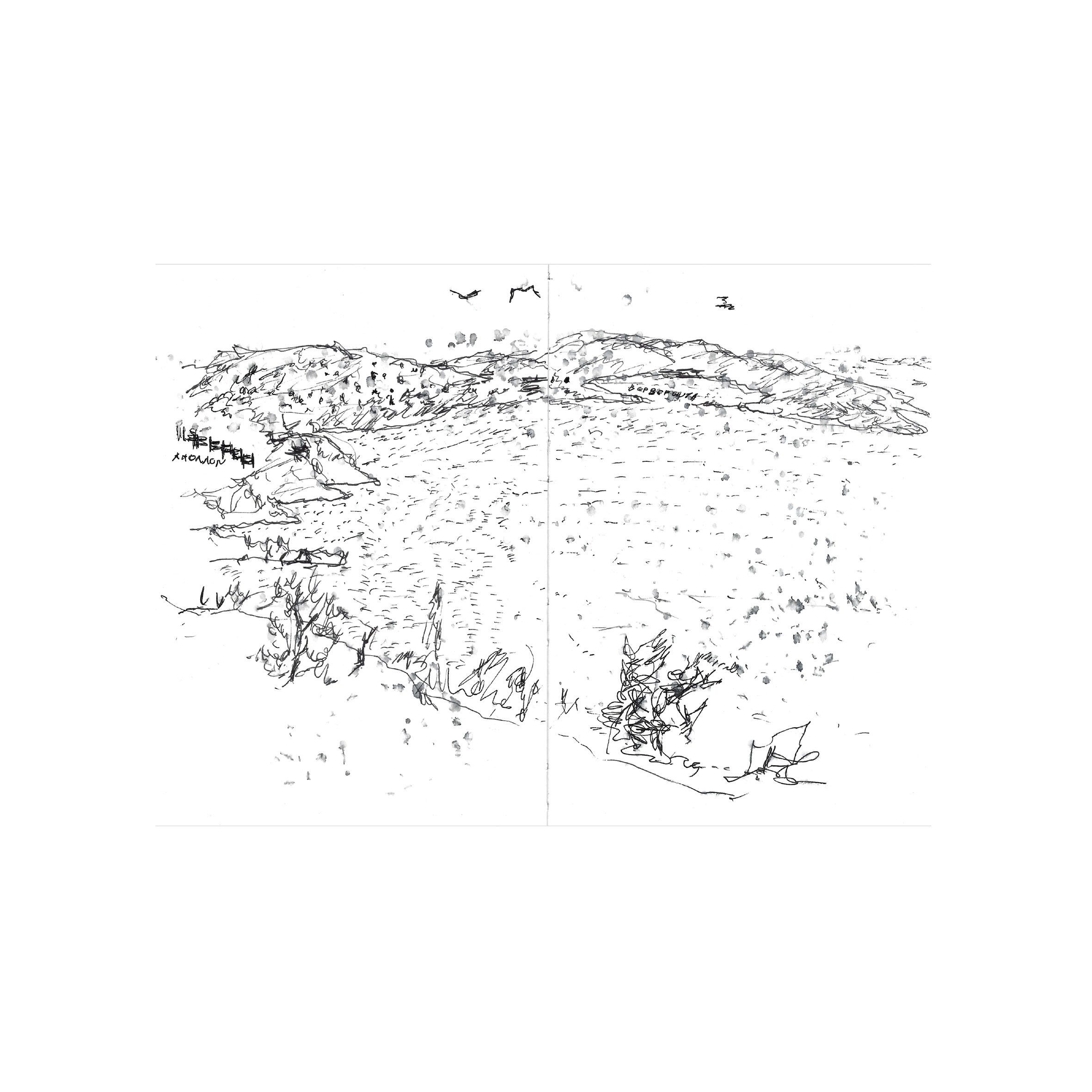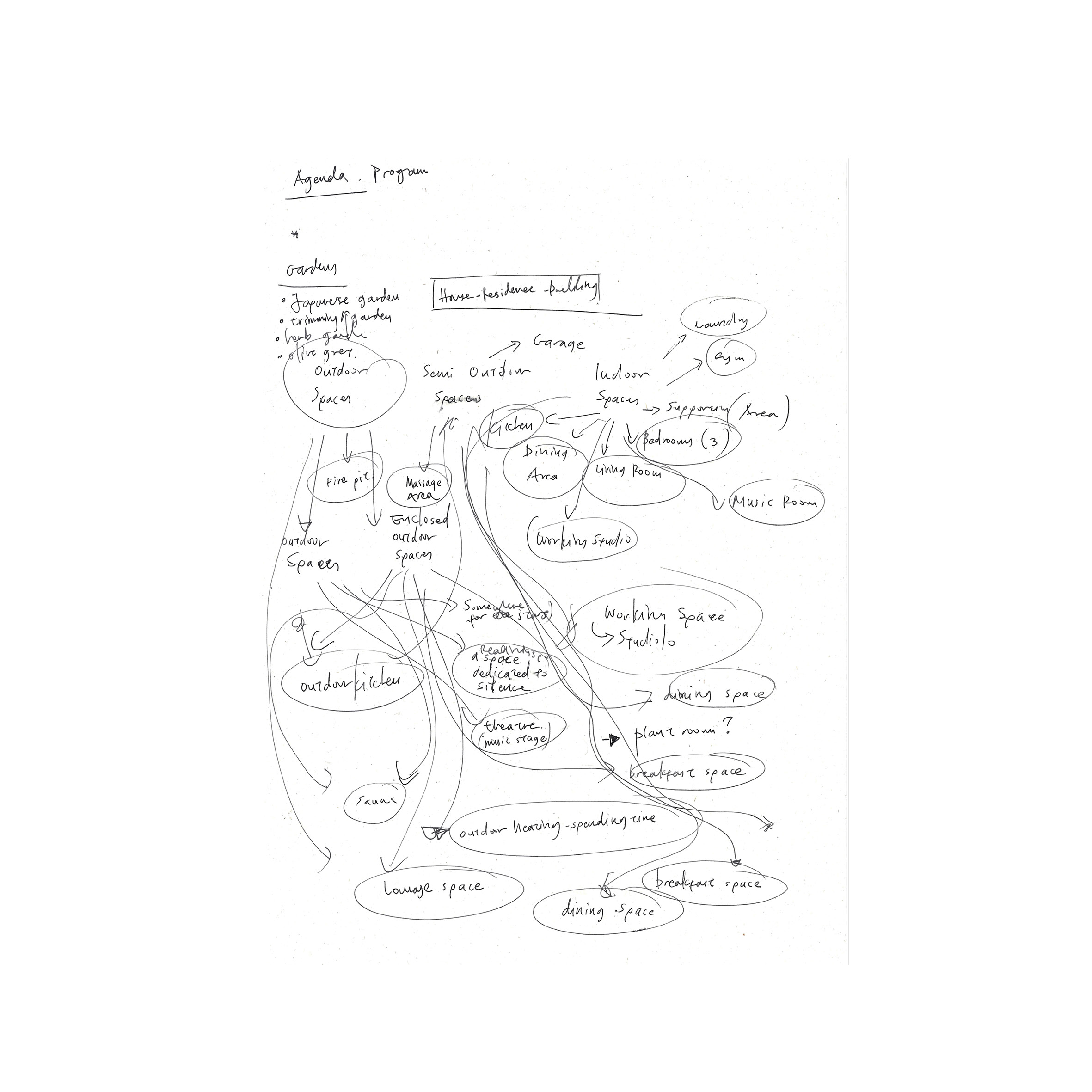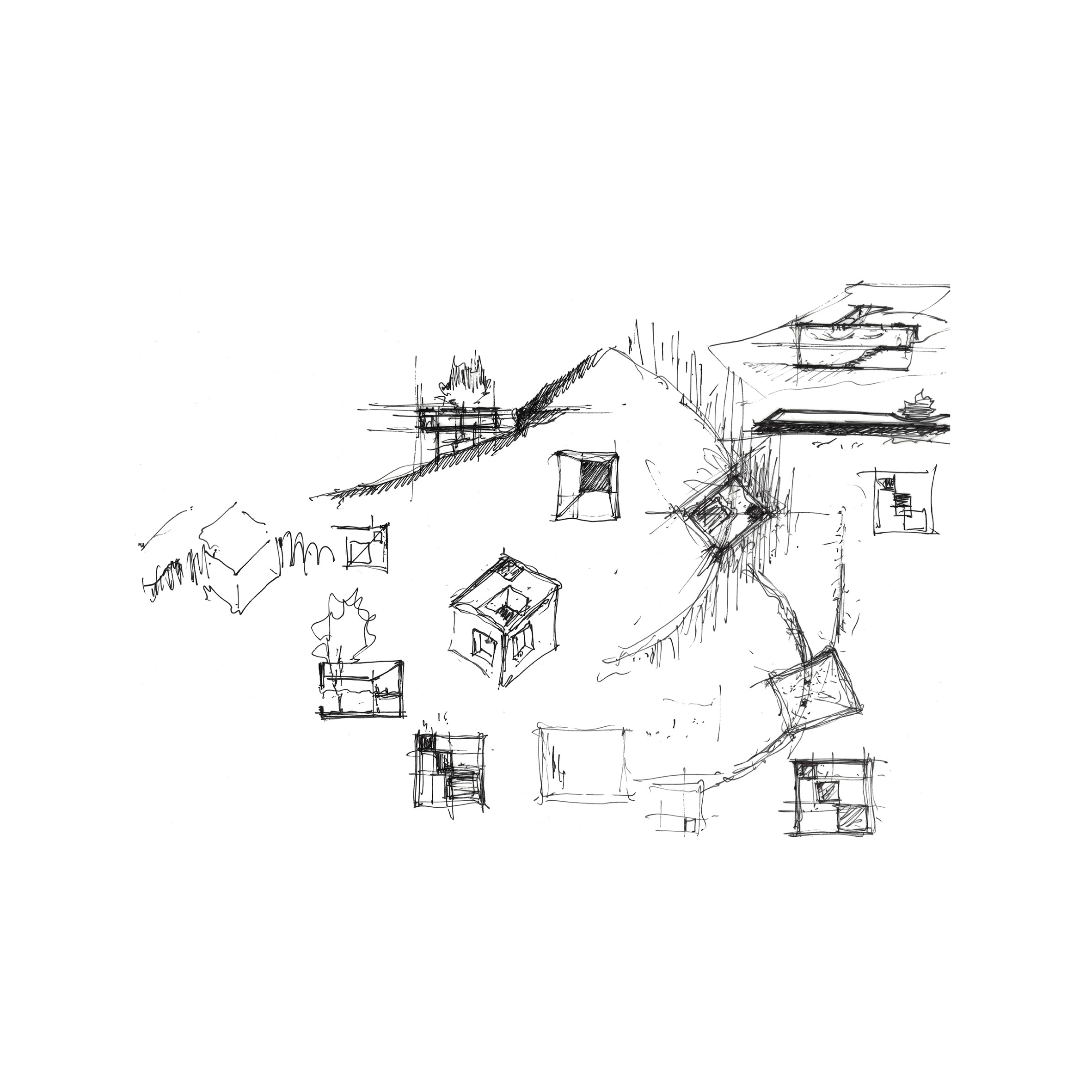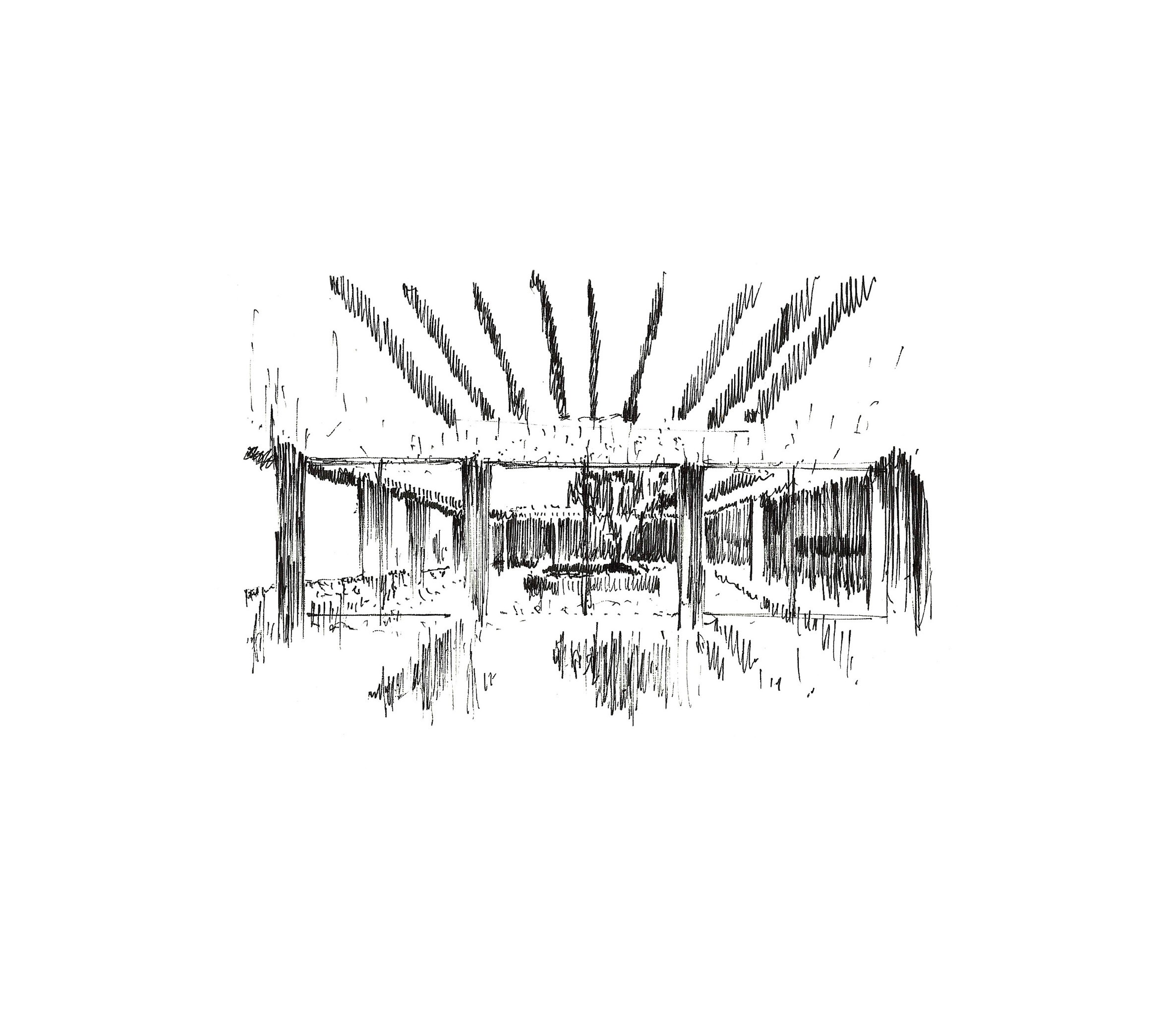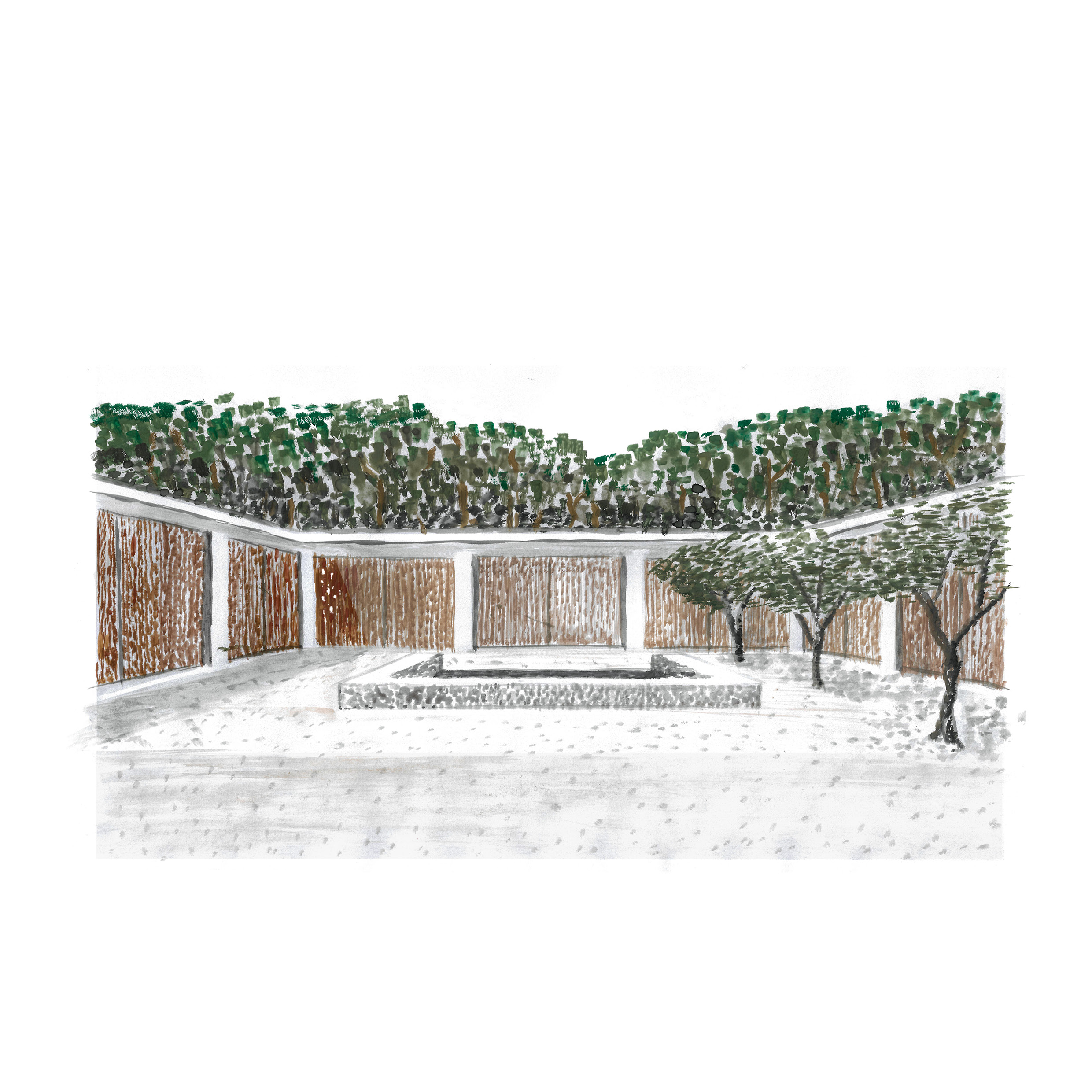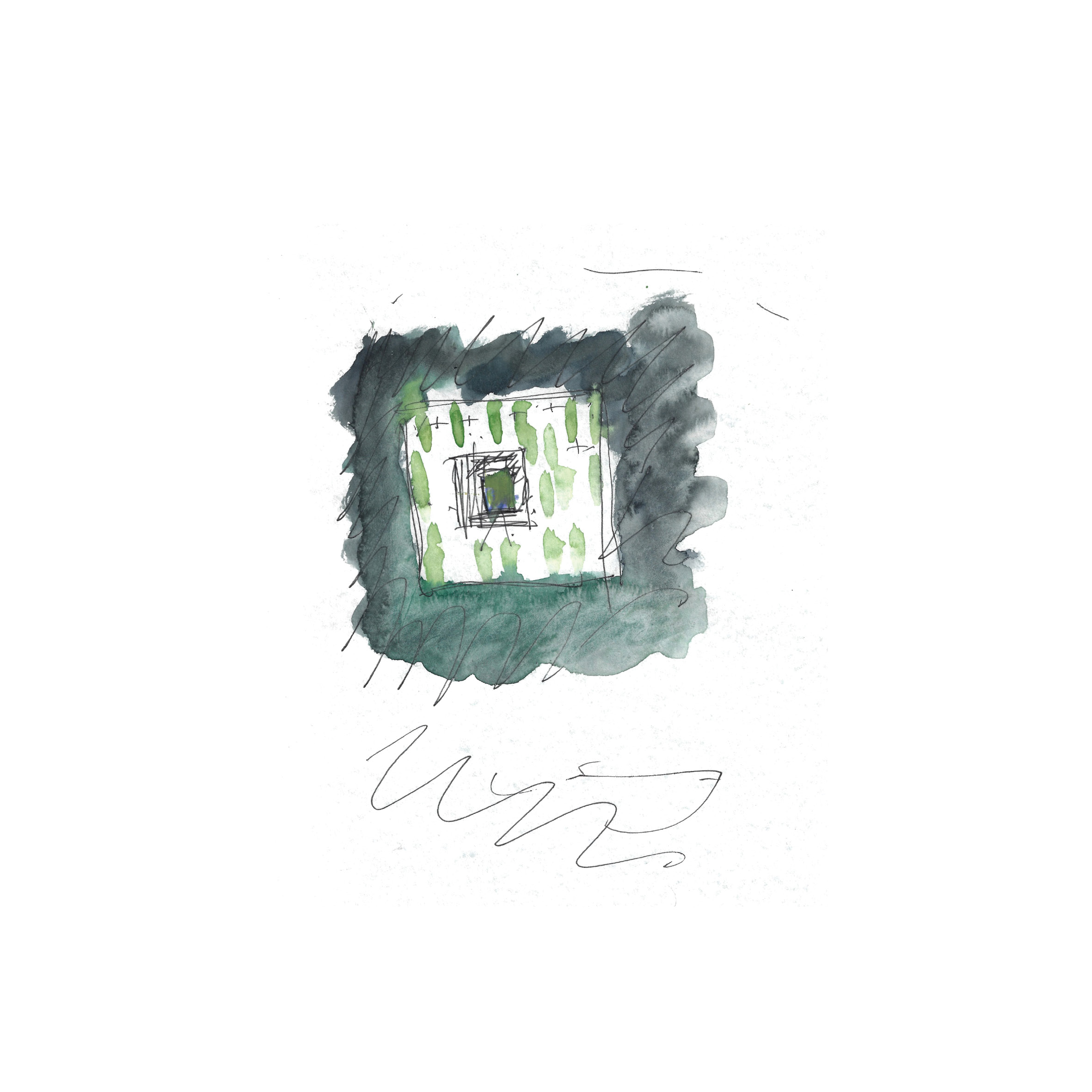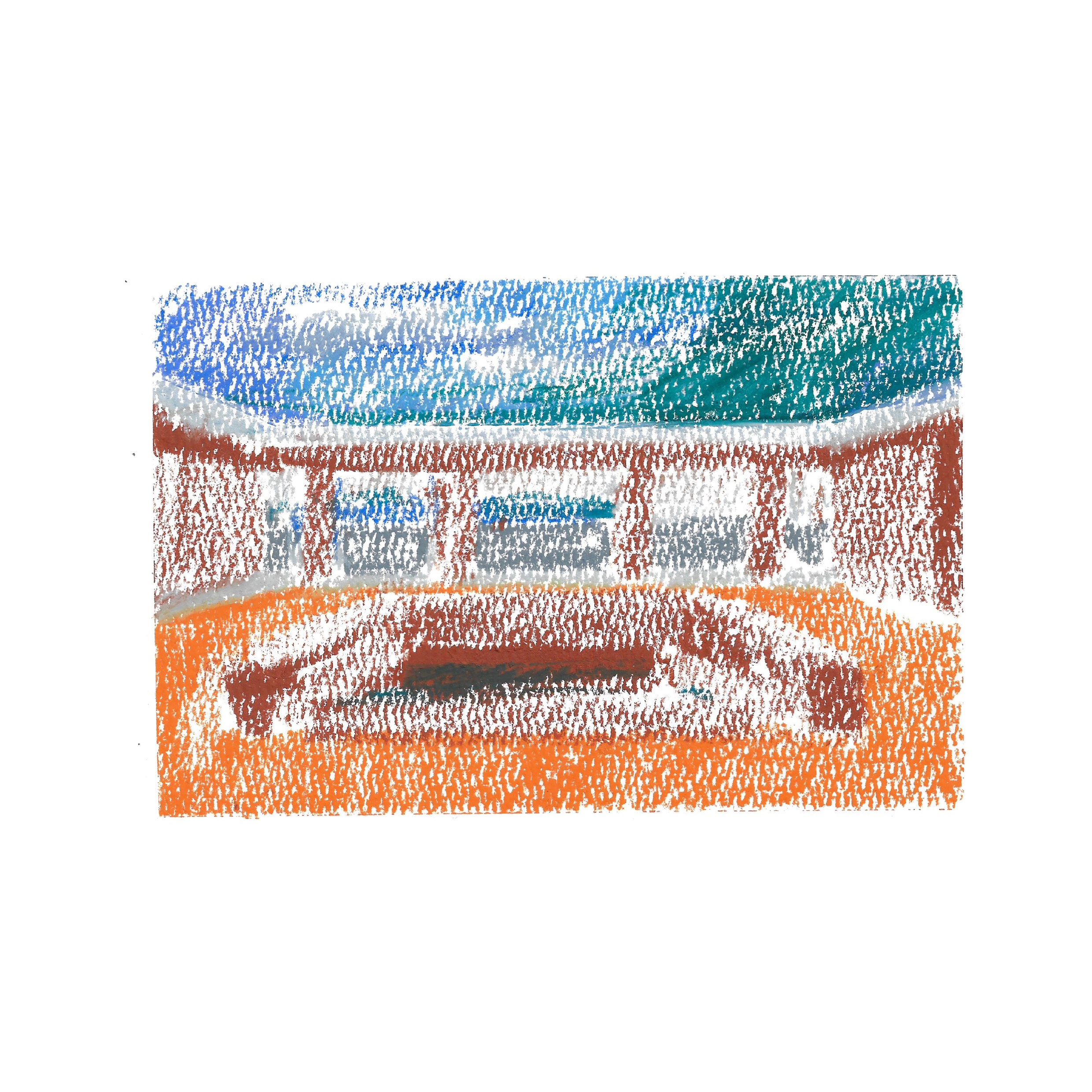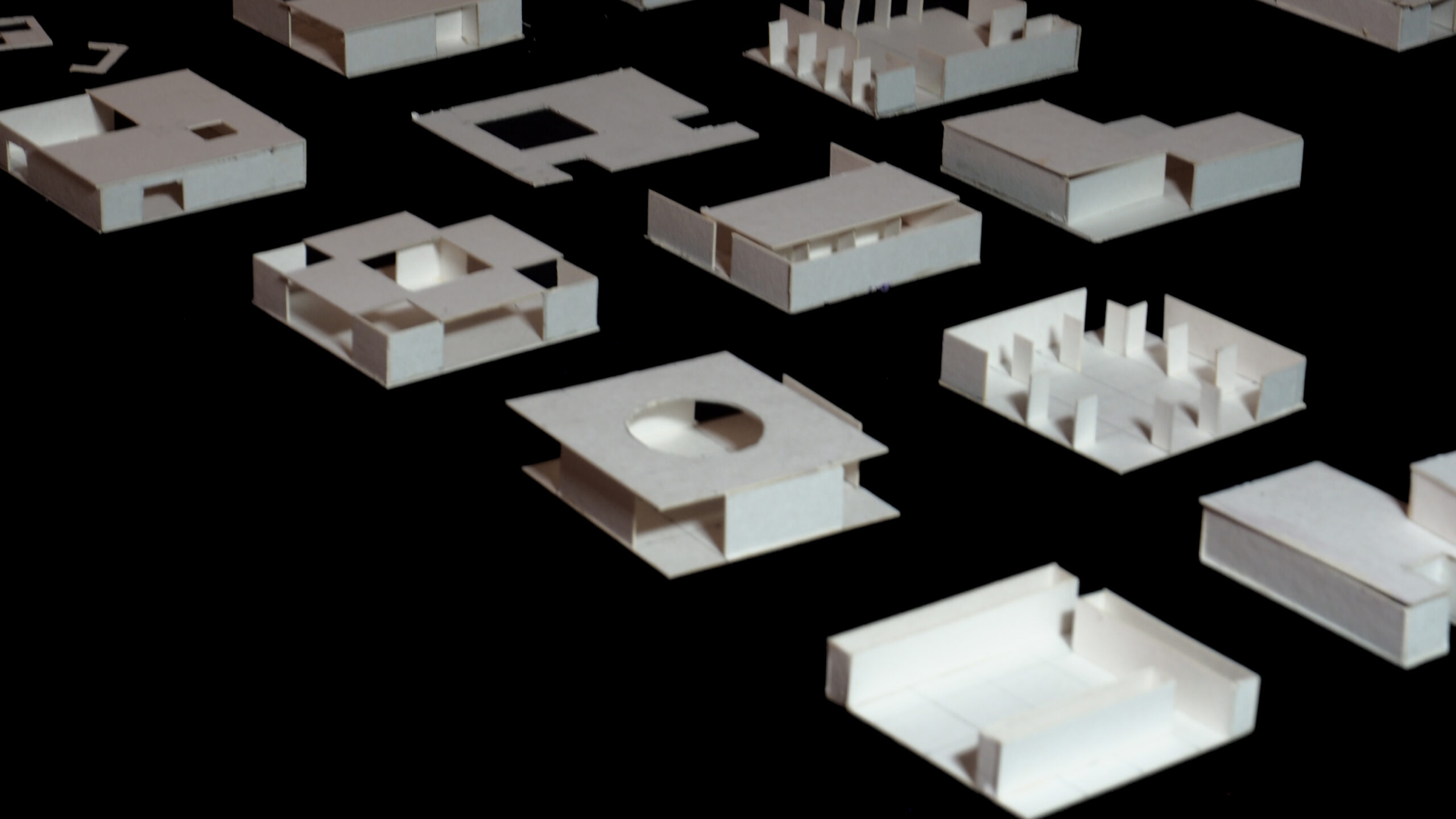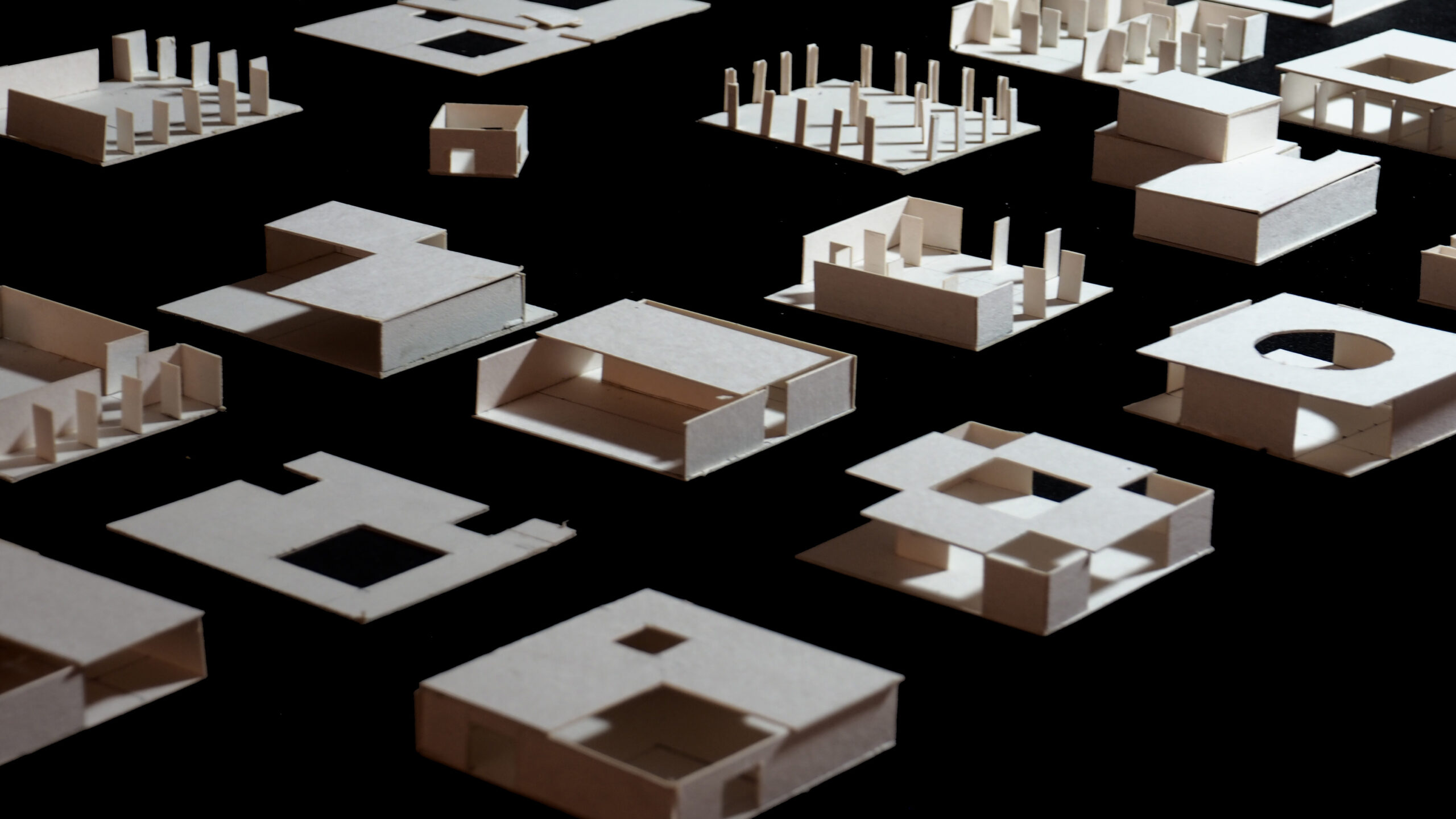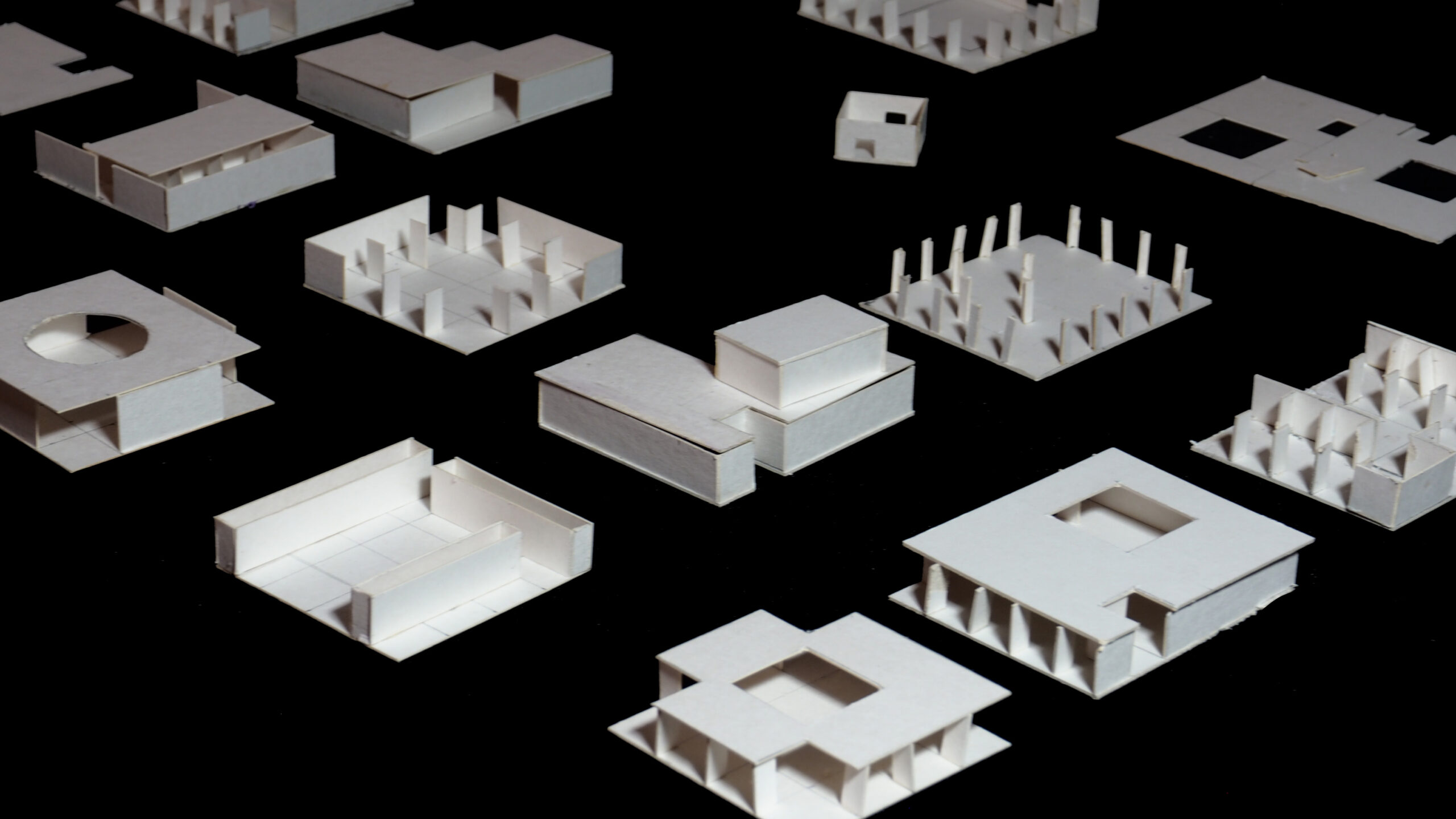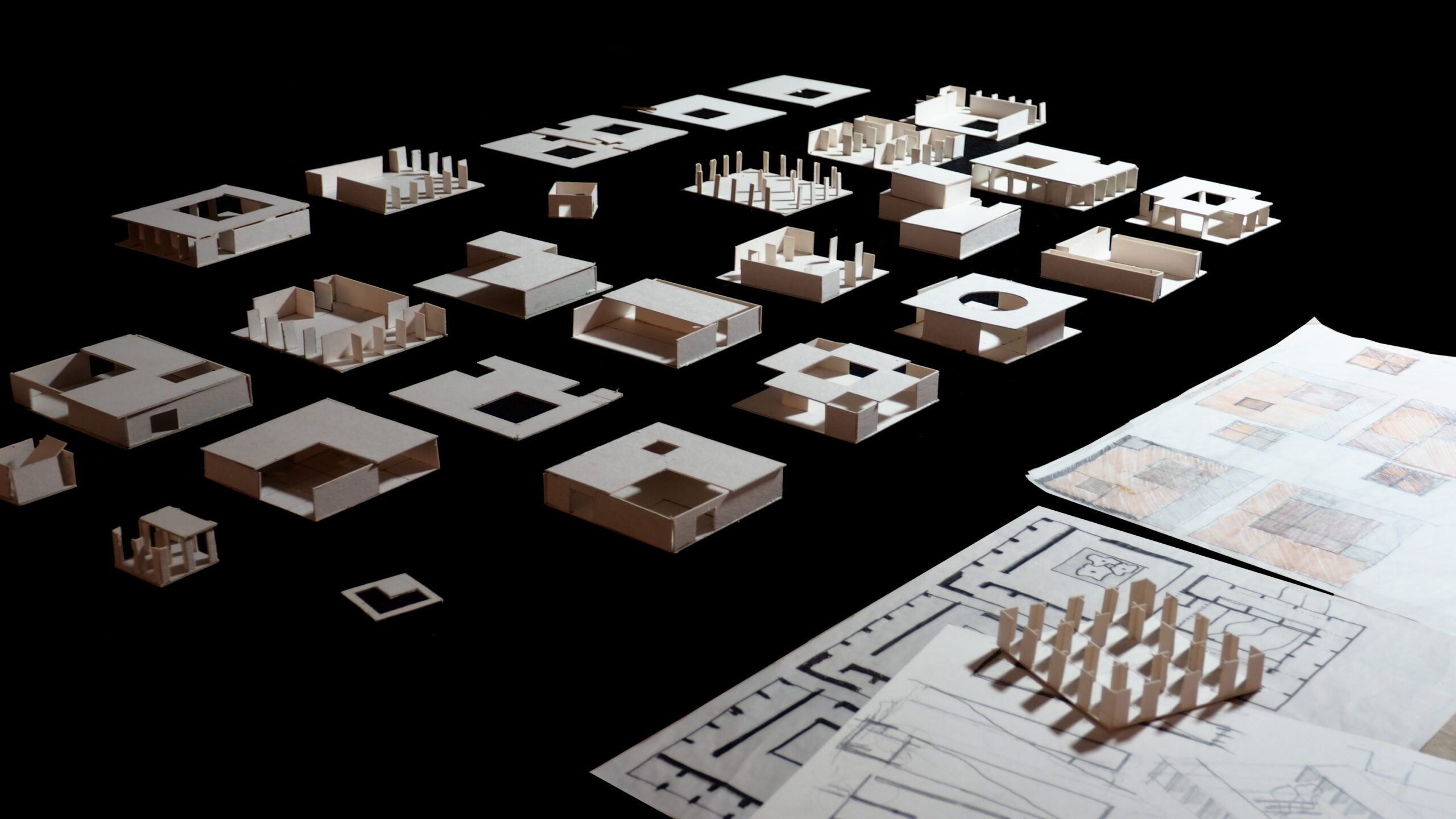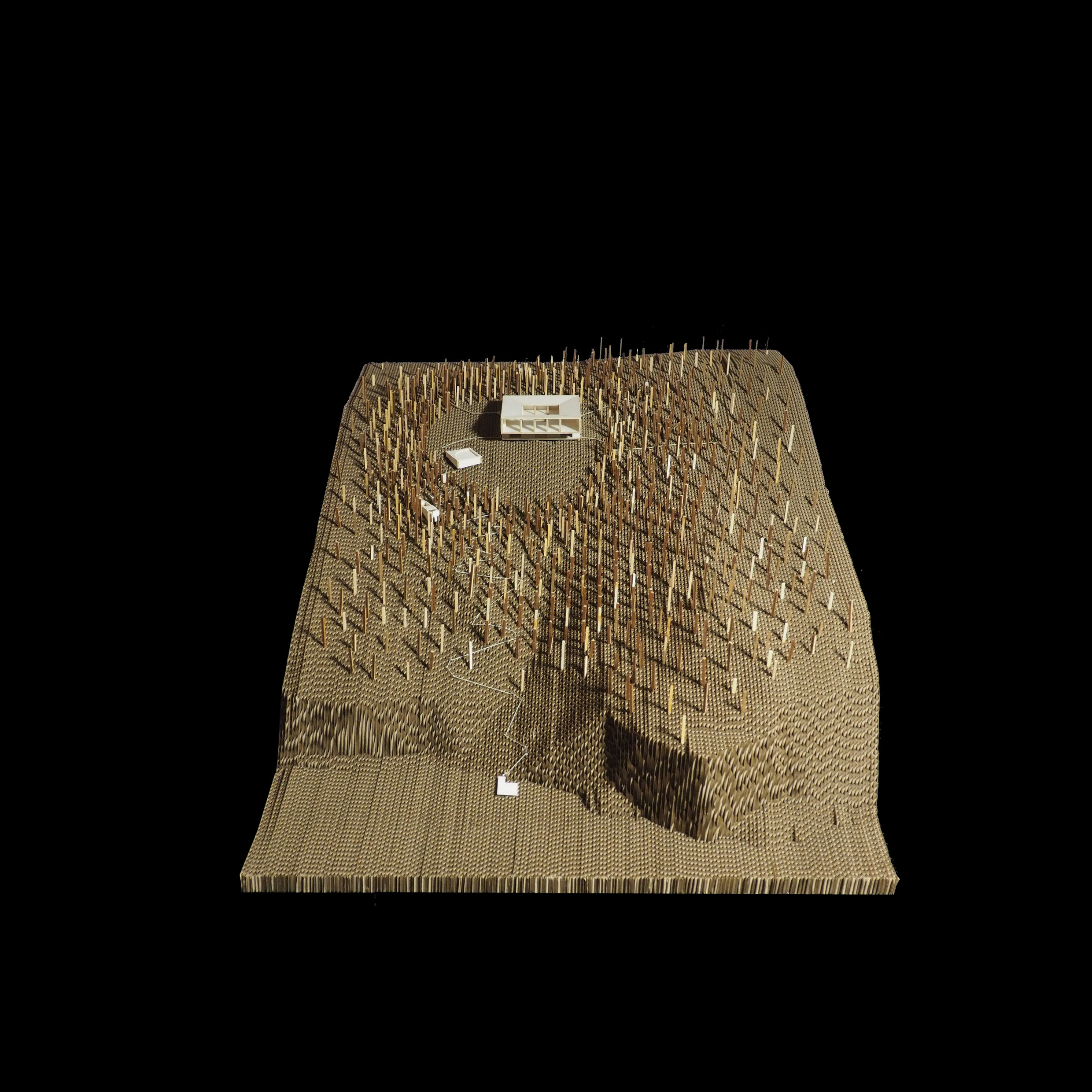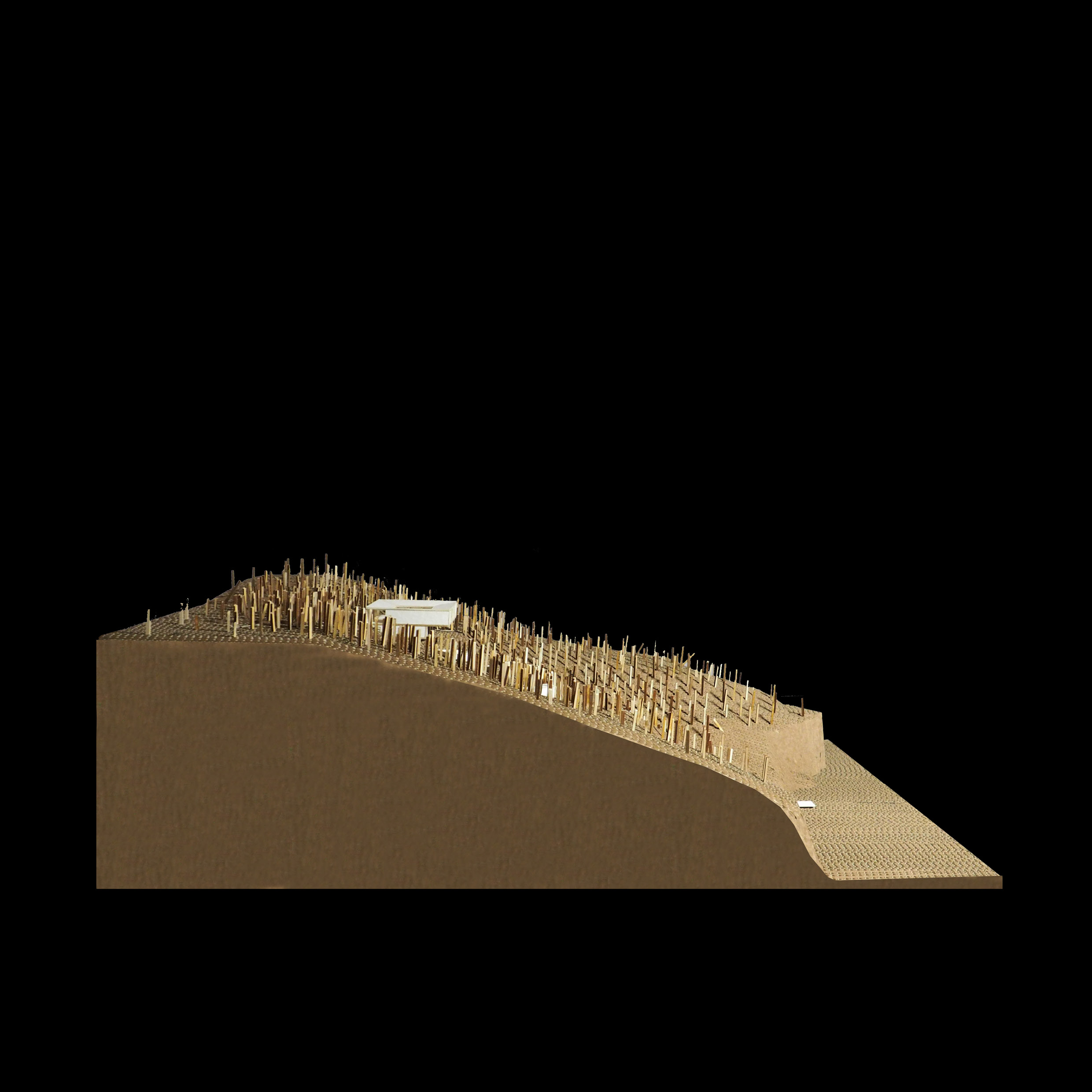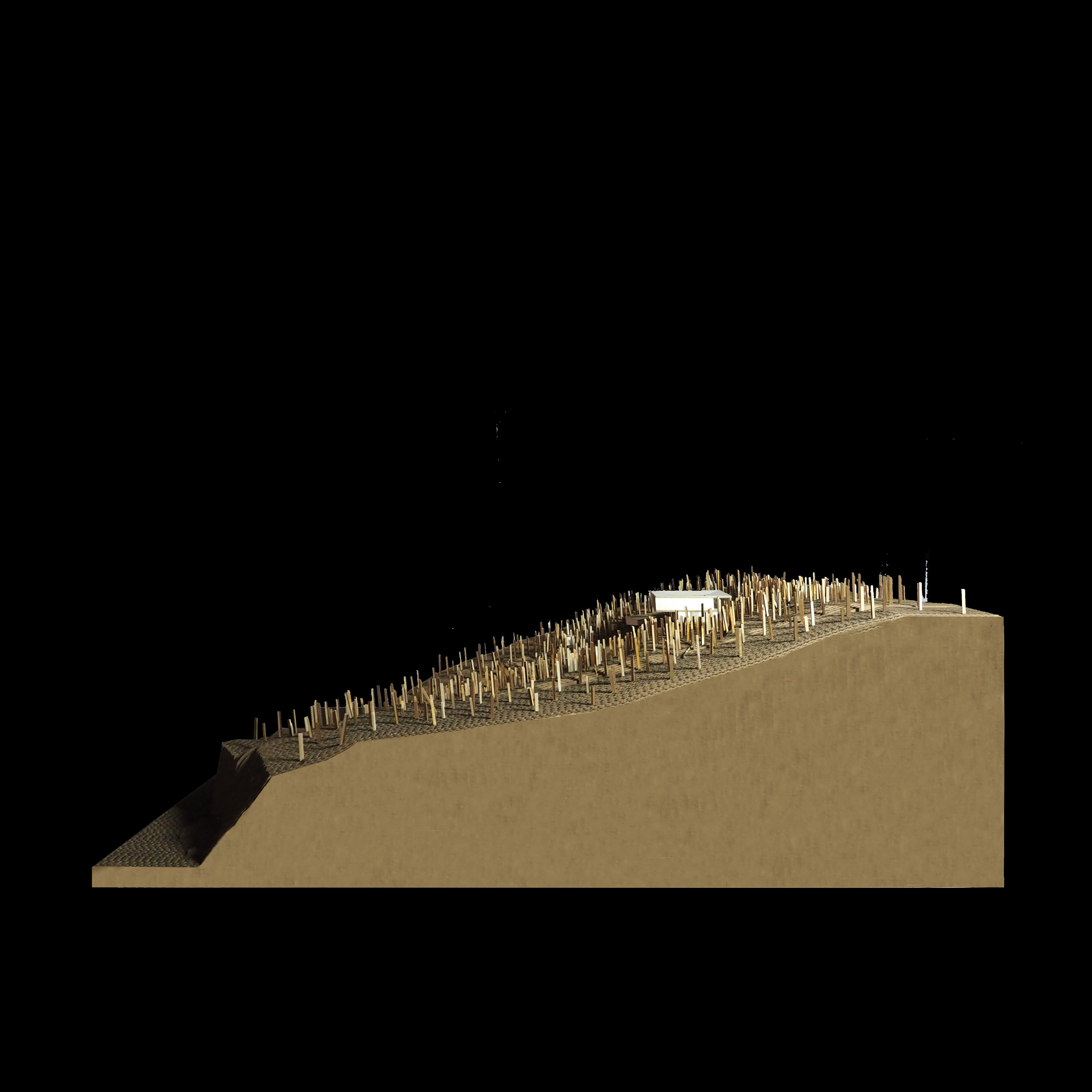
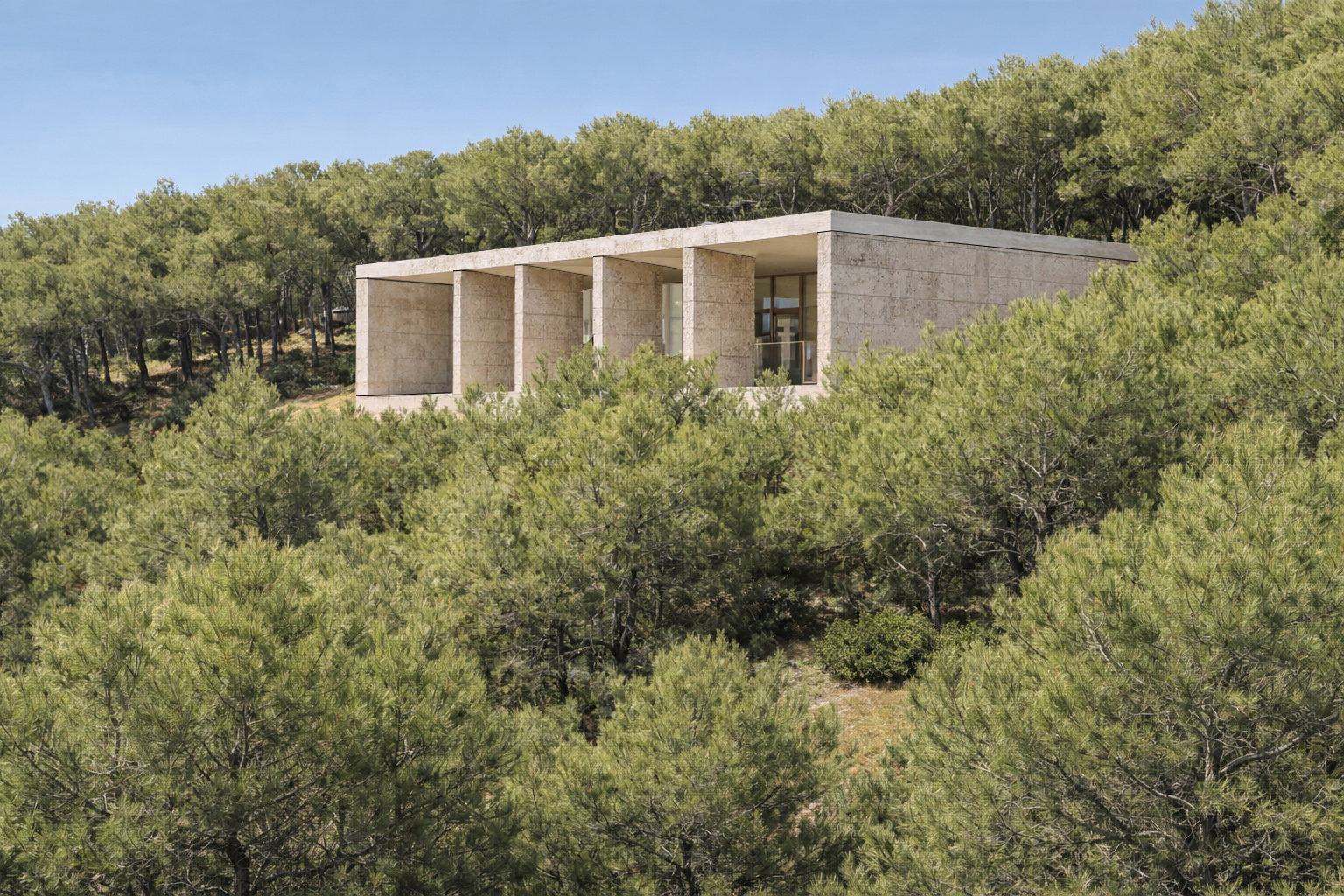
A couple who had decided to relocate permanently to Greece asked us to design their house and workspace on a seaside plot they had identified in eastern Peloponnese. The site is located on a steep slope near the coastline and is surrounded by a dense pine forest. At the same time, the plot already carried traces of earlier transformations. Excavations and retaining walls found across the terrain were residues of a widespread practice applied in the area decades ago: forested slopes were cleared and reshaped in order to create buildable terraces, gradually transforming the landscape into real-estate parcels.
From the site’s first visit, through careful documentation of its characteristics and conversations with future inhabitants, it became clear that the project had to address these conditions at their source. The proposal was therefore not conceived simply as the design of a house, but as an attempt to re-establish relations between dwelling, landscape, and topography. On the one hand, the project seeks to recover parts of the disturbed natural environment; on the other, it aims to establish a protected condition of inhabitation – sheltered from the fragmented character of the surrounding constructions while remaining open to the southern horizon and the distant coastline.
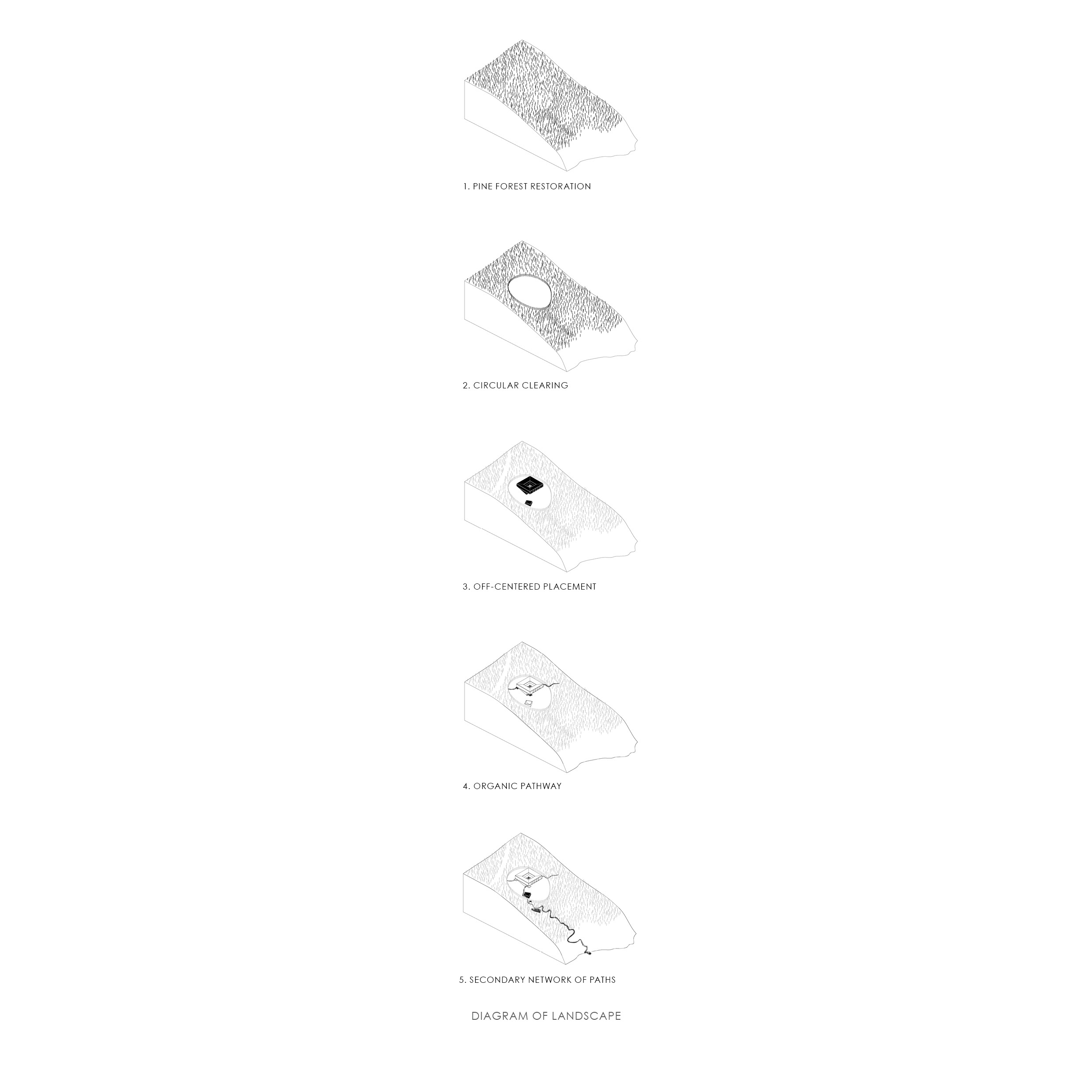
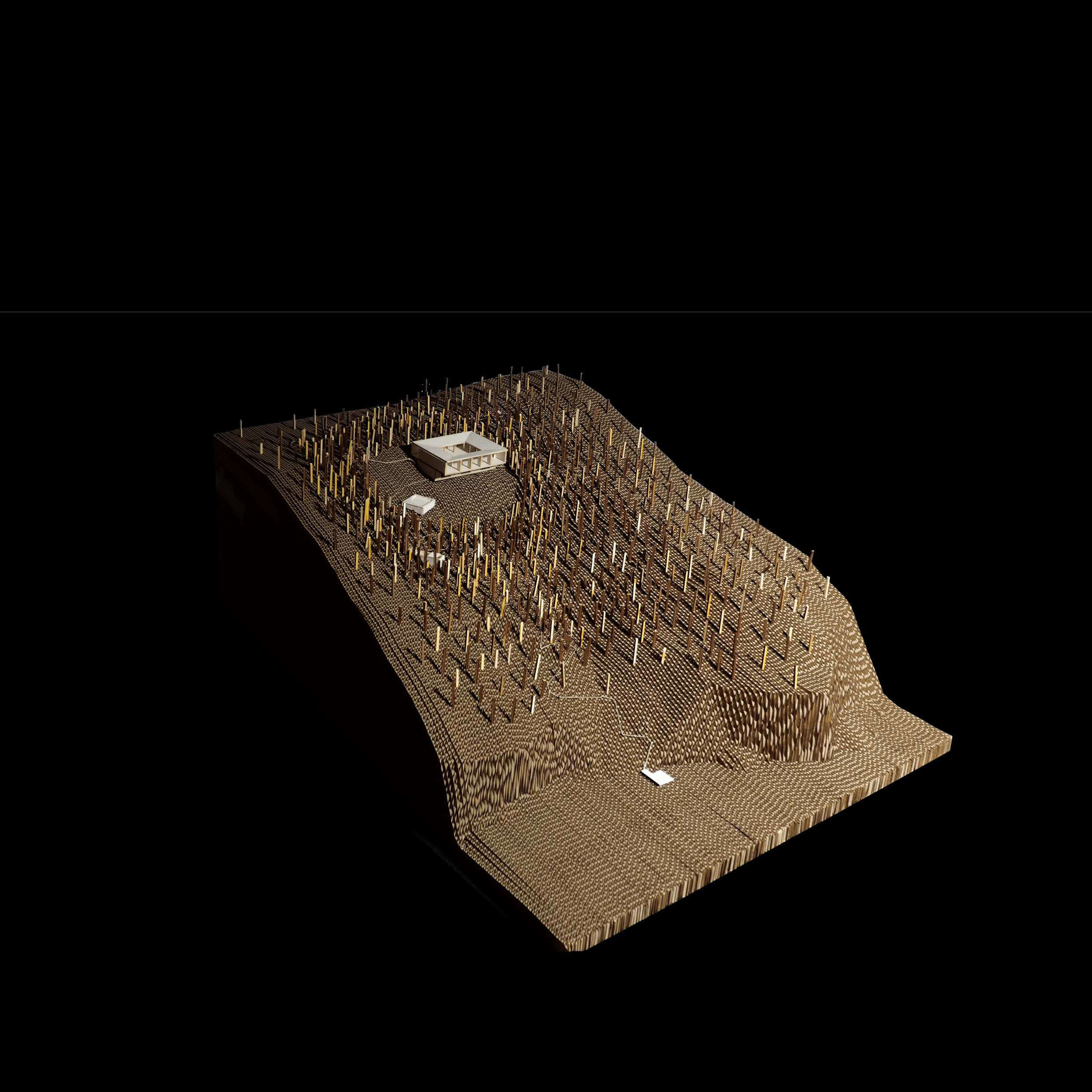
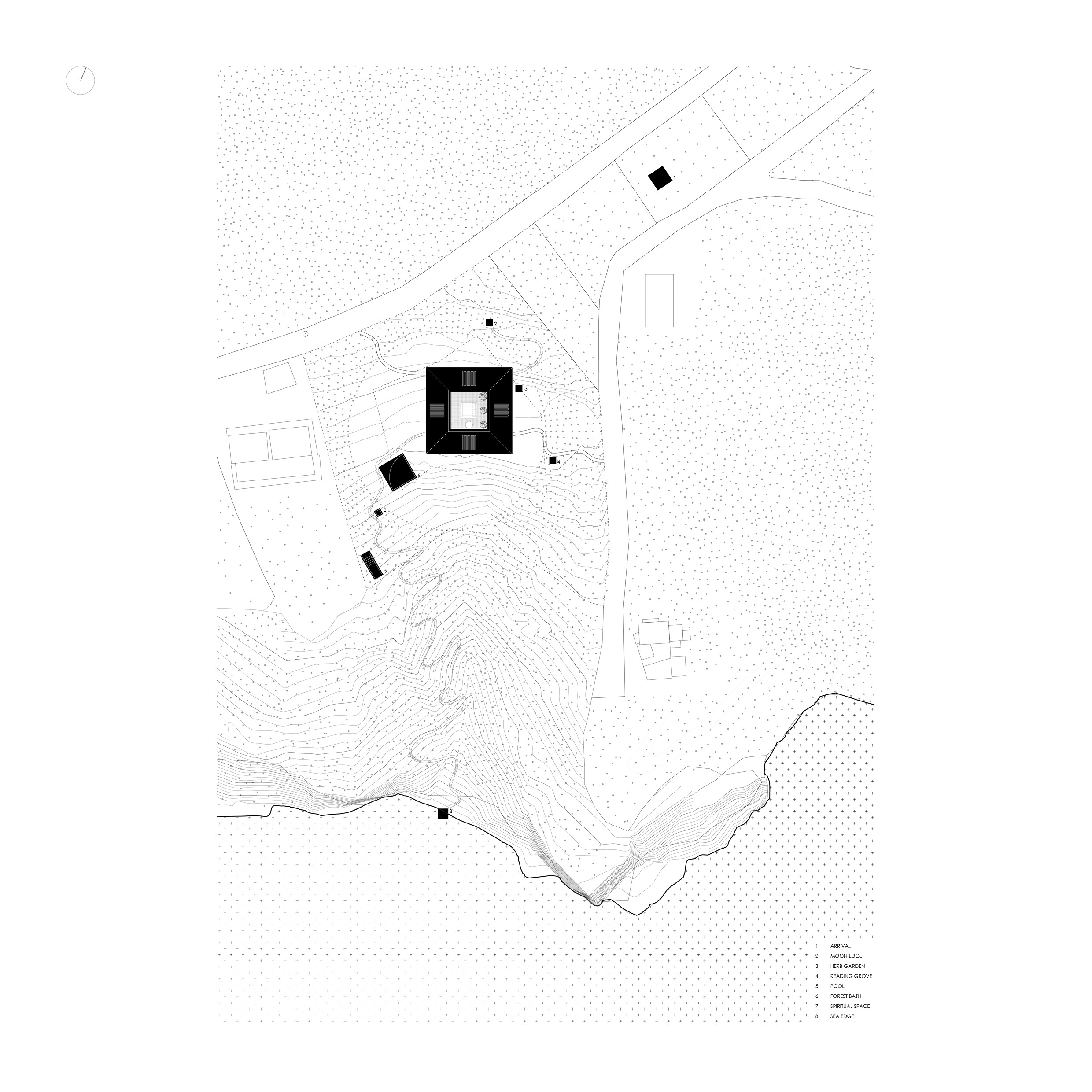
A fundamental decision of the project was not to respond to these questions primarily through the building itself, but first through the landscape. Before becoming an architectural object, the project is structured as a sequence of landscape operations: planted areas, paths, clearings, and retaining elements that reorganize the terrain while introducing a series of outdoor uses. Within this broader spatial framework, the house appears as one element among others rather than as the sole generator of the proposal.
- The first concerns the gradual restoration of the pine forest through a systematic process of replanting, allowing the landscape to slowly recover its density over time.
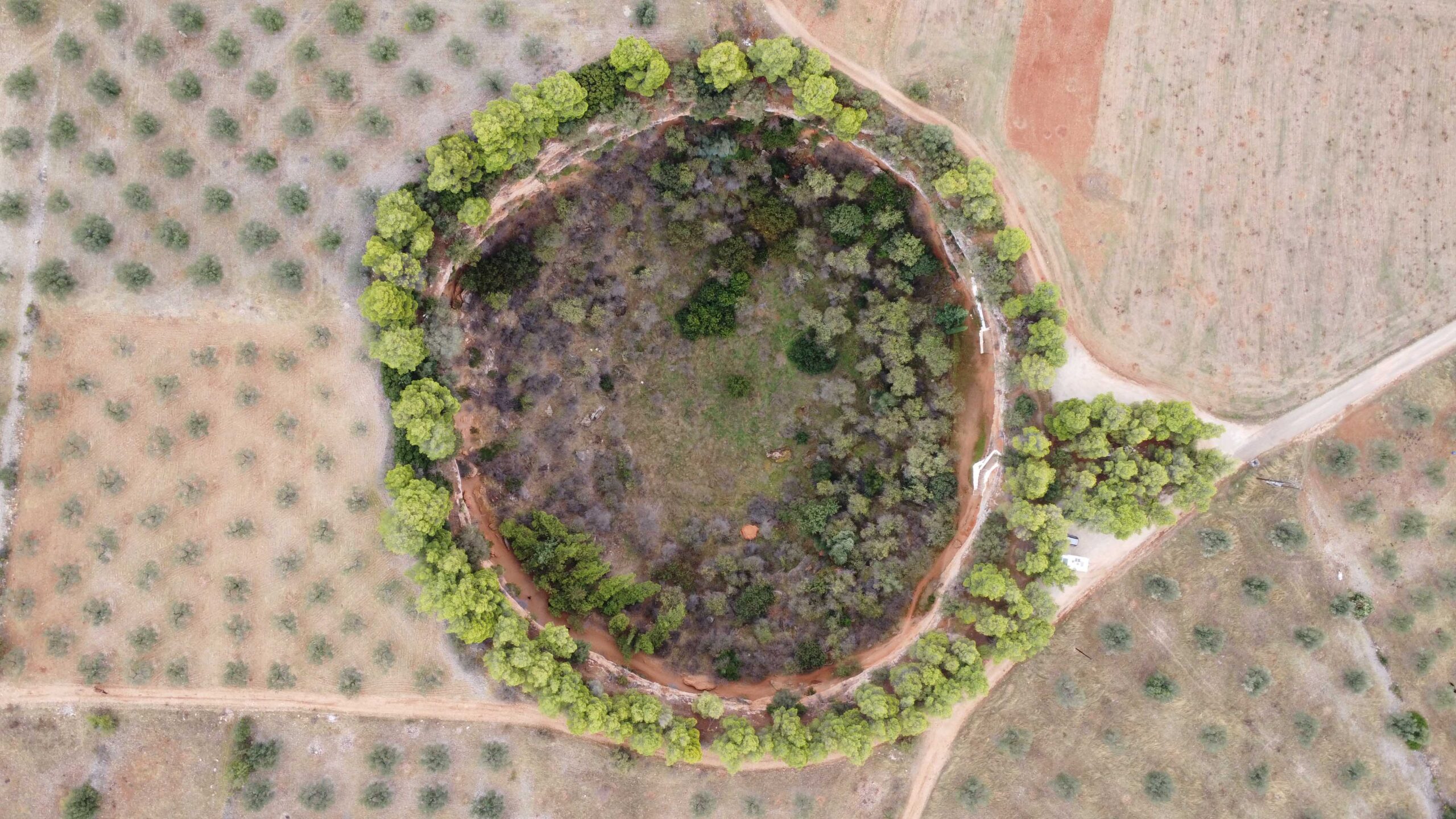
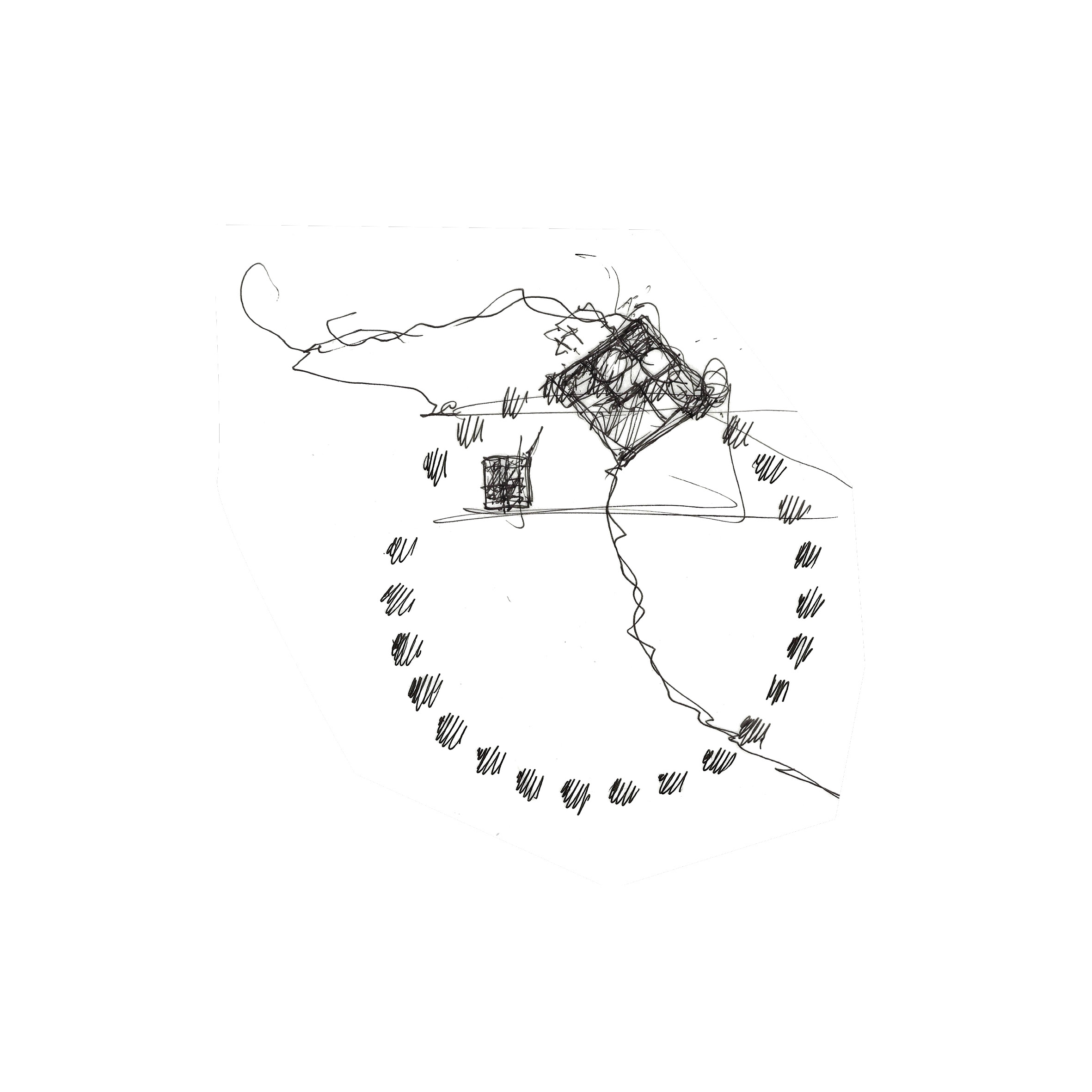
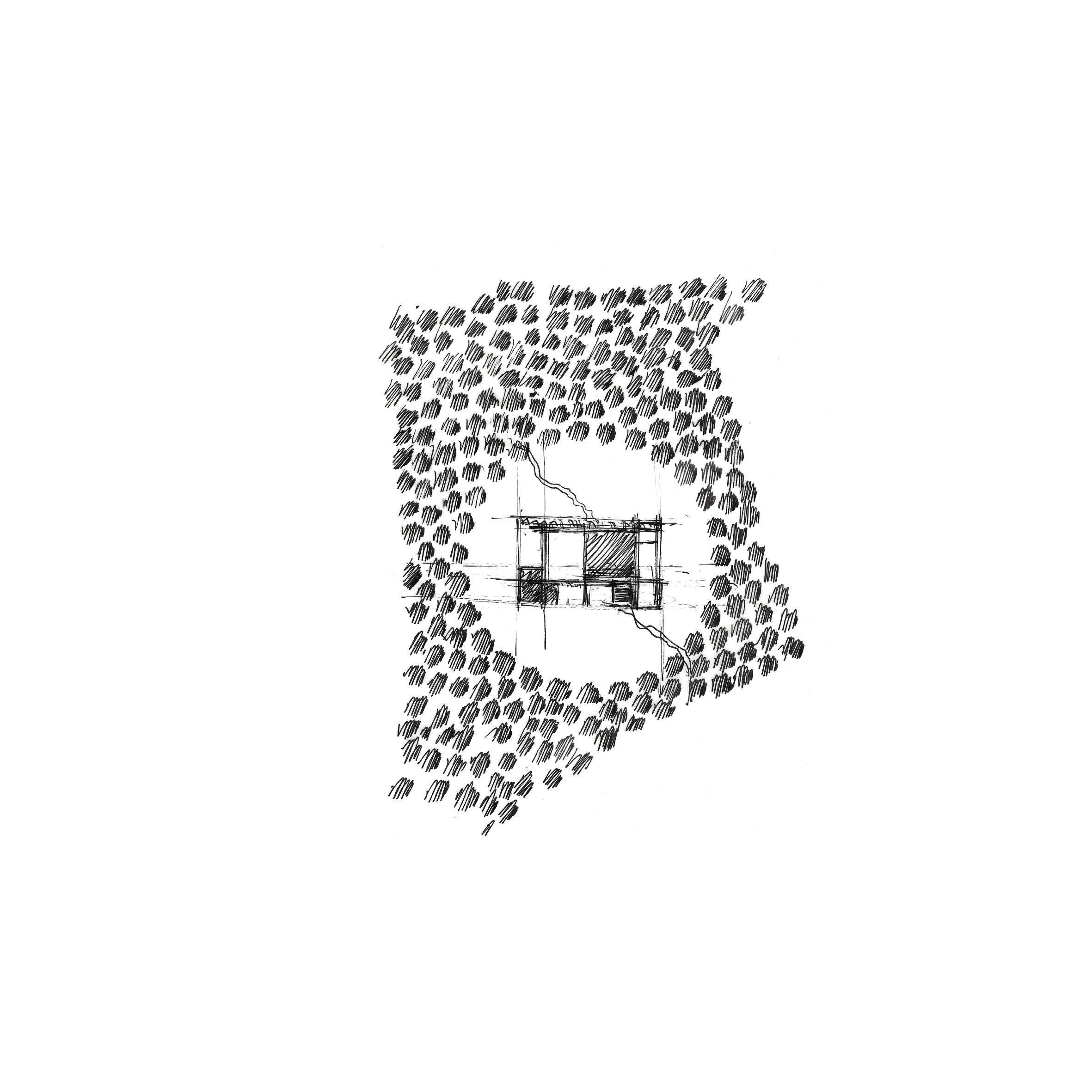
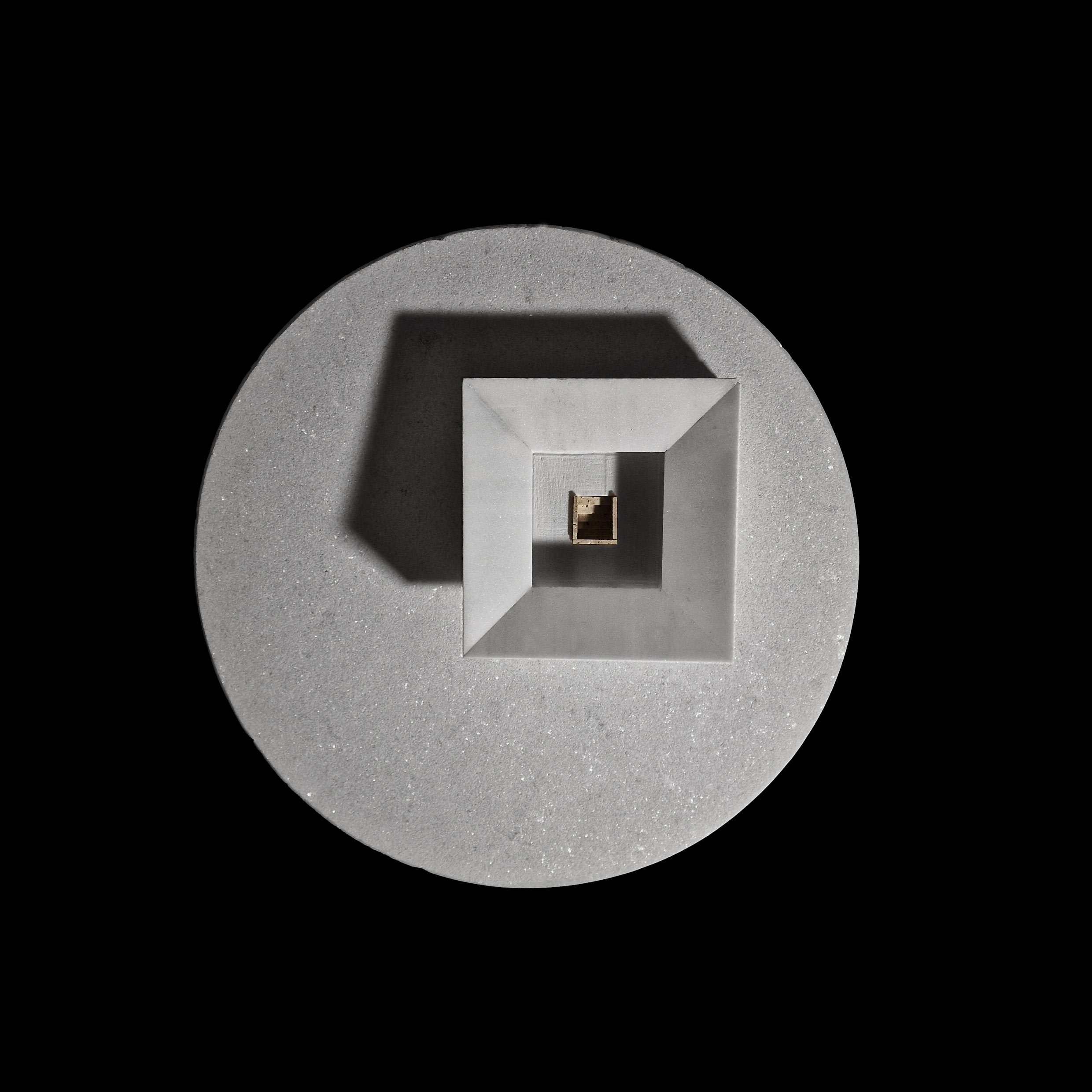
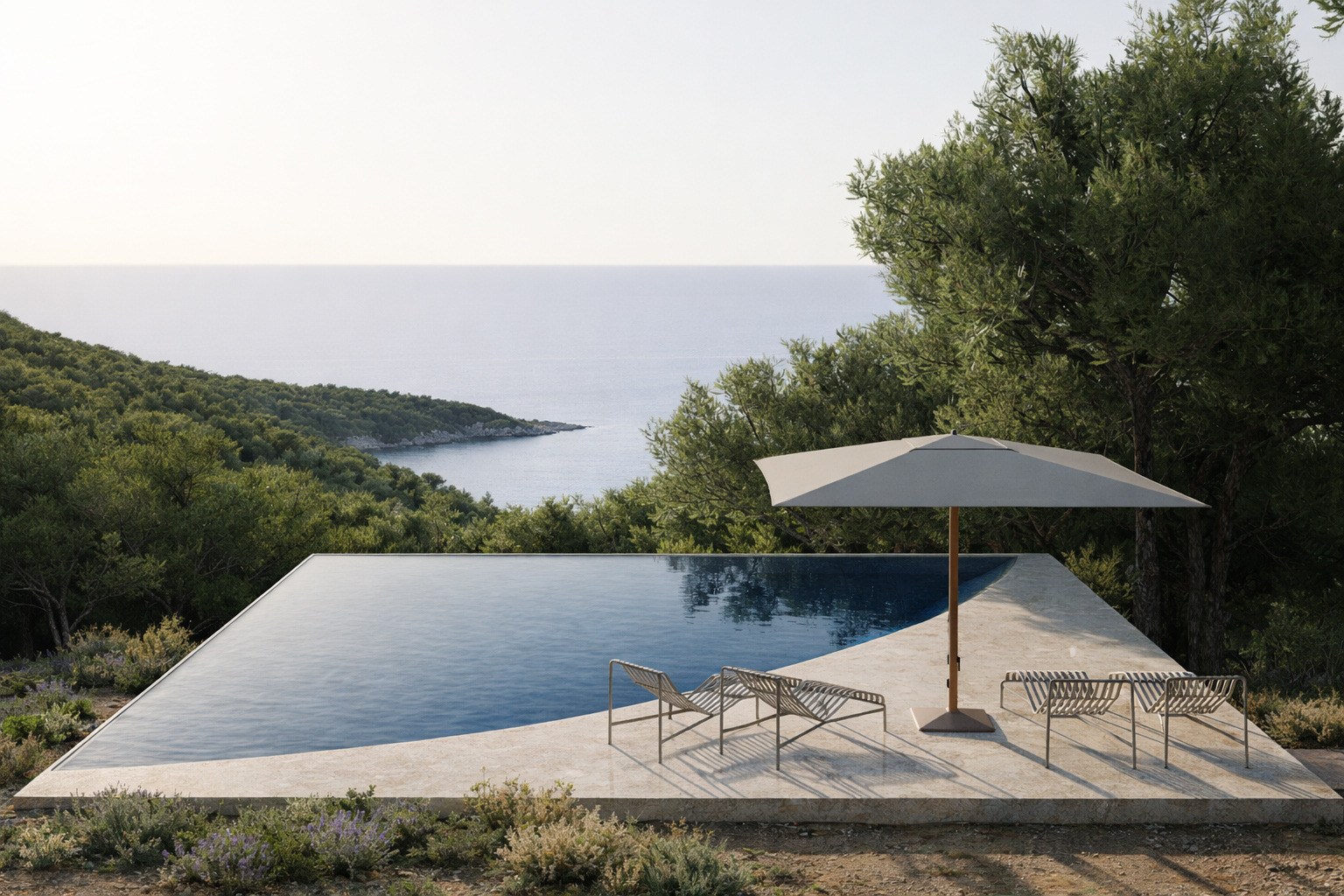
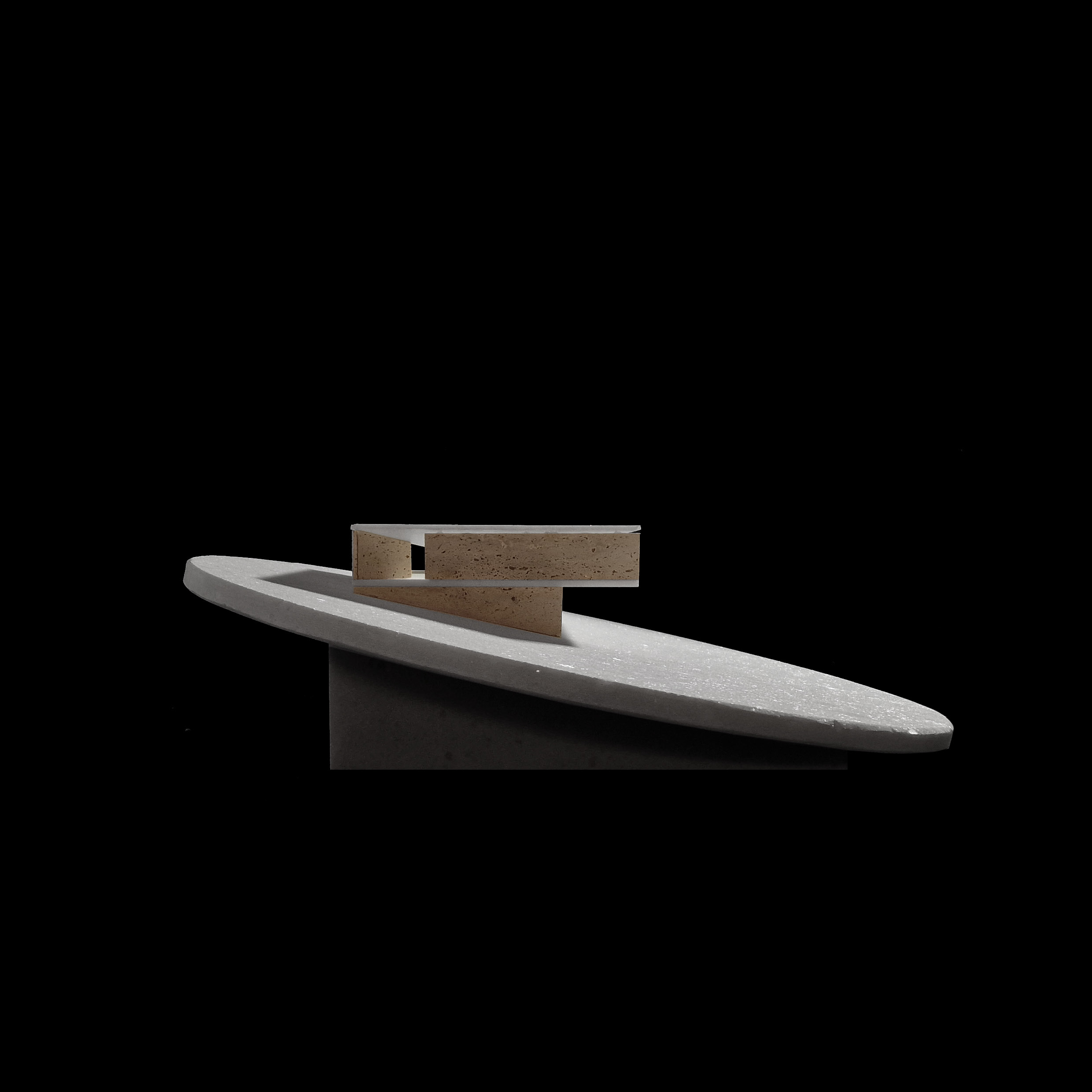
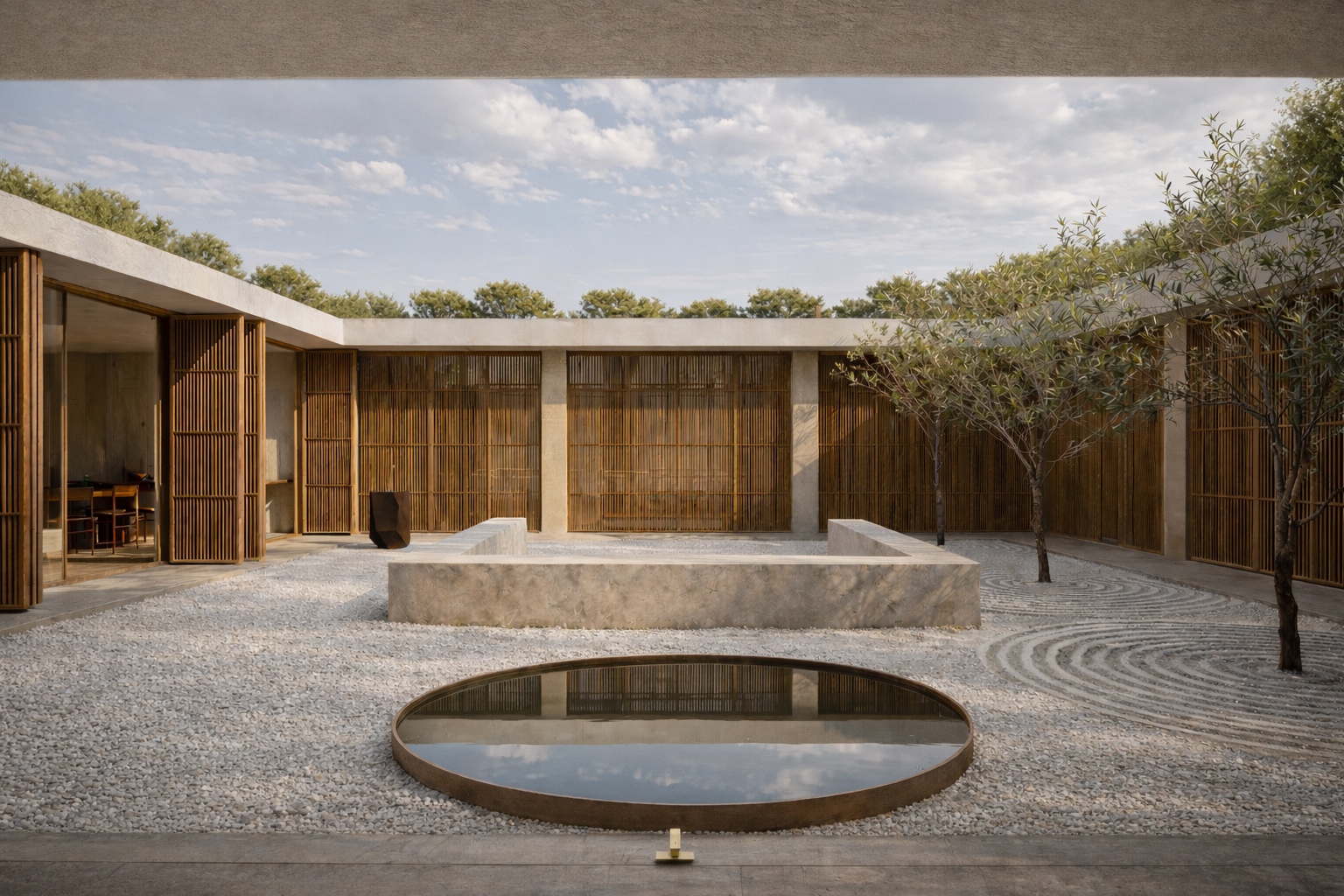
- The second gesture is the creation of a circular clearing at the site’s center. Without a predetermined orientation, this clearing establishes a protected interior landscape within the forest. At the same time, its geometry and the steep slope allow the inhabitants to disengage from the surrounding constructions while maintaining an open relation with the southern horizon and the distant coastline.
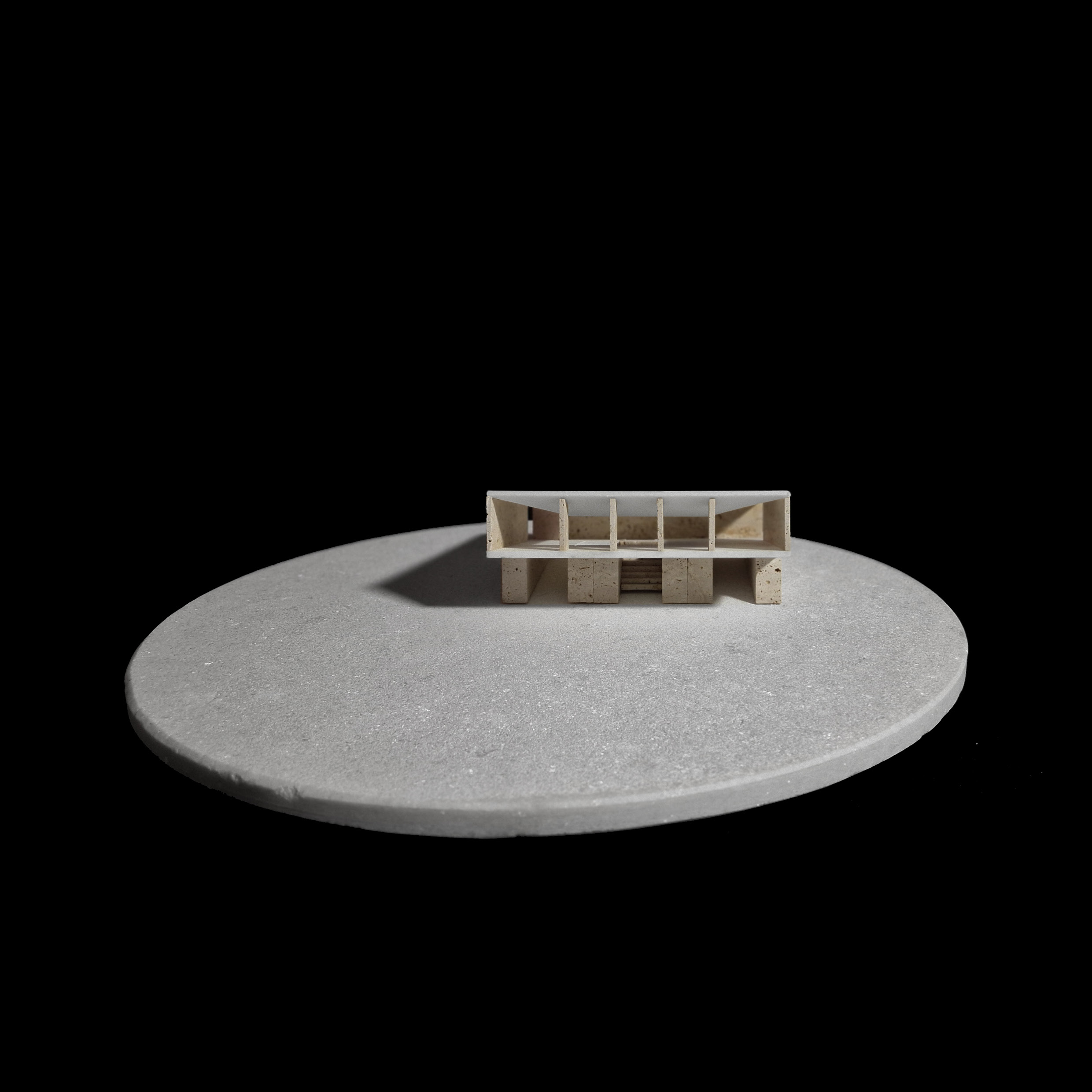
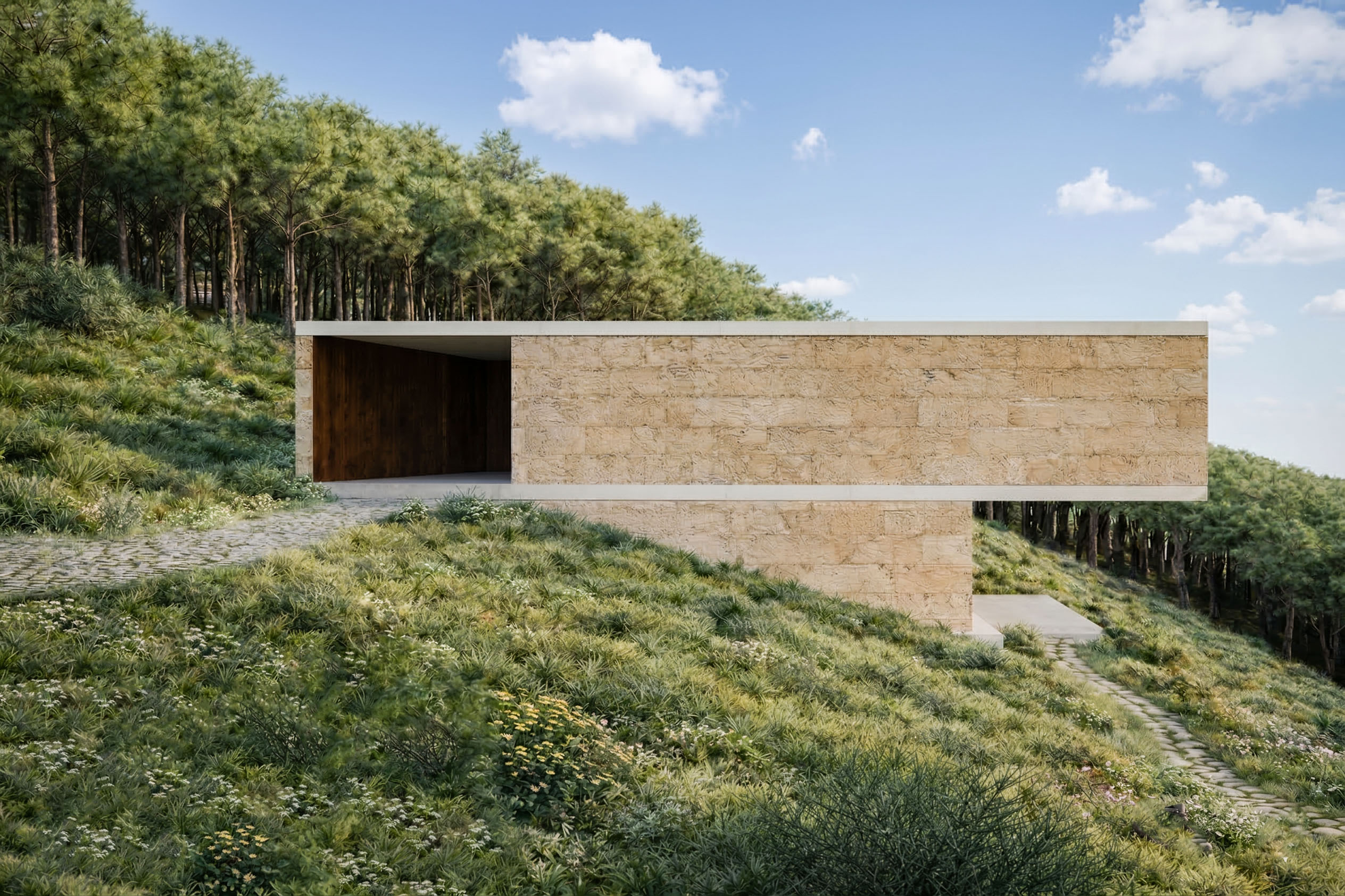
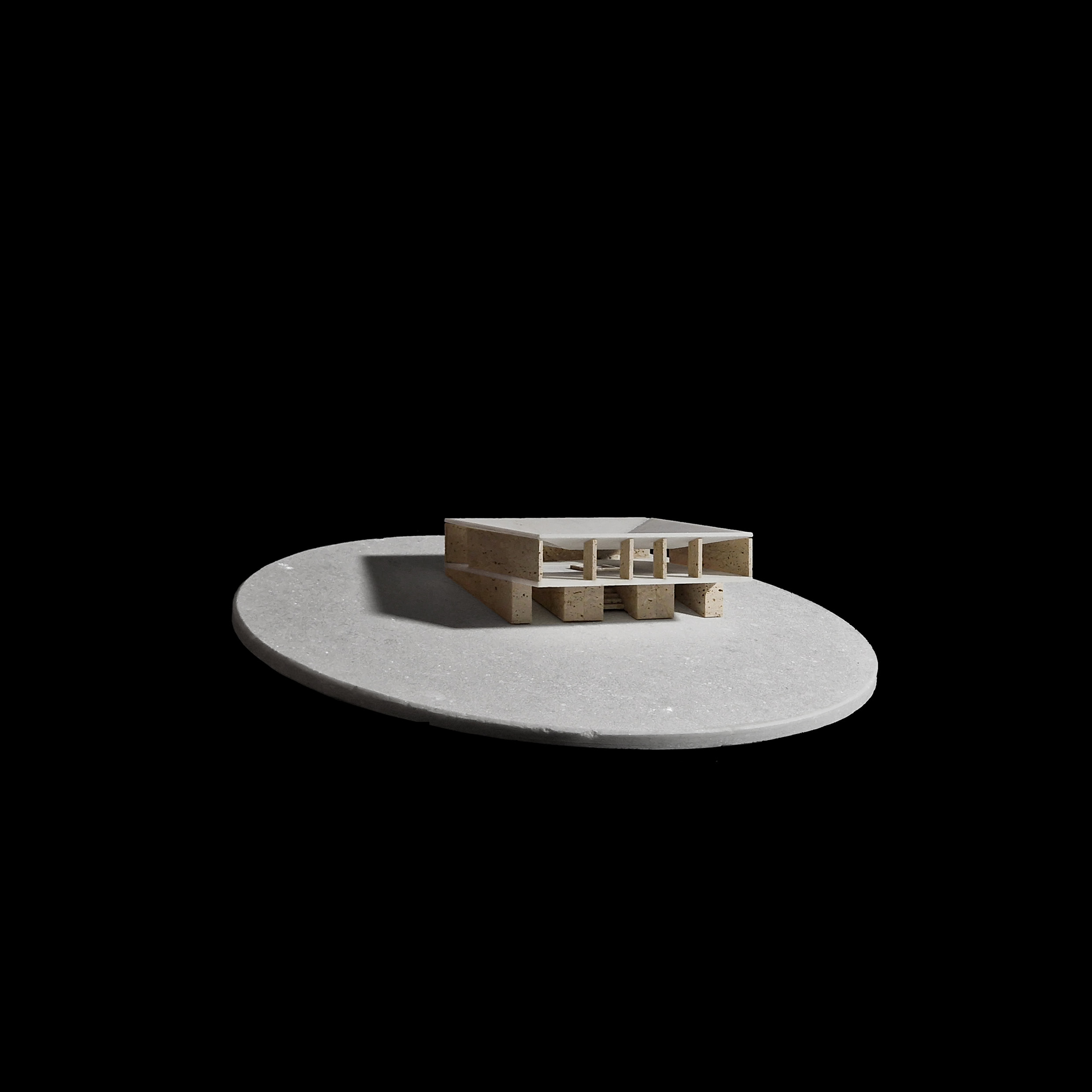
- The third gesture is the placement of the building not at the center of the clearing, but at a precise offset, elevated on a stone plinth. This displacement defines a hierarchy of exterior spaces and allows the house to frame the landscape in different directions.
- The fourth gesture is the formation of an organic path that guides movement through the terrain. Beginning from the road access, the path crosses the forest and connects to the pedestrian route on the eastern edge of the plot while defining the diagonal sequence of entrances to the house.
- The fifth gesture introduces a secondary network of paths and pauses that organizes the entire site. Along this sequence, small interventions are placed within the forest: a swimming pool located within the clearing following the natural terrain, a reading platform, a small contemplative space, and a lightweight wooden dock connecting the property with the nearby shoreline.
Through these operations, the project attempts to transform a fragmented terrain into a coherent landscape of inhabitation where architecture and landscape operate as parts of the same spatial system. The spatial experience unfolds through a triptych related to the archetype of the forest clearing: forest, threshold, and clearing. First, the dense pine forest establishes a condition of isolation as one moves through the terrain. This is followed by the threshold at the edge of the clearing, where the landscape opens, and the horizon becomes visible. Finally, within the clearing itself, a sense of protection emerges, defined by the surrounding forest and articulated by the sequence of wooden barks that mark the interior of the space.
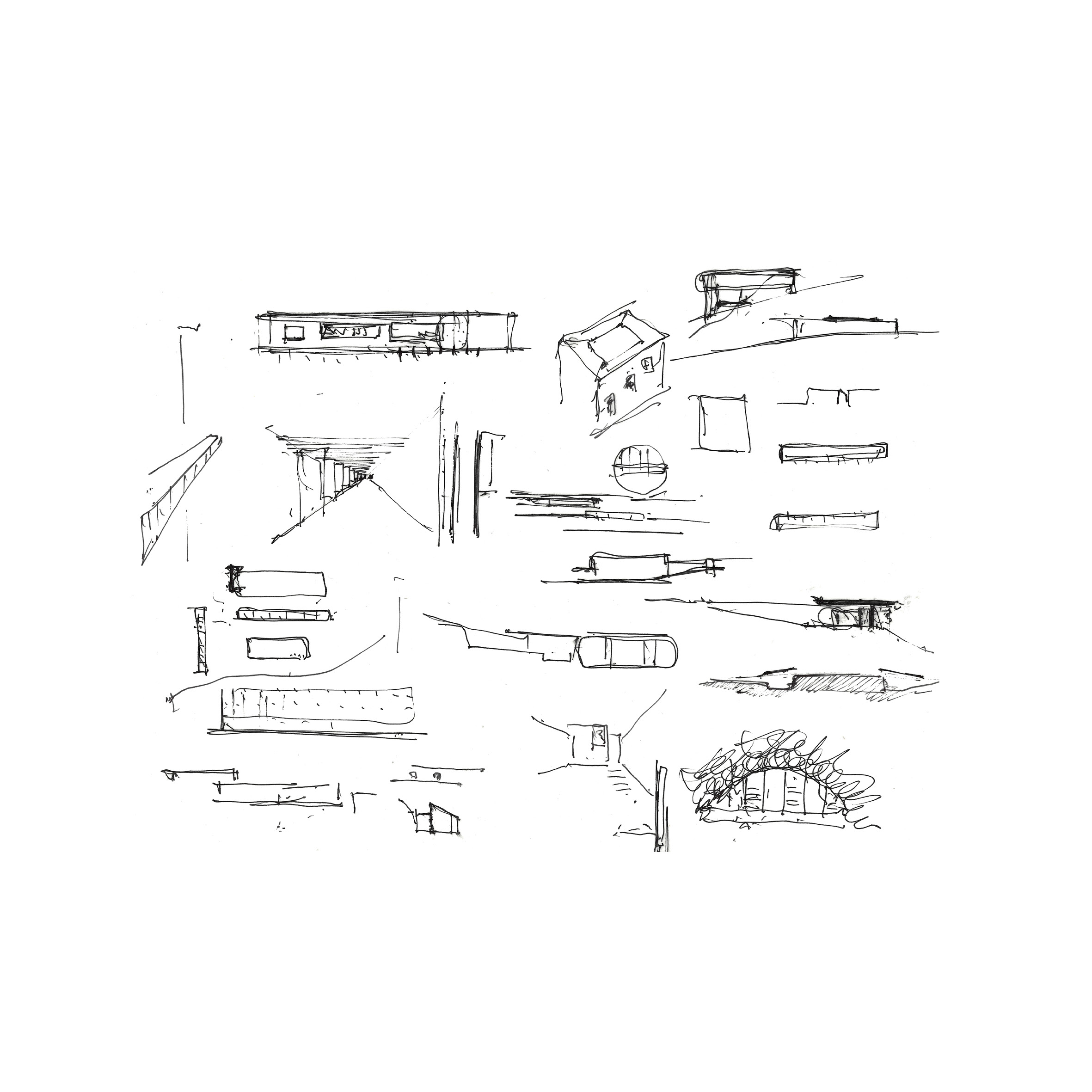
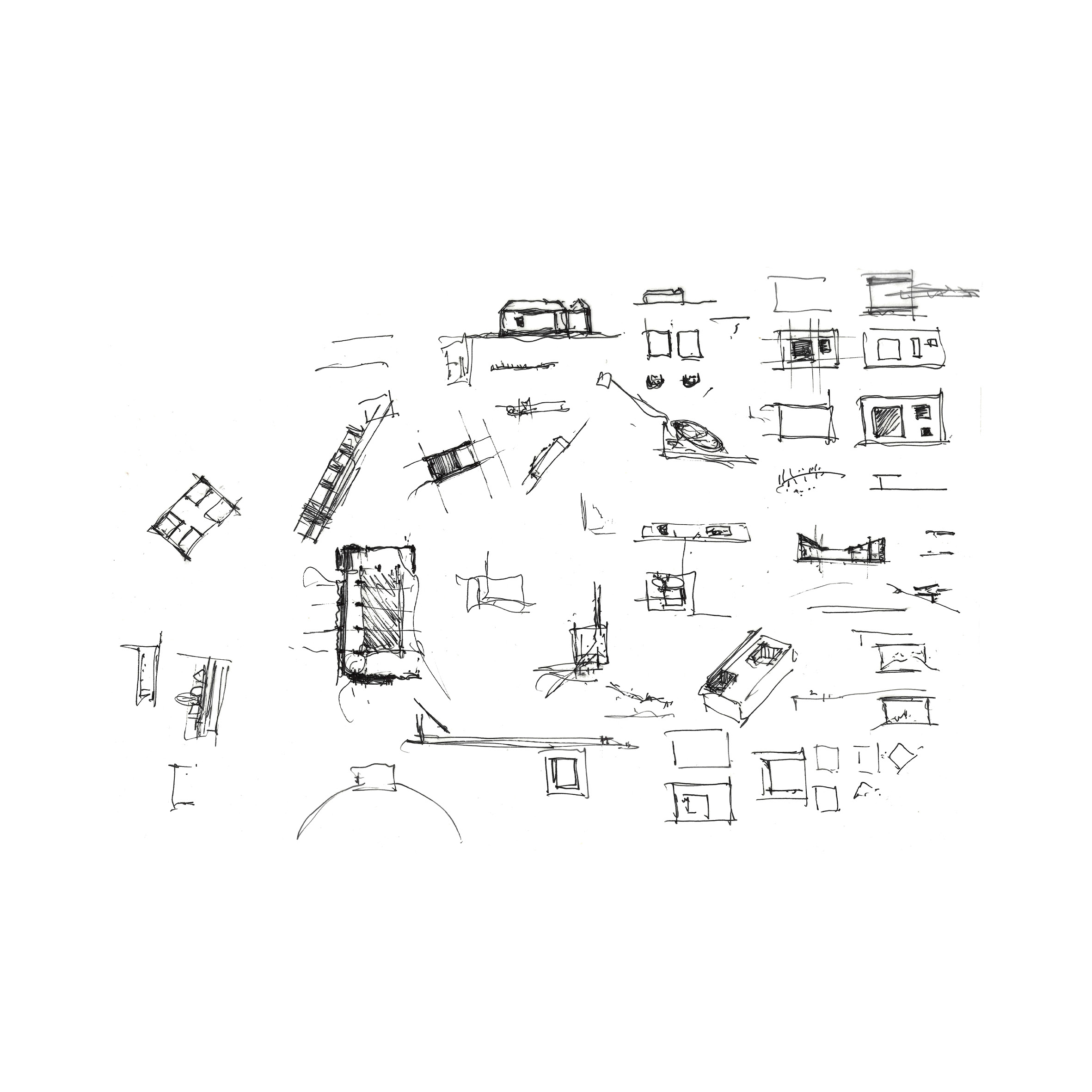
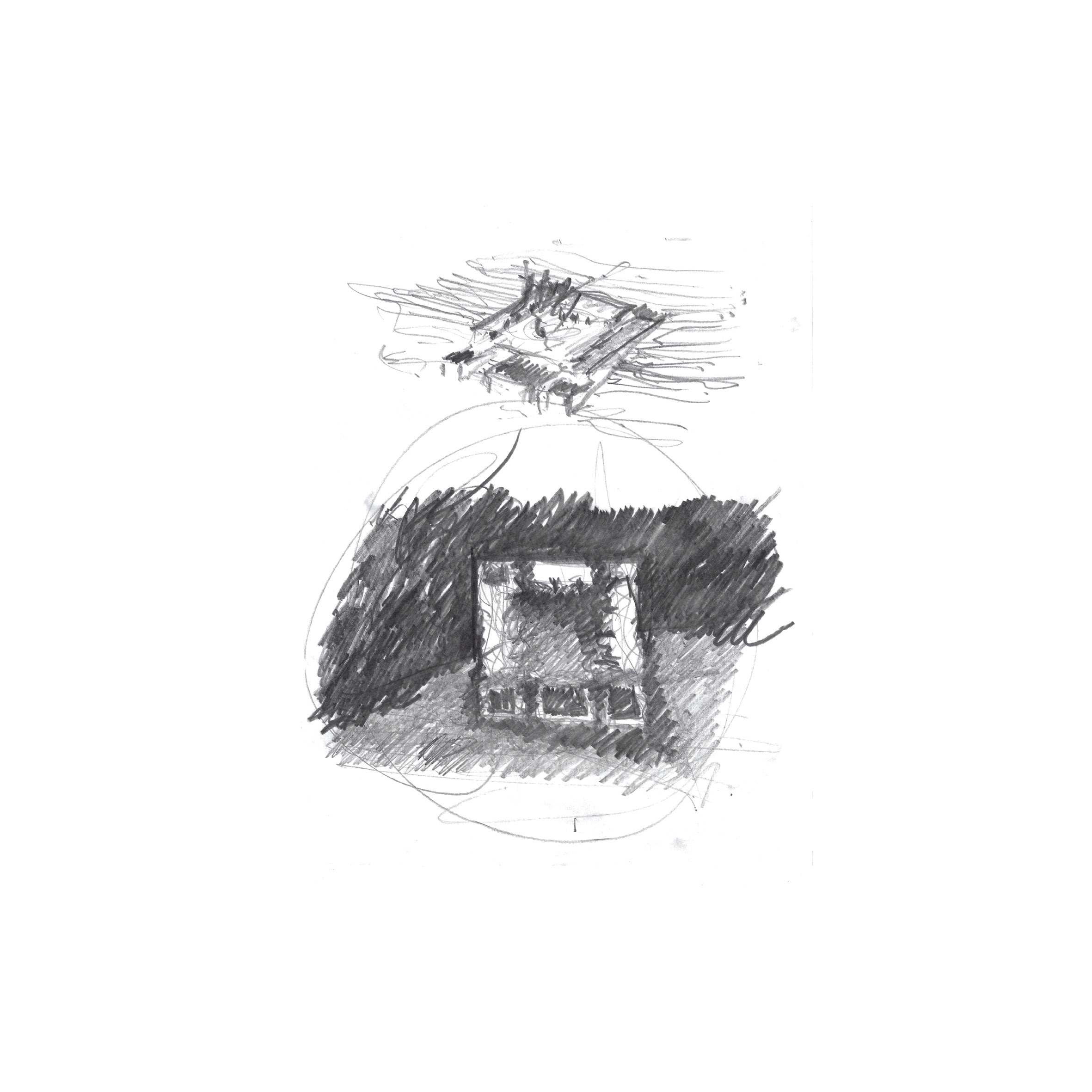
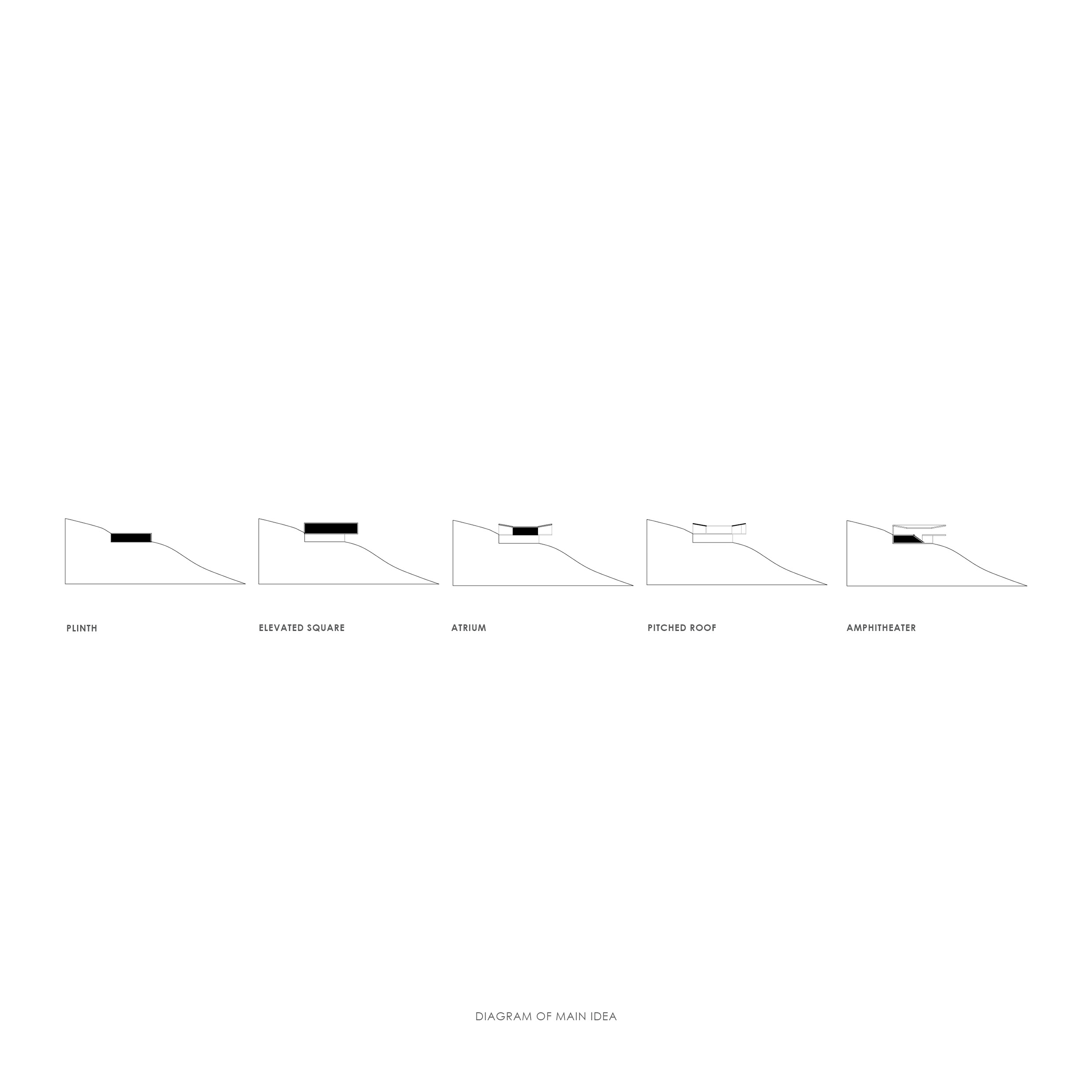
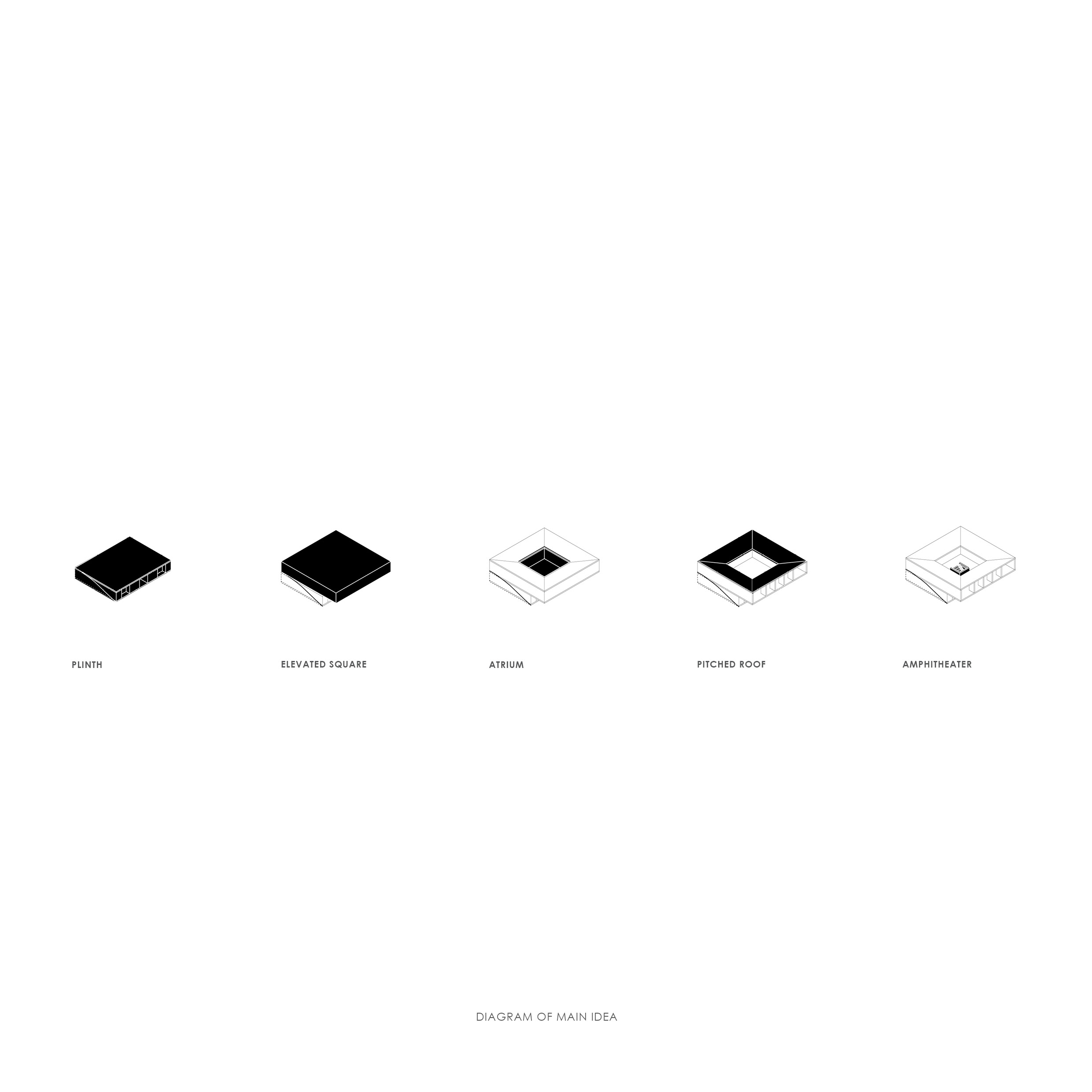
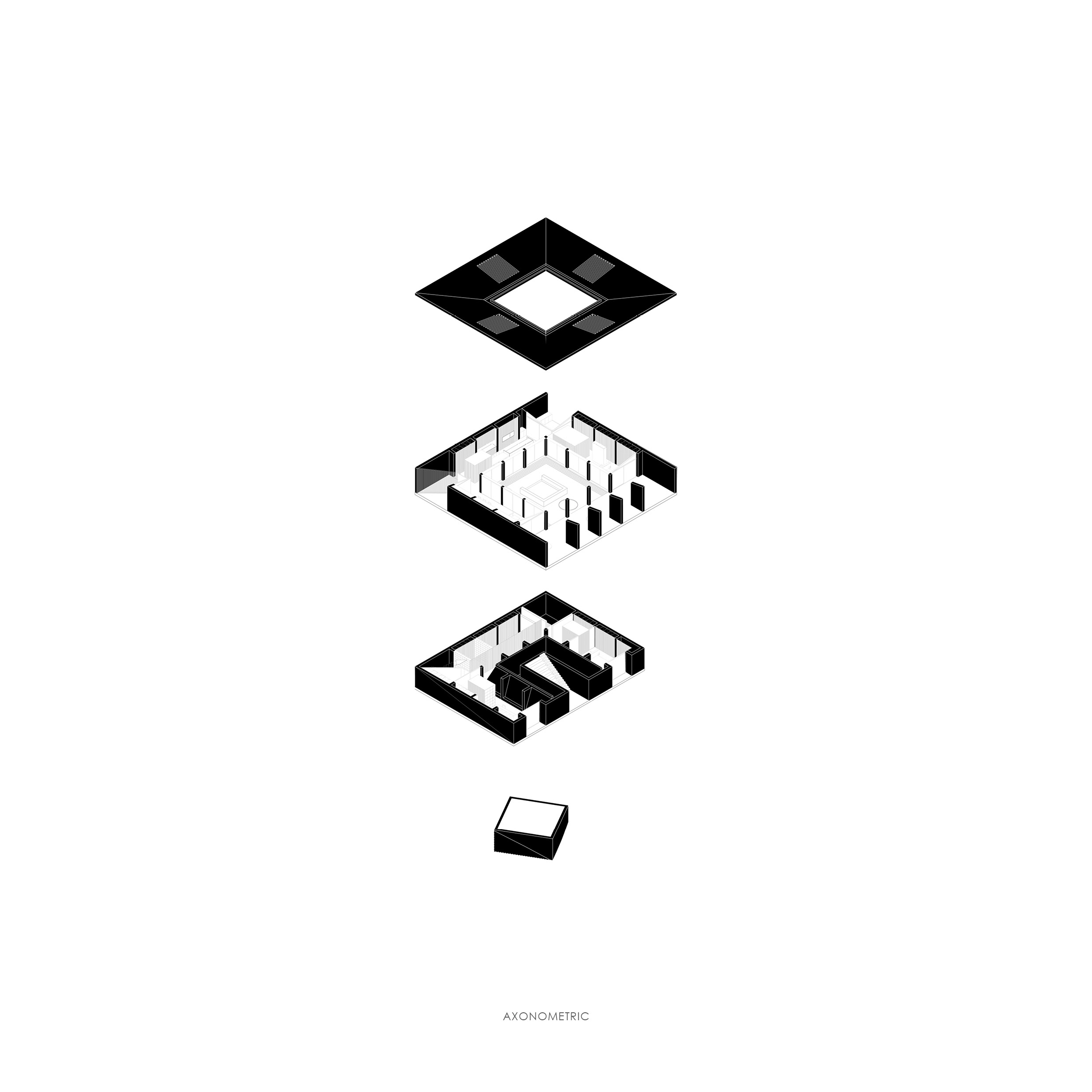
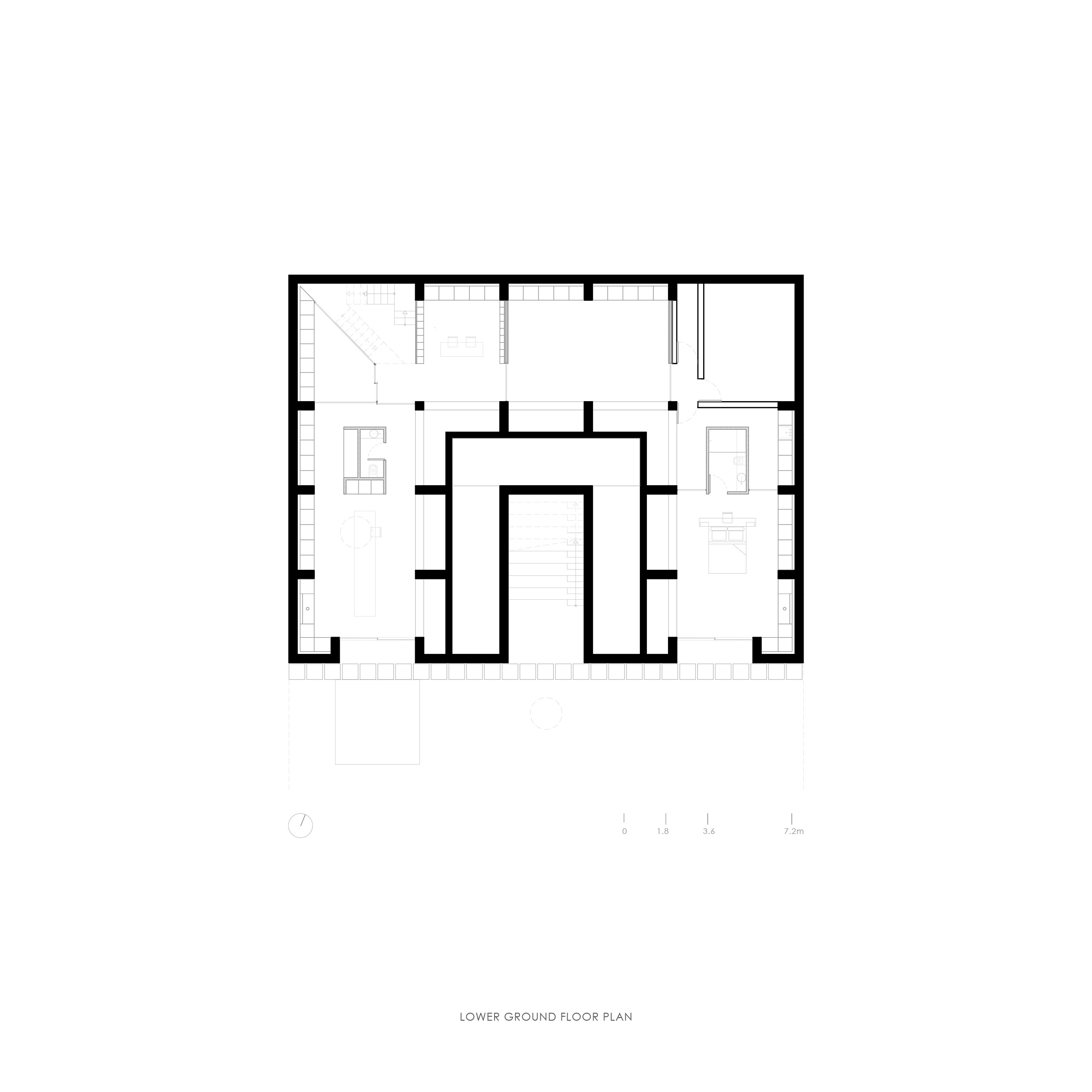
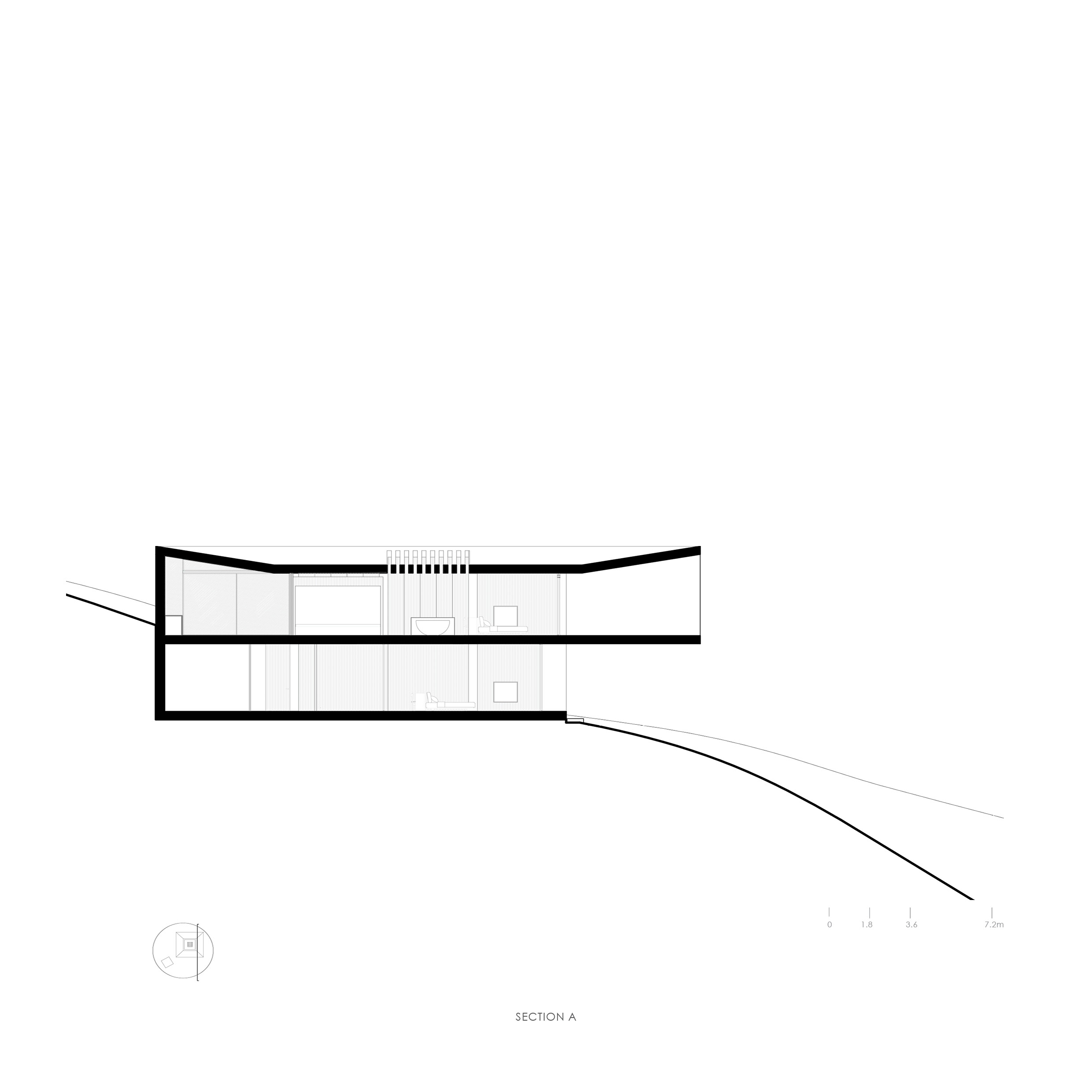
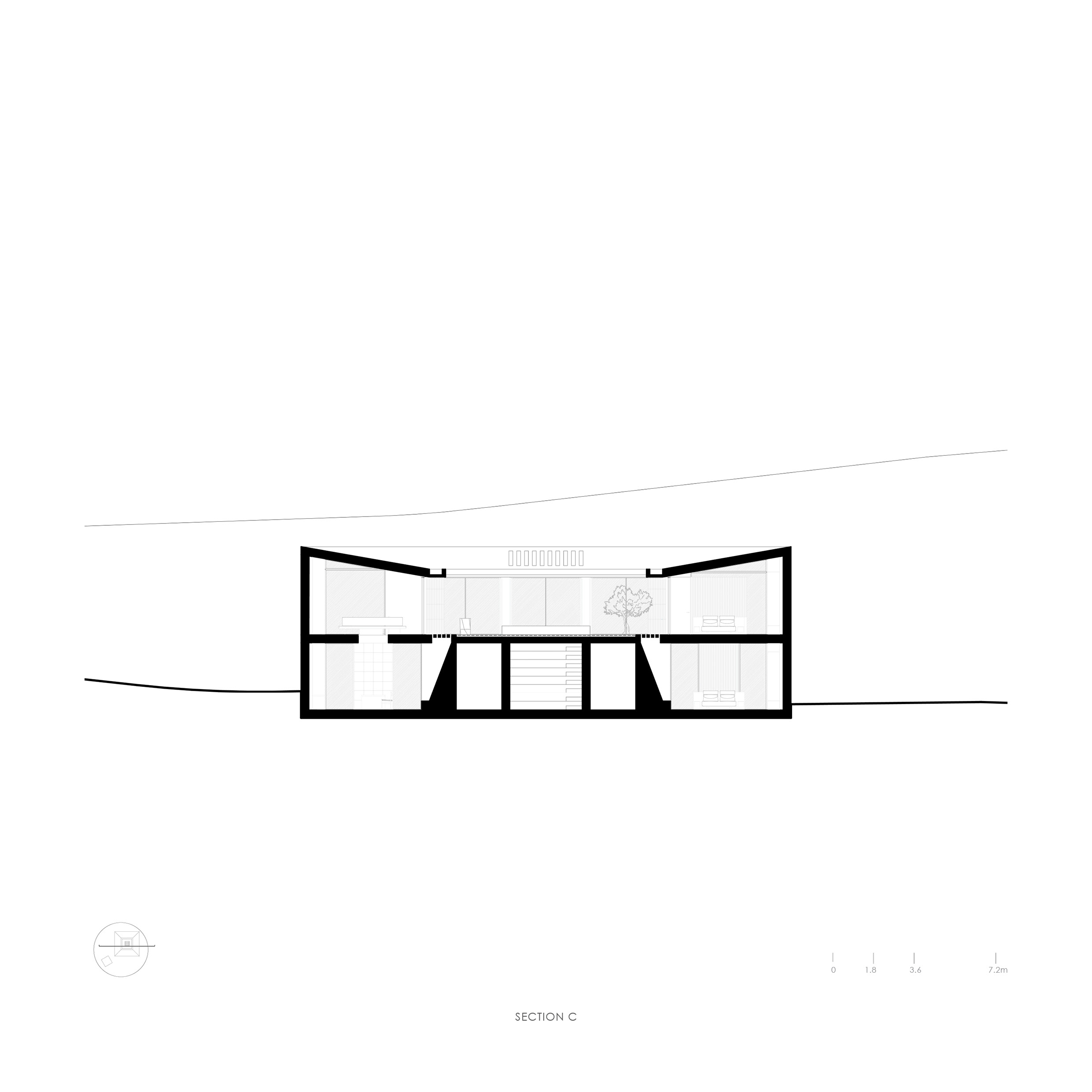
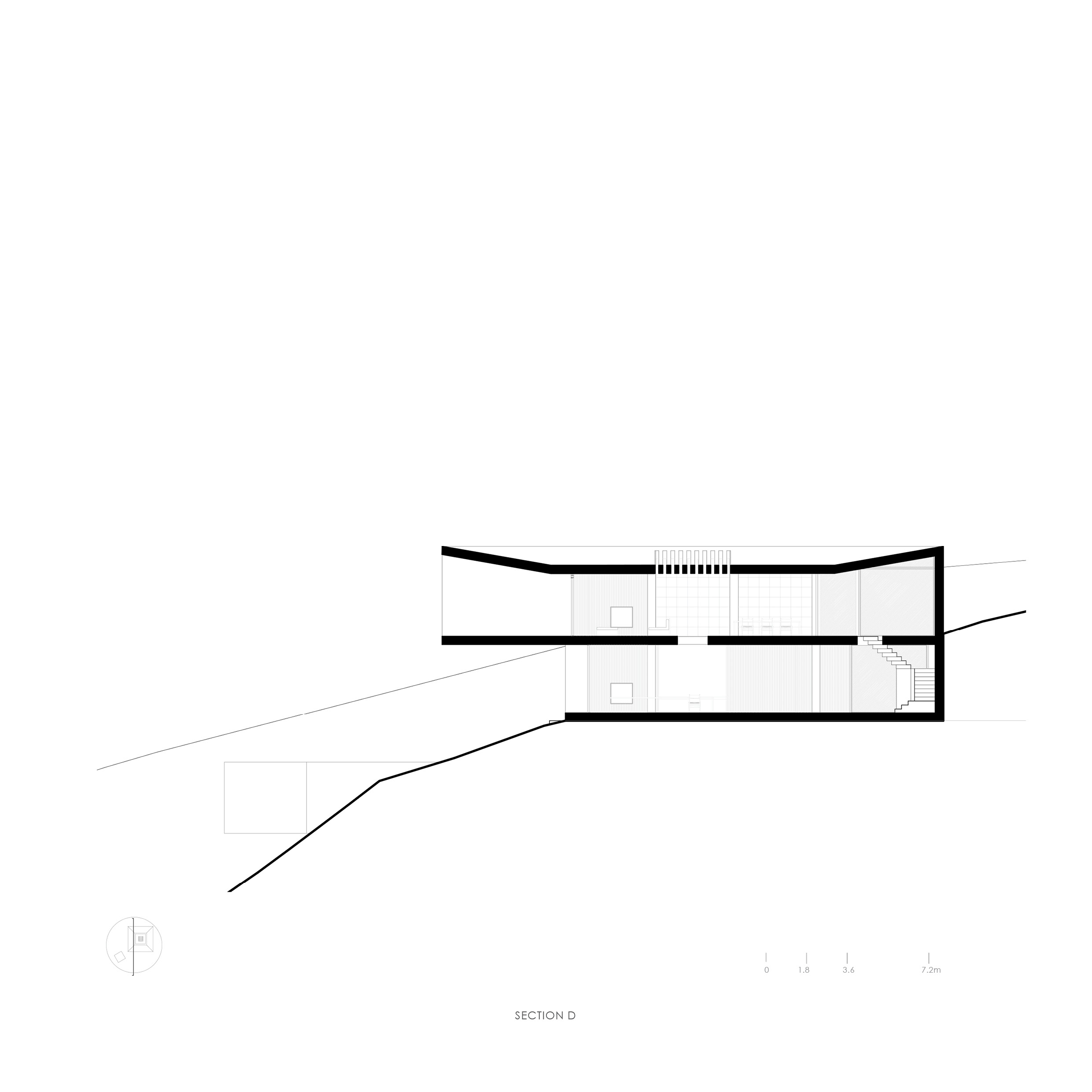
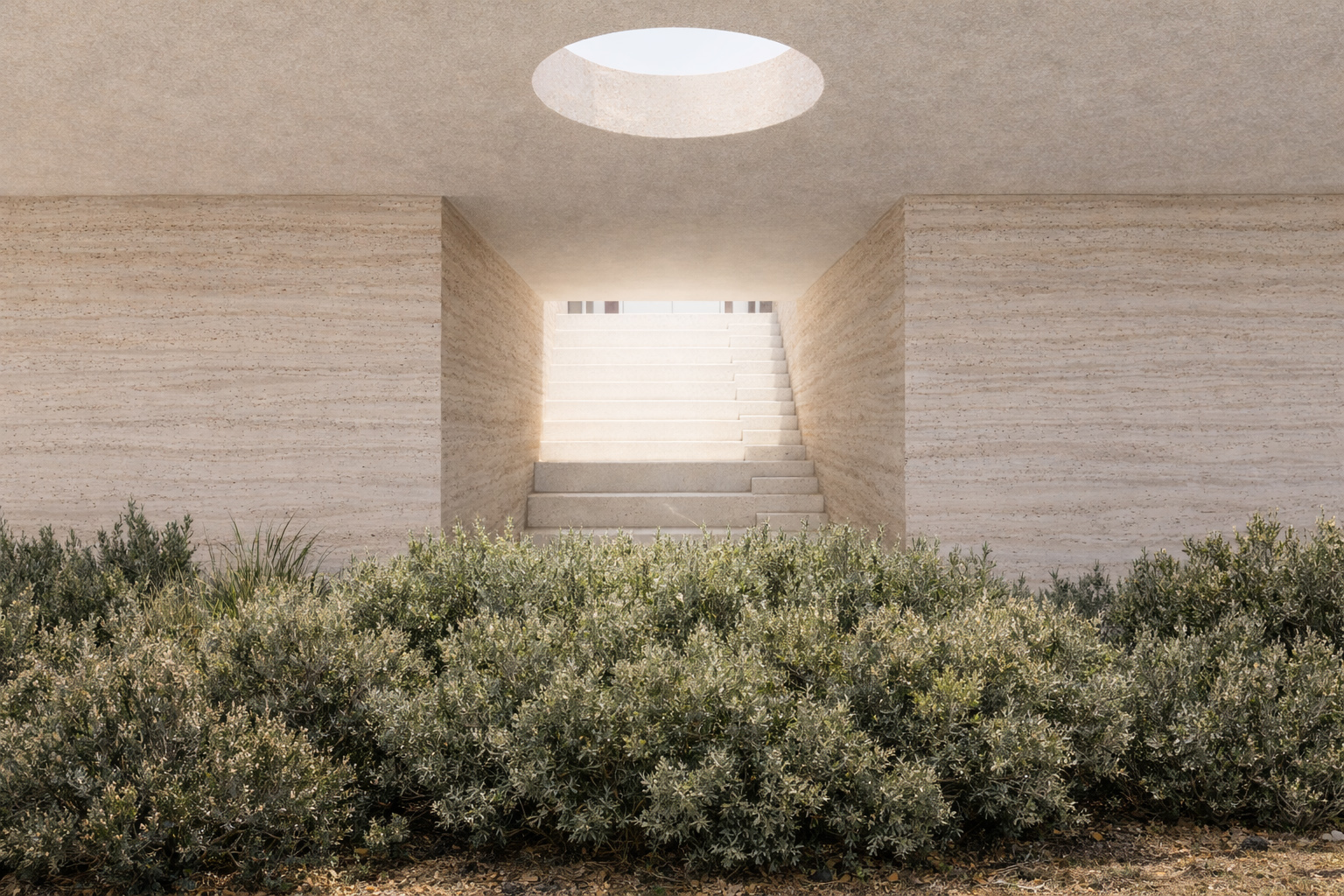
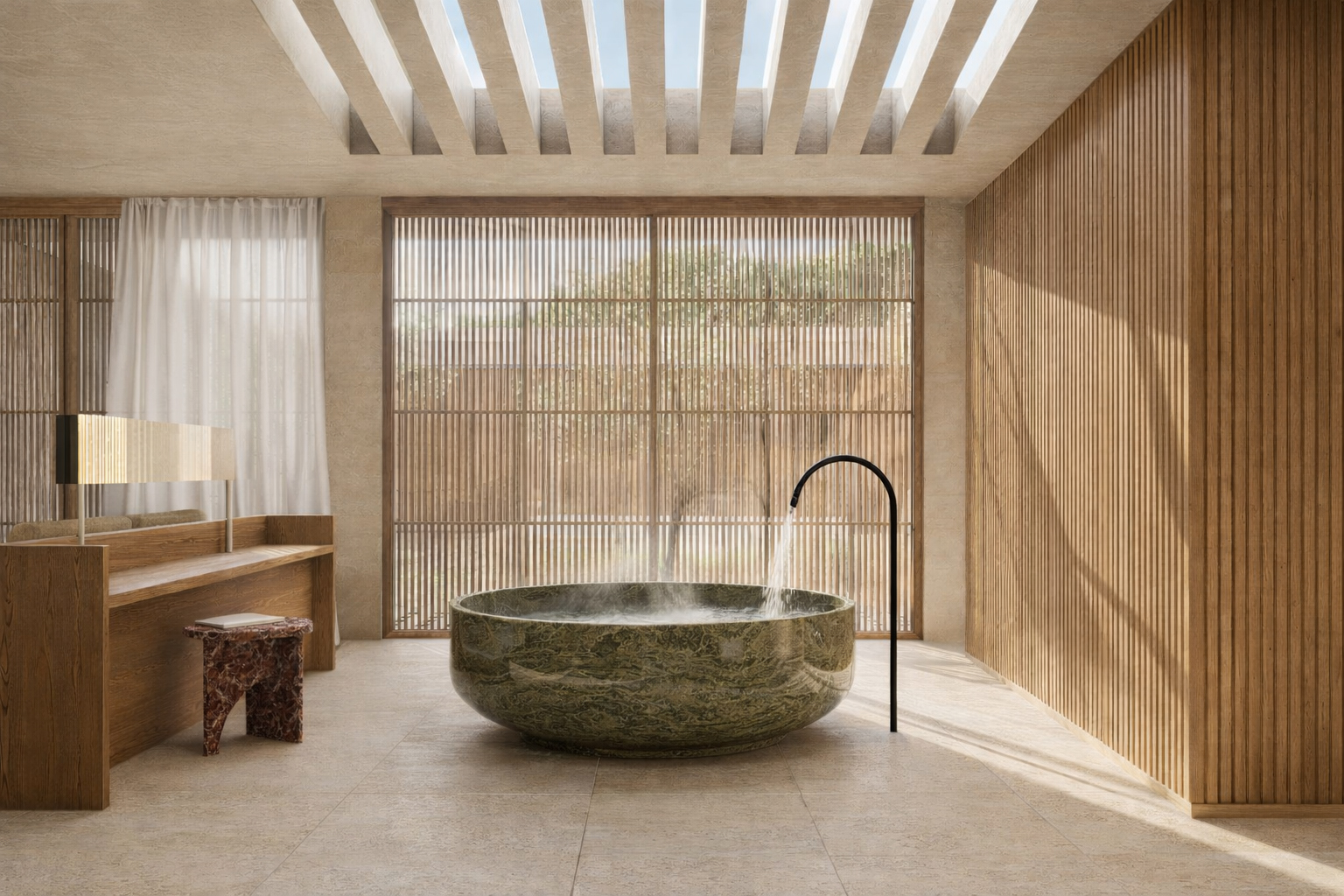
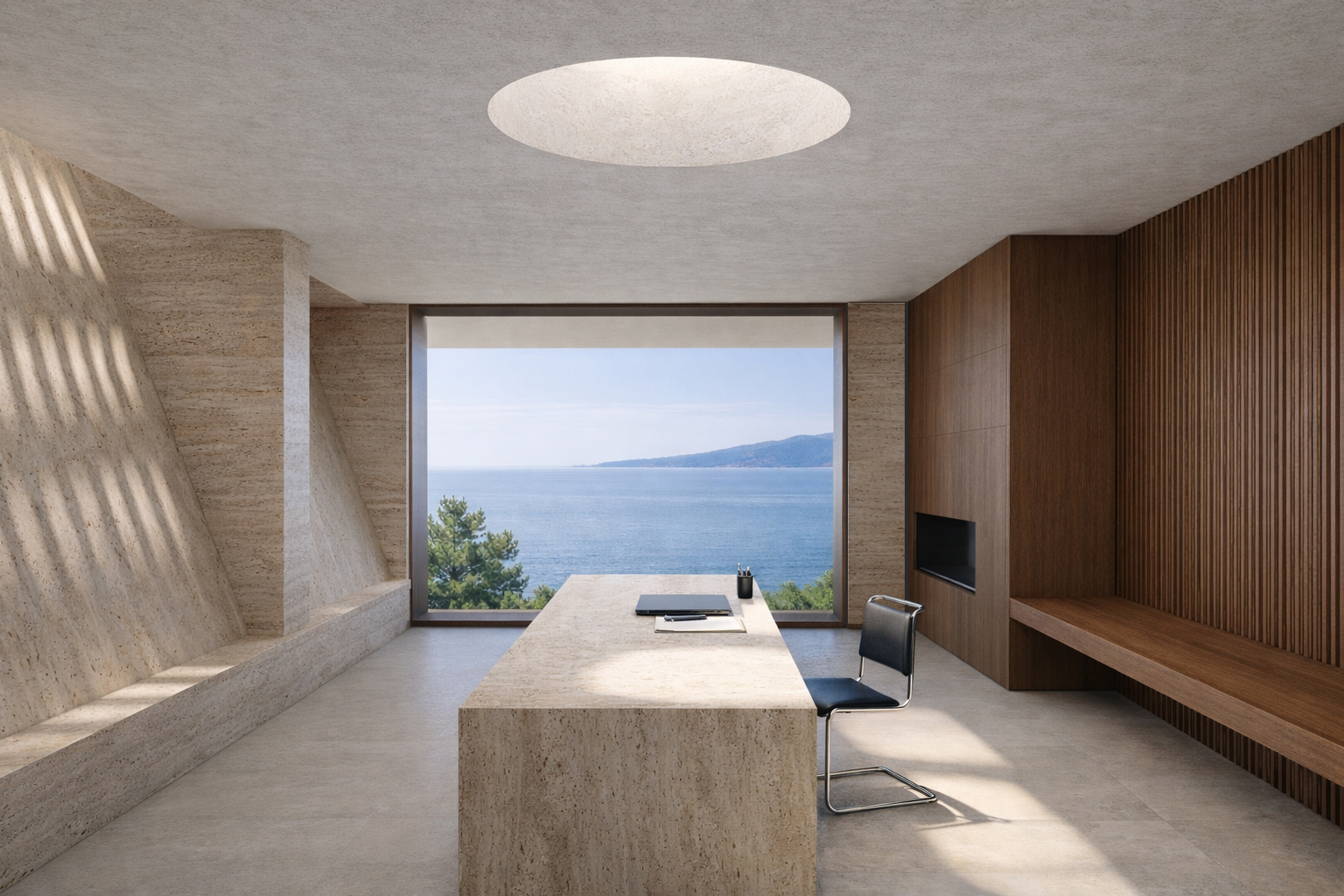
The house is developed as an abstract square volume elevated on a stone plinth. Constructed with local stone, the plinth accommodates the working studio of the inhabitants, guest rooms, and auxiliary spaces. Embedded in the terrain, it establishes a direct relationship with the clearing and the slope while generating the horizontal plane necessary for habitation above.
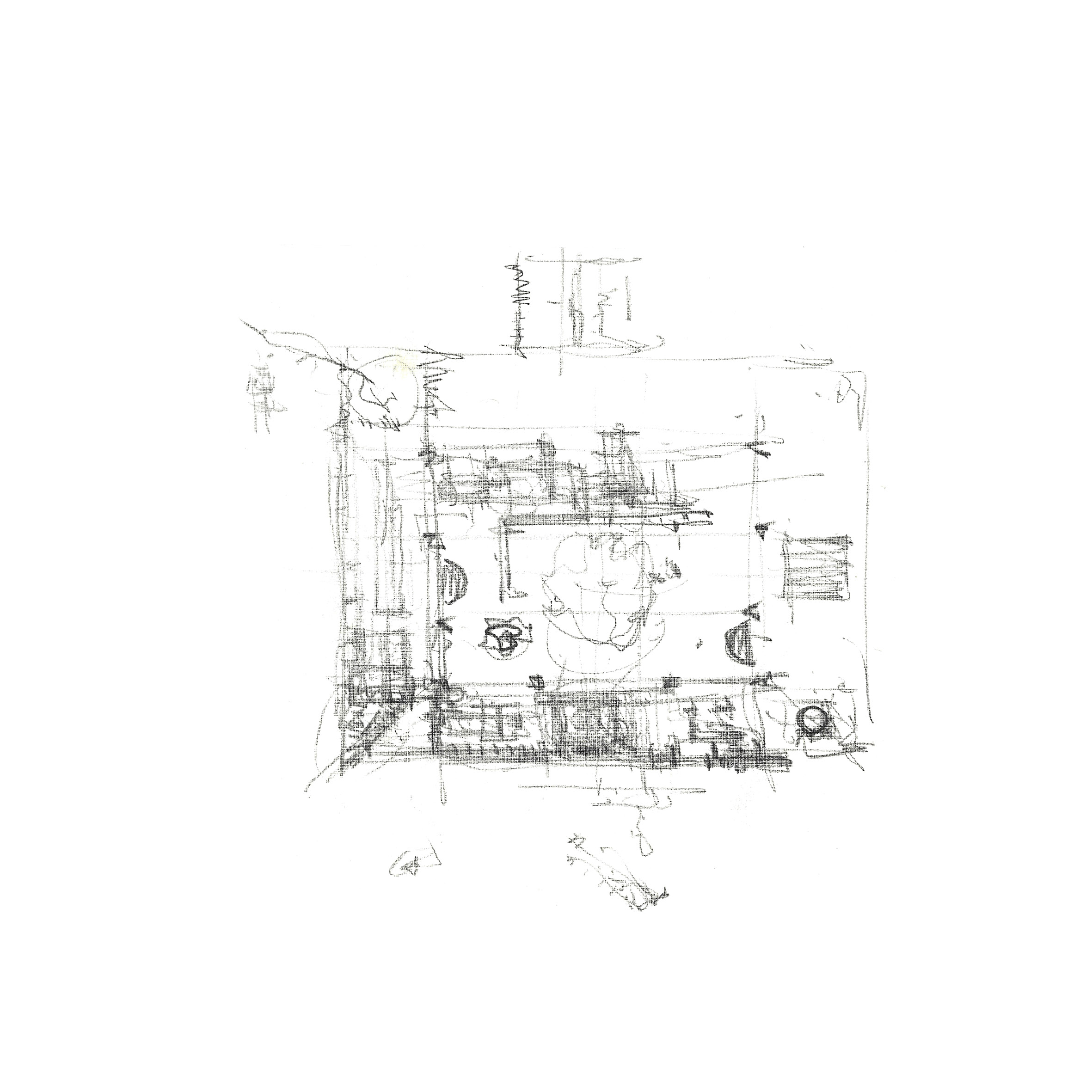
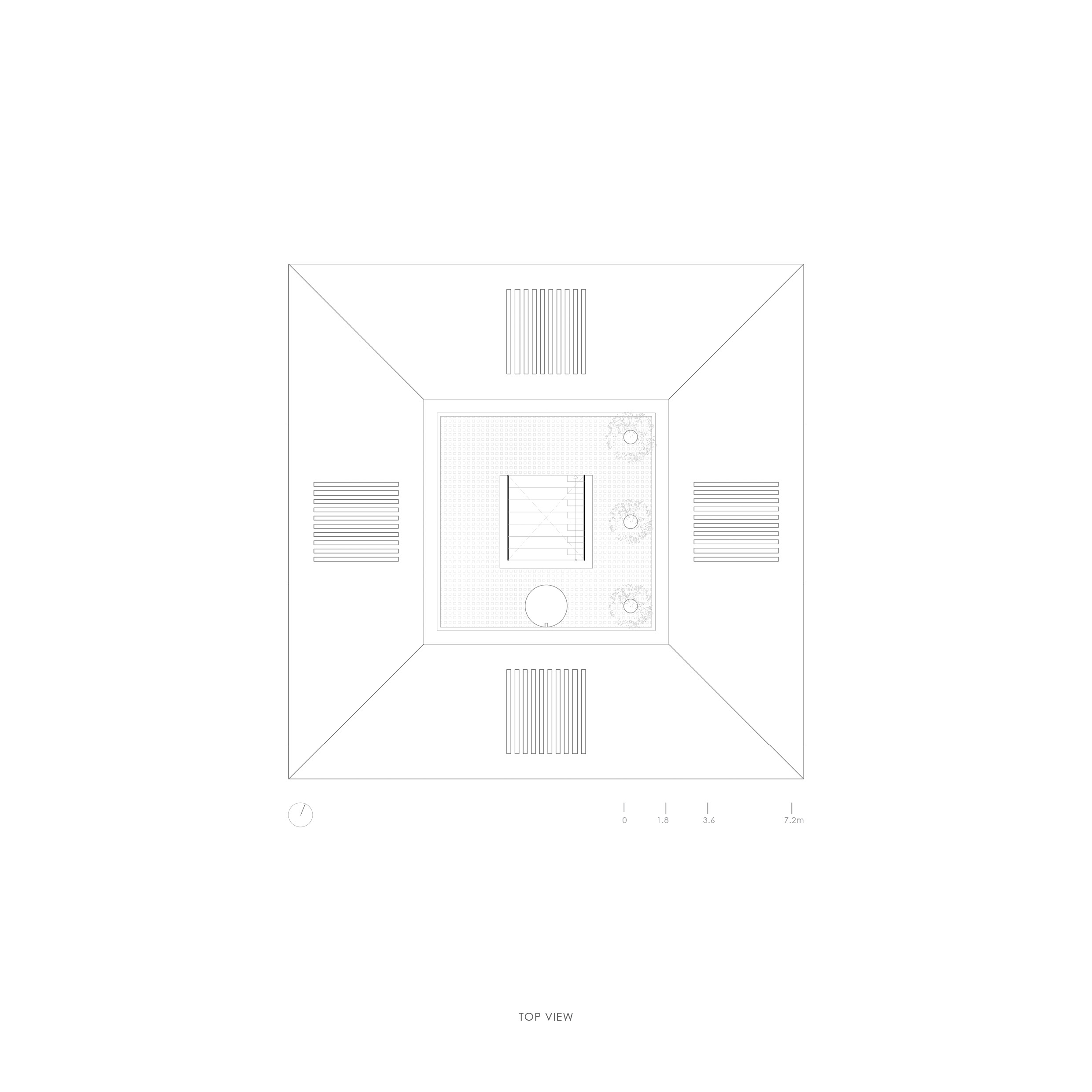
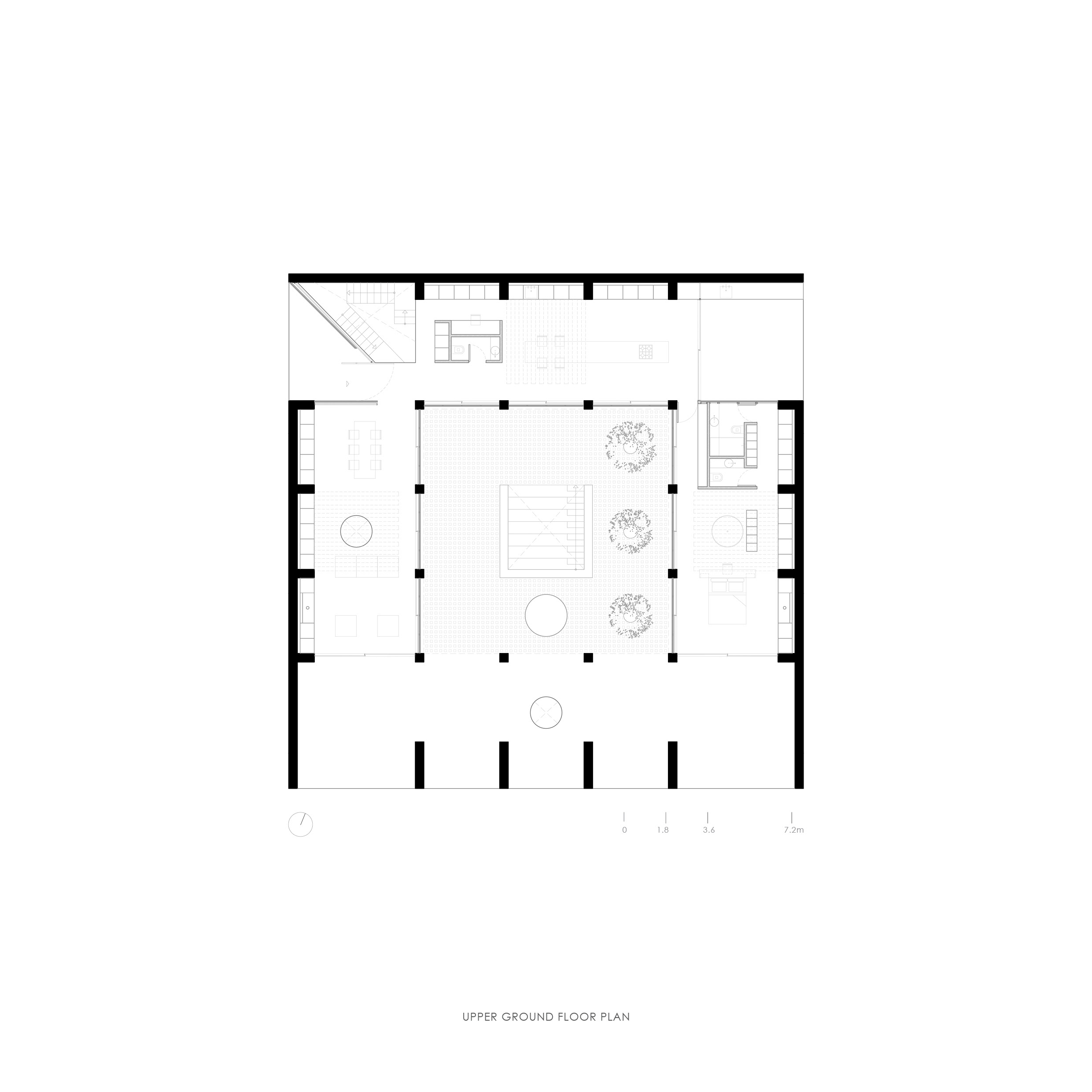
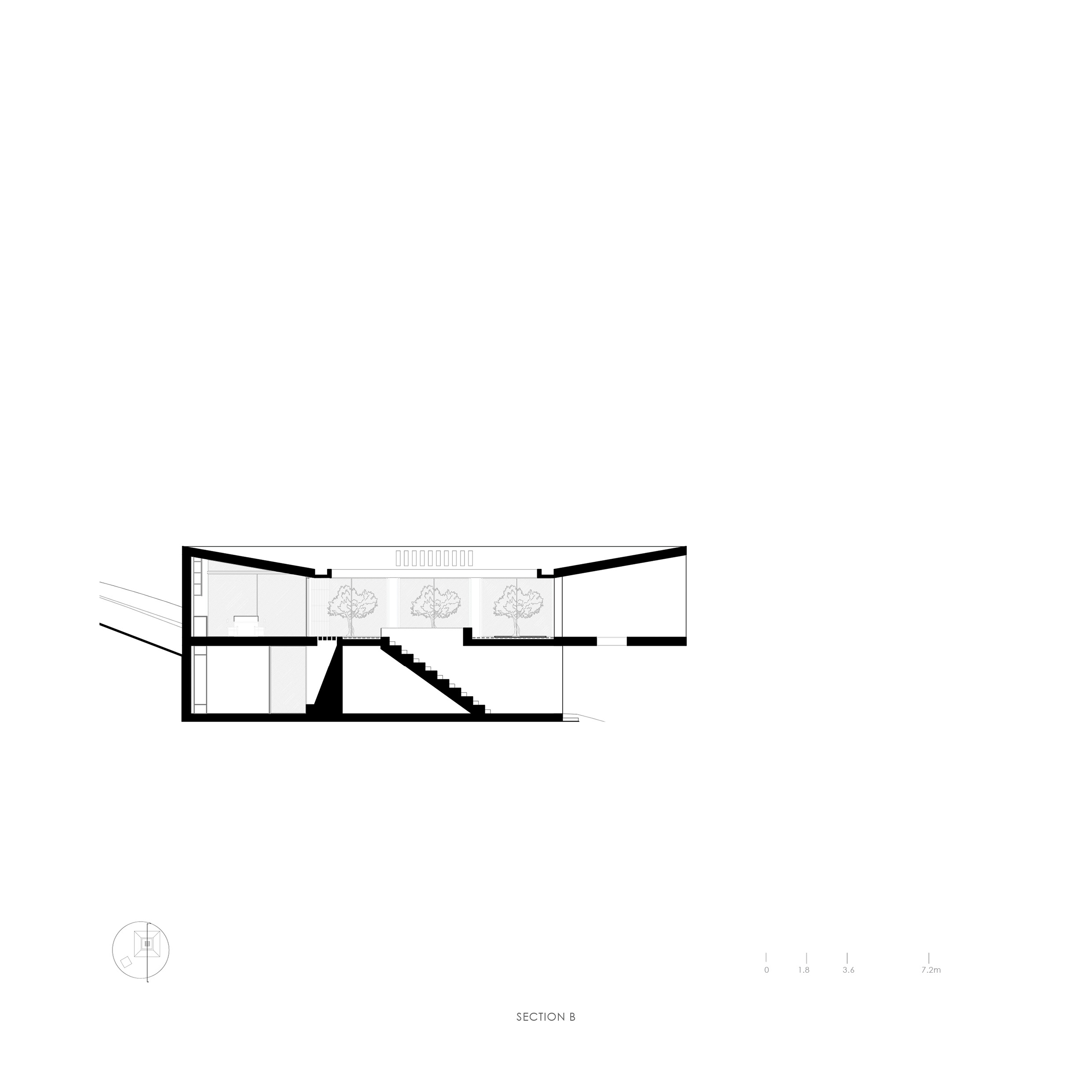
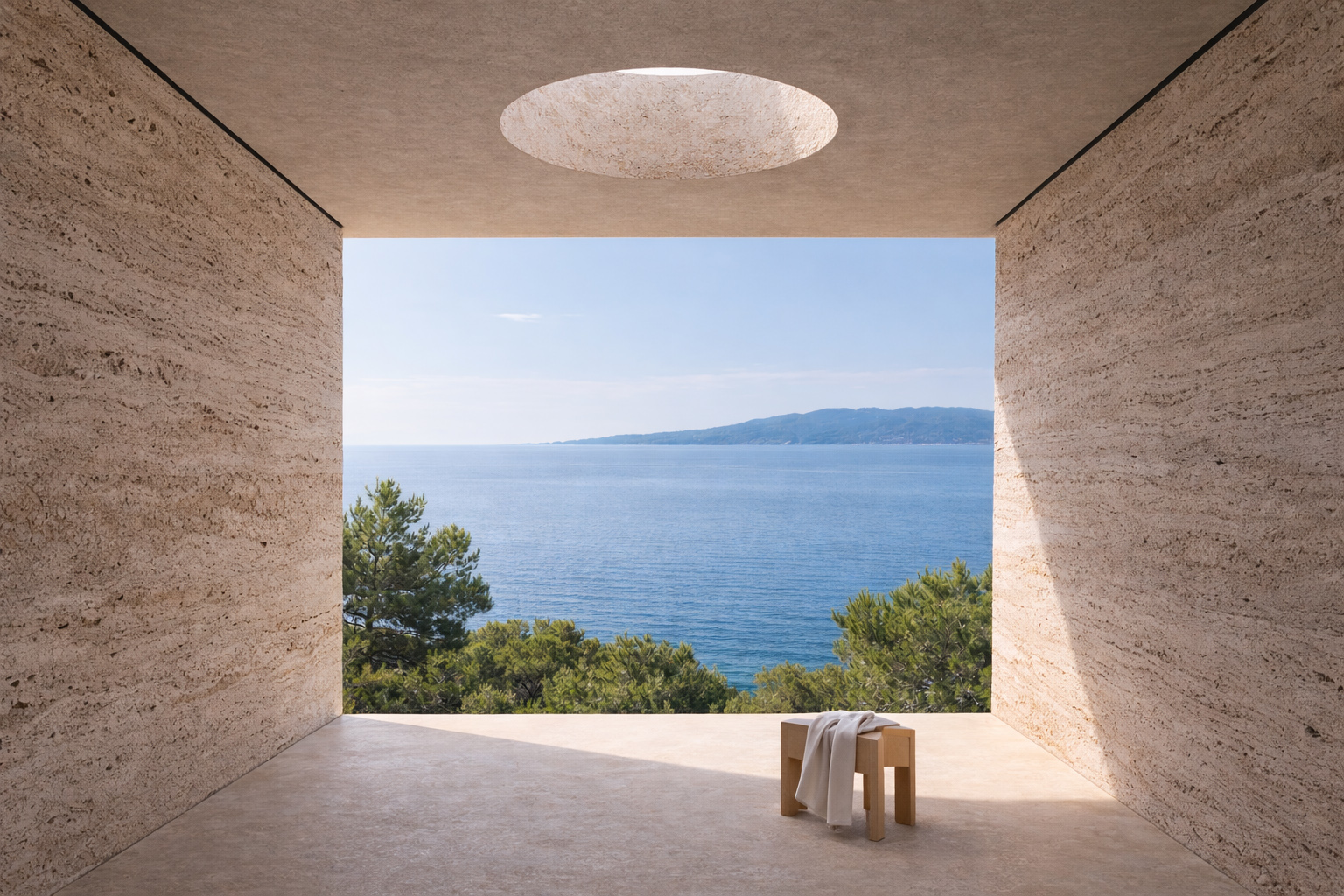
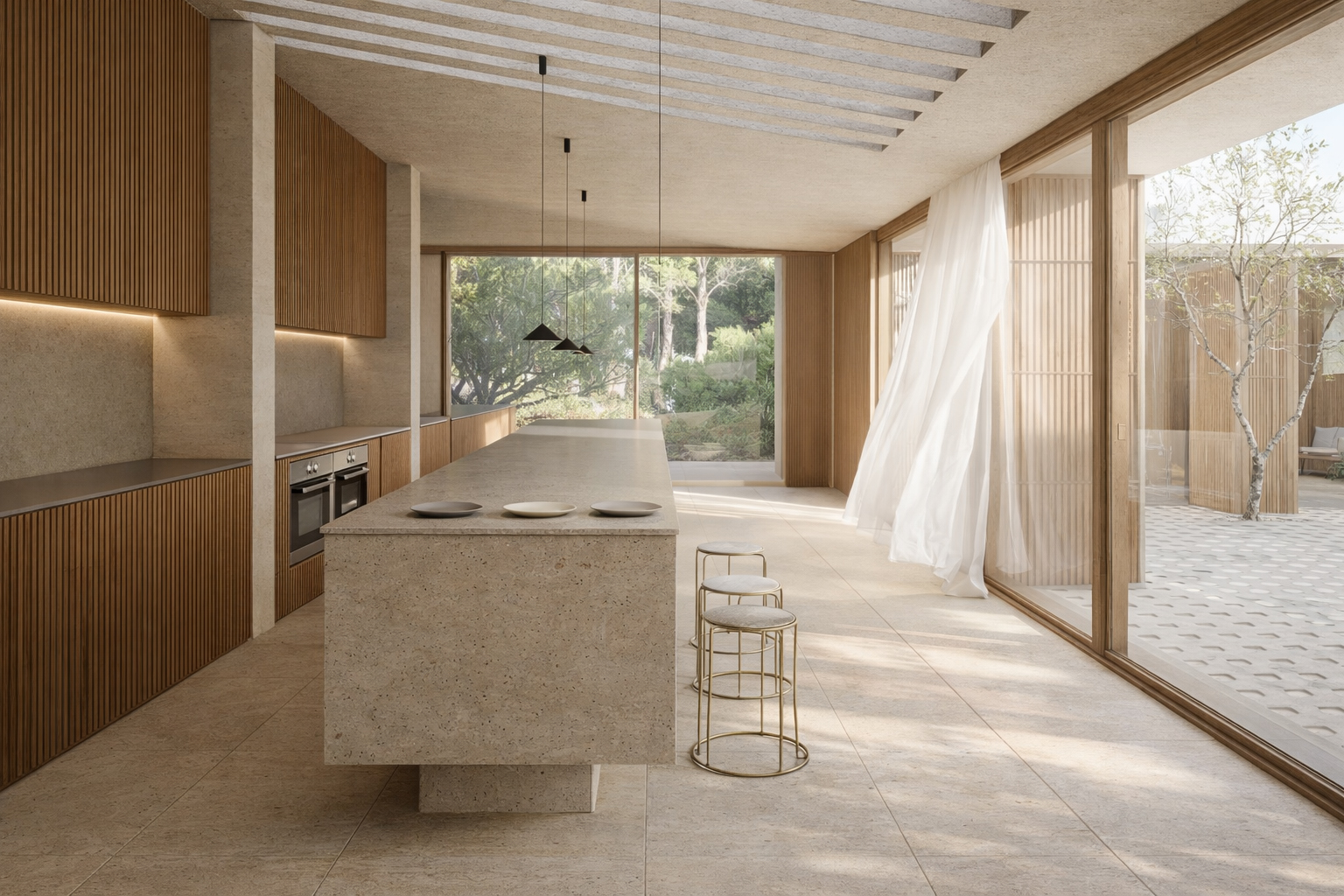
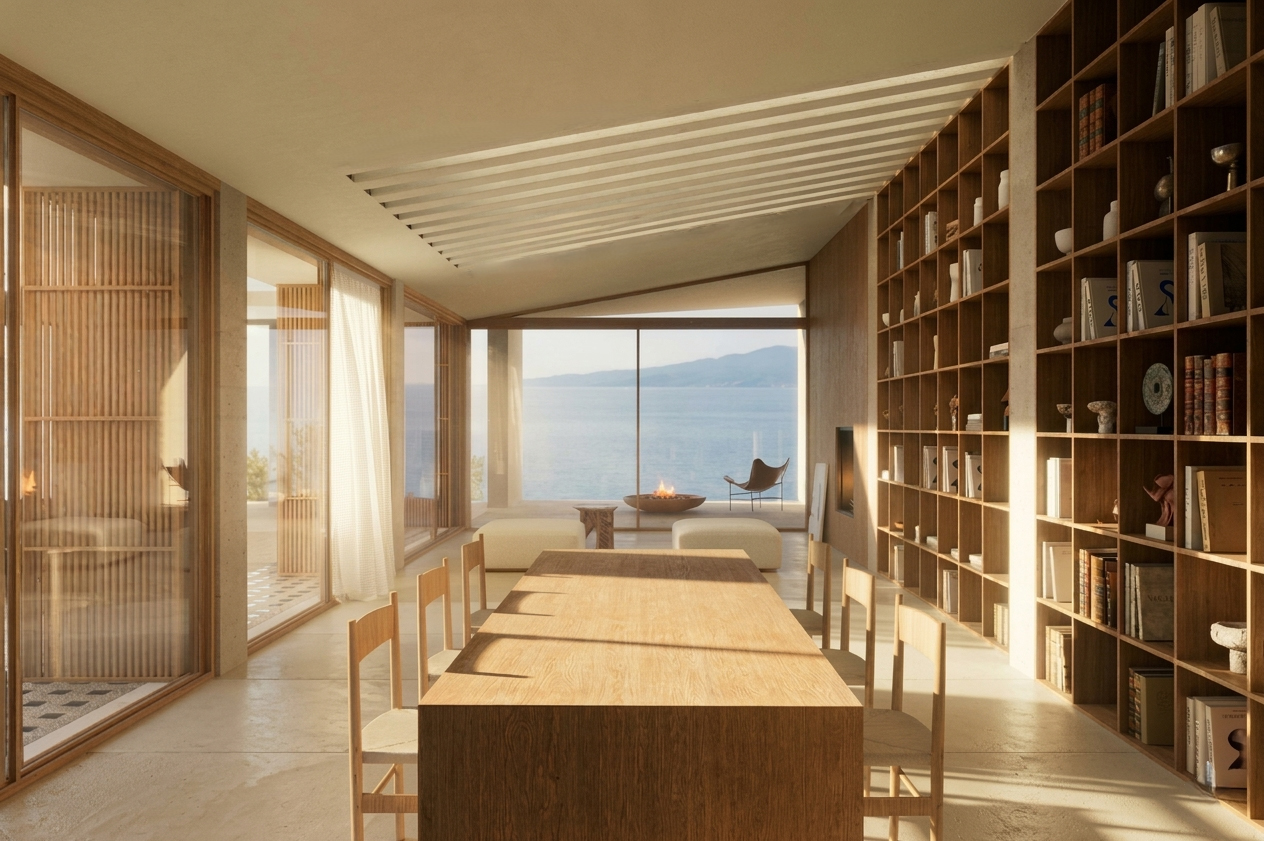
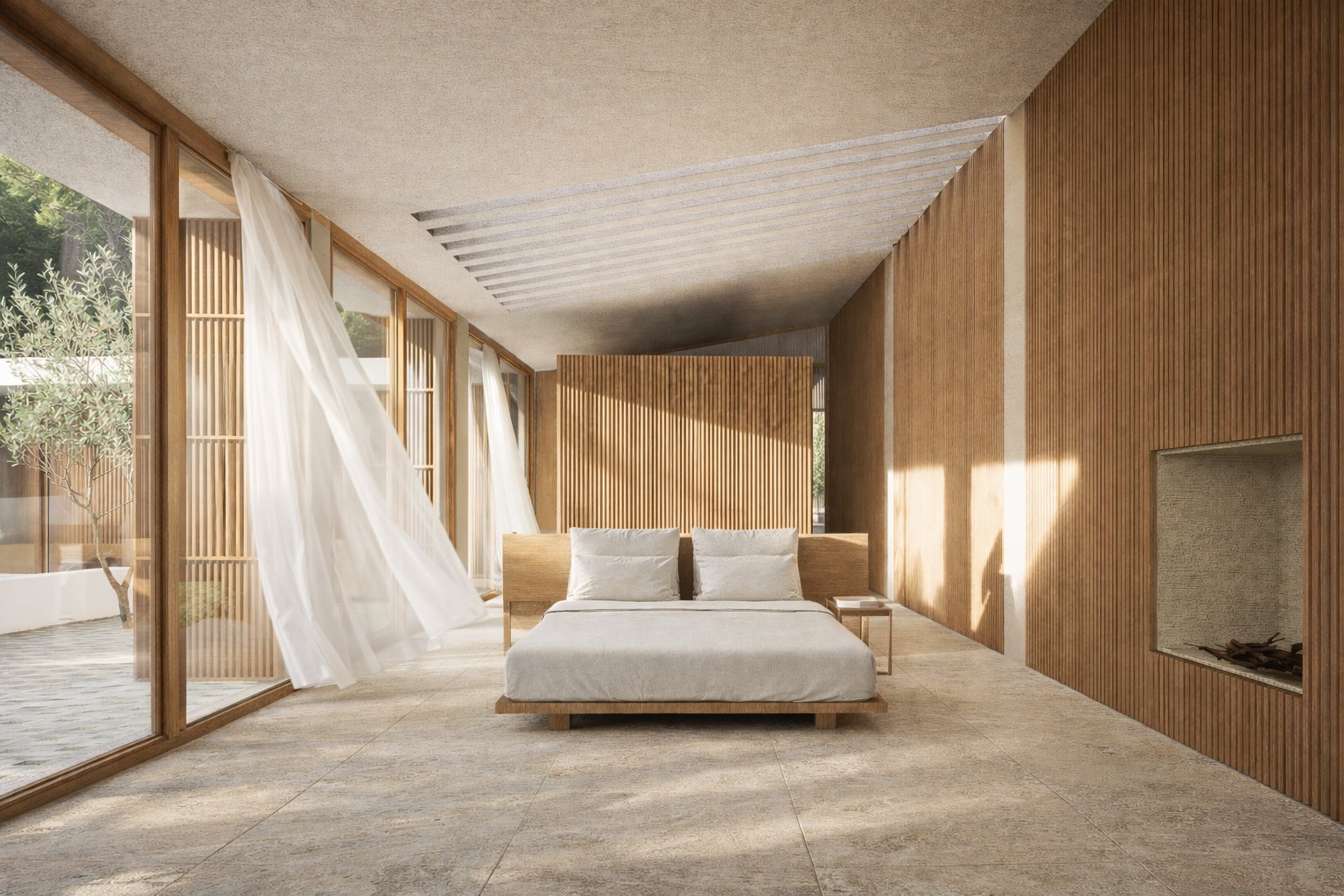
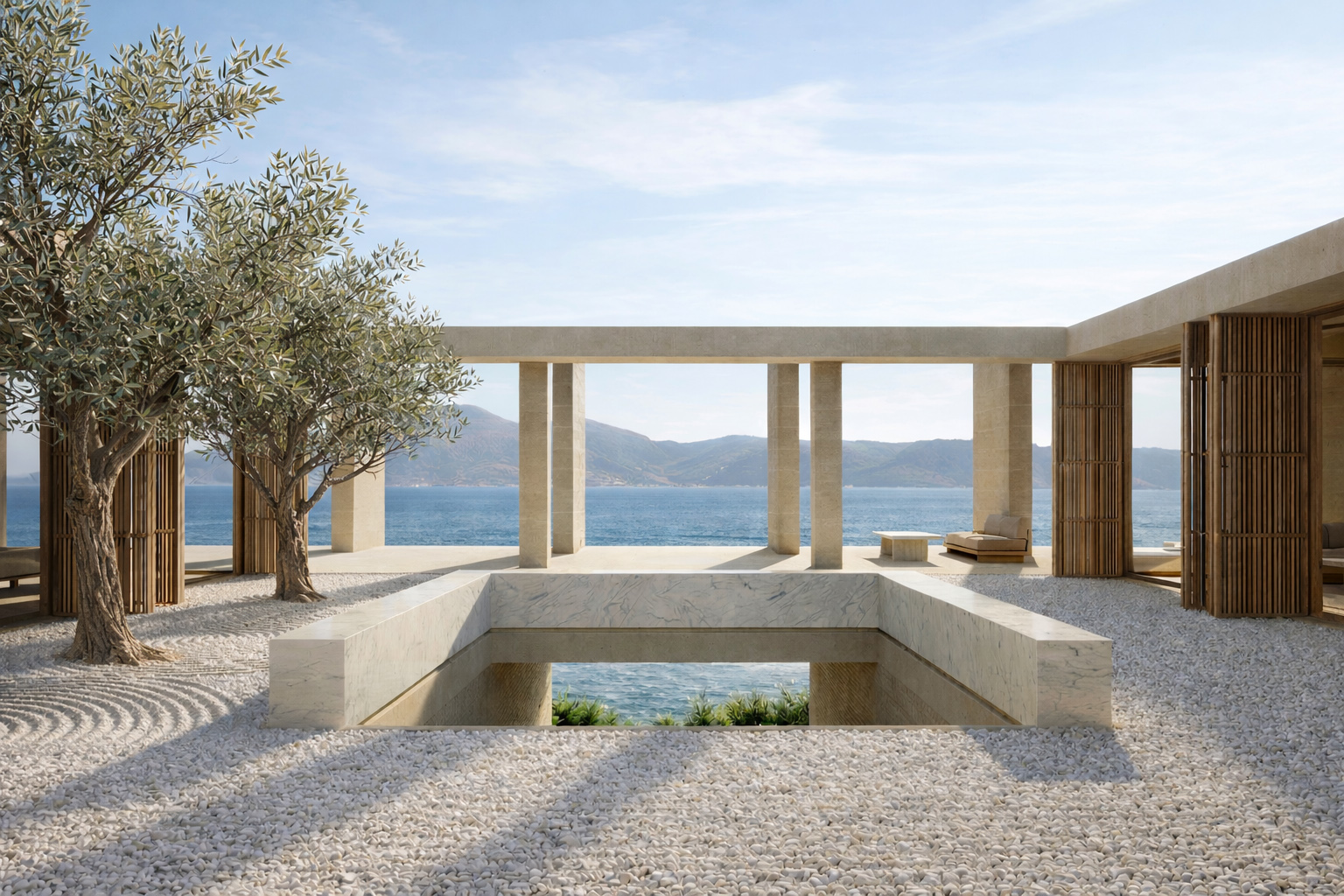
The elevated level follows a square typology organized around a central courtyard open to the sky. The roofs of the surrounding spaces slope towards the courtyard, reducing the perceived scale of the volumes while collecting rainwater towards the garden. The courtyard establishes the internal order of the house. Around this protected garden, four principal zones are arranged: the sleeping areas, the living space with its reading area, the kitchen, and a semi-outdoor veranda that connects the spaces of the house while framing the distant landscape.
At the center of the courtyard, a small outdoor theatre connects the two levels of the house. Formed as a stepped seating space, it functions as a place for gatherings, contemplation, or small performances, with the landscape and the sea forming the background.
Dwelling is understood here not as the occupation of the land but as the careful opening of a place within it. At the center of the project, the circular clearing operates as a contemporary temenos, a space cut out from the ordinary terrain and set apart for inhabitation. Within the dense pine forest, the house of Casa Nemoris simply marks this opening, allowing the ground, the trees, and the distant horizon to remain the primary presence of the site. Architecture thus appears as a measured act of placement that frames the clearing while preserving the quiet continuity of the landscape.
Architects: P4architecture
Design Team: Alkiviadis Pyliotis, Evangelos Fokialis, Konstantinos Pyliotis, Panayiota Kyriakou
Contributor: Margarita Togia, Angeliki Kontokosta
Landscape Architect: Chrysi Gkolemi
Civil Engineers Consultants: Skalos EPE
Mechanical Engineer: KNS Engineers (Kostas Sourilas)
3D Visualization: P4architecture
Project Type: Private Commision
Project Year: 2026