WHAT IS THE INSTITUTION OF A CONGRESS CENTER TODAY?
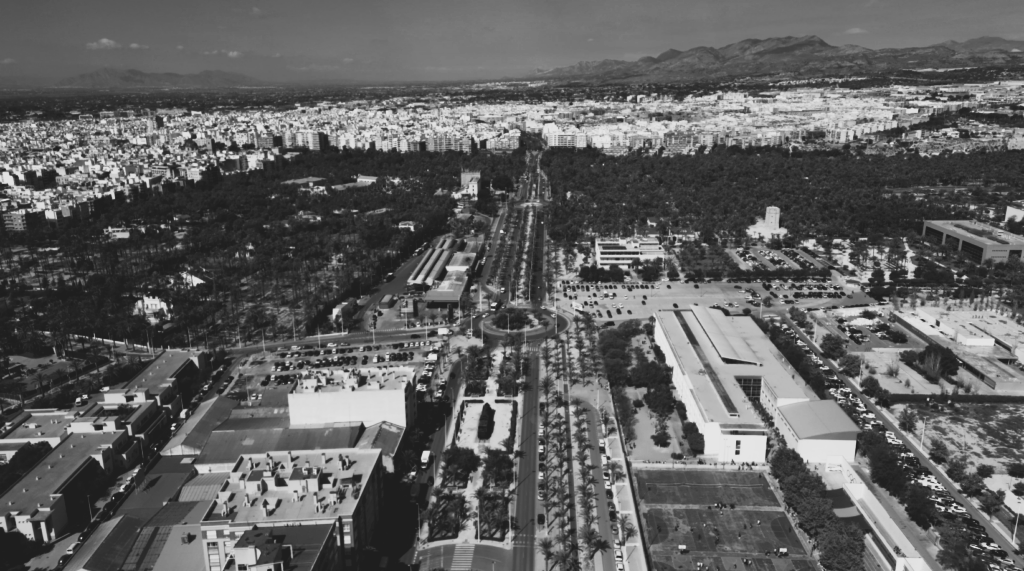
The digital revolution and the rapid transformation of contemporary working environments present a valuable opportunity to reflect on the relevance, current challenges, and future of congress centres. As remote working, virtual collaboration, and hybrid meeting formats become widespread, the global frequency of large-scale conventions is expected to decline. Yet paradoxically, the demand for physical gatherings in places with distinct cultural identity and urban character—such as Elche—may grow stronger. In this context, the inevitable question arises: how can a building embody the tradition of a place, create spatial experiences that resonate with the site’s characteristics, while still responding efficiently to the contemporary functional demands?
At the same time, the persistence of long idle periods— up to 60–65% of the year, even in successful venues— raises crucial questions about the impact of these buildings on their surroundings, especially in medium-scale urban settings where the presence of large, inactive volumes can undermine civic life. Rather than persisting as inert volumes awaiting periodic activation, the institutions of congress centres today must seek a moreintegrated civic role within the urban fabric, imagining the convention centre not only as a cultural hub or a place to meet but also as a venue that includes a series of unassigned programmatic uses.
These concerns became even more significant, especially when combined with high maintenance costs, the impact of the energy crisis, and the environmental burden of large-scale infrastructure. With this in mind, we approached the project as an opportunity to question the nature and typology of the congress centre itself. Rather than a singular monumental volume, our proposal envisions a flexible spatial system: one that can remain open to the public between conventions, operate in parts, scale to different events, and minimise its environmental footprint and operational costs. Above all, it is conceived to remain adaptable—capable of hosting emerging forms of communication and gathering, both physical and virtual.
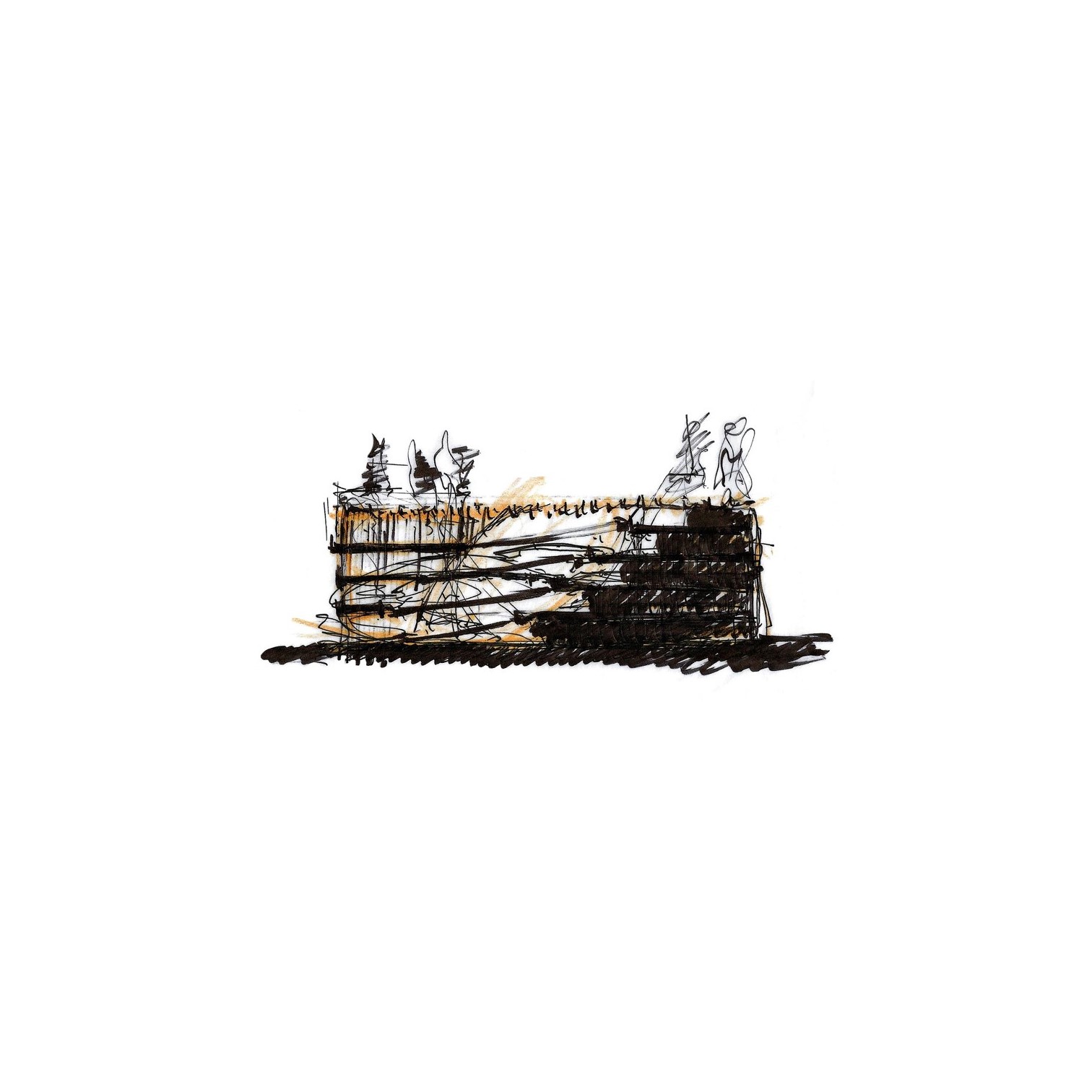
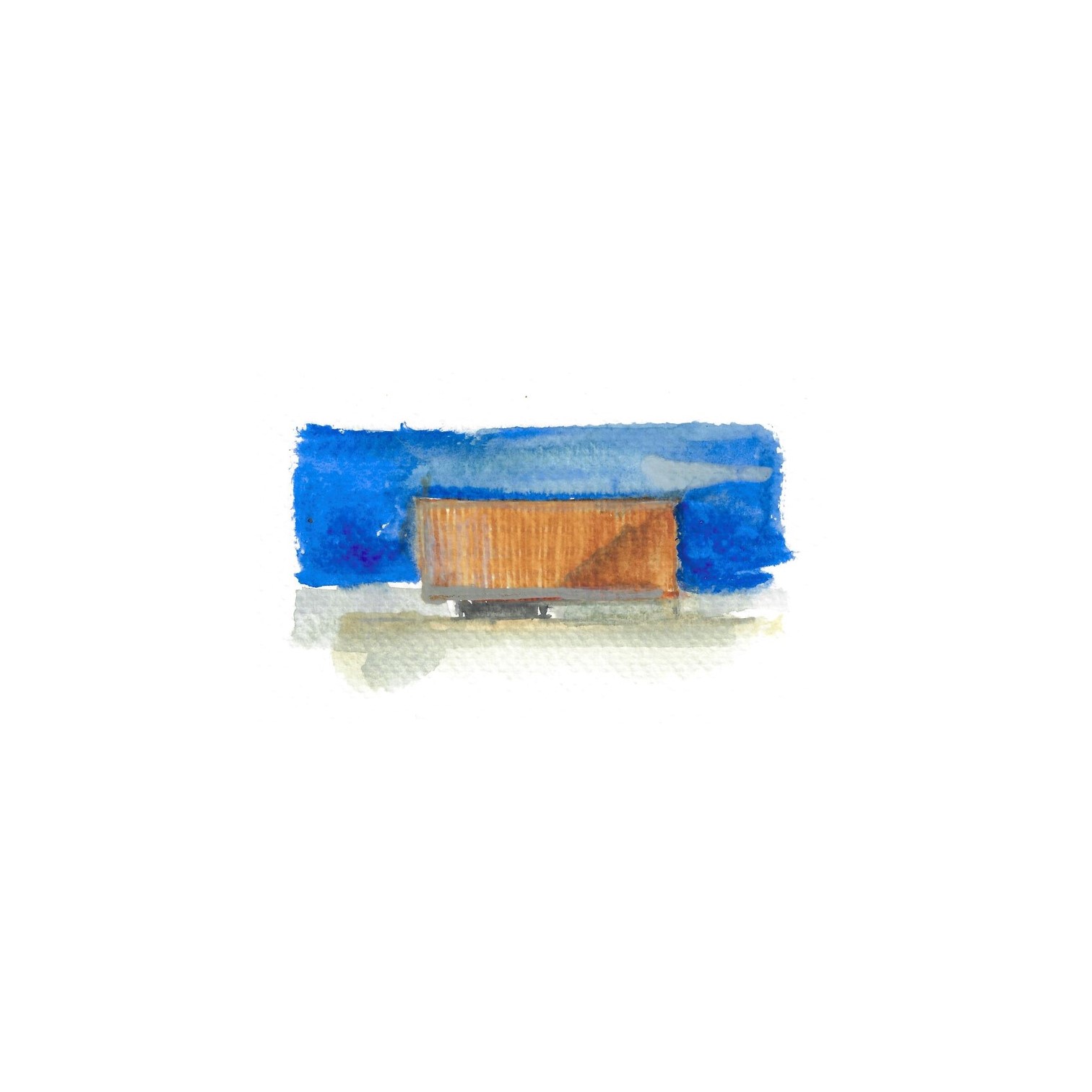
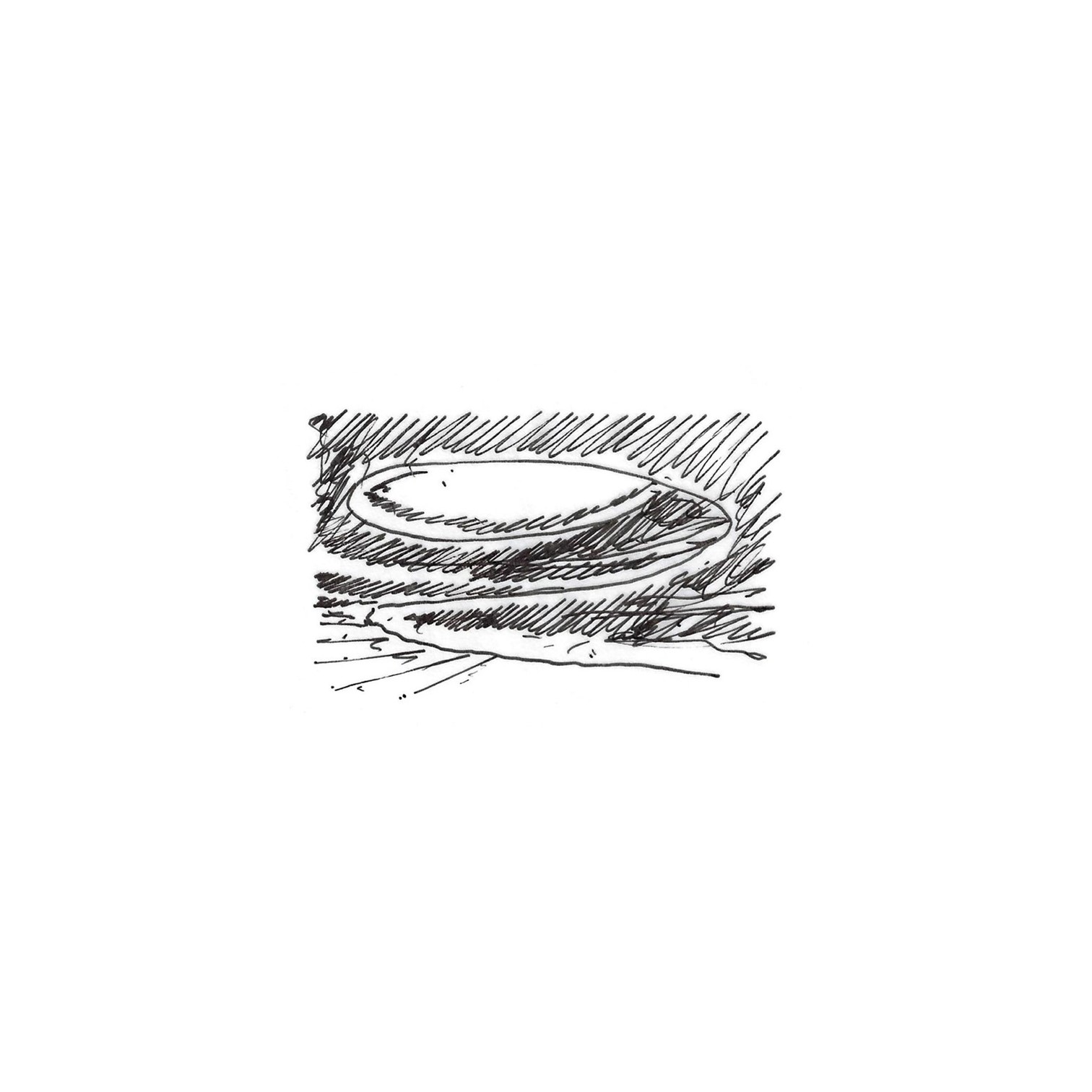
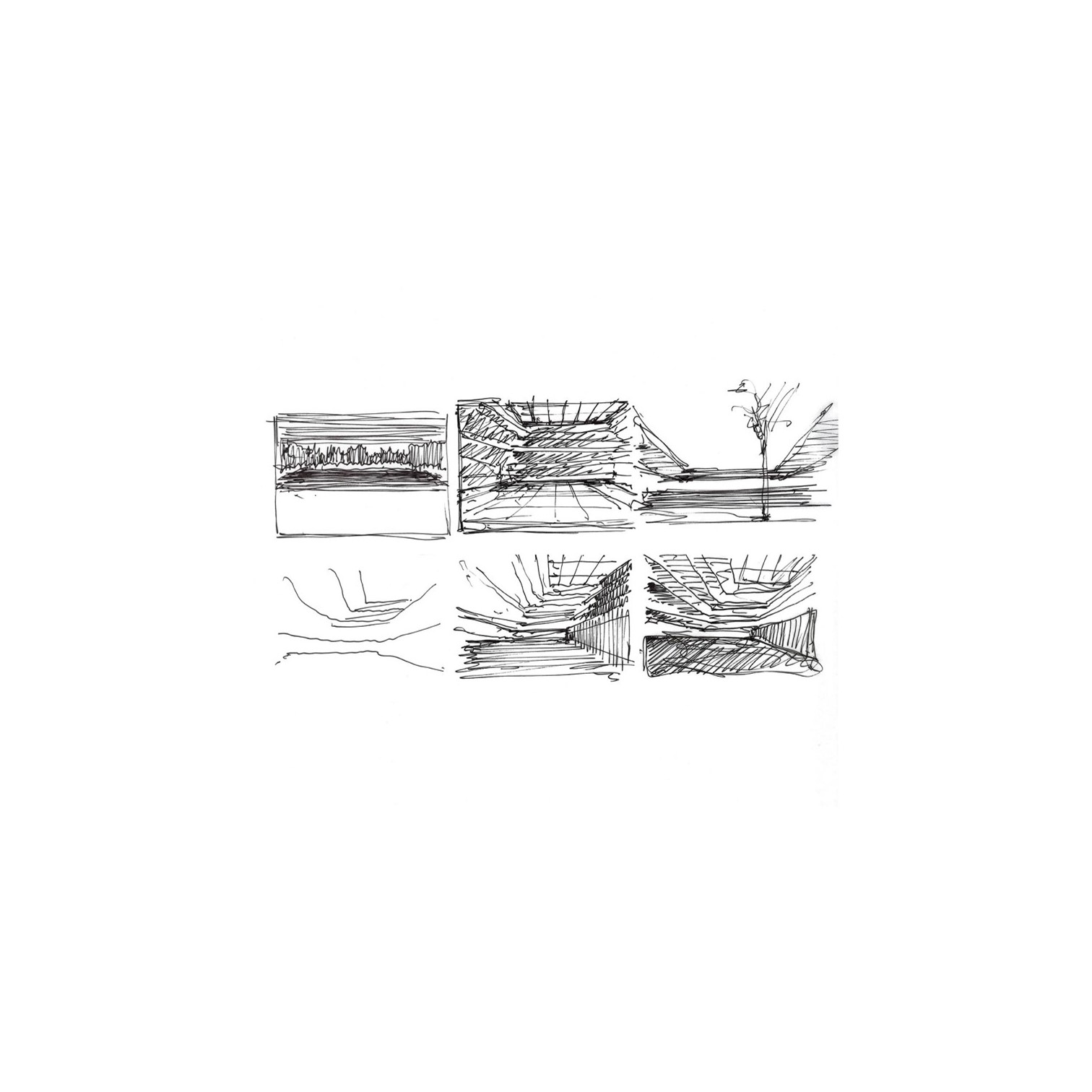
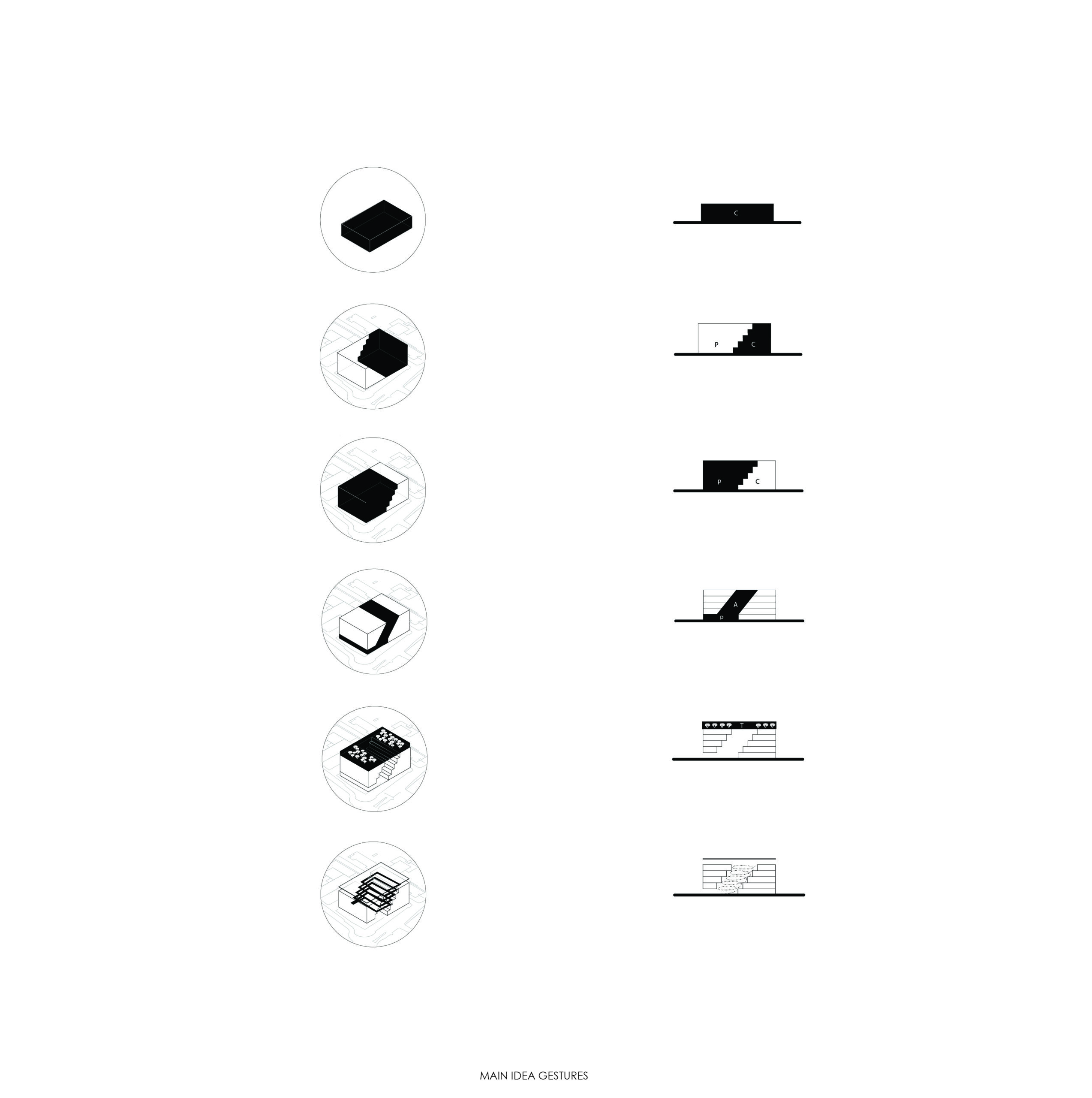
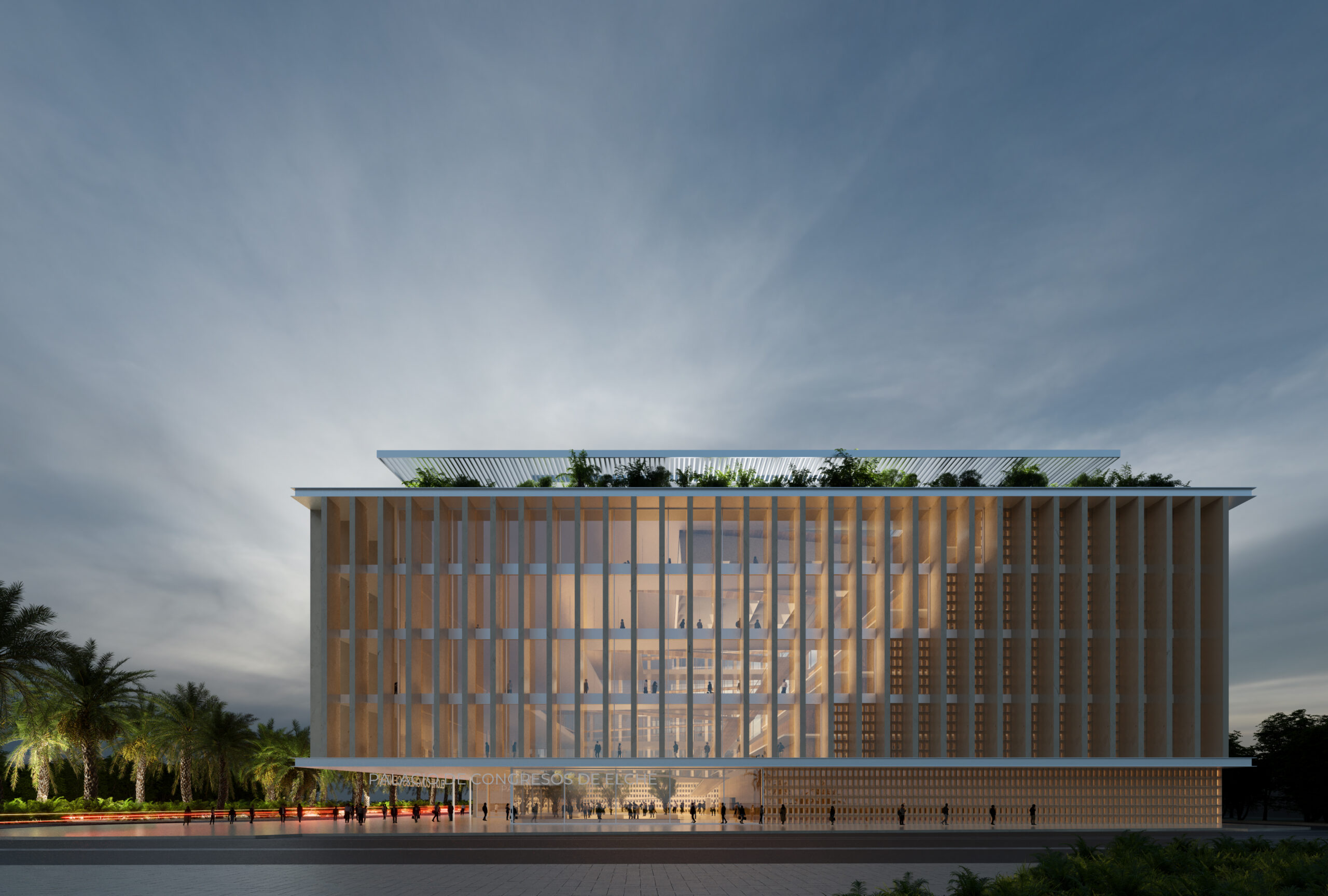
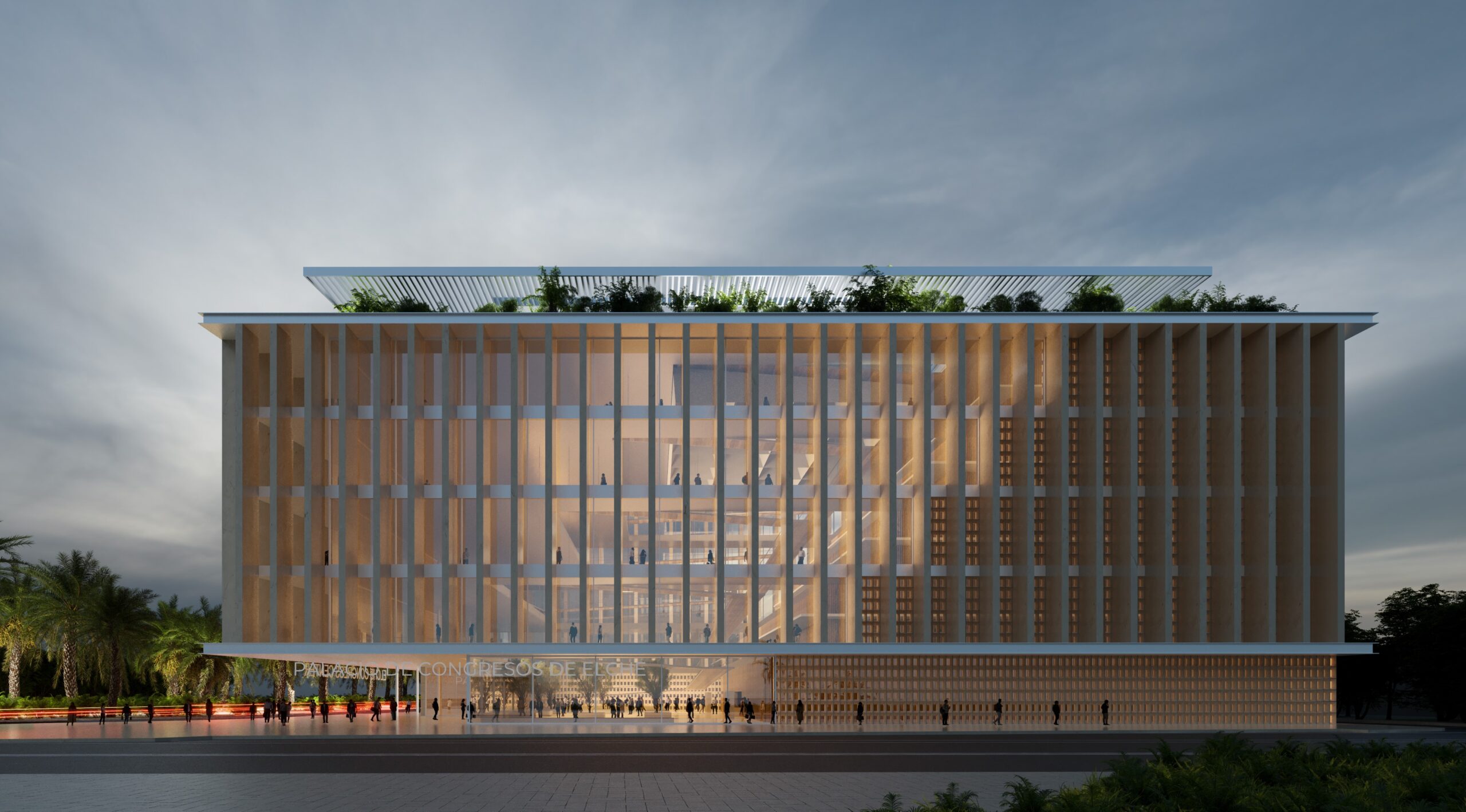
This proposal attempts to reinterpret the conventional event venue as a vertical civic structure embedded within the urban and territorial fabric of the city. Departing from the introverted typology of isolated complexes, the project organizes a sequence of publicly accessible spaces stacked vertically—fostering continuous interaction between programmed activities and flexible, open-ended uses.
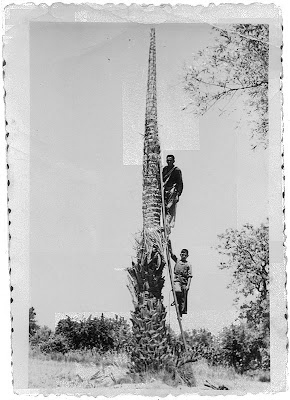
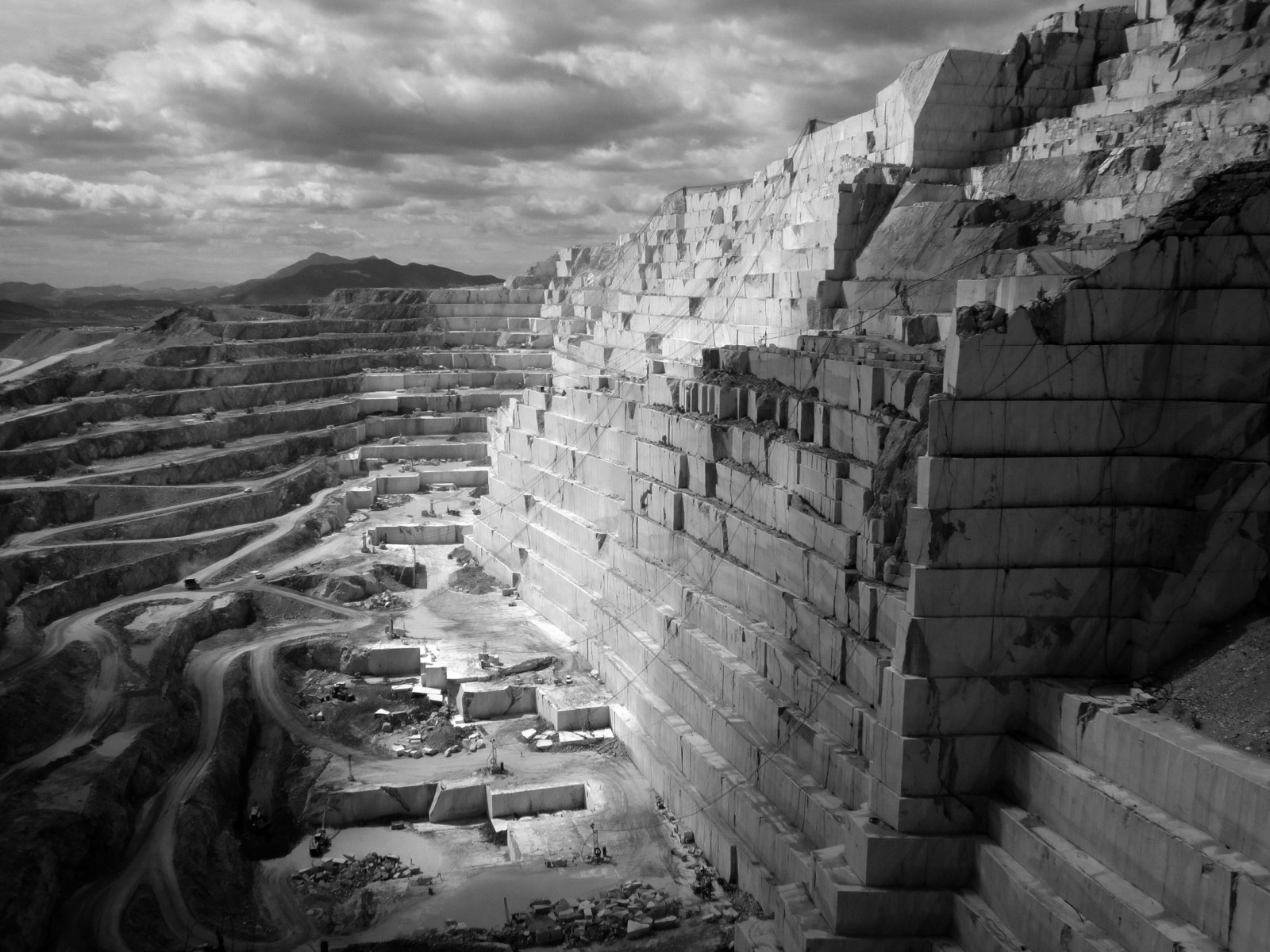
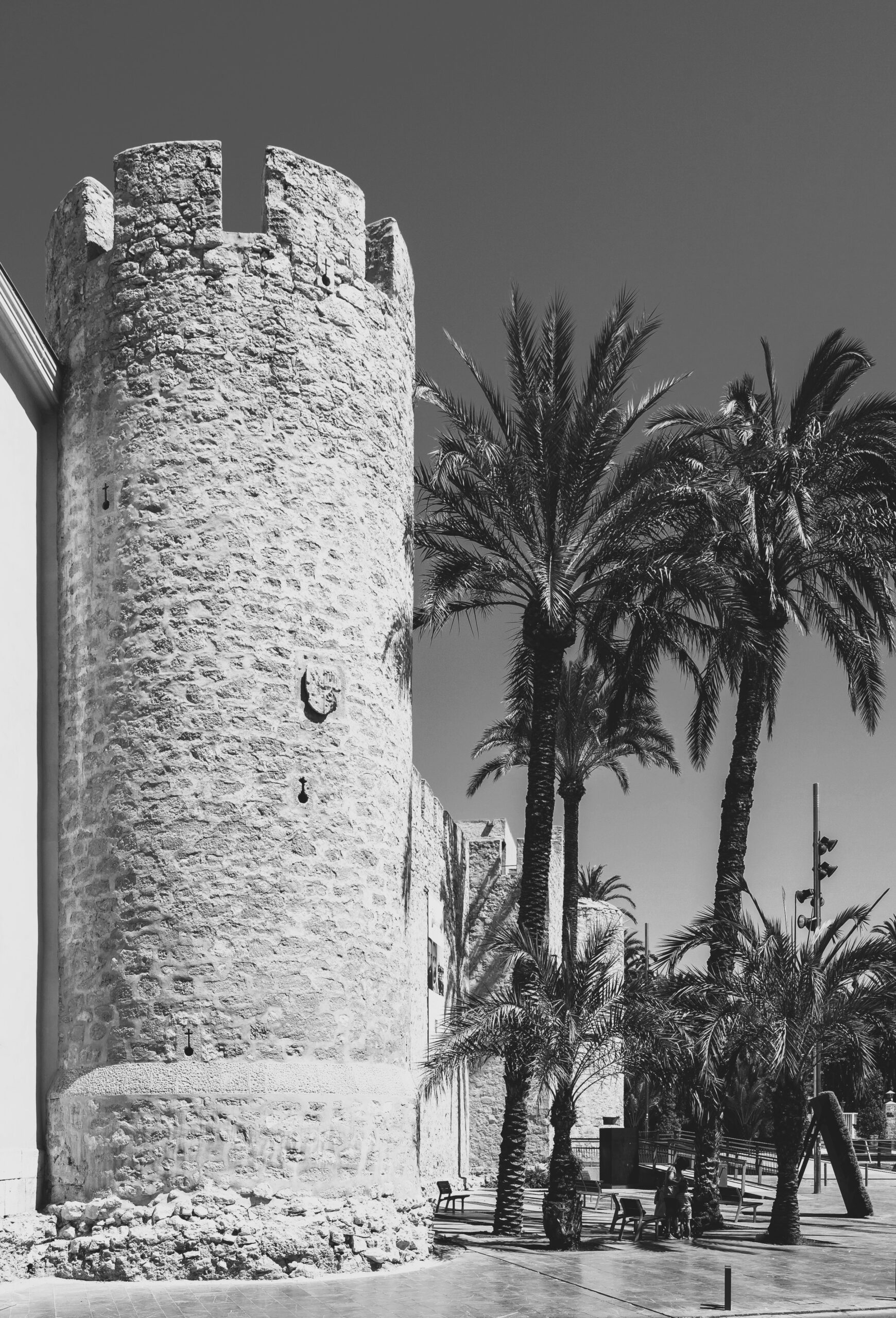
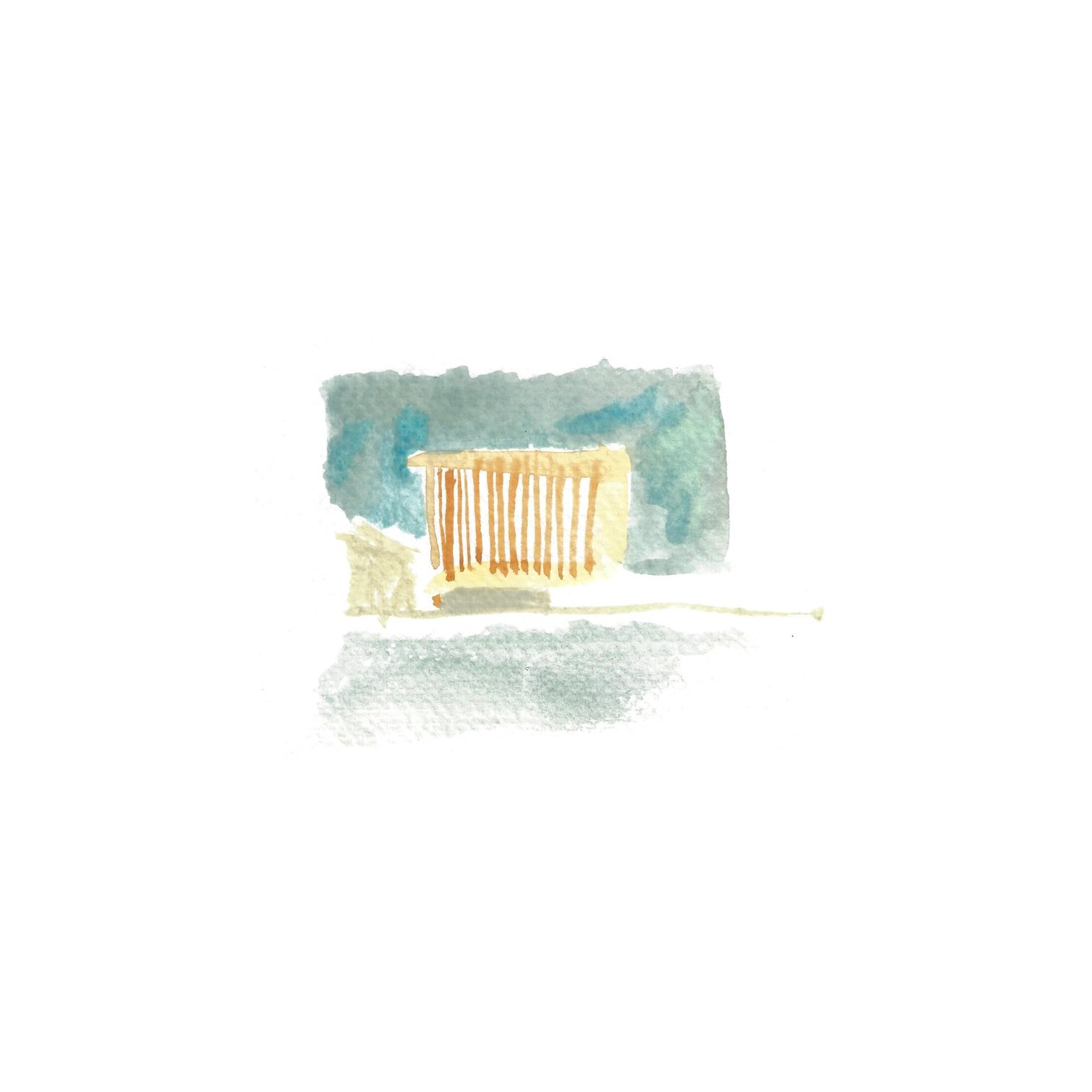
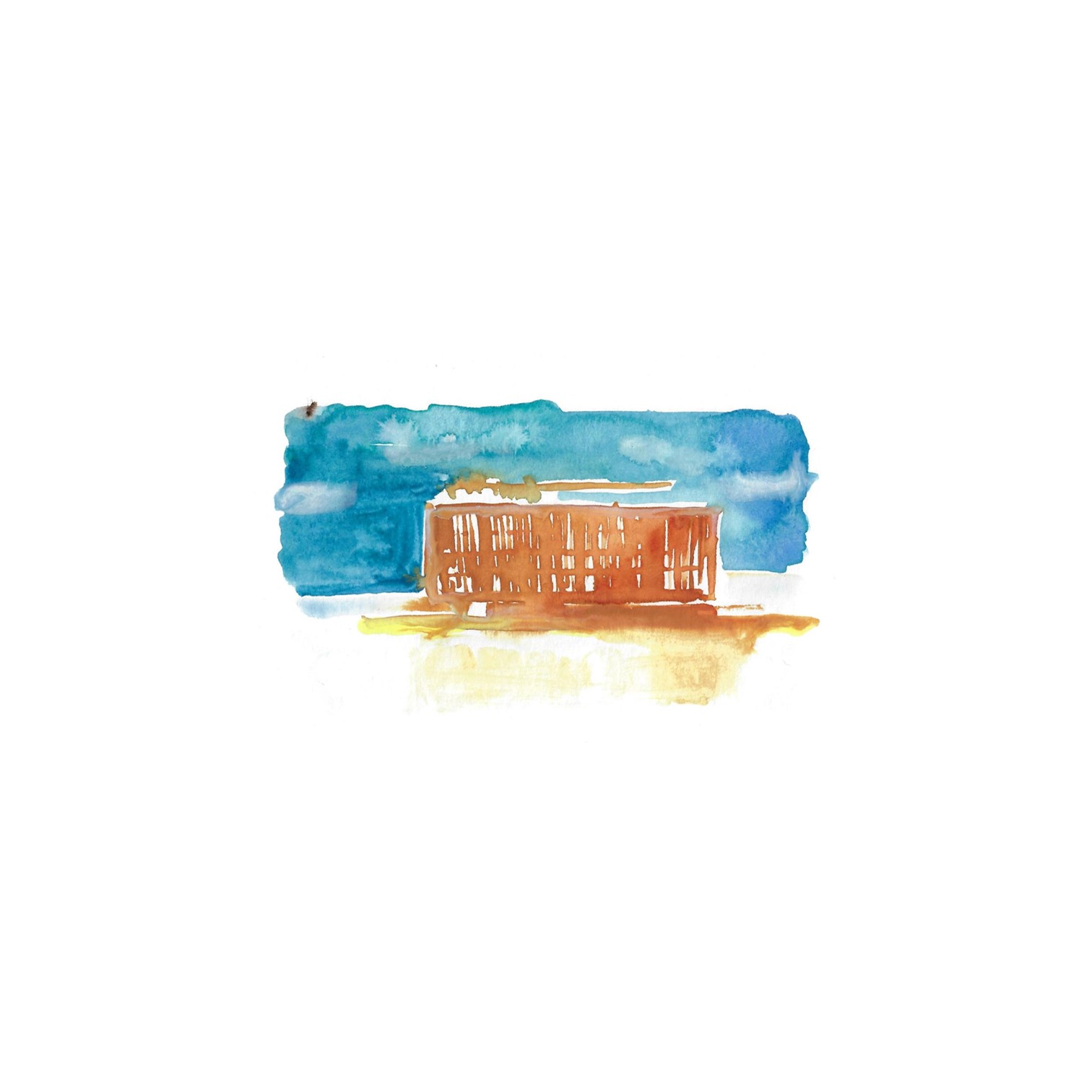
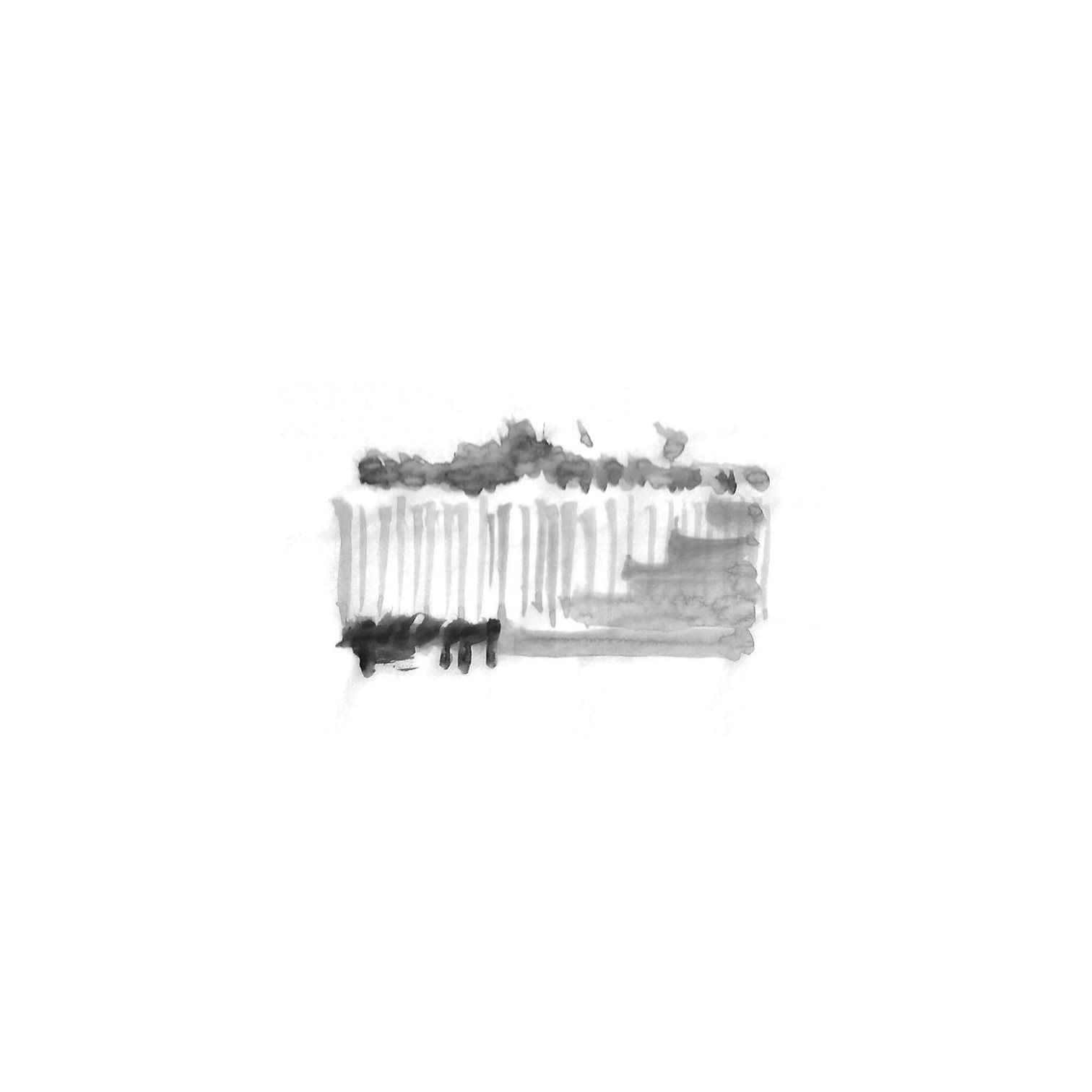
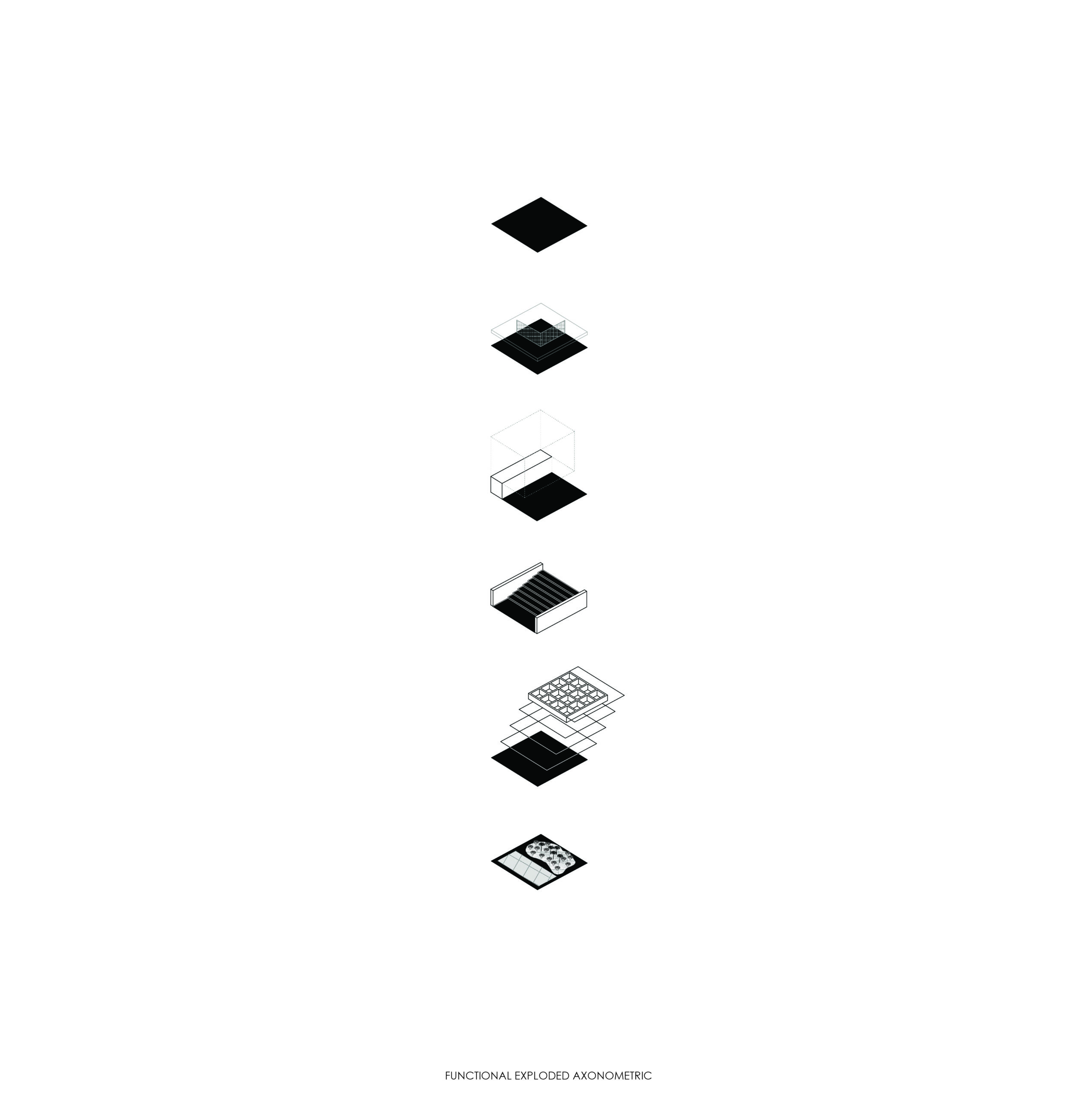
Drawing on the vertical presence of the palm tree within Elche’s predominantly horizontal landscape, as well as the terraced geometries of regional quarries, the proposal assembles a composition of deep spatial archetypes rooted in the Mediterranean culture: Stoa, Threshold, Atrium, Theater, Plaza, and Garden. These elements establish a framework for spatial generosity, civic engagement, and social diversity.
Designed as an evolving urban ecosystem, the building prioritizes environmental sustainability by minimizing its footprint while remaining adaptable to future transformations. Five key architectural strategies structure its spatial and infrastructural layout:
1. Vertical Organization: A Congress Centre as SteppedSolid Volumes
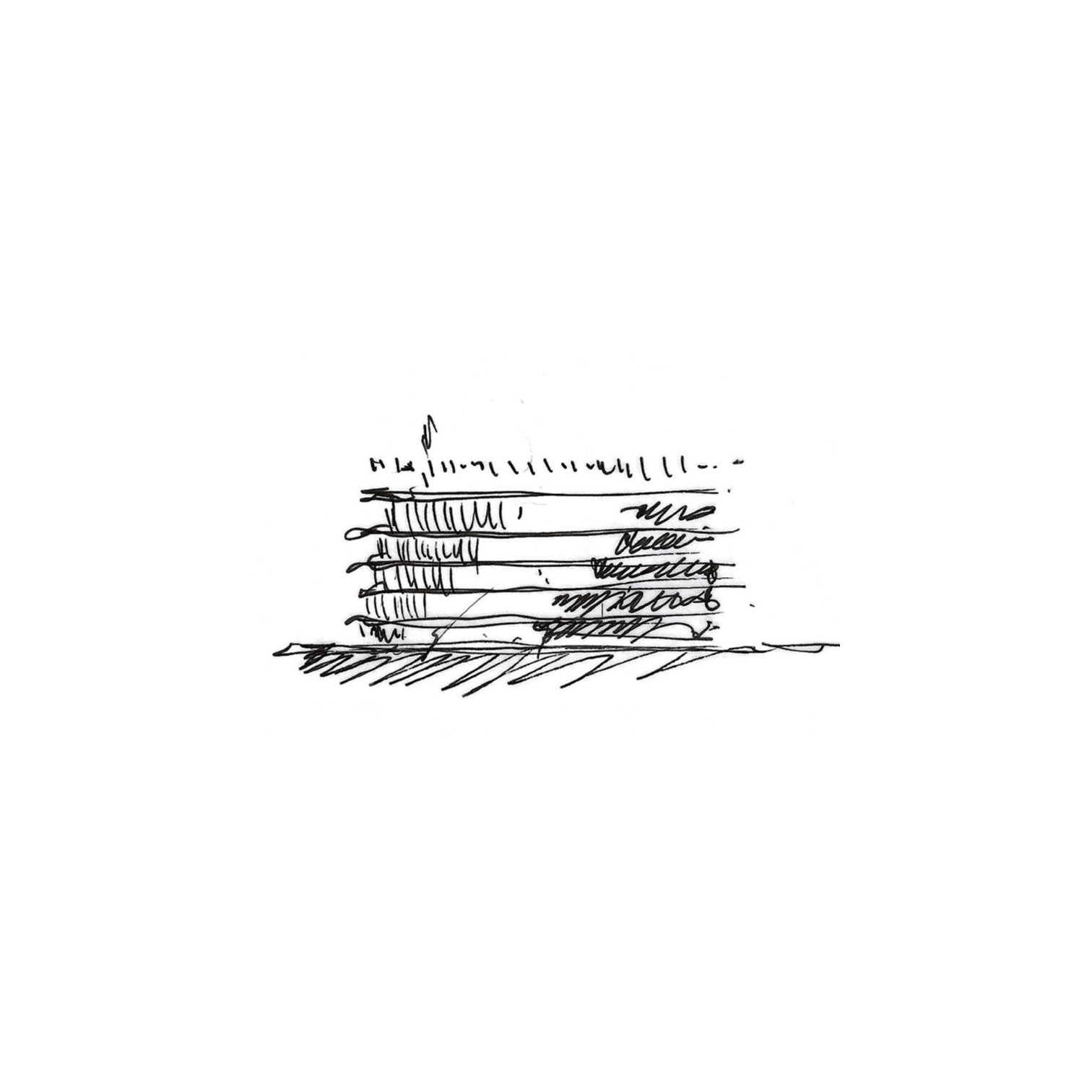
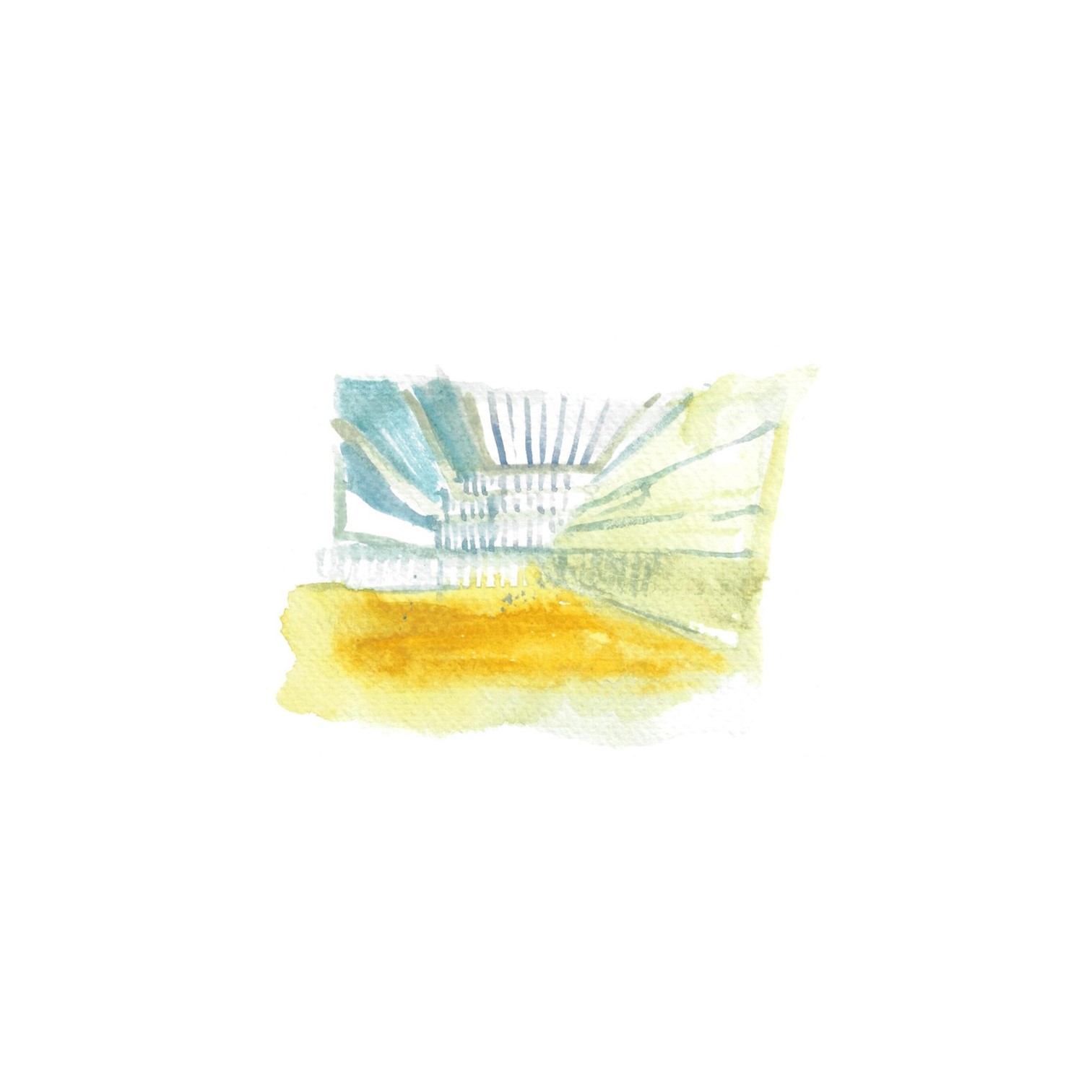
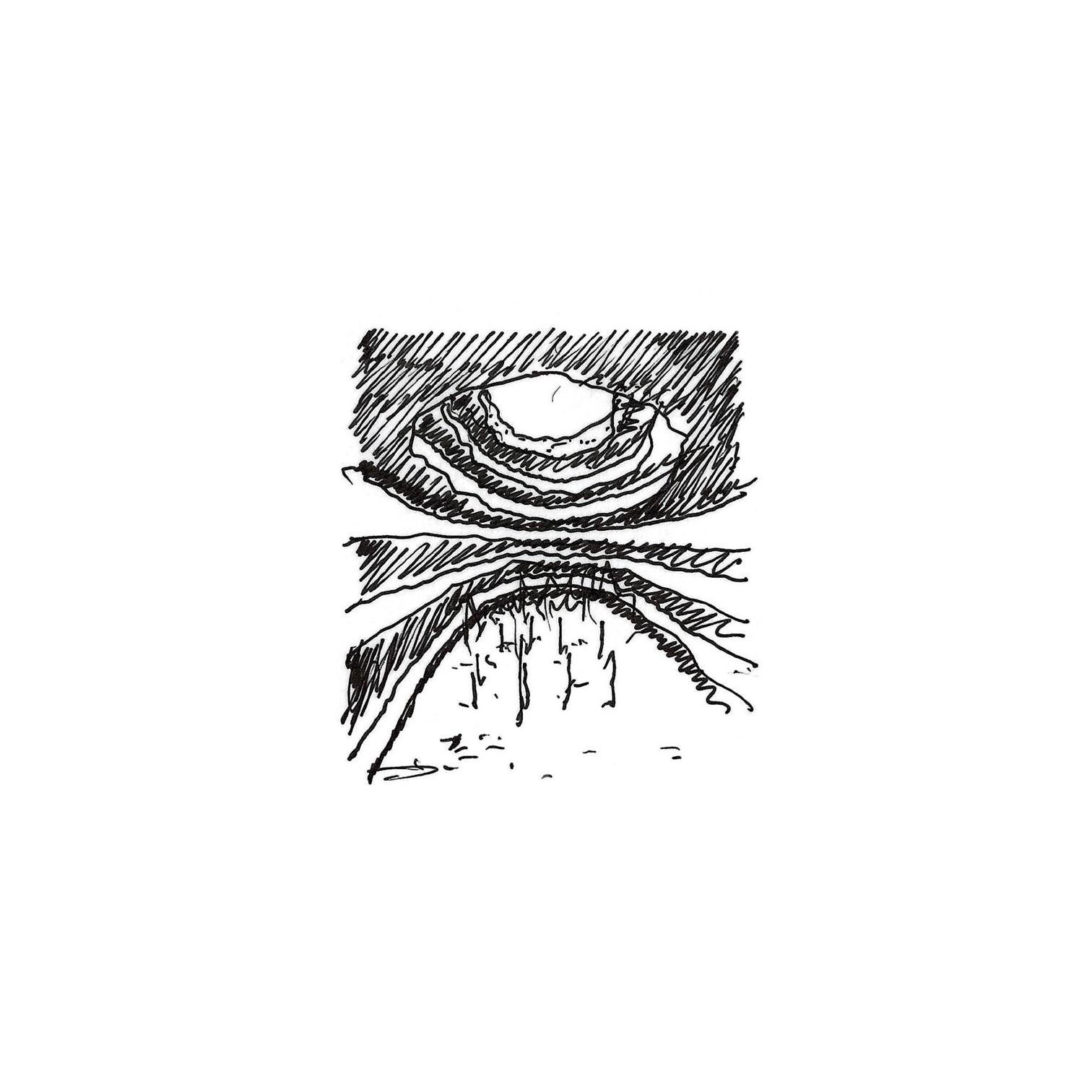
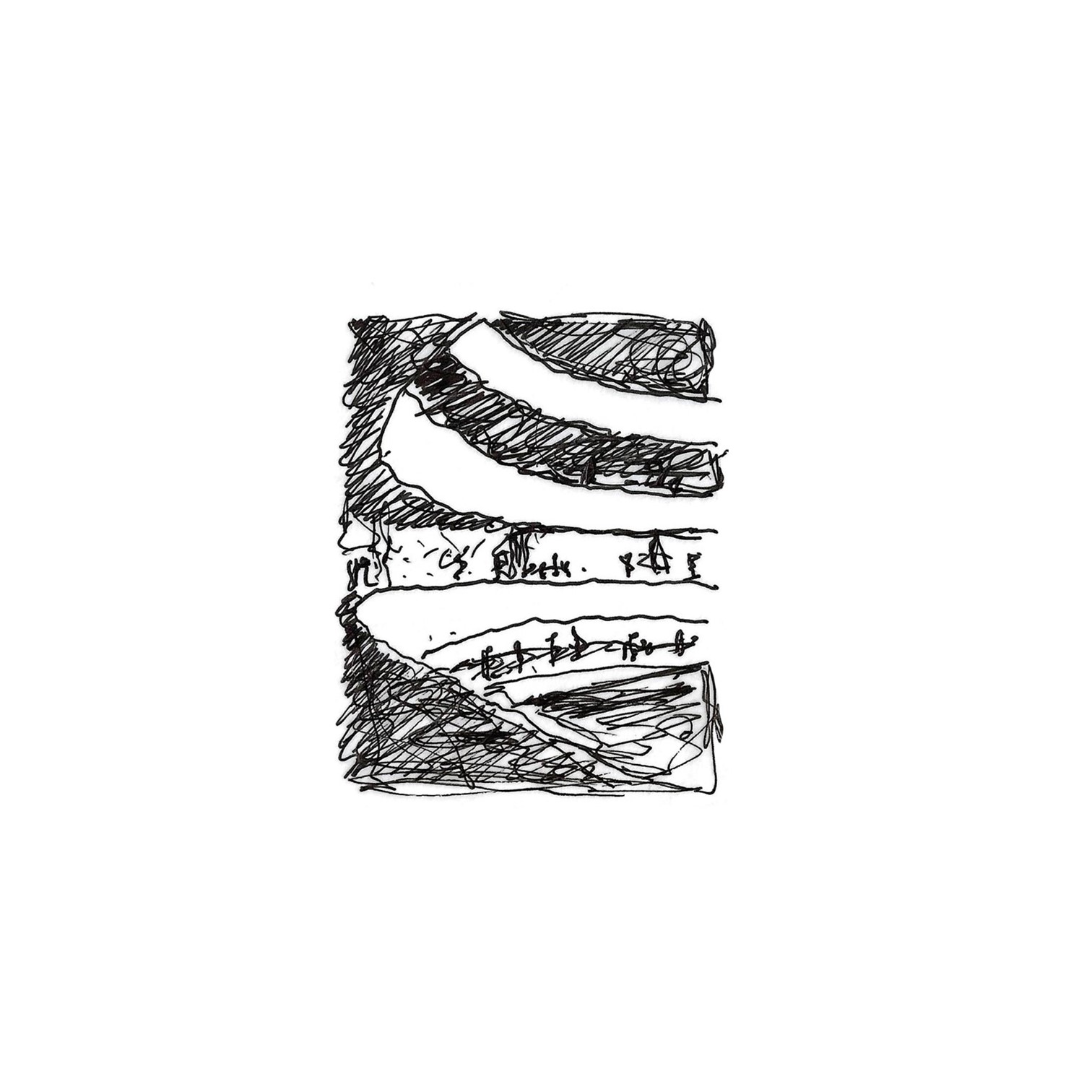
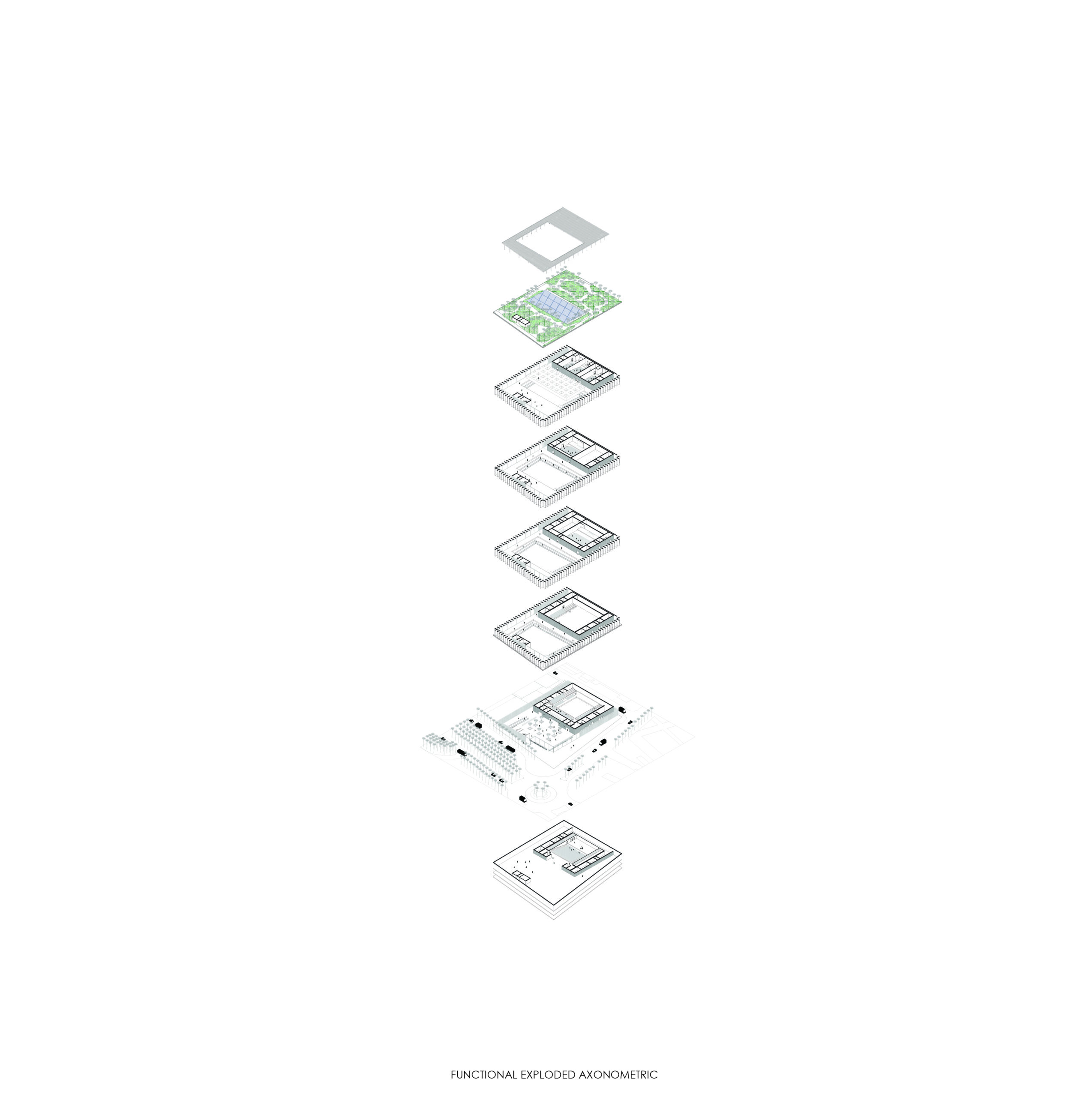
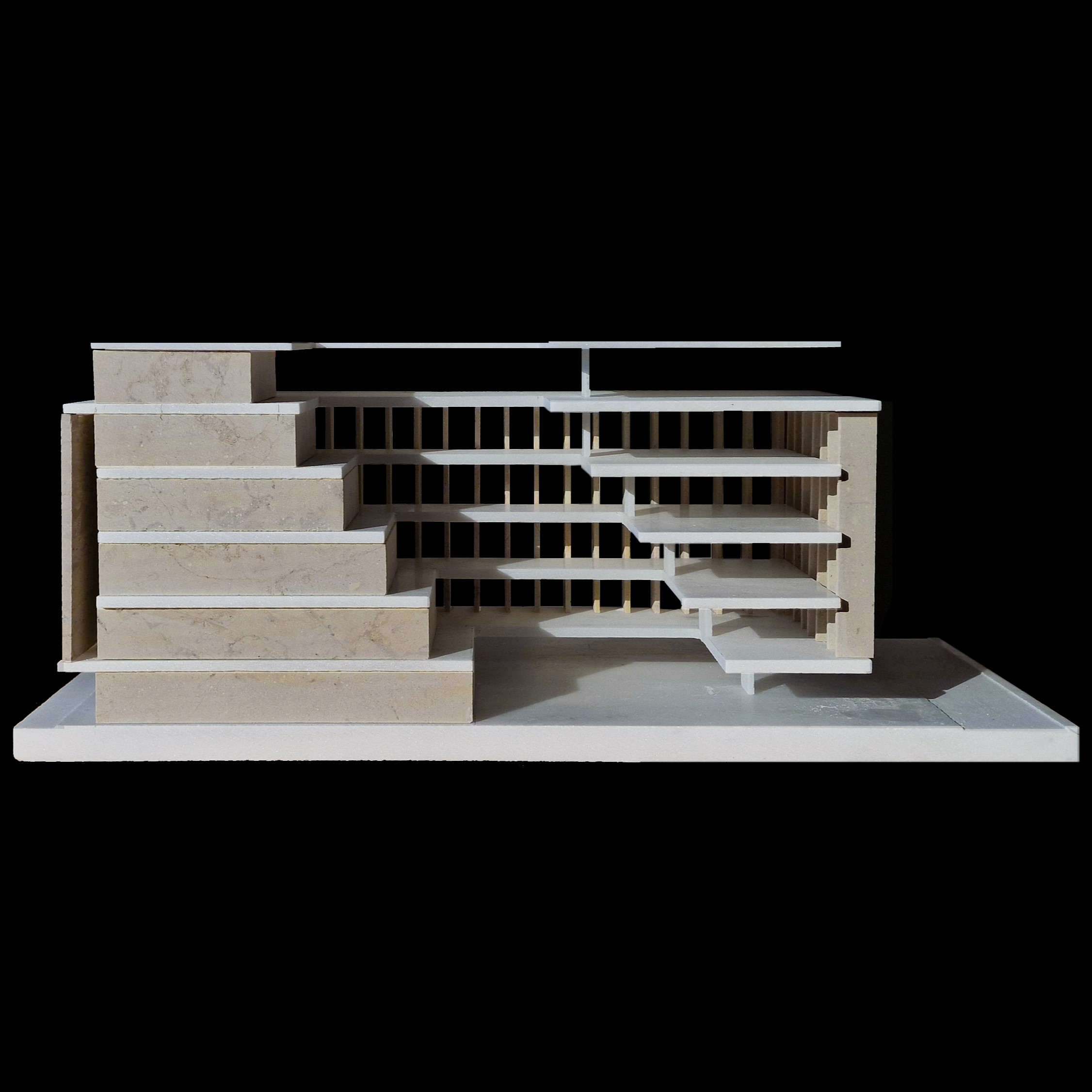
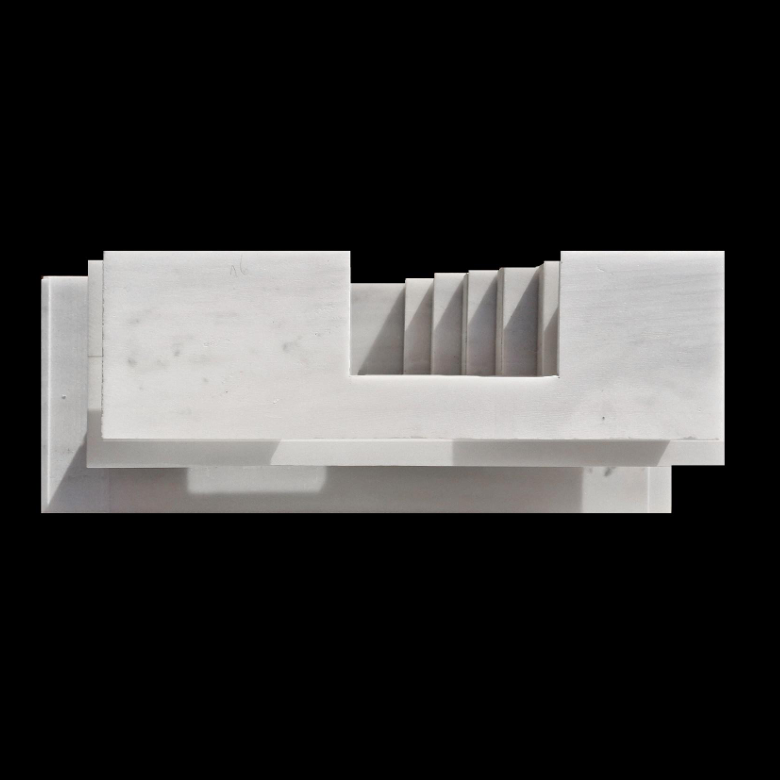
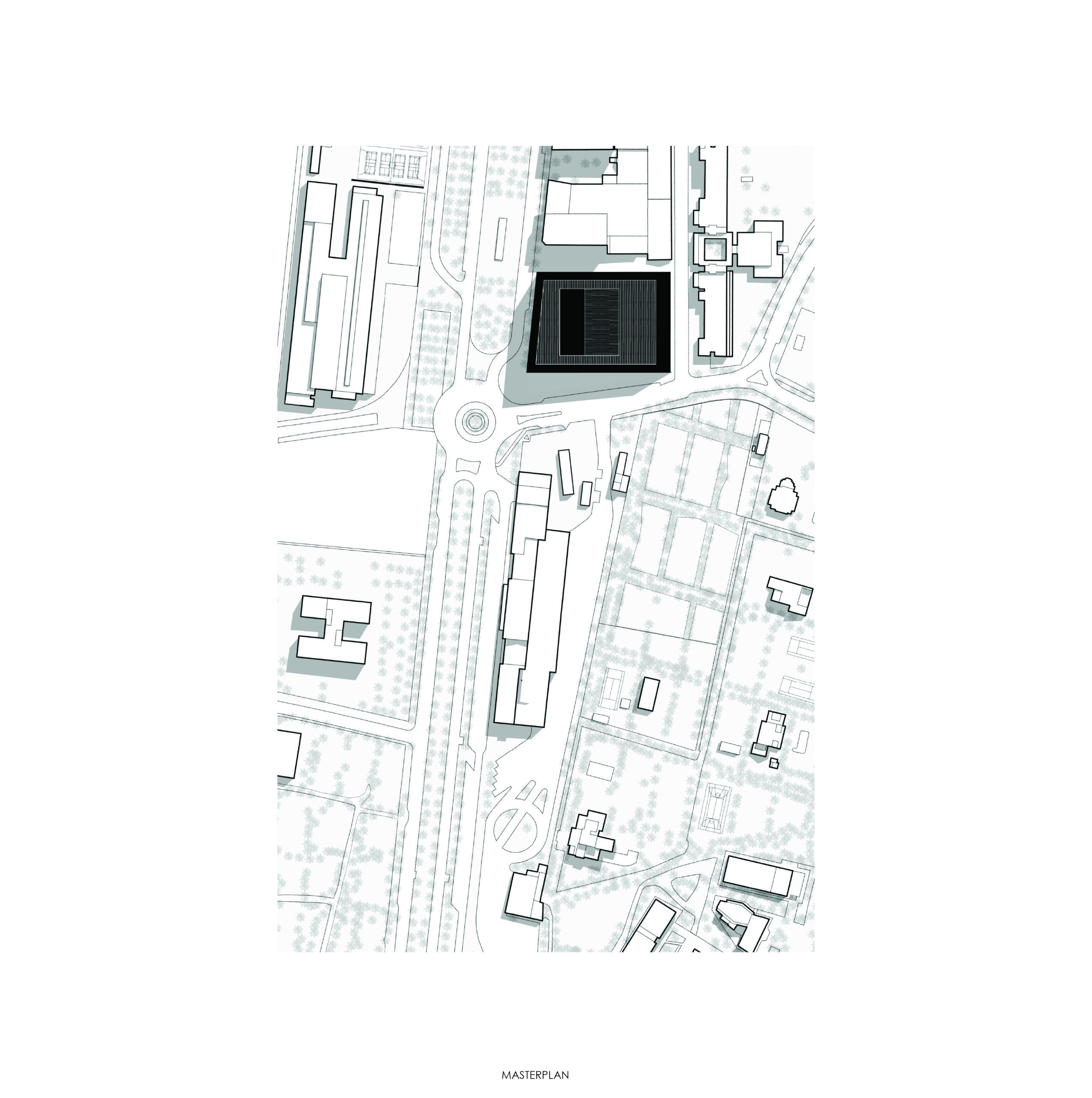
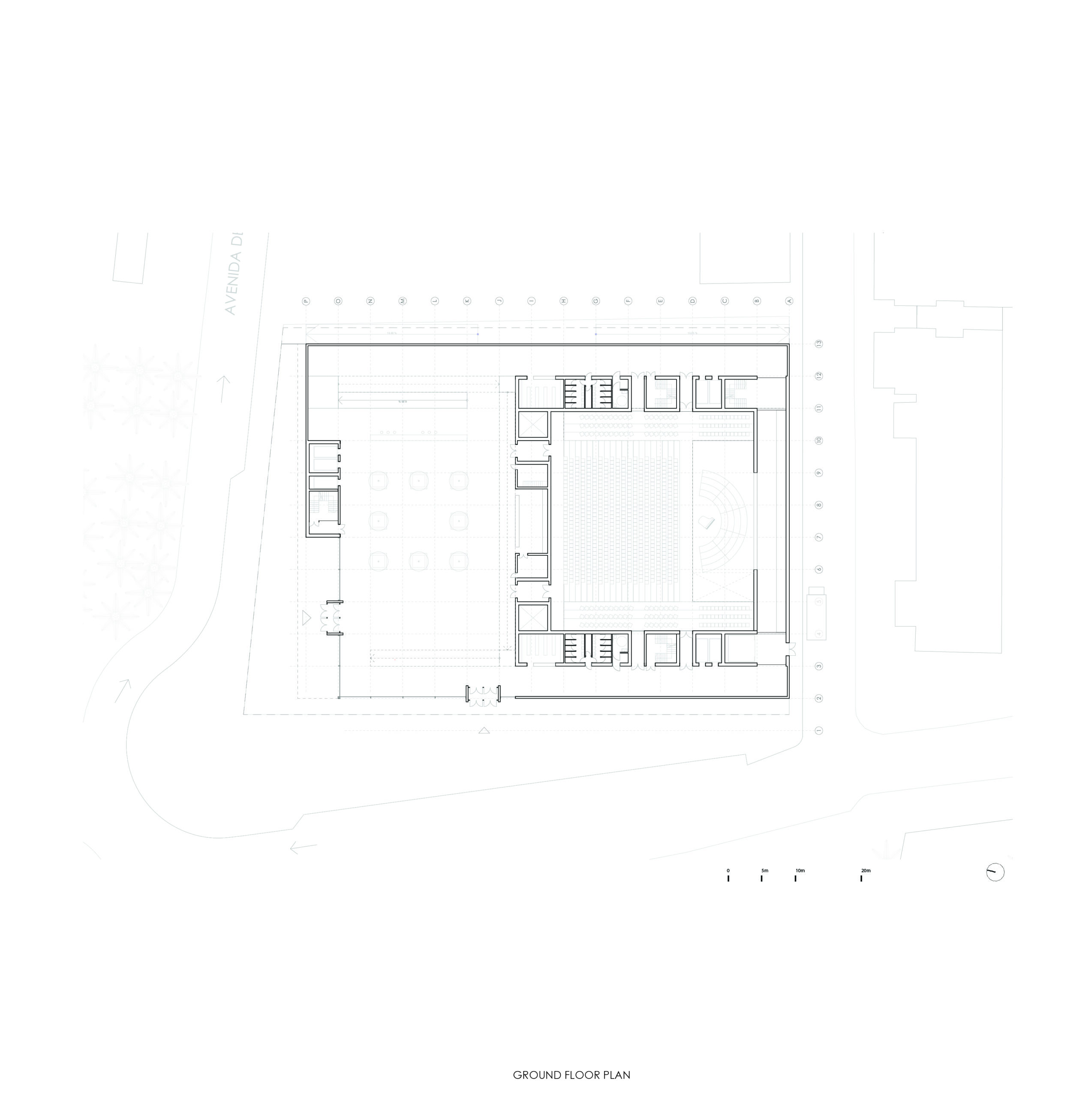
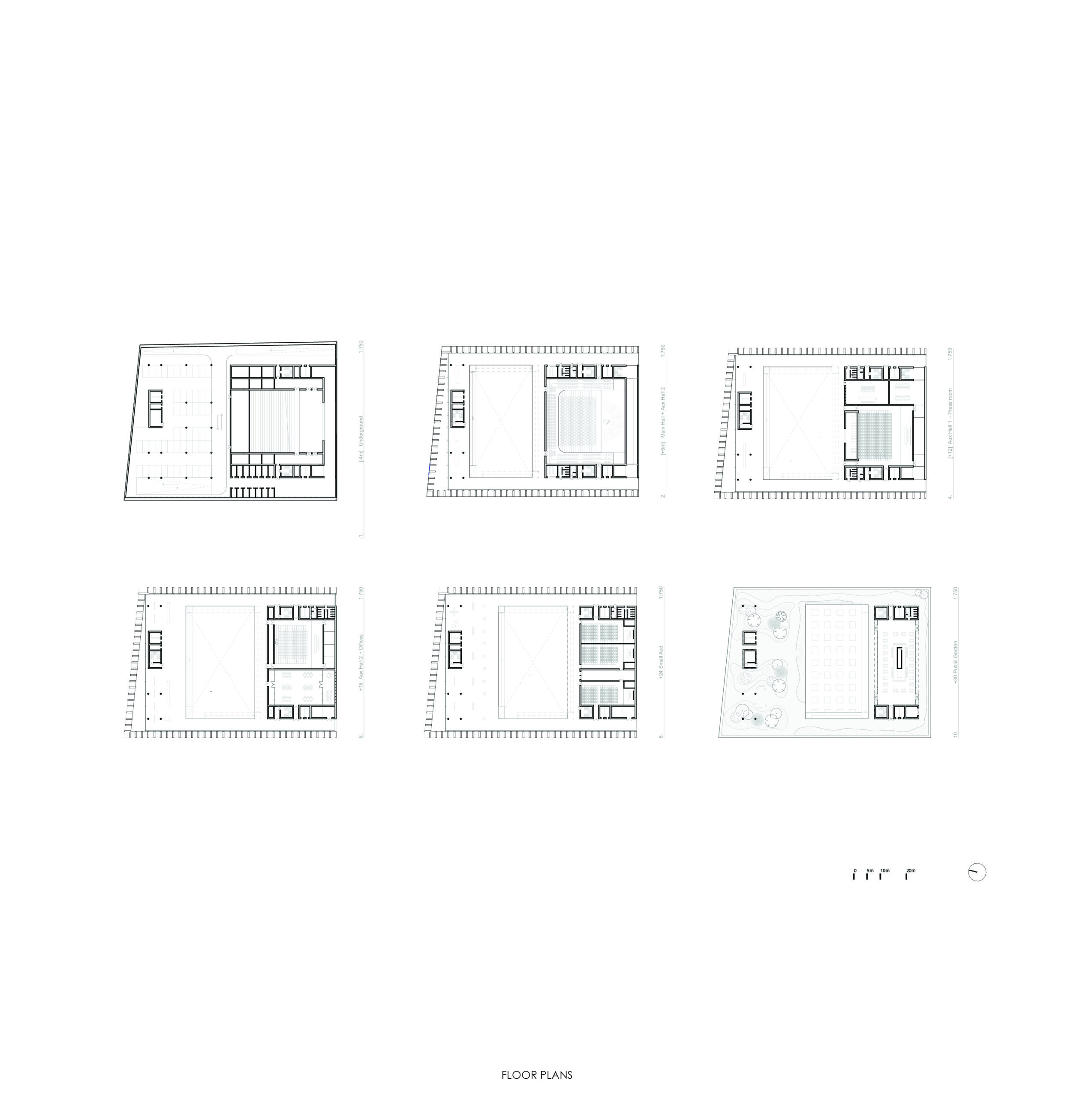
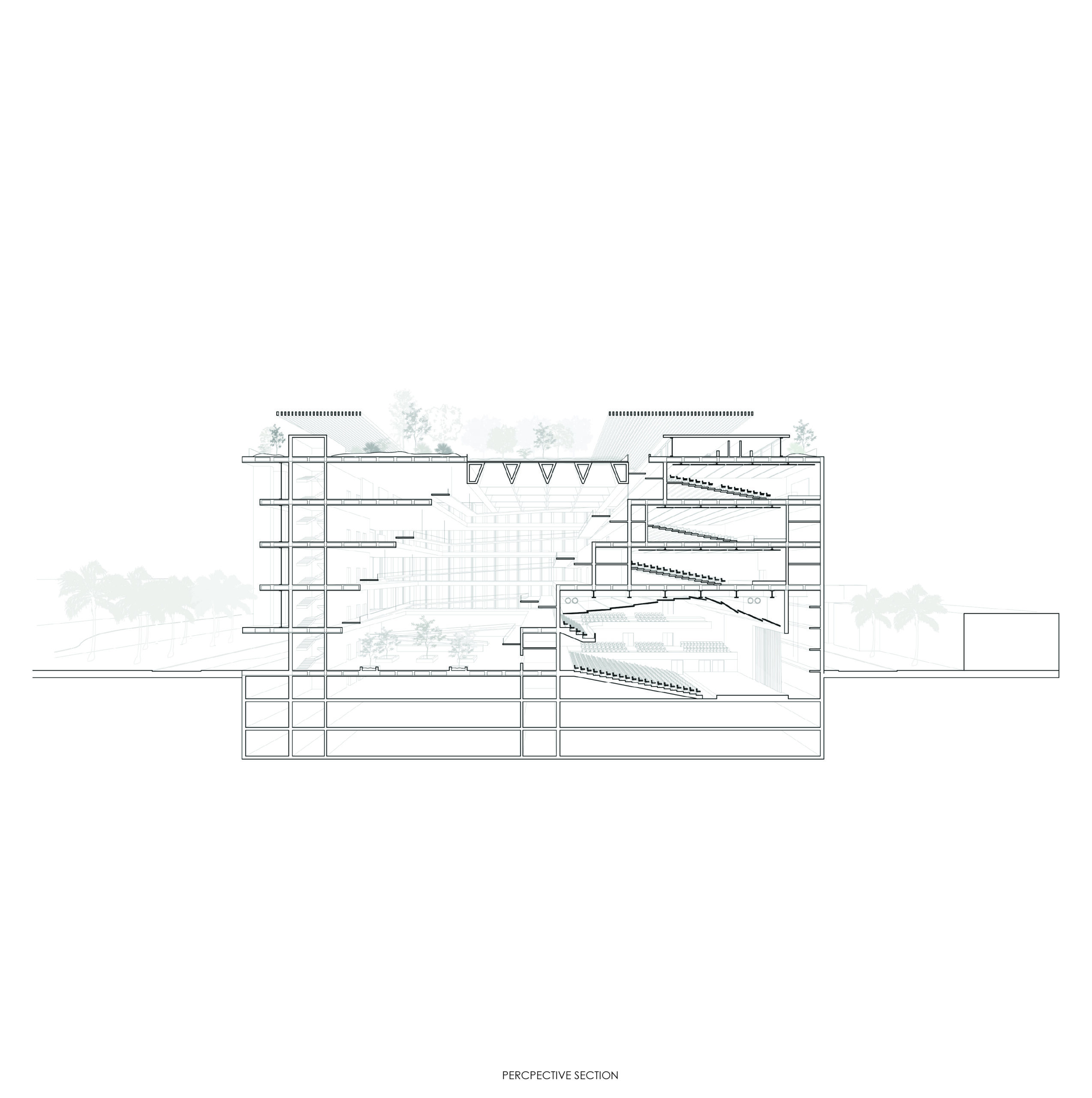
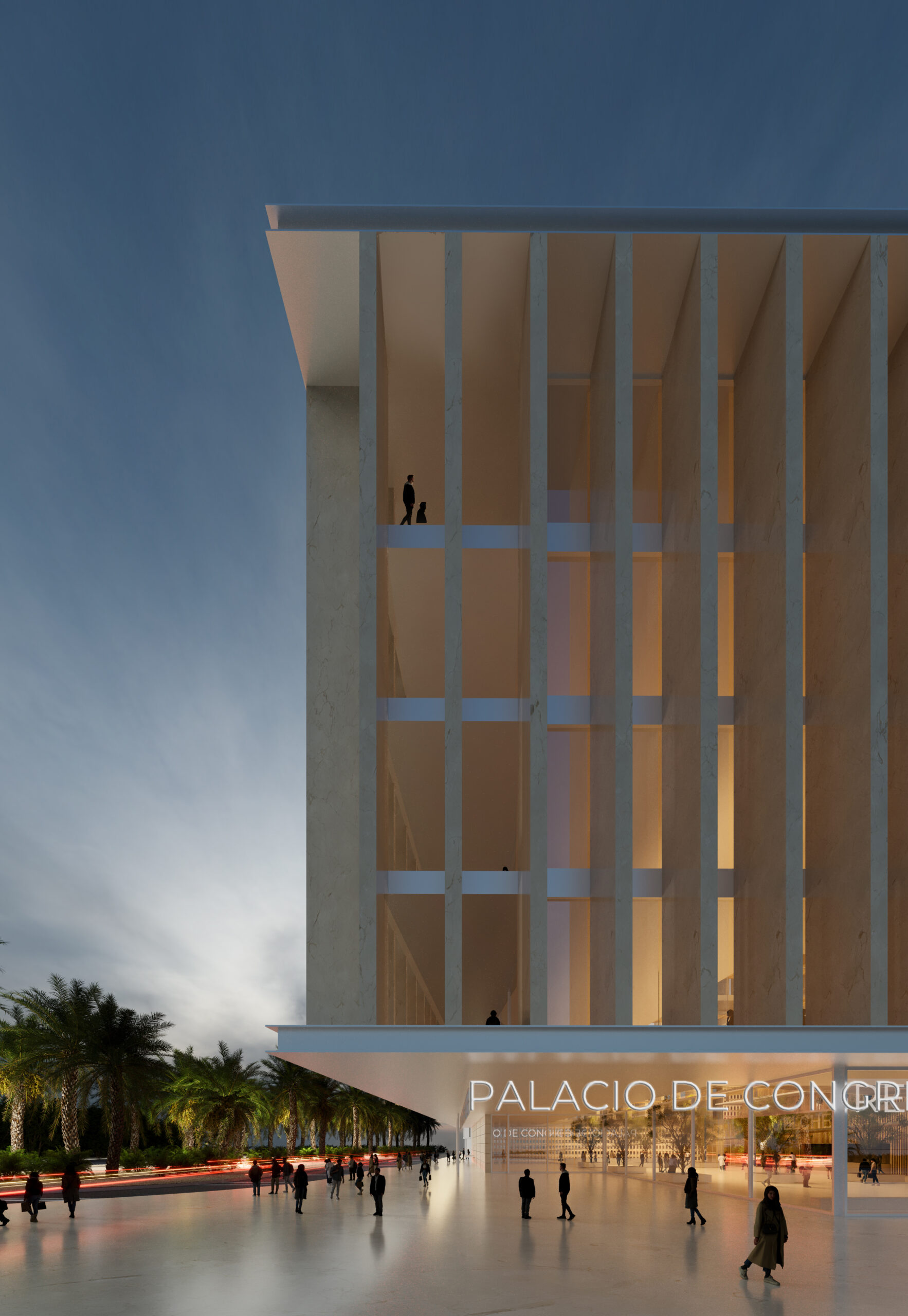
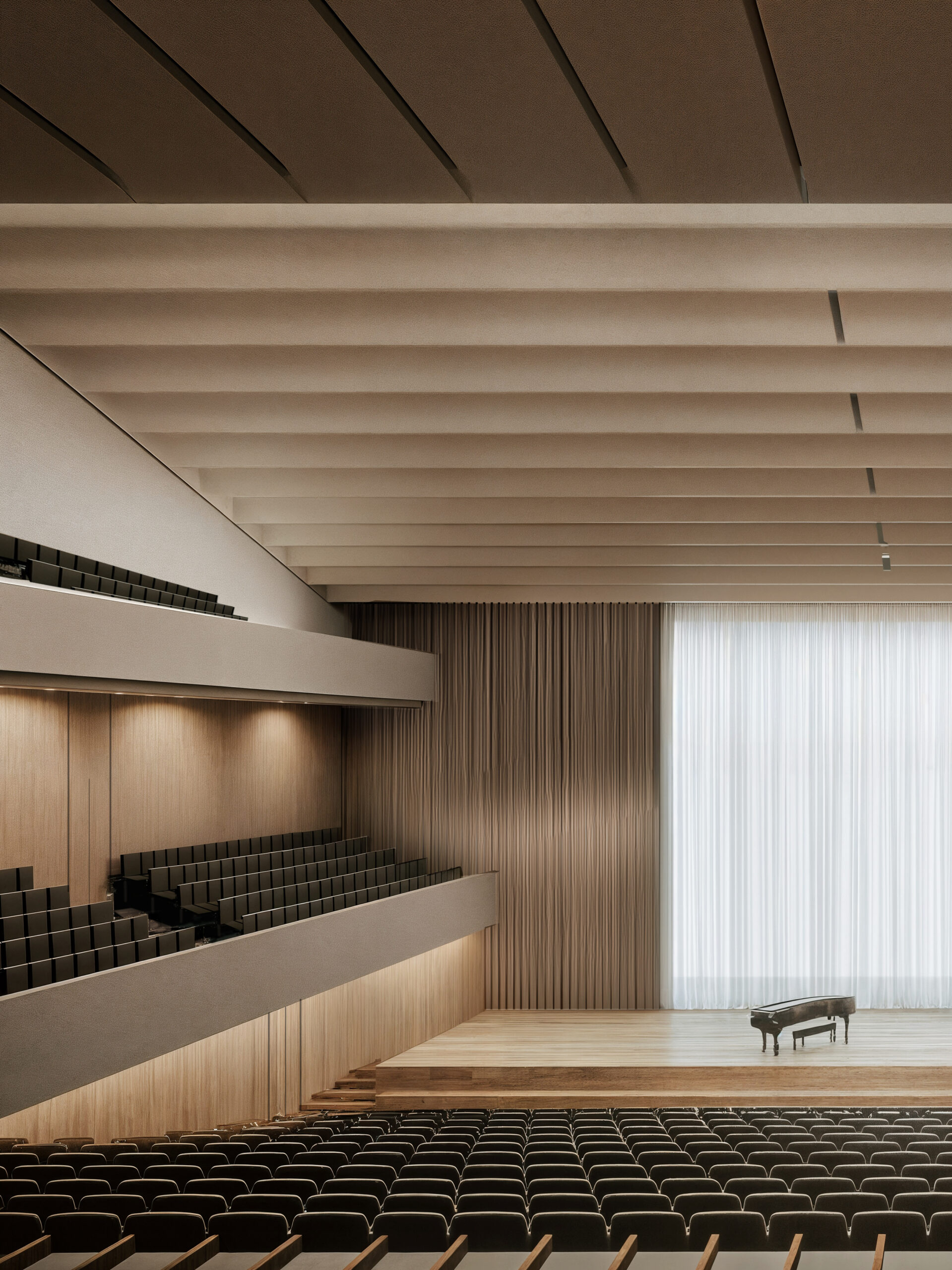
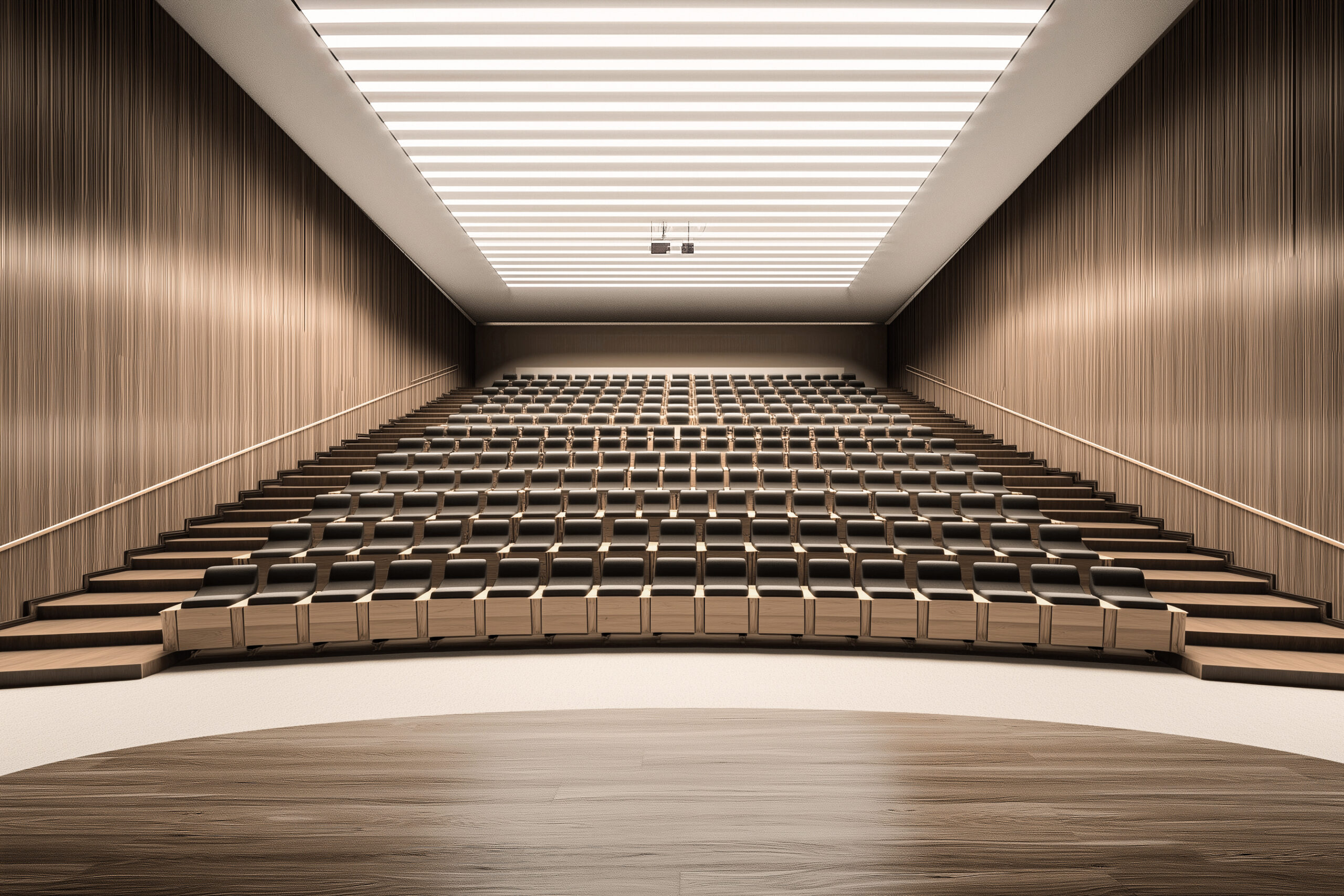
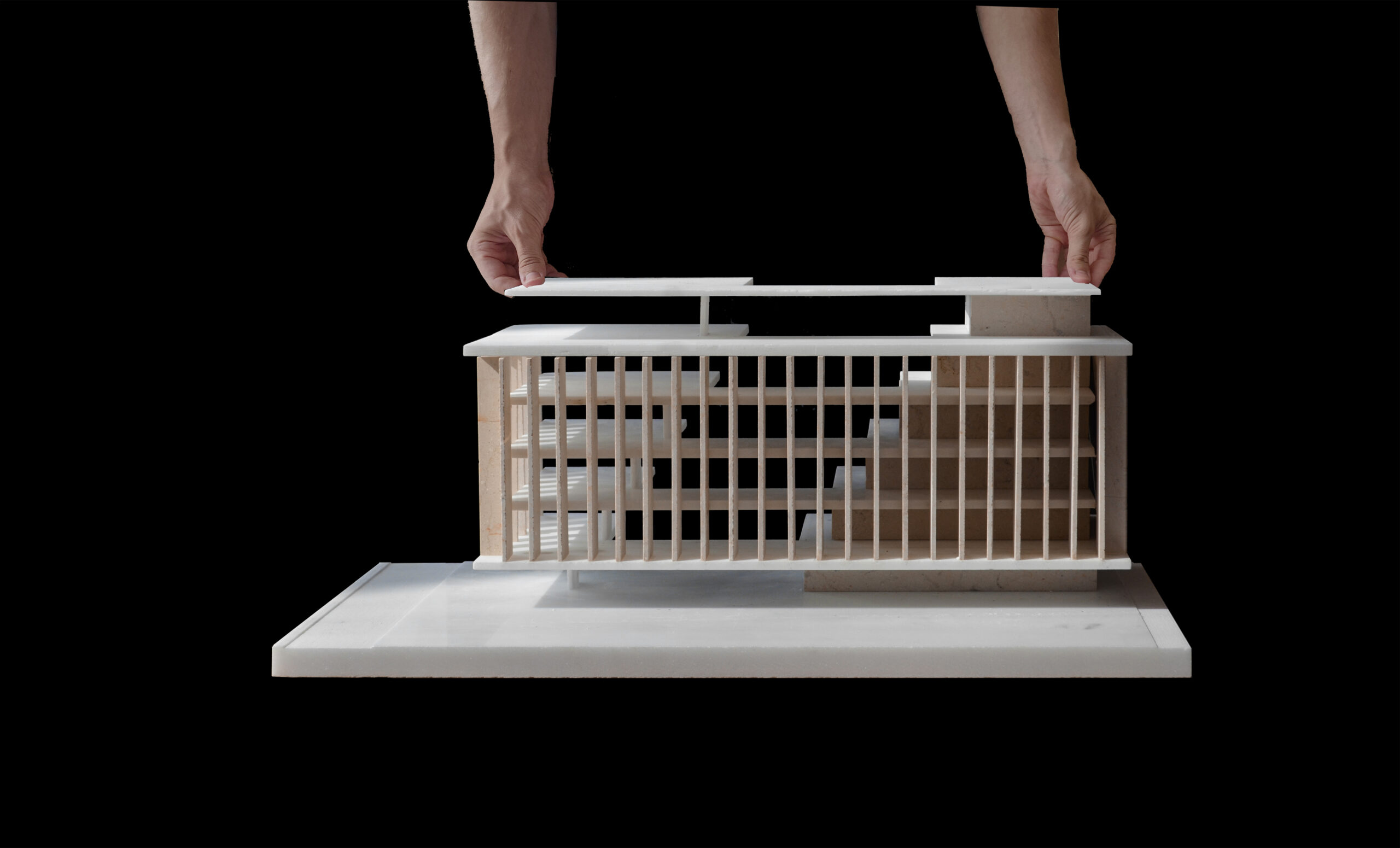
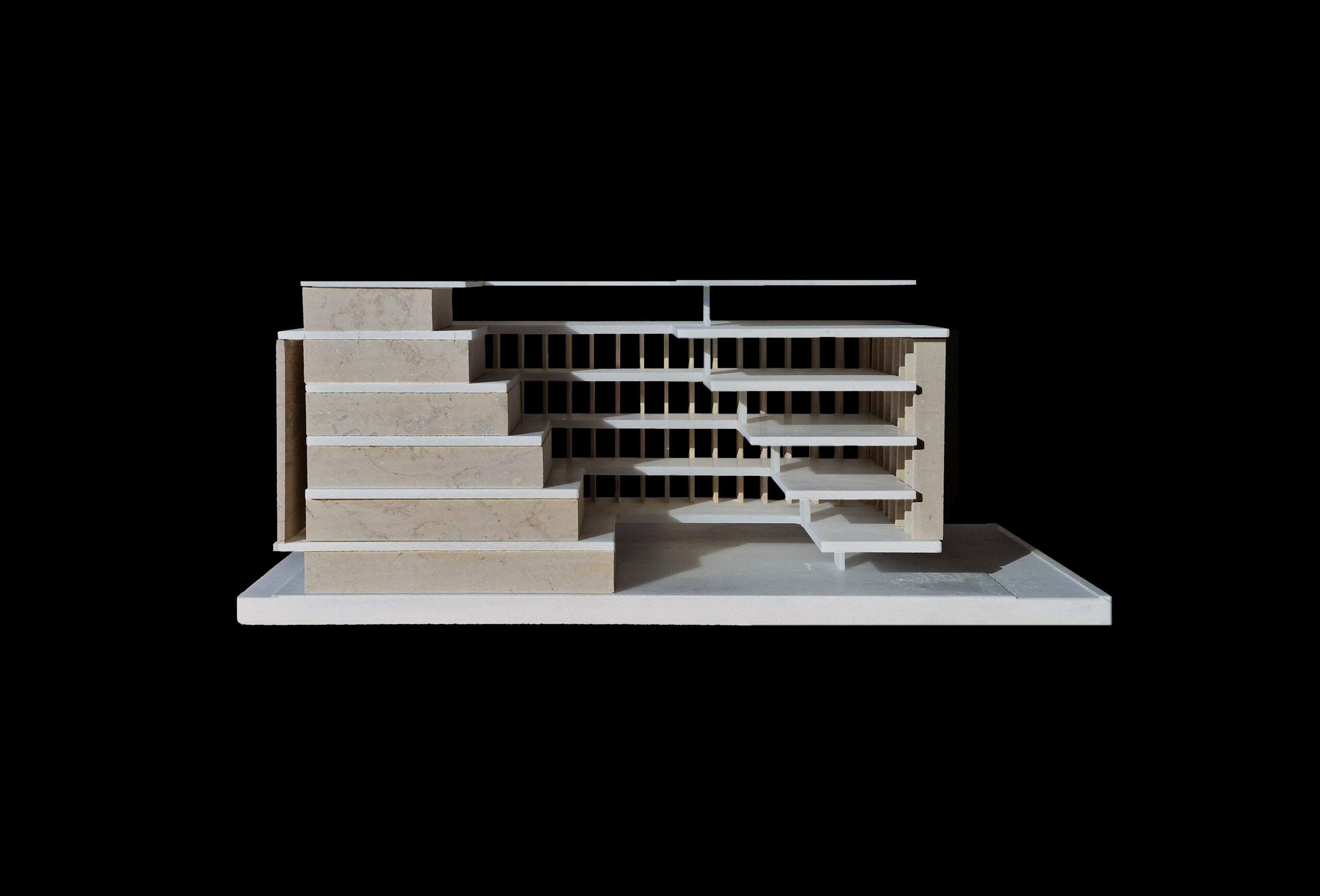
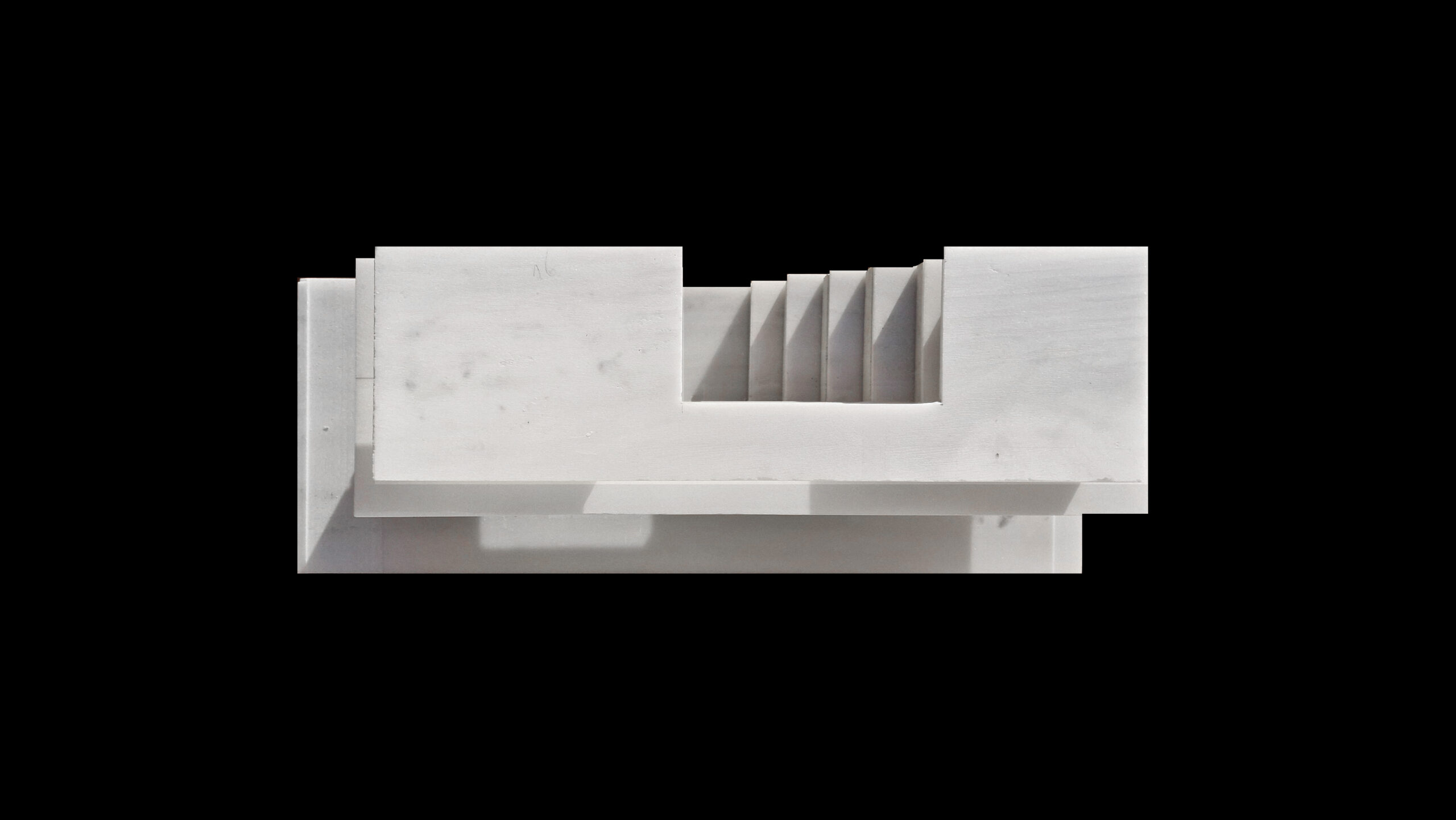
Departing from the conventional horizontal layout of large event venues, the proposal compacts its main functions—primarily the auditoria—into a vertical stack along the southern edge of the site, facing José Sánchez Sáez Street. The sequence begins with the main auditorium at ground level and continues upward with smaller halls, arranged in order of scale and frequency of use. Each auditorium is conceived as an autonomous, flexible volume that can operate independently or adapt to seasonal needs.This stepped vertical composition defines the project’s silhouette toward the city and recalls the terraced forms of the Monte Coto quarry, establishing a formal and material dialogue with the region’s stone-cutting tradition and the collective architectural memory of Elche. Even when Congress activities are not in session, the structure remains active, with the auditoria functioning as closed solid volumes within an open civic framework.
2. Distributed Foyers: Defining a Public Section
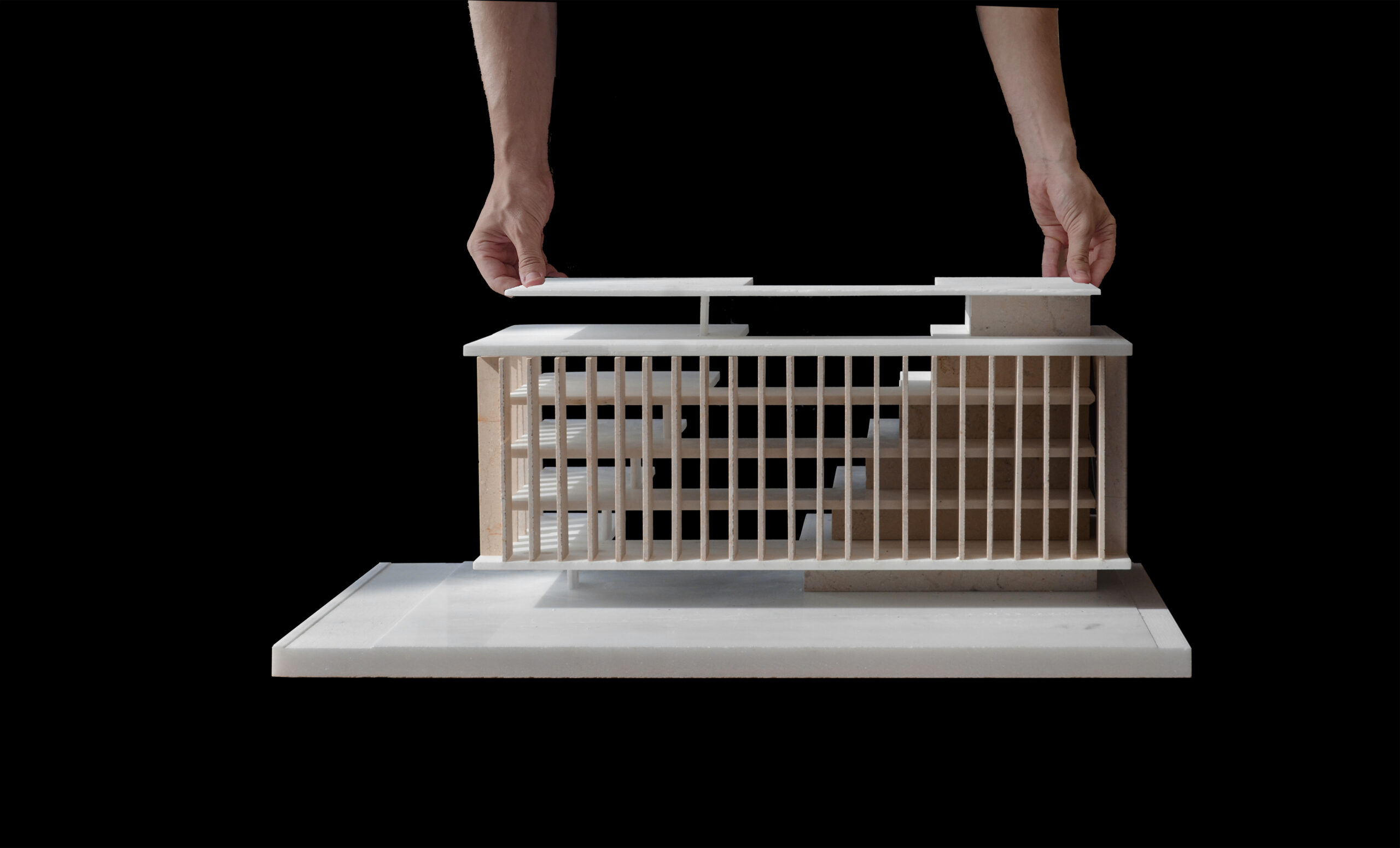
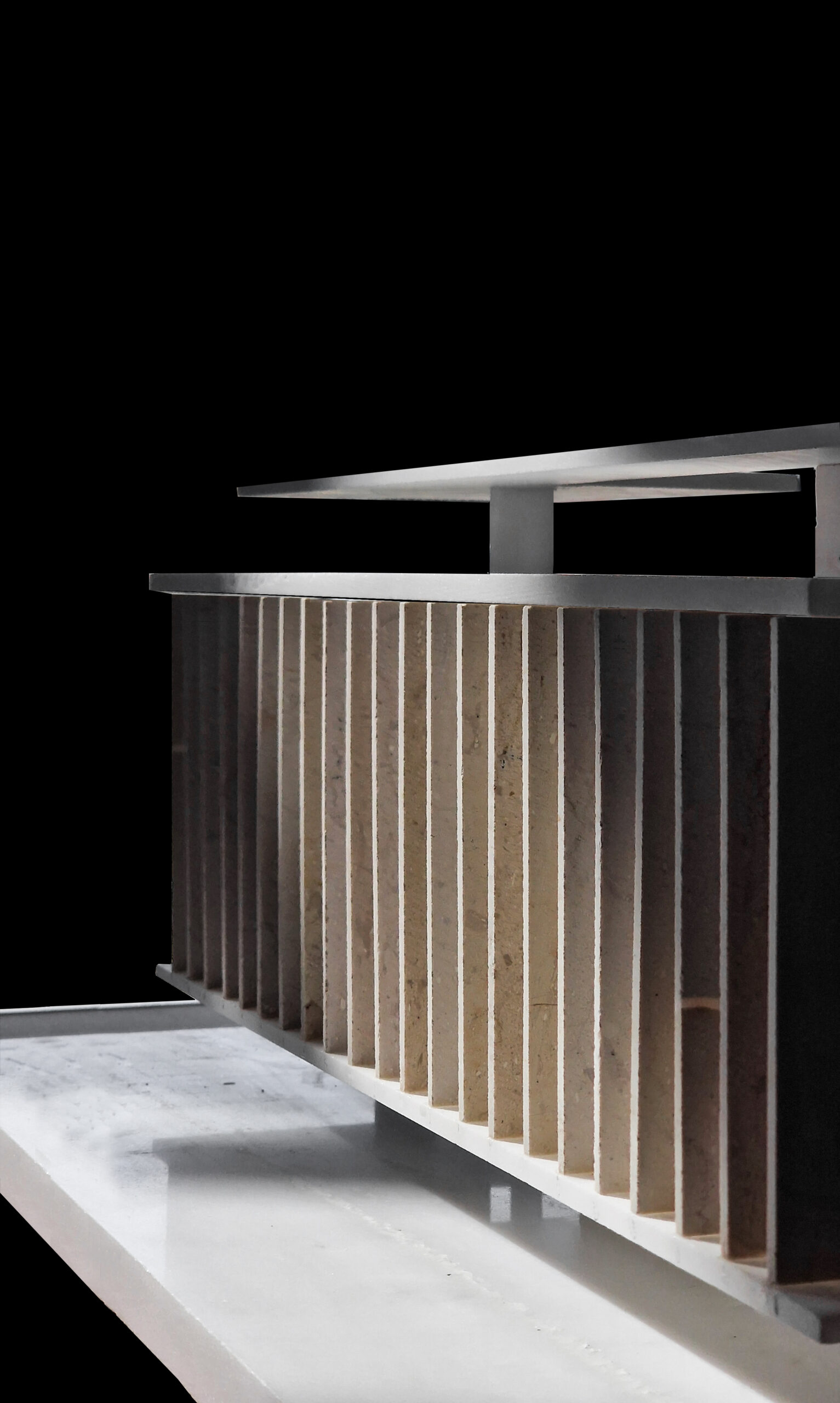
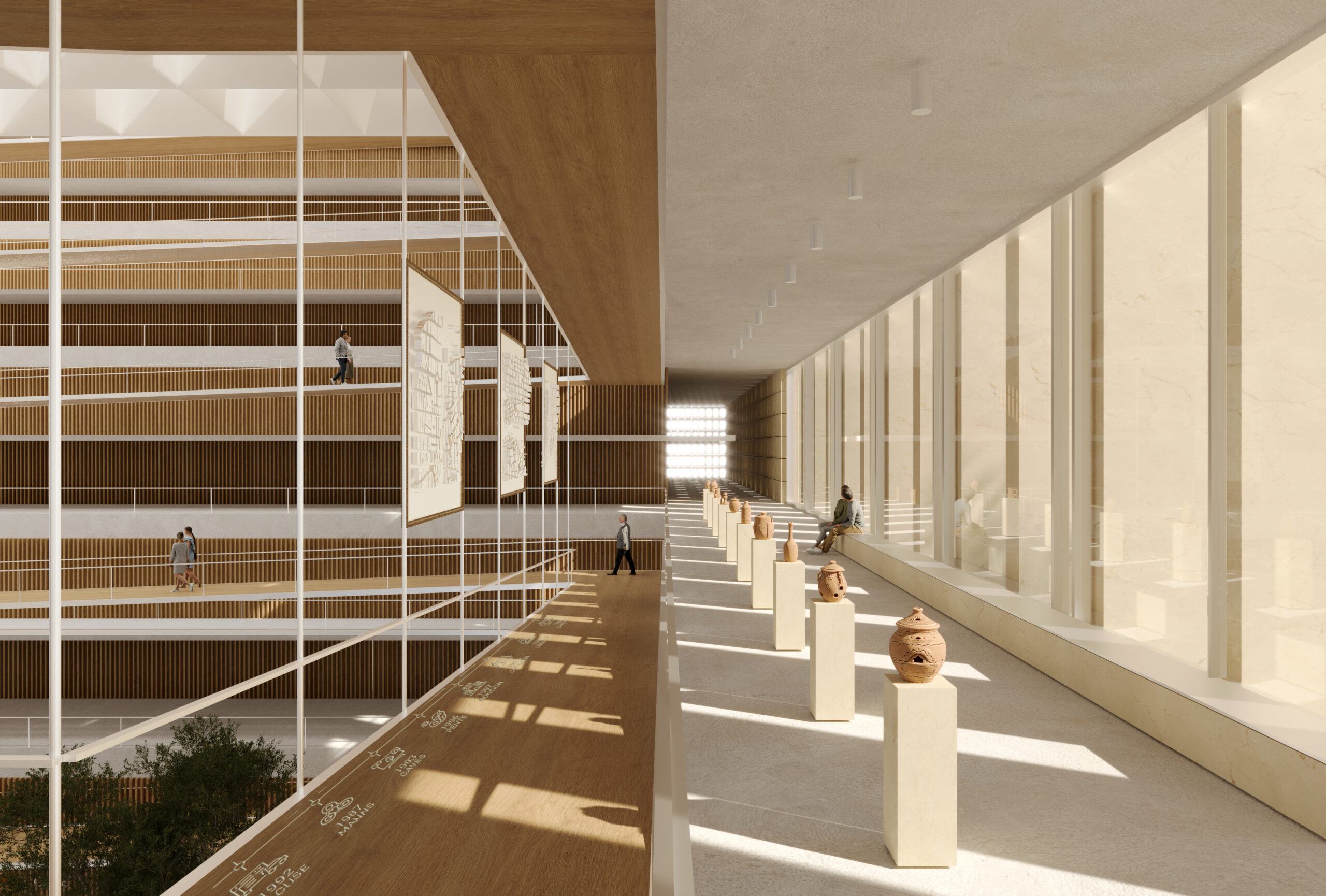
Parallel to the vertical stack of auditoria, a series of transparent spaces serves as distributed foyers and exhibition areas on each level. With open layouts and visual connections to the city, they link circulation routes with the auditoria and connect to the necessary service zones. Expressed as horizontal slabs, these public layers follow the stepped geometry of the auditoria, progressively articulating the presence of public functions as the building ascends.These intermediary spaces host exhibitions, receptions, and informal gatherings, reinforcing the congress centre’s civic dimension. Viewed from the historic centre to the west, the sectional logic becomes legible: solid auditorium volumes anchor the southern boundary, while the upper levels become lighter and more open toward Avenida de la Universidad de Elche to the north.
3. Civic Plaza and Atrium: Extending the City Inward
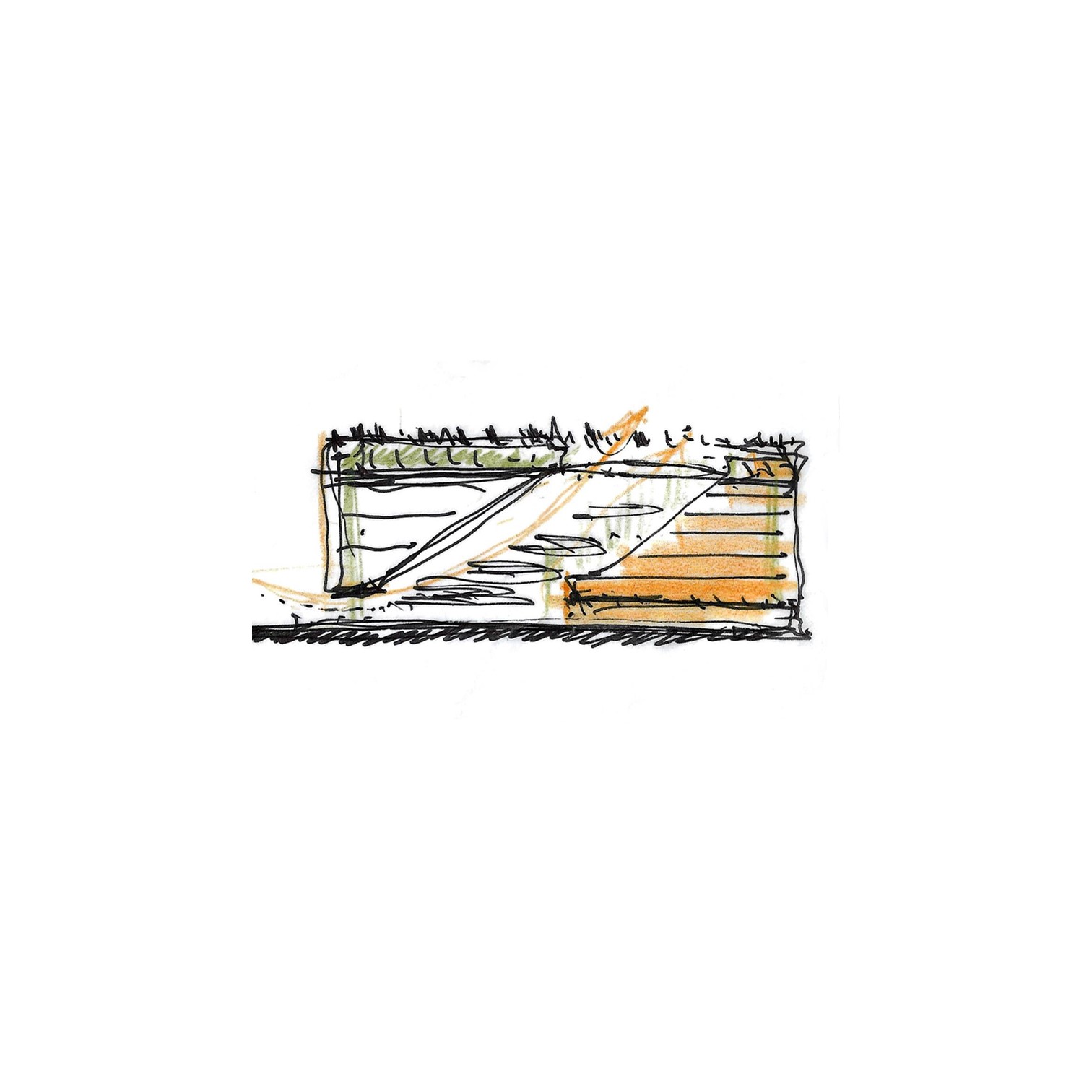
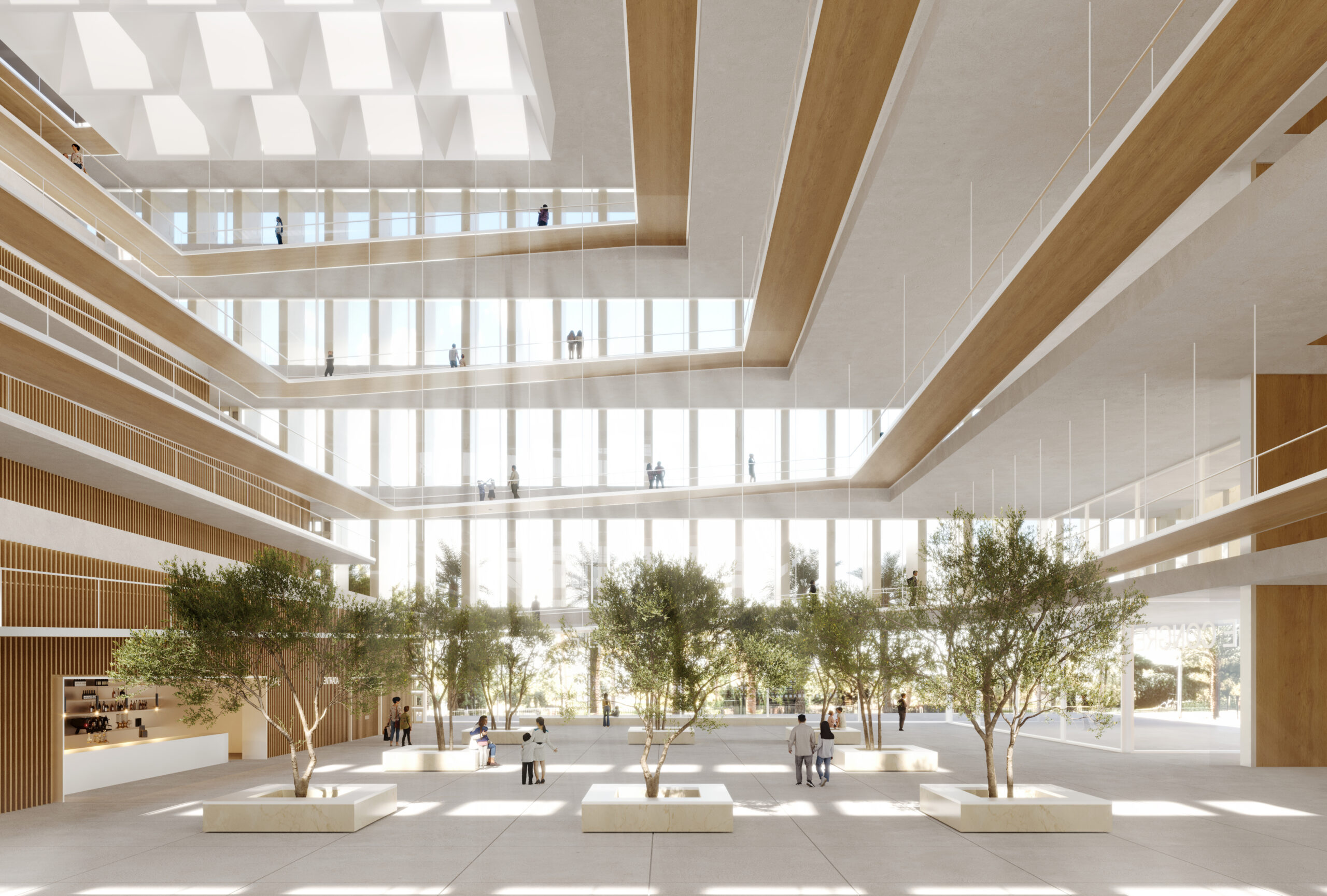
At ground level, a public plaza functions as both the building’s entrance and an open civic platform. Accessed from the extended stoa along Avinguda de la Universitat d’Elx and Carrer Camí de la Bassa del Moro, it forms a transitional space between the city and the congress centre—an expanded threshold. A rhythm of benches and planted olive trees anchors the plaza at a human scale, evoking the local identity and recalling the agricultural patterns and cultivations that have shaped the landscape over generations. It also serves as a “flexible” foyer to the main auditorium and can host public events such as concerts, screenings, or markets, particularly during periods without congress activity.A central atrium above the plaza floods the interior with natural light and opens views to the sky—inviting the public to ascend through the building. Structured as a stepped void, it begins above the public plaza and follows the geometry of the auditorium volumes as they diminish upward. This translucent core organizes vertical circulation and defines the spatial relationship between public areas and more controlled zones of the auditorium, reinforcing the distinction between programmed and unprogrammed spaces while maintaining continuity and orientation throughout the structure.
4. A Garden Above the City: Creating an Ecosystem
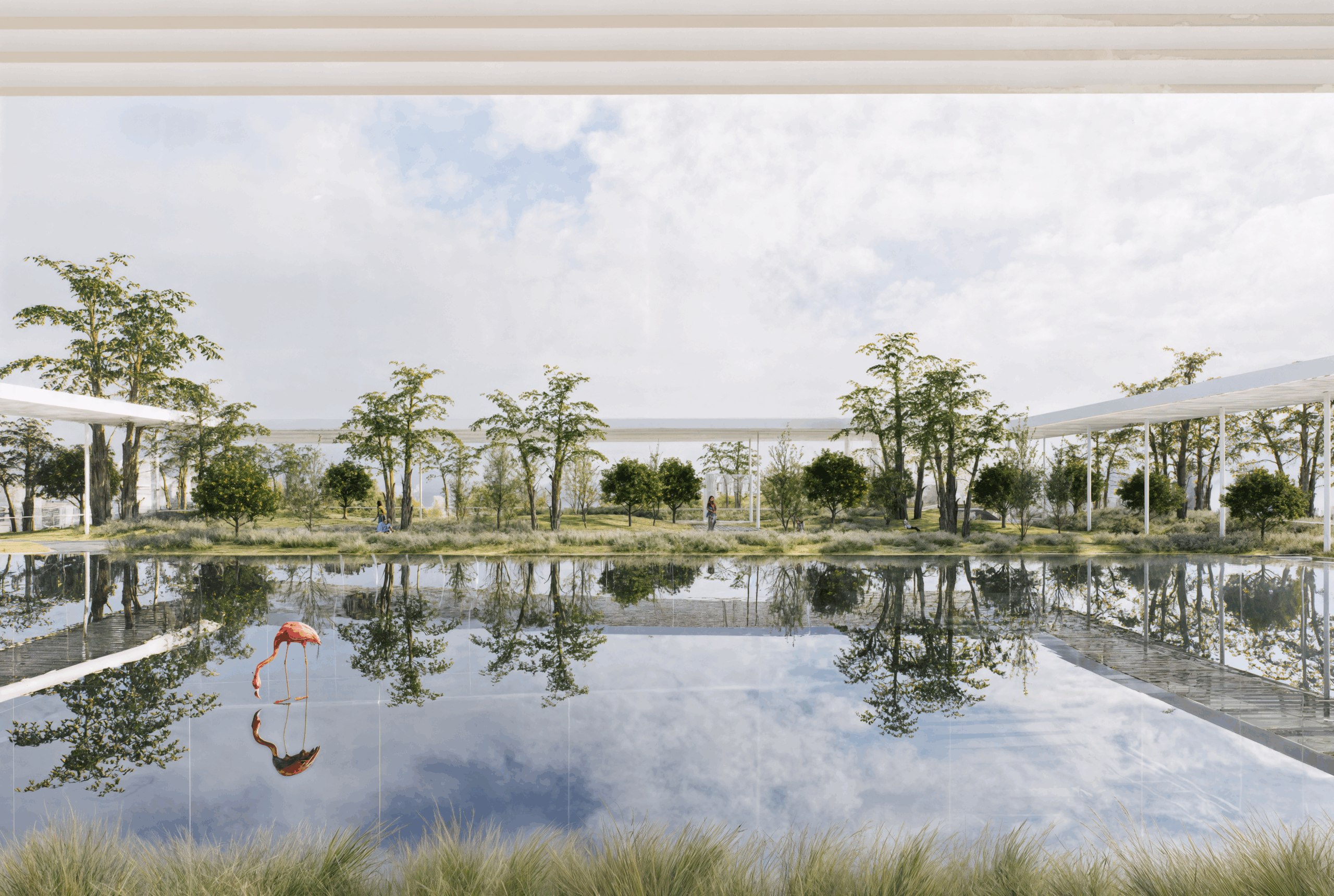
The vertical sequence culminates in a rooftop garden conceived as a civic space, offering panoramic views of Elche and its surrounding landscape. Positioned as a new vantage point beyond the historic centre, it extends the public experience and reinforces the building’s connection to the city and toward the wider territory. A shallow plane of water, set atop the structural grid that brings sunlight into the atrium, contributes to a cooling microclimate while creating a soundscape that helps soften and filter the ambient city noise. A perforated canopy crowns the building, providing shade, linking the vertical circulation routes, and housing a second café/bar that serves both congress visitors and the broader community.
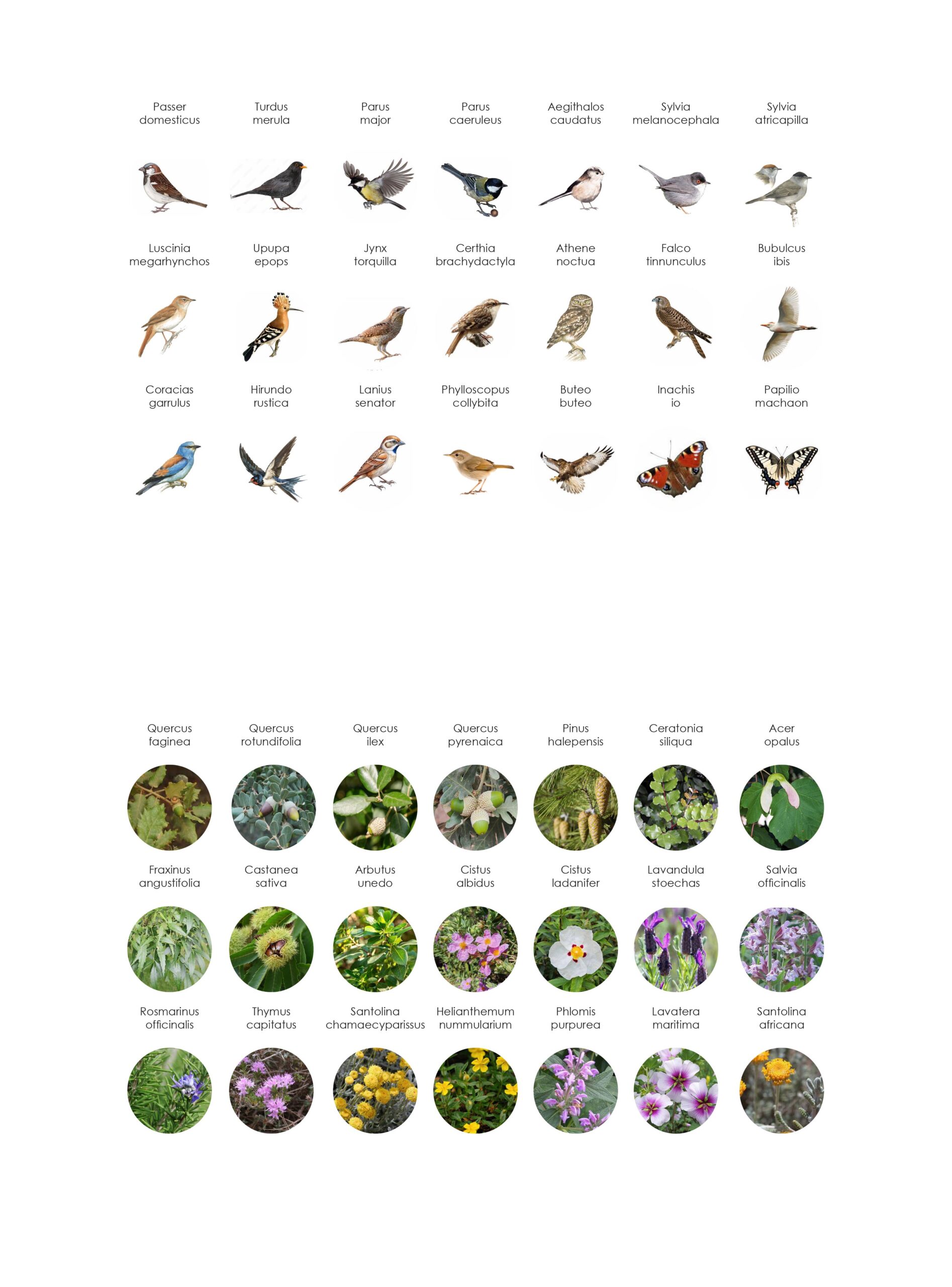
Beyond its experiential dimension, the rooftop garden aspires to establish a slow ecosystem that evolves. By incorporating native and adaptive species, it fosters biodiversity, seasonal change, and gradual transformation. Seating and gathering areas, integrated with trees and local plants, support informal public use, reinforcing the building’s civic identity. Through this gesture, the proposal inverts the conventional hierarchy of service and public zones—demonstrating architecture’s potential to construct shared ground and redefine its relationship with the city.
5. The Ramp as Civic Thread: A Continuous Path Linking
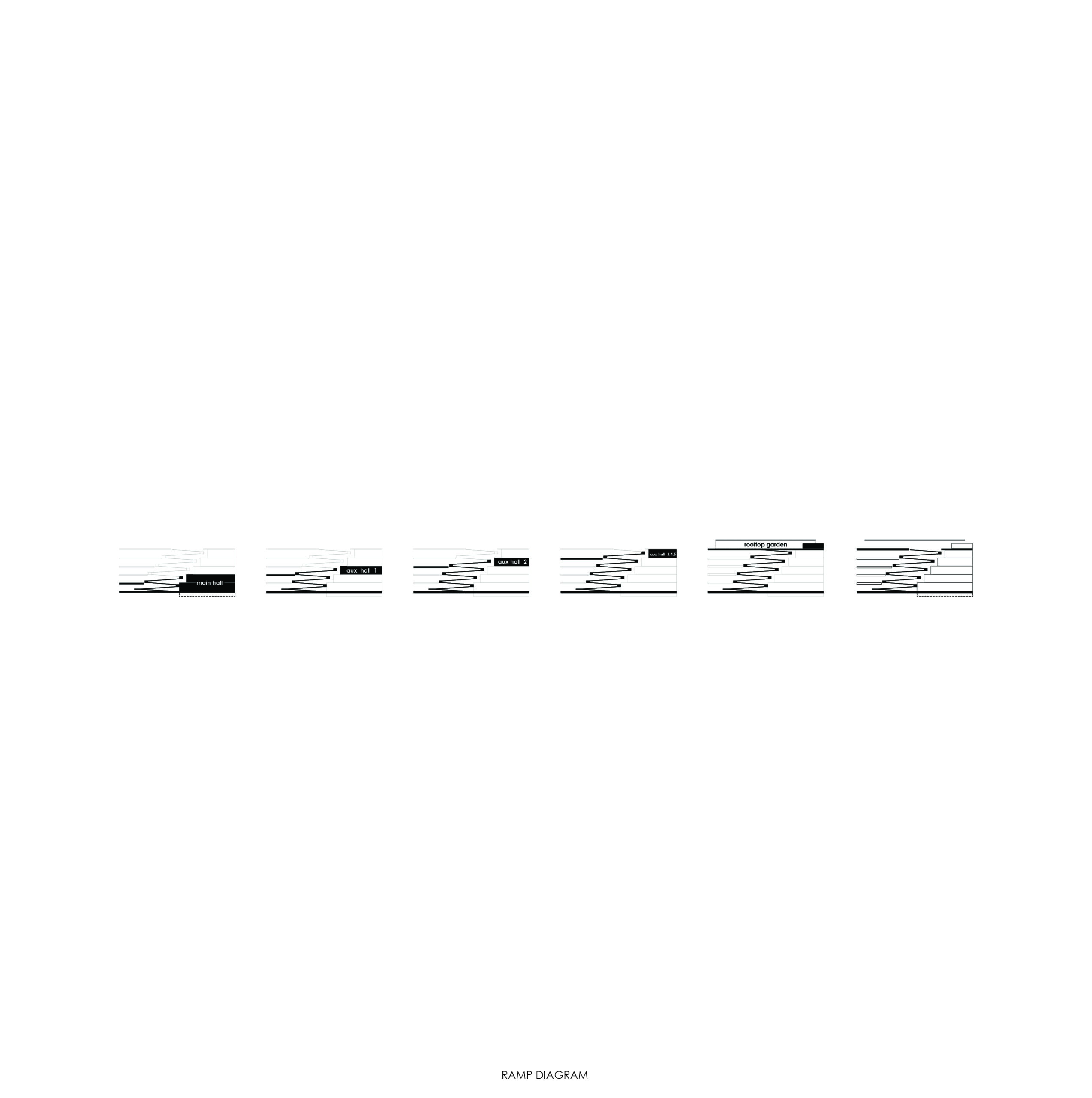
Public Spaces and ProgramsA continuous ramp weaves through the building, linking the civic plaza to the rooftop garden. Circulating through the atrium, the ramp establishes a spatial promenade that connects auditoria, foyers, and service zones through a single, accessible path. Its gentle slope integrates movement and experience, forming a coherent architectural narrative.More than a circulation device, the ramp functions as a civic instrument, activating the building’s section asa public domain through informal uses such as temporary exhibitions and resting points. This continuous spatial gesture ensures the building remains open, legible, and accessible throughout its event calendar and beyond.
Architects: P4architecture
Design Team:
Chara Kaika, Evangelos Fokialis, Konstantinos Pyliotis, Alkiviadis Pyliotis
Contributors:
Nektarios Karangelis, Panayiota Kyriakou, Manolis Savvas, Margarita Togia
Architectural Consultants:
Ana Fernández Martínez, Francisco Colom
Landscape Architect: Chrysi Gkolemi
Structural & MEP Consultants:
SOCOTEC Group
3D Visualization & Interior Design Consultant:
Michail Meggios
Marble Model:
Doussis Marble (Konstantinos Dousis, Nikolaos Doulos)
Project Type: Research – Competition
Year: 2025